Browsing Tag

Family Fun

Head to Bend for Summer Fun: Go Play Outside

There’s plenty of summer left, so if you like spending your sunny days outdoors, head to Bend, Oregon. Hiking, biking, fishing, rock climbing, floating, kayaking, and paddle boarding are just a few of the outdoor pursuits that make Bend (and nearby Central Oregon communities) enormously popular in summer months. Waterfalls, lakes, and lava flows are close by and the mighty Deschutes River winds its way right through the city. 

The Deschutes River runs right through Bend, Oregon providing plenty of summer fun for kayakers, paddle boarders and floaters.

I noticed a sign saying, “Defund Visit Bend,” posted on a bridge on a recent stay, but I’ve always found the locals friendly and happy to share the attractions their city offers.  As a frequent visitor, here are some of my favorite places to go out and play:

Floating Away

Ready, set, float!

I think floating on the Deschutes River is one of the best ways to while away a summer afternoon in Bend, and I’m not alone in that opinion. Between Memorial Day and Labor Day, one quarter of a million people take to the river on floats, paddle boards and kayaks, according to VisitBend.com.  Weekends get really crowded. If you can, do your floating mid-week.  There are rules for everyone’s safety. Wear your personal flotation device (there are no lifeguards on the river), and alcoholic beverages are not permitted. It’s the law.

Early on a midweek morning, you’ll share the river with more ducks than people.

We’ve seen plenty of dogs floating with their humans, but it is not recommended, even with doggie life jackets.  Neither are pool toys and floats; they aren’t sturdy enough for the rocks and branches you’ll encounter.  If you don’t have your own, rent equipment at Park & Float or Riverbend Park. PFDs are free to borrow at both places. Reserve your floats in advance since it’s first come, first served, at the rental places.

Along with your water bottle, sunscreen, hat, and rash guard, remember your aqua socks. Get a pair with sturdy soles to protect your feet from rocks. Leave your flip flops at home. You’ll also want a dry bag to keep your car keys, wallet and phone safe while you float along. If you didn’t bring one, there’s an REI in the Old Mill District.

There’s a short section of the Deschutes with rapids, but you can choose to go over them or not.

Keep an eye out for the white water rapids under the Colorado Avenue Bridge. Fear not, it’s a short segment of the river. If you’re not up for the adrenaline rush, it’s easy to leave the river just before the rapids and put back in after you pass them.  There are warning signs in the river that show where to go. It’s fun to watch people navigate the rapids on their floats, paddle boards, kayaks, and sometimes, surf boards, from the safety of the shore. Depending on where you put in (and the currents) your river “cruise” will take between one and two hours.

Surf’s up on the Deschutes! Bring your board and enjoy the ride.

The Old Mill District: Go for the Music, Bird Watching, and More

Hayden Homes Amphitheater hosts high wattage talent all summer long.

You’ll have floated (or paddled) right by the Old Mill District on your river outing. The towering smokestacks you passed have become a Bend landmark, and are all that remain of what were once two highly productive lumber mills.  Now the Old Mill District is a thriving gathering place with restaurants, bars, shops and Hayden Homes, the largest outdoor music venue in Oregon. The amphitheater has 8,000 seats, including lawn spots, and features chart toppers in every genre from alt rock to cowboy crooners all summer long.  It’s the perfect place to enjoy a sultry summer night!

Paved paths along the Deschutes beckon bike riders and dog walkers.

The inviting pathways along both sides of the Deschutes at the Old Mill make it easy to walk, jog, or bike along the river. If you don’t have your own two wheels, Wheel Fun bike rentals are open seasonally. Bend is a dog-friendly town so bring your furry friend for a stroll here, but please obey leash laws.

This is also a great place for bird watching. Pick up a free guide at the Ticket Mill or the Bend Visitor Center before you set out. Raptors, woodpeckers, songbirds, waterfowl and shorebirds as well as owls and quails call Bend and its environs home or are migratory visitors. The East Cascades Bird Alliance occasionally offers free guided “bird walks” along the river.

Bird watching is a popular pastime at the Old Mill.

If you’re looking for retail therapy, the Old Mill has everything from clothing to fine jewelry, accessories and sporting goods. There are also plenty of places to eat and drink. But let’s get back to the great outdoors.

Climb Smith Rock

Smith Rock State Park draws rock climbers from around the world. It’s a great place to hike and bike, too.

Some claim rock climbing was invented at Smith Rock State Park in nearby Terrebonne.  Whether that’s true or not, with a ridge elevation of 3,200 feet, the high volcanic walls are a big draw for climbers from around the world.  That’s not for me, but the scenic hiking trails are.  Choose the well-marked trails that best match your abilities from the easy Canyon Trail to the aptly named Misery Ridge Trail. You’ll enjoy spectacular vistas on whichever trail you follow, especially the ones overlooking Crooked River. Smith Rock is also popular for fishing and mountain biking. It’s a beautiful place to spend the day.

The scenic trails along Crooked River are my favorite.

There is little to no shade at Smith Rock State Park, and it gets really hot in Central Oregon in the summertime. Try to get out on the trail early and bring plenty of water. Rangers recommend 16 oz. per person per hour. Wear sunscreen and appropriate footwear and be mindful that this is a wilderness area. Watch out for wildlife and snakes.

There is a $10 day use fee for Oregon residents ($12.50 for all others), unless you have an annual Oregon State Park pass. Smithrock.com has all the details you’ll need to plan your outing. Check in at the Welcome Center in the parking lot for passes, maps and information.

There are no services in the park, but plan to stop at nearby Juniper Junction. Rockhard has the most delicious huckleberry ice cream I’ve ever tasted.  Reward yourself after your exertions! The small store also has local crafts, souvenirs, and snacks. Contact them for rock climbing guides.

Alpacas!

On your way back to Bend, stop at the Crescent Moon Alpaca Ranch. Walk around the enclosure, learn about, and feed these fuzzy creatures whose wool is so prized. These alpacas are super friendly and so are the people who work here. We saw new babies in the barn and you might, too.  Crescent Moon has a terrific gift shop with all things alpaca from gorgeous knitwear to stuffed toys and lotions and potions made locally. They sell the alpaca food there, too.

A Special Place: Newberry National Volcanic Monument

Volcanic activity began here 500,000 years ago and produced 400 cinder cones, lava tubes, and vents amid a flow area that covers 1,200 square miles. Newberry National Volcanic Monument in the Deschutes National Forest covers 57,384 acres of that area, which means there are plenty of places to explore the fascinating geological formations created by volcanoes in Central Oregon.

Some sites in the Newberry National Volcanic Monument are accessible to all, others are not for the mobility challenged. Big Obsidian Flow is in the latter category. Formed only 1,300 years ago, it is the youngest lava flow here.

Big Obsidian Flow
This is the “trail” up the Big Obsidian Flow. Figuring out where to safely put my feet was a challenge.

 Somehow we thought it would be fun to climb what turned out to be an extremely treacherous one- mile loop to the top of the razor-sharp flow. It was all about the views of surrounding mountains and Paulina Lake for us.  While we were enjoying the sights from the top, suddenly lightning flashed, thunder roared, and the rain poured down.  Realizing we were the tallest things up there, we ran for our lives as carefully as we could down the hazardous, barely- there trail, getting soaked to the skin. It was an adventure we laugh about now.

We’d gone from sunshine to torrential rains and back to sunshine by the time we reached nearby Paulina Lake. We knew we’d find restrooms, shelter and food there. A kind woman on the restroom line took one look at my soaking wet hair and clothes and offered me her beach towel. I gladly accepted.  Paulina Lake is popular for boating and fishing and has a lodge with a casual restaurant. They rent boats ranging from canoes to motorboats, but I’d had enough water for one day.

Welcome to Lava Lands!

There are spectacular views across the lava fields to the mountains beyond at Lava Lands.

Lava Lands Visitor Center with its Chitwood Exhibit Hall is a great place to begin your exploration of the Newbury National Volcanic Monument.  Named for a former geologist with the U.S. Forest Service, the Chitwood Exhibit Hall is full of educational, interactive exhibits on the geology and cultural history of the area including a 3D topographical map. There are daily films and helpful Forest Service Ranger talks.

Step outside the visitors center and you’ll enter Lava Land. There’s a 5.5-mile fully accessible Sun Lava Trail as well as the Trail of Molten Land over the 7,000-year-old lava that flowed down from nearby Lava Butte.  There are plenty of informative signs about the geological features, the wildlife, and the original inhabitants on these lands. A seasonal shuttle takes visitors to Lava Butte for a fee, or you can hike up. There’s also a pleasant walk through a young forest along the Trail of the Whispering Pines.

Had we come here first, we would have been better prepared for Big Obsidian Flow! There are picnic tables and restrooms here as well as a well-stocked gift shop.

Spooky and Surreal Lava Cast Forest

All that remains of a majestic forest are these otherworldly lava casts.

Once upon a time, an enormous forest stood where lava casts of this old growth forest now lie. About 7,000 years ago molten lava caught the trees on fire, and the resulting steam formed the casts. It’s an extraordinary place and fascinating to see. 

The beginning of the trail from the parking lot is paved and accessible to all, but further out into the Lava Cast Forest the trail becomes rough and nearly disappears in places. Strollers or wheelchairs should turn back, but hikers can continue down the switchback through the Ponderosa Pines. There are no services and no shade here so be prepared for heat and sun, and pack accordingly.

Waterfalls Galore

You’ll need to hike to see this waterfall in Deschutes County.

The Northwest Waterfalls Survey lists more than 60 waterfalls in Deschutes County, some unnamed. At almost 100 feet, Tumalo Falls is the tallest and one of the most popular waterfalls in Central Oregon. It’s easy to reach and busy with bikers and hikers. For fewer crowds, head halfway between Bend and Sunriver to see both Dillon and Benham Falls. We visited both one afternoon.

It’s a thrill to watch the whitewater race by at these atypical waterfalls in the Deschutes National Forest.

These are very different from the typical cascading waterfalls you might expect, but well worth a visit. Reach these falls by either hiking the Deschutes River Trail between the two or driving to each. We drove and hiked the trails along the river at each of the falls.

Take a moment. Breathe in the fragrant pines and enjoy the spectacular white water views!

The one-mile accessible trail from the day use/parking area at Dillon Falls takes you through the towering Ponderosa pines to a lookout point over the river. The river narrows here, and you can view the raging rapids furiously funneling through the channel as it drops, creating Dillon Falls. The lava flow on the opposite shore is impressive, too.

Beware! The river here runs tremendously fast and turns into Class-V whitewater. It is as treacherous as it is beautiful and a recent tubing accident resulted in fatalities. If you are not an expert on the water, the views are best enjoyed from the trail. Hike along the riverbank to enjoy the spectacular scenery.

Dillon Falls has roiling rapids and class-5 whitewater. It’s a beautiful hike along the riverbank and a much safer place to enjoy these raging waters.

South of Dillon, you’ll find Benham Falls.  At 25 feet, Benham is the largest waterfall on the Upper Deschutes River. There’s no monumental cascade of water, instead you’ll see a series of powerful rapids rushing over steep volcanic rock. The drop forms Benham Falls. You may see rafters and kayakers paddling through the fast-moving river here, surrounded by high volcanic walls. We also spotted hardy mountain bikers on the rugged trail as we relaxed with our picnic lunch.

Just beyond the Newbury Caldera, 80 feet high Paulina Falls is another favorite. There’s a short, accessible trail to the double-plumed waterfall and a picnic area.  Hike further along to view the majestic falls from above, which we did. You won’t be alone here; these falls are popular.

You’ll need a $5 day use pass, Northwest Forest annual pass, or a lifetime America the Beautiful pass available to people age 62+ for $80 wherever you see signs saying, “Recreation fee required.” Click here for pass and permit information.

But Wait, There’s More!

Bend has plenty to offer in all seasons, and it’s especially enjoyable in summertime. Visitors can explore the Ale Trail, High Desert Food Trail, and Roundabout Art Route. Downtown Bend is a delight with boutiques, restaurants, breweries, and bars. There are world-class golf resorts, and even a tea producer in this growing city.
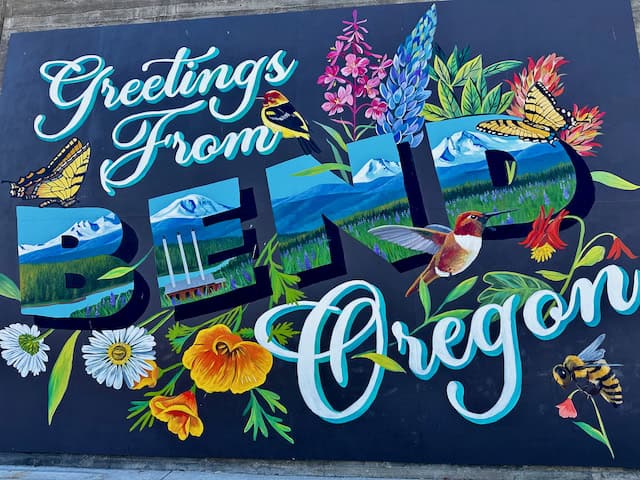
Bend Oregon welcome sign
Bend has something for everyone.

Woman-owned Metolius blends responsibly- sourced teas from family farms and small co-ops, along with delicious handcrafted syrups. You can sample their popular chai, Earl Gray and other teas at local cafes including Sisters Coffee and the Backporch. They’ll ship your online order or you can pick it up when you’re in Bend. I love their teas and was lucky enough to have a private tour there.

There are also notable museums in and around Bend, including the High Desert Museum, my favorite! More on that in another article.

Have some outdoor fun in Bend before the sun sets on summer.

Whether you’re traveling solo, as a couple, or taking the whole family; go and enjoy this outdoor paradise while the summer days are long.

Written and photographed by Jeanne Neylon Decker

Protected by US copyright laws.

This post contains affiliate links. If you click and book, I may earn a small commission at no cost to you. I promise not to spend it all on ice cream. Thank you!

Where to Go for Cool Summer Fun: Fairbanks Alaska

Once the “greening” begins, it’s a sure sign that Spring has arrived in Fairbanks, Alaska and summer is on its way. In the space of a week, trees that have lain dormant and shrubs and wildflowers that have been buried under the snow for months, erupt in a riot of blooms and buds.  The time to see the exuberant sky show known as the Northern Lights has passed, but the Midnight Sun will keep things light in our 49th state until late August. There are plenty of Spring and Summertime activities to keep visitors busy in Alaska’s far northern interior once the snow goes! Here are some suggestions:

Rolling On the River

Take a ride on the Tanana River aboard the Riverboat Discovery III with Captain Wade Binkley. His grandfather began piloting boats up and down the river decades ago transporting passengers and supplies to those living along this important tributary.

 I got a chance to chat with Captain Wade in the wheelhouse and found out he, like his father before him, worked on the Discovery every summer during high school and college, learning the ins and outs of the river and the boats.

These days, after a hearty lunch in the on-land dining room, tourists queue to climb aboard the big paddle wheel riverboat for an unforgettable trip into Alaskan history.  We learned a lot about the region, dog mushing, and native culture on our journey with our group from the North American Travel Journalists Association.  We even met some reindeer!

As we cruised along, David Monson, husband of the late Susan Butcher, Iditarod champion (four- time winner and only the second woman to win the grueling dog sled race), provided an entertaining and informative sled dog demonstration on the shore while we watched and cheered from the boat. 

He showed off his prize-winning dogs from Trail Breaker Kennel, which he and his late wife established in 1976. We saw first-hand how the older dogs tutor the young ones in the skills they’ll need to succeed as sled dogs. We also learned how important the dogs are for survival in this inhospitable climate where roads are few and far between.

We continued along the waterway to an Athabascan Fish Camp called Chena Village.  These camps were typically inhabited only during summer months when native Alaskans would fish, hunt and preserve their catch in preparation for the long, hard winter ahead.  We learned about the salmon that was a dietary mainstay not just for the people, but their dogs as well, and watched a demonstration showing how salmon is prepared for drying and smoking.

We also saw a fashion show of sorts featuring the many garments necessary for living in this frigid terrain—moose leather, beaver, caribou and muskrat fur play a key role in traditional Athabascan winter wear. Fur is more a necessity than a fashion statement here, where winter temperatures can hover around -50F.

Athabascans are a subsistence-based culture and put everything to use from salmon skin to the fur and hides of the animals they hunt.  While many Athabascans now live in Fairbanks and surrounding areas, and conventional camps have been abandoned in many areas, we were told some families still gather in summer months at fish camps like the one we visited.

As we enjoyed the scenery on our way back, our captain’s grandmother came out of her home on the riverbank to wave enthusiastically at her grandson, and us. We soon returned to the dock where cocktails and shopping awaited us. We got a good deal on waterproof parkas, which came in handy on our Holland America cruise the following week, while others stocked up on cute and cozy pjs, sweatshirts and other Alaska-themed merchandise. 

Cultural Exchange

Our interest in all things Athabascan was piqued after our riverboat ride and we were excited to learn more at the Morris Thompson Cultural and Visitor Center.  We met local artisans who displayed and sold their work, which included jewelry, hand-beaded and embroidered clothing, paintings and handcrafted baskets. 

We also enjoyed a dance performance put on by local tribal members who explained the symbolism of every move and sound we heard.  We were treated to the still rare event of having a woman drummer accompany the dancers. We even got to sing and dance along to their ice cream song, which shows and tells how to make the treat arctic style!

The Morris Thompson Cultural Center and Tanana Chiefs Conference partner to provide classes and Athabascan cultural programs to residents and visitors.

Take time to explore the fascinating exhibits at the Morris Thompson Cultural Center.

Admission is free and the center has a wealth of information for visitors, in addition to outstanding exhibitions that explain the area’s history, habitats and cultures.

Cool Cars and Clothes

If vintage cars and clothing are more your speed, the Fountainhead Auto Museum is a must.  We spent several hours ogling the immaculately maintained cars in the museum’s private collection.  The vehicles are displayed with period-appropriate clothing, which made it even more interesting—there’s something for both antique auto fans and fashionistas here. 

The first car built in Alaska is exhibited here and as the story goes, a young man in Skagway, desperate to win the affections of a certain young woman, thought if he only had a car, he could court her in style and win her affections. His rival was a doctor’s son who had a fancy horse and carriage.  Never having seen one, 22-year-old Bobby Sheldon built a car from found items including a discarded wagon, miner’s headlamps, a gas pipe (used for a steering tiller) and ordered a brass horn from Sears & Roebuck.  He may not have gotten the girl in the end, but he and his car are memorialized at the museum. 

The Fountainhead Auto Museum was founded by Tim Cerny who began his collection with a 1951 Dodge Wayfarer in 1976.  The 30,000 square foot museum exhibits 60 vintage vehicles at a time.

Every car in the collection is in working order and regularly taken for a jaunt around town.  Tim’s wife, Barb Cerny, curates the textile collection which includes garments from the 1700s to the 1930s.

Go North

The Museum of the North at University of Alaska Fairbanks is a short drive out of town and well-worth the trip. The museum contains one of the most comprehensive collections of arctic and sub-arctic Native American art and artifacts anywhere and tells the story of the people and the land in Alaska’s Northern Interior.

Art and artifacts, textiles and taxidermy, are all included in the collections that bring to life the rich history of the area’s first people and those who followed. It’s fascinating to see the unbridled creativity this unforgiving but stunningly beautiful environment has generated.

Plan to spend at least several hours perusing the art galleries and natural exhibitions at the Museum of the North.

While you’re here, step inside, “The Place Where You Go to Listen.” It’s a unique experience that allows you to feel the earth move subtly around you, watch the light change and listen to the world. 

A Day in Denali

One of the country’s most spectacular National Parks is about a two-hour drive south of Fairbanks or a relaxing train ride away.  We took a bus, which had been arranged for our group, to the Park. We learned that Denali is only visible 20 percent of the time, even though the peak rises to 20,310 feet and the base is about 2,000 feet above sea level. We were lucky enough to see it both days we visited the park.  Everyone is welcome at Denali National Park, but special permits are required for anyone intending to hike the mountain and transportation via plane must be arranged. 

Our plans were far more modest.  After a welcome briefing from US National Park Rangers (who seemed disappointed that no one in our group had packed bear spray or even bear bells as a safety precaution) we hopped aboard one the many free green buses that traverse the park and headed out into the wilderness. 

Before departing the Visitor Center our driver gave us a safety lesson that included what to do if you encounter wild life, how to use the radio in case he was incapacitated (it could happen he assured us), and how to access the first aid kit—stark reminders that cell phones don’t work here and you are on your own in this stunning natural environment that is, in fact, home to animals that can kill you.

We were cautioned to never hit the trails alone, to talk or sing as we hiked so if bears were in the area they would hear us and stay away, and to never approach wild animals, ever! Denali National Park is an incredibly beautiful place but it is a wilderness. I’m happy to report we enjoyed hiking amid the awe-inspiring scenery, singing as we went. We spotted moose from a long way away—and saw no bears!

We also had a chance to see sled dogs up close at Denali.  There are regularly scheduled demonstrations where the dogs and the rangers show off their skills. Visitors can meet the dogs before and after the demos.  We learned that in summer months, park employees volunteer to take the dogs out for exercise so they’ll stay in shape for their winter work, which includes bringing rangers and equipment far afield in the Park once snow renders the roads impassable.

After a busy day exploring the this natural wonder, we enjoyed Gold Star service aboard the Alaska Railroad. Our trip back to Fairbanks included dinner, drinks and an opportunity to enjoy the area’s incredible natural beauty from the only rooftop railway observation cars in the state. It was a glorious ending to what was a bucket list day for me.

Go Play Outside

When summer comes, Fairbanks has plenty of options for fishing, rafting, hiking, and other outdoor activities as well as annual events like the Midnight Sun Run and Midnight Baseball.  The Chena Hot Springs get rave reviews at any time of year and a drive or flight to the Arctic Circle is easily arranged. You can also enjoy Christmas year-round at North Pole, just a 20-minute drive from Fairbanks. Visit explorefairbanks.com for more!

We thoroughly enjoyed our time in a town that not enough people from “the lower 48” get to experience. Don’t miss out on this fascinating destination!

Fun fact– Fairbanks is one of the best locations in the world to see the Aurora Borealis.  To enjoy nature’s spectacular light show, plan to visit between August 21 and April 21. That’s next on my wish list!

Written and photographed by Jeanne Neylon Decker

Protected by US copyright laws.

This post contains affiliate links. If you click and book, I
may earn a commission at no extra cost to you
. Thank you. I appreciate it!

A Springtime Visit to Greece: Adventures on the Peloponnese Peninsula

Skip the sweltering summer heat and crazy crowds. Sunny skies, warm weather, wild flowers amidst the ancient ruins, and best of all, far fewer tourists competing to see the extraordinary sights that Greece has to offer make Spring the best time to visit. Our original plan was an April trip to the Greek islands, but we were a month too early.  Most island hotels weren’t even open yet so we chose a road trip around the Peloponnese Peninsula instead.  

We saw only pleasure craft in Nafplio’s beautiful harbor–several from as far away as Sweden and Wales.

The Beautiful Seaside CIty You Probably Never Heard Of

Nafplio, Greece’s first capital city, is less than a two-hour drive from Athens. Though this charming seaside city is unfamiliar to many Americans, it’s a favorite weekend getaway for Athenians. With its rich history, Venetian fort and castle, wonderful museums, and important archeological sites nearby, this is where we began our Peloponnese adventure

Sunday afternoons are perfect for a stroll and a leisurely lunch across from the Nafplio harbor.

We chose a boutique hotel in a former sea captain’s home as our base– 3Sixty Hotel & Suites. The busy harbor, lined not with working boats, but luxury yachts and other pleasure craft, enticing shops, and open-air restaurants with fresh fish on offer, was a five-minute walk in one direction.  Syntagma Square, the center of the historic old town with museums, beautiful churches and more restaurants and shops was five minutes the opposite way.

Nafplio’s Historic Center

Syntagma Square is still the heart of the city. The Archeological Museum forms the Western wall of the square.

Syntagma or Constitution Square, remains the center of public and political life in Nafplio and it was here that the citizenry rose up and demanded independence from the Ottoman Empire. Throughout the city there are monuments, plaques and a War Museum proudly proclaiming the important role Nafplio’s citizens played in Greece’s War of Independence.

You’ll find monuments to Greece’s War for Independence all around Nafplio. The Palamidi Castle looms high above this one.

Standing in the center of the square you are surrounded by several of modern Greece’s most important buildings. The former mosque used as the country’s first Parliament and the homes of Greece’s first Governor, Ionnis Kapodisrias, and War of Independence hero Theodoros Koloktronis are here, along with Nafplio’s Archeological Museum. The must- see museum is housed in a 1713 Venetian building that forms the Western side of the Square and boasts exhibits that date back to the Paleolithic era. 

These figurines were discovered at the archeological site at Tiryns and date to 6th-5th century BC. They are part of the permanent collection at Nafplio’s Archeological Museum.

Priceless antiquities, some more than 5,000 years old, including pottery, clay and bronze seals, and marble figurines, await in this impressive building originally meant as a warehouse for the Venetian fleet.

This cache of 92 golden staters dates back to the early 3rd century BC.

Clay hearths from 3,200-2,100 BC, stone and bone tools, jewelry, anthropomorphic clay figures, and some of the earliest handmade Neolithic clay vases are displayed, giving us a glimpse into what life was like back then.

Ouch! You’ll find these iron reinforcements for sandals at the Nafplio Archeological Museum.

While you’re in the historic center, enjoy a leisurely stroll through the pedestrian-only shopping streets. There are shops, restaurants, bakeries, and cafes to suit most tastes and budgets.

<img loading=
After a nice wander around town and some shopping, I always want ice cream. Here’s my favorite!

Visit one of the beautiful Greek Orthodox churches here, like St. George’s Cathedral with both Byzantine and Venetian 16th century architecture. Another noteworthy church is St. Spyridon on Odos Kapodisriou. The street was named for the first governor. Mr. Kapodisriou was murdered by political rivals on the threshold of the small church.

Greece’s first governor met his untimely end at the hands of political rivals here at St. Spyradon.

The Conquerors and What They Left Behind

The Venetians built this island fortress to protect the city from the Ottomans. The Turks captured Nafplio in 1540, were ousted by the Venetians in 1685, and retook the city in 1715. Today the Bourtzi is a tourist attraction.

Over the centuries the city was captured and ruled by Byzantines, Franks, Venetians and Turks before Greece won independence in 1830.  These conquerors have all left their mark on Nafplio’s culture, architecture and cuisine.

The Venetians were responsible for two of Nafplio’s best known and most visible landmarks—the Bourtzi and Palamidi Castle, both open to the public. On arrival, you’ll see a small, fortified island in Nafplio’s harbor. Bourtzi means island fortress in Turkish, but it was originally named Castello dello Soglio by the Venetians who built it on the islet of St. Theodoroi in 1471 to protect the city and harbor from invading Ottomans. Take a 10-minute boat ride from the harbor to visit the Bourtzi. Extremely windy weather on the day we planned to visit kept us away. 

Built by the Venetians and conquered by the Ottomans a year later in 1715, the Palamidi Castle is visible from nearly everywhere in Nafplio, including the public beach.

The Palamidi Castle, one of the best-preserved in Greece, looms 709 feet above the city. It was captured by the Turks only one year after it was built, ending the Venetians’ second occupation of Nafplio in 1715. The castle has spectacular views over the city and the sea, whether you choose to climb the 847 steps to reach it (some locals claim 999 steps), or drive, as we did. Wander the rooms, cells, and secret passageways and stop at St. Andrew’s Chapel to light a candle.

<img loading=
There are hundreds of years of history to explore at the Palamidi Castle.

Bring a picnic and soak up the sea air, sunshine and panoramic views. Look for the rocky beach far below.  Even though the water was cold, swimmers were enjoying a dip while sunbathers took advantage of the lovely Spring weather. Like most of the archeological sites we visited, the Castle is not accessible to mobility challenged visitors.  

If you plan to spend several days in Nafplio and explore nearby archeological sites, buy the 20 Euro three-day combination ticket at Palamidi Castle or the Archeological Museum. It includes Mycenae Archeological Site and Museum, Byzantine Museum at Argolis (Argos), Tiryns Archeological Site, Nafplio Archeological Museum, Palamidi Castle and Asini Archeological site. We managed to see all except Asini.

Why Worry (Beads)?

Greek worry beads, or komboloi, have been popular since the Ottomans ruled Nafplio.

It’s common to see Greek men toying with a rhythmically clacking string of beads while they’re walking down the street, chatting with friends, dining– pretty much anytime.  These are komboloi—worry beads— and Nafplio has a unique museum dedicated to them. Komboloi became popular during the Turkish occupation but the use of beads for prayer, mediation, and to ward off evil can be traced to the 8th century BC. Always strung in odd numbers, the beads are traditionally barrel shaped and made from amber, carnelian, horn, bone (buffalo and camel are popular) semi-precious stones, ivory or olive wood. Along with komboloi, the museum has a spectacular collection of beads dating from 1550 to 1950 including Muslim prayer beads brought back by the crusaders and converted to rosary beads, and Hindu and Buddhist meditation beads. No photos were allowed in the Museum.

<img loading=
Komboloi made from natural materials can cost from several hundred to more than 1,500 euro.

Because Nafplio is so closely associated with komboloi, there are shops selling beads of varying quality everywhere. I liked Amber House at 12 Vos. Konstantinou, which carries locally crafted komboloi.  Natural materials make the most satisfying sounds and are meant to sooth, owner Angelika told me. She had me hold several komboloi to find the most comfortable string and listen to the sounds the beads made before purchasing.

Tiryns and Hercules

Wildflowers were blooming amidst the ruins everywhere we visited in the Peloponnesian Peninsula, like here at Tiryns.

In 468 BC the ancient city of Tiryns was sacked by neighboring Argos. Today, wildflowers, poppies and chamomile bloom among the remaining stone foundations of the once thriving kingdom. Climb the stone steps to the upper ramparts and use your imagination to see where the palace once stood, as well as homes and shops in this community of 15,000. Fun fact: Hercules’ mother (Greeks call him Heracles), Alcmene, was the Queen of Tiryns. You’ll likely have this peaceful place all to yourself, as we did.

Mighty Mycenae and a Scandalous StoryMighty Mycenae and a Scandalous Story

<img loading=
Mycenae’s extensive archeological site covers about 79 acres or 32 hectares.

One of the most important archeological sites in the world is perched high between two hills 30 minutes from Nafplio. Home to the once mighty Mycenean civilization, this area has been inhabited since the 7th millennium BC. The extensive ruins here date from the late Bronze Age (1,350 to 1,200 BC). Excavation of the vast site began in 1876, funded by a German businessman with a penchant for Homerian heroes. He was on a quest to find the burial site of King Agamemnon and he succeeded. 

These enormous stones at Mycenea are a hallmark of Cyclopsean architecture. It was thought that only creatures as great as the cyclops could have built with stones this size, not mortal men.

Legend has it that the conquering hero returned home from war (Agamemnon, not the German businessman) to find his wife Clytemnestra had taken up with Aegisthus, his cousin. Together they stabbed him to death in the bath, partly in revenge for sacrificing Clytemnestra’s daughter to ensure favorable winds for the Greeks as their warships sailed to Troy. The lovers are buried in giant beehive tombs, side by side, in the fields below the citadel. You’ll have to drive up the road and hike a bit to find Agamemnon’s larger, but solitary resting place. Don’t miss these ancient architectural wonders with their spectacular domes!

Walk inside Agamemnon’s phenomenal tholos, or beehive, tomb- an architectural wonder. Pieces of the sculpted facade are on display at the British Museum in London and the National Archeological Museum in Athens. Grave robbers make it impossible to know what treasures he may have been interred with.

Mycenae is on the tourist route and there were busloads the morning we visited. The often-photographed Lions Gate is at the entrance and selfie-seekers can create a bottleneck.  Be prepared to be awed as you follow the pathway up through the Cyclopean walls where you’ll find the ruined palaces, temples, royal burial circles, cistern, treasury and fortifications.

Royal burial circles at Mycenae are just inside the gates. The dead were placed in vaults vertically.

There are some paved paths at Mycenae, particularly in the beginning of the complex through the Lion’s Gate and past the royal burial circles. Further along, the path is mostly rocks and dirt with sharp pieces of marble protruding from the ground and then it becomes paved again. Much of this site is not accessible for people with mobility challenges, nor are the fields below the citadel where the beehive tombs are located.

The famous Lions Gate is a highlight at ancient Mycenae and one of the few areas accessible for those with mobility challenges.

Whether you visit the Mycenae Museum before or after the archeological site is personal preference, as long as you see it.  More than 2,500 amazing treasures including fine gold works like Agamemnon’s exquisite death mask, everyday items like pottery, weapons, figurines, jewelry, and frescoes from the archeological site showcase the life and afterlife of the ancient Myceneans from the Bronze Age to the Hellenistic Era. 

Agamemnon”s death mask is just a splendid example example of the fine gold work the Mycenaens were known for. You’ll find it in the Mycenae Museum.

An Ancient Healing Place

It’s a long climb to the top of the ancient theater at Epidaurus. Known for its outstanding acoutics, it still hosts performances today. And yes, you can hear every word spoken at the bottom!

In the ancient world, Epidaurus and the Sanctuary of Asclepius was known as a curative place. Asclepius was the most important healing god in antiquity. Today the site draws visitors primarily for its theater, a UNESCO World Heritage Site, known for its perfect acoustics. Built around 340 BC, the Greek theater, which was expanded by the Romans to seat up to 14,000, is one of the best preserved in the world and still used for performances. Climb up the steep stone steps to the top and listen to the “orators” below.

Take time to wander through the Sanctuary of Asclepius, one of the most important healing places of the ancient world.

After, head out to the sanctuary where you can visit temples, the gymnasium and the enkoimeteria- a large hall where visitors would sleep and wait for the gods to come to them in their dreams with health advice. There is also a small museum on the site with sculptures and other excavated artifacts.

Byzantium

The road leading to the ancient Argos Theater, built in 320 BC, still has some of its marble pavers. Just beyond are Roman baths and the Greek Agora is across the road.

Snakes were the only thing on my mind as we followed the groundskeeper who, armed with a weedwhacker, cleared the tall grass between placards in the ancient agora, or marketplace, at Argos. Located in the modern town, the ruins of Roman baths and the theater complex are across a busy street. They’re worth seeing, though there is little signage.

Detail on a stela near the Argos Theater.

The Byzantine Museum, housed in the historic Kapodistria Barracks, focuses on private, public and religious life here, from 324 AD until 1453 AD.  Everyday objects, pottery, sculpture, weapons, and religious artifacts that belonged to residents of the one of the oldest continuously inhabited cities in the world gave us a fascinating peek into the past.

This 13th century bowl is among the everyday objects on display at the Byzantine Museum in Argos.

Nafplio and the amazing archeological sites nearby filled us with wonder and sparked our interest in returning to this spectacular region for a deeper exploration of these ancient civilizations. Our road trip continued to Kalamata, Patras, Galaxidi, Delphi and finally, Athens—a city we could have spent a month exploring. Those who choose the Peloponnese Peninsula as their destination, as we did, will be generously rewarded.  We’ll visit the islands another time!

PracticalitiesDriving and More

Driving on Greece’s main roads is easy. Mountainous, country roads are bit of a challenge but getting to explore the Peloponnese countryside is worth the effort.

Nafplio is an easy drive from Athens, but country roads can be winding and narrow, especially in the mountains, and people drive fast. Most signage is in Greek and English but not all, so prepare by jotting down the Greek spelling for your destination, especially if it is off the main road, and bring paper maps. Most Greeks speak English, but they were tickled when we could say good morning, hello, goodbye, and thank you in their native tongue. Very few of the archeological sites we visited were accessible for people with mobility challenges.

Nafplio was a great place to begin our exploration of the Peloponnese Peninsula. We will definitely return!

We stayed at 3Sixty Hotel & Suites in Nafplio. Some of our favorite restaurants were I Folio, Taverna Pidalio, Mevta, and 3Sixty Grill, all in Nafplio.  Here are links to the sites we visited mentioned in this article:   Archeological Museum of Nafplio, Palamidi Castle, Archeological Site and Museum at Mycenae, Archeological Site at Tiryns, Archeological Site at Argos, Byzantine Museum in Argos, Epidaurus, the Bourtzi.

Written and photographed by Jeanne Neylon Decker

Protected by US Copyright Laws.

This post contains affiliate links. If you click and book, I
may earn a commission at no extra cost to you
. Thank you. I appreciate it!

California’s High Desert Hidden Gems: Noah Purifoy’s Outdoor Desert Museum

I first learned about Noah Purifoy’s wondrous Outdoor Desert Museum while planning a trip to Joshua Tree National Park during the COVID pandemic. Museums, and most cultural outlets, were closed in Southern California where I live, and pretty much everywhere else, too. When I learned about an outdoor museum close to the town of Joshua Tree, I knew we had to go!

Welcome to Noah Purifoy’s Outdoor Desert Museum of Assemblage Sculpture.

After spending most of the day hiking in the strange but beautiful Joshua Tree National Park, we headed out for a look at another high desert gem—Noah Purifoy’s Outdoor Desert Museum of Assemblage Art. We drove through the small town of Joshua Tree, into the scrubby desert landscape, past large lots and small houses–more than a few surrounded by chain link fences. In this part of Southern California, pick-up trucks are far more popular than Porsches.

The high desert landscape is the perfect setting for Mr. Purifoy’s assemblage art. Shipwrecked is in the foreground with White House to the left.

Up and down the lonely roads we drove until our turn- off onto an unpaved road that ended in a dirt lot. A triumphal arch of tires spelling out W-E-L-C-O-M-E in a non- conformist way, let us know we had arrived. 

Please don’t jump on the Band Wagon, 1995. Tempting as it is, visitors are asked to refrain from touching or climbing on the sculptures.
Bowling balls play a starring role in a number of Mr. Purifoy’s sculptures.
Found materials of all kinds make up the monumental sculpture in the Outdoor Desert Museum, as in this work called Aurora Borealis.

I have been fascinated by assemblage art for a long time. Created from found materials, assemblage art personifies the old saying, “One man’s trash is another’s treasure,” and shows how a creative mind can make something provocative, beautiful, and meaningful from goods that might otherwise have been tossed on the trash heap.  Noah Purifoy’s Outdoor Desert Museum of Assemblage Sculpture is the embodiment of that. 

1996 Toilet Bowl Sculpture is just one of the 30 inventive and monumental assemblage sculptures on the 10-acre art site.

Too often, we find ourselves exploring these out-of-the-way places alone. We were happy to see others here experiencing these amazing art installations.

Purifoy’s work can be poignant and provocative. This piece is called White/Colored.
Homelessness and shelter are among the social themes Purifoy explores in his work.

A renowned assemblage artist, Noah Purifoy first came to national attention with sculpture he created using burnt debris from the 1965 Watts Riots in Los Angeles.  His work was part of 66 Signs of Neon, a landmark group exhibition that traveled across America and abroad from 1966- 1971. 

Prominently positioned, The White House includes plumbing ware and bowling balls. It took Purifoy three years to create.

Free brochures lead visitors on a self-guided tour of the 10-acre site. Docent-led visits for groups can be arranged through the Noah Purifoy Foundation.

Purifoy was the founder and first director of the Watts Tower Art Center and was later appointed to the California Arts Council, a position he held for more than a decade. His work there included bringing art into California’s State Prison system under the Artists in Social Institutions program he initiated.

This piece, called Kirby Express, was created from old Kirby vacuum cleaners and bicycle parts among other things.
Here’s Kirby Express from a different vantage point with Shipwrecked and Carousel to the left.
No Contest (Bicycles) is dwarfed by a Joshua Tree, the area’s namesake desert plant.

Long a fixture on LA’s art scene, Purifoy, who was born in Alabama in 1917, moved to Joshua Tree in California’s high desert in 1989.  He began populating his 10-acre sculpture park with works of all shapes and sizes using materials ranging from discarded toilets to tires and just about everything in between. Industrial materials, clothing, wood, metal, rubber, concrete and old appliances all found their way into Purifoy’s art.

From the Point of View of the Little People, 1994.
Abstract, whimsical, inventive and thought provoking, Purifoy’s works are best experienced by a visit to his amazing desert museum.
Piles of old chairs became art in Purifoy’s wildly creative hands.

From 1989 until his death in 2004, Purifoy worked to create a public art space that continues to attract visitors from across the country and around the world.  Admission to the sculpture park is free but donations are welcome. The Outdoor Desert Museum is open daily.

The Gas Station conveys a certain attitude. The White House is to the left.
Admission is free but donations are welcome.

Purifoy’s work can be seen at the Whitney Museum of American Art in New York, Los Angeles County Museum of Art, National Gallery of Art in Washington, DC, as well as other prestigious art institutions here and abroad. These eminent museums have long since reopened their doors, but visitors to Southern California may well want to head to the high desert to experience Purifoy’s final and very impressive body of work. Visit the Noah Purifoy Foundation for more information.

Written and photographed by Jeanne Neylon Decker

Protected by US copyright laws.

Listen to the World at Phoenix’s Musical Instrument Museum

If “Music is the language of the soul,” the Musical Instrument Museum speaks it fluently.  The MIM, as it’s known, is home to more than 8,000 musical instruments from every country on the planet and calls itself the world’s only global music museum.

Musical instruments from every country on earth are displayed at the MIM, sometimes along with ceremonial costumes, like this one from the Mongol people of Ulaanbaatar.

Wonder what a theremin sounds like or even what it is? Put on your headset and watch and listen as virtuoso Clara Rockmore brings this custom-built instrument to life, moving her hands between two antennae to control pitch and volume. You’ll learn the history behind the instrument, the artist, and even see what she wore as she toured the USA with major symphonic orchestras in the 1930s. 

I’d never heard of a theremin before my visit to the MIM! Now I’ve had the chance to see, hear and even play one!

The MIM’s interactive technology instantly syncs your headset to any video screen you stand before, allowing guests to see, hear and experience instruments we may never have even heard of, let alone seen and heard being played!

Move your hands between two antennae to control pitch and volume on the theremin. There’s one in the Experience Gallery for visitors to try!

Throughout the museum, thousands of instruments– historic, rare and sometimes common place– are displayed along with clothing, costumes, cultural artifacts, maps, and most importantly, information that gives perspective to the ceremonies, rituals and the role in everyday life the instruments play.  The videos that accompany each exhibition take visitors on a musical journey to countries and cultures around the world and sometimes, back in time.

Headphones sync automatically with videos as you walk through the museum.Watch and listen as Kukeri- costumed dancers chase away evil spirits with their jangling bells in Bulgaria.
Visit Ireland and hear the Chieftains, the country’s “Musical Ambassadors,” perform traditional Irish music.

We started our visit at the MIM’s special exhibition, Treasures: Legendary Musical Instruments. Rare, historically significant and stunningly beautiful instruments from around the world, spanning thousands of years of musical history, are on display along with videos that allow you to hear these incredible instruments being played. 

Where else will you see and hear an ancient Greek trumpet that may be the only one of its kind still in existence?

Nowhere else will you experience the sounds and sight of a Salpinx, an ancient Greek trumpet (300 BCE-200 CE) believed to be the only one of its kind still in existence!  You’ll see and hear renowned musician Jake Shimabakuro play a Kumu tenor ukulele handcrafted of Koa wood, mahogany, mother-of pearl, ebony, turquoise, abalone and onyx, built specifically for him.  View fragments of a 4,500-year-old lyre from Ur, Mesopotamia (modern day Iraq), along with the oldest intact guitar on earth, and Jimi Hendrix’s iconic Black Widow guitar.

The oldest intact guitar in the world is at the MIM along with Jimi Hendrix’s famous Black Widow, shown below.
Anthropomorphic harps from the Ngandi people of the Central African Republic are among the rare instruments in the Treasures exhibition and are a part of the MIM’s permanent collection.

The collection includes a 1584 harpsichord from Belgium made from wood, bird quill, iron, felt, paper and paint, and anthropomorphic harps from the Ngandi people of the Central African Republic (1850-1875). There are fiddles, mandolins, drums, bells, lutes, and flutes– some shown being played by world-class musicians. In the center of it all is a spectacular bronze-gilded grand piano built by the Erard Company in Paris for the 1889 Exposition Universelle, where the Eiffel Tower was introduced to the world.

This splendid piano was unveiled at the 1889 Exposition Universelle in Paris at the same time as the Eiffel Tower.

Next door to Treasures, the Artist Gallery features musicians from nearly every genre you can think of from hip hop to country.  Missed Woodstock? The MIM has it covered with instruments, costumes, memorabilia and video of that epic event thanks to donations by people who performed there including Carlos Santana, Joan Baez and John Sebastian.

Memorabilia, musical instruments and concert performances by numerous artists who played the iconic festival help capture the spirit of Woodstock.
I saw the legendary drummer performing at New York City’s Rainbow Room many years ago though I don’t know if Buddy was playing this particular set of drums.

The white, marine pearl Swingerland drum set the legendary Buddy Rich played many times on The Tonight Show hosted by Johnny Carson (also a drummer by the way) is here. So is the Steinway piano John Lennon composed Imagine on and the guitar Eric Clapton used to record Layla. Country music fans will find the Chet Atkin’s Signature electric archtop guitar donated by Duane Eddy and hear Glen Campbell strumming, singing and playing the bagpipes, via video at the MIM. 

Photos, video, drums, even Tito Puente’s dazzling jacket are here along with one of the “Queen of Salsa” Celia Cruz’s gorgeous stage dresses and maracas. Cruz, a five-time Grammy -award winner sometimes performed and recorded with Puente.

Elvis Presley, Dick Dale, Black Eyed Peas, Johnny Cash and Maroon 5 are just a few of the artists sharing the spotlight in this enormous gallery which rotates its 40 exhibitions to include music icons from around the world.

The King is among the legendary performers in the Artists Gallery, of course!

In the Mechanical Music Gallery, the MIM has treasures ranging from intricate music boxes to player pianos to my personal favorite, the orchestrion named Apollonia.  Built in 1926 in Antwerp, she is 25 feet wide, seven feet tall and weighs two tons. After retiring from a career touring the dance halls of Europe, Apollonia was refurbished in 1950 and found her way to the USA.  Now she entertains MIM’s visitors daily at noon and 3 p.m.  How extraordinary to experience the same music played on identical instruments audiences enjoyed nearly one hundred years ago!

Apollonian entertains visitors daily at noon and 3 p.m. Don’t miss a chance to hear this performance!
Intricate music boxes, dancing puppets, player pianos and more fill the Mechanical Music Gallery.

Upstairs, in the Geographic Galleries, you’ll tour the world through music—the bridge that connects us all. Start in Africa, where human civilization began, and wind your way through the continent from Angola to Zimbabwe. 

Start your journey in Africa, where human civilization began and prepared to be amazed at the sheer variety of instruments played on that continent.

Stunning stringed instruments, drums, Nigerian bronze bells from the eighth century, an enormous 18- key xylophone from Ghana, Ngoni lutes from Mali, and more held our attention as we traveled from country to country learning about cultures, languages and the music people make a world away from our home.  Move on to the Middle East then continue your tour through Asia.  

In 17th century Japan, displaced Samuri warriors often became Komuso monks, wandering the countryside playing the shakuhachi. Wearing a basket over their head signified detachment from the material world.
Take a musical journey through every country in the world at the MIM. Just about every instrument imaginable– is here in one gallery or another!
No area of the globe is left unexplored -even instruments from the subarctic are here!

Cross the seas to Oceania and Latin America. Experience Europe’s musical treasures–opera, ballet and orchestral instruments and performances– and finally, explore genres from country to classical to jazz and even marching band music in North America.  Who knew Elkhart, Indiana played such a significant role in our musical history?

This 48K Grand Jumbo sousaphone (left) was manufactured in Elkhart, IN, the home of most American band instrument companies. Master engraver Julian Stenberg created this for a nationwide promotional tour for the C.G. Conn company’s 50th anniversary.

Personally, I was astounded to see how musical instruments traveled and evolved across borders and through time.  We saw bagpipes in one form or another, made from materials ranging from fabric to animal skin, not only from Scotland, but also Tunisia, Croatia, Slovakia, France, Spain, Romania and Sweden.

Above are bagpipes from Tulum, Turkey while the instrument below is from the Iranian province of Hormozgan.

Though closely associated with the Scottish Highlands, bagpipes have been around for 2,000 years and may have originated in Turkey, according to the MIM.

Bagpipes may have originated in Turkey more than 2,000 years ago. This display shows wind, string and percussion instruments from Turkey’s countryside and urban areas.

Don’t leave the MIM before stopping in the Experience Gallery where visitors of all ages are not only invited but encouraged to make their own kind of music. 

The gamelan shown here is displayed in the Geographic Galleries but there is also a gamelan available for visitors to play in the Experience Gallery. Give it a try!
Drums are found in every country. These Turkish kettle drums from the 1920’s are made from copper covered in camel skin and are part of the Treasures exhibit. There’s a huge communal drum for visitors to play in the Experience Gallery.

Bang a gong, play a zither, try your hand at the theremin or Javanese gamelan. Join your friends around the communal drum and make a joyful noise! Express your own ‘Language of the Soul”—after all, that’s what this magnificent museum is all about. Learn more at mim.org.

Note: Treasures: Legendary Musical Instruments was a special exhibition that has closed since I originally posted this article, but the majority of the rare instruments highlighted in the exhibit are part of MIM’s permanent collection and can still be seen and experienced at the museum.

Written and photographed by Jeanne Neylon Decker

Protected by US copyright laws.

Lisbon’s Beautiful Belem

The Belem district is a fascinating and historic area of Lisbon that ought to be on every traveler’s itinerary—and it appeared that it was on the Sunday we spent there! Packed with monuments, museums and many of Lisbon’s “must see” spots, it’s just about five miles from the downtown area. It’s easy to reach via bus, tram or cab. We took a 10 Euro taxi ride for the 20-minute trip from Lisbon’s city center. The tram costs less but takes nearly an hour and with so much to see, we opted to save time.

There’s plenty to see and do in Lisbon’s busy Belem area.

Belem was the launching point for many sea voyages during Portugal’s Age of Discovery. The Tower of Belem was the last thing sailors would see as they left port and the first site to welcome them home.

The Church of St. Jeronimos and its monastery are beautiful examples of the decorative Manueline architectural style.

Before setting off, many sailors would stop at the stunning Church of St. Jeronimos and its spectacular monastery to pray for a successful journey and a safe return. These gorgeous buildings are wonderful examples of the decorative Manueline architecture popular in Portugal in the late 1400s through 1500s.

St. Jeronimos and it’s spectacular monastery are among Lisbon’s most popular sites.

The entry fee for the monastery is 10 Euro and worth it. It’s stunning and surprisingly peaceful in spite of the crowds. Admission is free for the church. If you plan to attend mass, be punctual. We arrived late and no amount of pleading would make the guards open the church doors for us until services were over.

Visitors to the church can see the tomb of famed Portuguese explorer Vasco da Gama and the memorial to writer Luis de Camoes.

Entry to the Church of St. Jeronimos is free but there is a fee for the monastery.

We were directed to the end of a very, very long line. After standing around for quite some time, we realized there were no lines at the other end of the building and decided to go check it out. That’s when we found the National Archeology Museum.

Avoid the long lines at St. Jeronimos by buying a combo ticket for the Archeology Museum next door for an extra two Euro.

Here’s a tip we wished we’d known–walk right past those long lines in front of the monastery and church and make your first stop in Belem the National Archeology Museum.

The museum is full of ancient treasures and antiquities, some dating back to the Iron Age.

Buy a combo ticket for the museum and the monastery (the monastery is actually in the same building as the museum). For an extra two Euro, or 12 Euro total, you can enjoy the museum’s terrific exhibitions and avoid the crowds. The museum is a treasure trove of Egyptian, Roman, Greek, and Moorish artifacts. After touring the galleries, you’ll go directly into the monastery from the museum without waiting on the ever-present line.

This was the first megalith we saw and it inspired us to seek out the Almendres Cromeleque, home to 95 of these fascinating stones near Evora in the Alentejo area.

The museum has a rich collection of Egyptian, Greek, Roman and Moorish art and antiquities. Be sure to visit the Room of Treasures in the museum. No photography is allowed in that area but the display of coins and jewelry from 1800 to 500 BC is impressive.

After touring the galleries in the National Archeology Museum, you’ll enter the Monastery directly without waiting on any additional lines.

This fascinating time line inside the monastery captures 500 years of world history in words and images.

In spite of the crowds, there are numerous serene spaces within the monastery perfect for quiet contemplation.

You may notice long lines around the bakery just up the street from the monastery. If you’ve been to Portland, Oregon, this may remind you of the lines around Voodoo Doughnuts. I’m always amazed by the patience people seem to have in their quest for particular baked goods, but back to Belem…

Lines for Casa Pasteis de Belem snake around the corner. Worth the wait? You decide.

This is the place that claims to have the original and the best Pasteis de Belem. These are little custard pastries in a flaky filo- like crust. Locals say these are good, but you’ll have to decide if they’re worth waiting for. We didn’t, but we haven’t ever waited for doughnuts either. They sell Pasteis de Belem in the Starbuck’s next door without the wait, though buying them there doesn’t quite have the same cachet. You can find these delicious pastries all over the country though they’re called Pasteis de Nata (nata is cream) or Pastel de Nata, if you’re only having one,  everywhere else except Belem. Try one or two and remember to add a healthy shake of cinnamon and powdered sugar on top!

Time for lunch or dinner? Turn down this little street to find Enoteca de Belem.

If you’re hungry for a meal, we highly recommend the Enoteca de Belem   (+351) 213 631 511 Travessa do Marta Pinto, 12. Located on a little alley off the main street in Belem, this is a terrific choice for lunch or dinner.   It’s very small so book a table or prepare to be disappointed.

We were delighted with our lunch at Enoteca de Belem. Here’s a peak at the menu.

Sitting at the bar gave us a chance to learn about and taste delicious Portuguese wines.

We sat at the bar since we had missed our reservation time—the museum and monastery were so fascinating we spent far longer than we had anticipated. The bar turned out to be perfect for us because in addition to a fabulous lunch, we had a great chat and learned quite a bit about Portuguese wines and history.

The perfectly prepared scallops with cauliflower puree and quail eggs were as delicious as they looked.

The freshly caught grouper was the fish of the day. Served with “clam rice,” it was an incredibly flavorful dish.

Portuguese cuisine often pairs fish and pork. The tender grilled octopus and spicy chorizo was perfection on a plate.

This classic dessert, Papo de Anjo, reminded us of an upgraded rice pudding. Comfort food at its best!

Our lunch was incredible and one of the best meals we had in Lisbon. Try the scallops to start and the grouper or cod if they have it.

When we asked for the wine list, we were handed these vintage binoculars and instructed to look around and choose whatever we were interested in from the shelves above the bar. There was a printed list, as well, but selections change regularly– thus the binoculars.

We opted for wines by the glass so we could sample several. The staff were well- versed in the wide selection available and happy to make suggestions and answer questions.

The knowledgeable staff will be glad to help you match the appropriate wines to your food selections.

Sailboats and other pleasure craft ply the waters off the embarcadero. The Hippotrip looked like Lisbon’s version of the Boston Duck Tours. Could be fun, but we didn’t try it.

Next, take a walk along the water down to the Monument to the Discoveries, which honors Prince Henry the Navigator, and was built in 1960 to commemorate the 500th anniversary of his death. Henry’s mother, Queen Filipa of Lancaster, Vasco da Gama, Magellan, King Manuel I and the poet Camoes are all depicted on the monument.

The busy waterfront is the perfect place to stroll and people watch. It’s possible to go inside the Monument to the Discoveries, which commemorates the 500th anniversary of the death of Henry the Navigator.

The Tower of Belem was the last bit of home Portuguese sailors saw as they set off to sea. It offers beautiful views but be prepared for long lines if you’d like to climb the 120 steps to the top.

Further on, you’ll see the famous Tower of Belem. It’s possible to climb 120 steps to the top of the tower for the views. Lines can be quite long. Let’s face it—there are lines for nearly everything you’ll want to see in this area so just be prepared for that. There’s an Atlas Hotel along the way with a nice terrace, perfect for an apperitivo if you’re ready for a break from touring– and the lines.

There is a lovely park near the waterfront and we happened to catch a good- sized open air market there on our visit.

On our walk back, we came upon an open air market selling everything from hand crafted ceramics, art and jewelry, to tea towels and mass-produced souvenirs. There was also a lively folk dance competition taking place in the park and we simply had to stop and watch for a while. It was delightful!

Troupe after troupe of talented folk dancers took the stage in the park. We joined the crowd to cheer them on.

Near the stage where the dancers competed, we spotted this pavilion. It was a 2012 gift from the Royal Thai Government to Portugal, celebrating 500 years of bilateral relations between the two nations.

We wished we had more time in Belem. We would like to have seen the Maritime Museum, Coaches Museum and the Ajuda Palace. Next time for sure!

Written and photographed by Jeanne Neylon Decker

Protected by US Copyright laws.

Portugal’s Mysterious Megaliths and Where to Find Them

Lisbon’s Museu Nacional de Arqueologia has numerous treasures including megaliths.

We saw our first megalith in Lisbon’s Museum of Archeology and we were intrigued. What were these stones with their strange markings? Where could we see more of them? It turns out the largest collection of megaliths on the Iberian peninsula is located less than two hours from Lisbon in the Alentejo region not far from Evora, the area’s capital city.

Drive in the direction of Nossa Senhora de Guadalup through the beautiful forests of cork oak trees to reach Almendres Cromlech.

There are numerous places to see megaliths in Portugal, many in the Alentejo, but Cromeleque dos Almendres, or Almendres Cromlech, is the largest and most prominent site. Older than Stonehenge, Cromeleque dos Almendres is located about seven kilometers off the main road, the N114, driving towards Evora from Lisbon. We were heading to the Evora after Lisbon and decided to include a stop to see these archeological wonders.

The megaliths are in a large clearing, surrounded by cork oak trees.

Head in the direction of Nossa Senhora de Guadalup through the beautiful forests of cork oak trees. The dirt road is clearly marked with signs–Cromeleque dos Almendres and Menhir dos Almendres– directing you to the site. You will either need a car or a taxi to get here. There is no public transportation available.

Visitors can wander freely around the 95 remaining megaliths, or menhirs, at Almendres Cromlech.

About 95 of the granite megaliths, also called menhirs, still stand in the area and date back to the Neolithic Period (4th and 5th century BC). The stones at Almendres Cromlech are arranged to form two rings and visitors are free to wander all around the area, though touching the stones is discouraged.

The Cromeleque dos Almendres is older than Stonehenge.

It is believed that the earliest stones were placed here in 6000 BC and that ancient peoples used the area at Almendres Cromlech until 3000 BC for religious purposes. There is still a great deal of mystery surrounding the purpose of the stones, their placement and the markings on them, but there is speculation that the site had astrological significance due to its latitudinal location.

The placement, purpose and meaning of the megaliths remains largely a mystery.

There is a map of the enclosure on site, which identifies particular menhirs and describes various markings on the different stones.

Helpful signs in English and Portuguese explain the history of Almendres Cromlech and a map of the area shows where the most important stones are located.


This is identified as megalith number 1 on the posted diagram. The markings are clearly visible.


A careful examination is required to see the ancient markings on many of the stones. Here’s a close up look at one.


Admission to the site is free. Guided tours can be arranged.

We chose to take a self-guided exploration of the area but guided tours can be arranged. We met a Canadian couple who had hired a tour company to take them out to Almendres Cromlech and explain the mysteries of this ancient site and they thoroughly enjoyed their visit. Admission to the site is free and there is plenty of parking.

Written and photographed by Jeanne Neylon Decker

Protected by US Copyright laws.


Adventures in Fatima and a Day in the Douro Valley

There are two things travelers must bring along on every trip—a sense of humor and resilience, because sometimes, maybe even often, things do not go to plan. That’s where a sense of humor comes in handy. This was the case one Sunday in Portugal on what was to be our longest driving day– from Evora in the Alentejo, to the mountains above the Douro River in the north of Portugal, with a stop at the Shrine of Fatima. I had wanted to visit Fatima for a long time and since it was right off the freeway, we thought this was a perfect plan.

It was time to leave the beautiful Alentejo in Portugal’s southwest and head north to the Douro Valley.

We did not get an early start, which is no surprise to anyone who knows us, but instead enjoyed a delicious, and leisurely, last breakfast at Convento do Espinheiro before setting off for the Douro Valley.

Each year the Shrine of Our Lady of Fatima welcomes more than 4 million pilgrims.

Imagine our surprise when two and half hours hours later we turned off the freeway heading for Fatima and were greeted by plenty of police and even more motorcyclists– thousands of them. Many of the roads leading to the Shrine were closed and everywhere we looked there were motorcyclists—young, old, families, even dogs—all on two wheels.

Apparently everyone in Portugal, with the notable exception of these two visiting Americans, knew there was a special mass for motorcyclists that day at the Shrine of Fatima. After spending about an hour in the traffic jam, we realized there was no possible way we could visit that day. We very sensibly decided to come back on a weekday on our return to Lisbon. I wish I had taken photos of all those motorcyclists but didn’t want to risk offending anyone and there was no possibility of a speedy getaway.  On our return visit, things were decidedly quieter.

 On Oct. 13 each year nearly hundreds of thousands crowd this immense plaza to celebrate the anniversary of the apparition. On the day we visited, a week after our first attempt, there were very few visitors.

Turns out the plaza at Fatima between the basilica and the chapel can accommodate 1 million people– as it did when Pope John Paul II visited in 1987—and we imagined that nearly as many motorcyclists had made the pilgrimage that Sunday morning, too.

The open air Chapel of the Apparition was built on the site where the Virgin Mary appeared to the children.

Each year the Shrine of Our Lady of Fatima welcomes more than 4 million people. When we returned on a Tuesday afternoon a week later, there were no motorcyclists in sight and relatively few visitors.  It could have been the 114 degree heat that kept people away.

Many visitors light candles at the shrine and pray for intentions and interventions.

We visited the beautiful basilica and the Chapel of the Apparition where nuns recited the rosary in numerous languages.  We also took the time to light a few candles, which were available for sale at the shop and ranged in size from standard to enormous. Some were bigger than my arm!

There is a full schedule of masses, reciting the rosary and confessions offered every day.

It was so terribly hot, and since there was no shade on the plaza, we chose not to cross it to see the enormous rosaries and crucifix on the other side. That will have to wait for another visit. But now, back to our journey to the beautiful Douro Valley—

We enjoyed the drive from the Alentejo in the south to the Douro Valley in the north of Portugal. Be sure your rental car comes equipped with the Portuguese version of the Fast Pass.

Back to the freeway and on to our pousada we went, over winding mountain roads and bridges, through tunnels, and burned out forested areas. The main roads in Portugal are well- paved and well-marked. Smaller side roads are a little bit trickier, but we never had trouble finding our way even out in the countryside.  We ate our picnic lunch in the car to save time and arrived in Alijo about three and a half hours later. It had been a long day.

Scenic mountain roads took us north to the vineyards of the Douro Valley.

When we finally arrived at the Palacete Alijo, the first thing we noticed was the laundry hanging out to dry on the balconies. Inside, the pousada didn’t come close to living up to the photos we’d seen online. Perhaps someone had carefully cropped out the propane tanks next door and the rust marks surrounding the pool.

Sadly, this pousada in Alijo didn’t live up to expectations and we left without staying.

The website’s images didn’t deliver an accurate portrayal of the property. This was the view from the room we were meant to have.

The website indicated the place was part of the well-respected Pestana Group. The friendly front desk clerk told us that it hadn’t been for nearly five years and offered us a “welcome” drink. He also mentioned that the air conditioner was broken, brought up a few other housekeeping issues and again offered a welcome drink. We had planned to stay for four nights but after seeing the accommodations, we turned down the drink and summoned up Trip Advisor on our phones.

This was the splendid view across the river to Pesa de Regua from our room at the Vila Gale Douro.

Vila Gale (a hotel group popular in Portugal and Spain) had a river view room available for two nights in the town of Peso de Regua, right on the Douro River. Back to the car we went, grateful we hadn’t brought our bags inside—we never do until after we’ve seen the room. After another hour of driving, this time in the dark through the winding mountain roads, and did I mention it was raining?—we arrived at the Vila Gale Douro.

The Vila Gale Douro, part of a popular group of hotels in Portugal and Spain, is well- located across the river from Peso de Regua.

While my husband parked the rental car in the garage, I went to the hotel’s restaurant to secure a table before they closed. It was 10:30 p.m. at this point and we were really hungry. I thought I was imagining things when I my heard my name called out and turned to find two dear friends from home finishing their dinners. Had we not changed our hotel, we would never have had the chance to spend time with them. We agreed to meet for breakfast the next morning.

Our Vila Gale room was large, comfortable and contemporary and had terrific views from the private balcony.

It was lovely to wake up to this beautiful view from our balcony.

Portuguese wine aficionados know that the steep terraced hillsides of the Douro Valley are home to numerous well-regarded producers of table wines and of course, port. Our friends were free in the morning but had to return to Porto in the afternoon. We agreed that a visit to a nearby winery would be the perfect outing.

We spent a fun and informative morning with our friends at Quinta do Vallado.

Grapes grow seemingly everywhere on the Douro Valley’s steep hillsides.

Like the wineries in the Alentejo, you must make reservations to tour and taste in the Douro Valley. My husband had his heart set on a visit to Quinta do Vallado but when he telephoned, was told that the morning’s English- speaking tour was already full. With the help of our front desk clerk, we secured four spots.

Quinta do Vallado is a highly regarded producer of Douro wines and port. They also have a small hotel on property.

The winery is located high up on the terraced hillside across the river from where we were staying, just about a 10- minute drive away. One of the oldest in the Douro Valley, the winery celebrated its 300th anniversary in 2016. Once owned by Dona Antonia Adelaide Ferreira (of the Ferreira Port family), production was geared towards port for the company’s first 200 plus years. In 1993, they decided to restructure and expand into producing Quinta do Vallado label table wines and in 2009 construction on the new winery was completed.

Our tour began in the vineyards where some grapes had already been harvested.

We followed our guide from the vineyards, through the production facilities, and into the cellars, as she explained each stage of wine making to the group in English. Tours are also given in Portuguese several times daily. We always ask if English tours are available, though rather than miss out, we’ve taken some in Italian, French and Portuguese at numerous places.

Our knowledgeable tour guide explained the wine making process in detail– and in English.

We saw everything from the grapes growing, to high tech, temperature controlled stainless steel tanks, to the traditional granite legares in which grapes are crushed by foot, to the cellars where the barrels are stored and wines are aged before they’re bottled.

We saw state of the art temperature controlled stainless steel tanks…

…and traditional granite legares where grapes for port are crushed by foot.

Antique barriques are still in use.

New French oak barrels are also used, depending on the kind of wine they’re aging.

After the very informative tour, we all gathered around a communal table and tasted Quinta do Vallado’s wonderful wines, working our way from crisp whites to delicious ports. Many of us made purchases in the quinta’s well-stocked shop.

After our tour we gathered around for a wonderful wine tasting.

During the tasting, we sampled crisp whites, full-bodied reds and finally, ports.

The well-stocked shop beckoned many of the visitors, including our friends and ourselves.

Though we were not able to tour it, Quinta do Vallado has a small hotel on property with 13 rooms—five in the manor house built in 1733, and eight in the modern wing constructed in 2012.

The roads in the Douro are narrow and winding but exceptionally scenic.

There were two things we planned to do in the Douro—wine taste and take a boat ride. After saying goodbye to our friends at the winery, we headed to Pinhao to check out the river cruise options.

The Douro has been used to transport people, port and other products down river to Porto for centuries.

The Douro River meanders from Spain through the heart of northern Portugal down to Porto where it empties into the sea. For centuries, port wine has been transported by boat down river to the city that shares its name with the wine. Day trippers from Porto, cruise boats from lines like AmaWaterways and Viking, private pleasure craft, and charter boats large and small ply the waters of the Douro River.  Getting out on the river sounded like a perfect plan on that hot day.

Tourism is big business in the small town of Pinhao.

Pinhao is a small town seemingly fully committed to the tourist trade. There are souvenir shops everywhere and numerous choices for boat rides on the river. A one-hour ride was 10 euro from any of the vendors. We chose our boat based on schedule. They all come and go from the same place and follow a similar route.

River boats all leave from the same place and follow similar routes. Schedules differ but pricing does not. 10 Euro is typical for a one-hour boat ride.

Once aboard, you’ll learn all about the port trade and see many well-known names as you pass by the quintas. We had a delightful time and enjoyed chatting with newlyweds from the Netherlands and a Spanish couple. It was a relaxing and informative hour that passed in a heartbeat. We wished we’d opted for a longer ride.

Our convivial group included newlyweds from the Netherlands and a couple from Spain.

Bridges large and small cross the Douro.

Hillsides, which reminded us of California, are dotted with wineries.

You’ll see quintas with familiar names like Croft along with others that have been producing wine for centuries here.

Our journey was so peaceful and enjoyable we wished we’d booked a longer trip. Next time!

After our boat ride, we walked over to the historic Pinhao train station, which has been in service since 1880. The station is notable for its lovely azulejos—the blue and white tiles for which Portugal is famous.

Trains have been transporting travelers to and from the Pinhao station since 1880.

The station is known for its azulejos– the stunning blue and white tiles famous throughout Portugal.

These particular azulejos tell the story of the port trade in 25 large panels that were installed in 1937. There is also a café and shop in the station perfect for a coffee, glass of wine or edible souvenirs.

Pinhao’s 25 panels tell the story of the port trade.

The azulejos were installed in 1937.

The shop inside the station is a pleasant place for a coffee, glass of wine or a snack.

After a leisurely stroll through town and a stop for ice cream and souvenir shopping, we headed back to Pesa de Regua and dinner.

This former industrial building has a new life as home to shops and restaurants.

Just across the bridge from our hotel is a renovated industrial building on R. Jose de Vasques that now houses several restaurants and shops.

Picnic provisions and edible souvenirs are available here.

The contemporary dining room at Castas e Pratos was full on the Monday night we ate here.

We browsed a bit and then headed to Castas e Pratos for our meal. Part wine bar, wine shop, and restaurant, the place was buzzing when we arrived. We were glad we had a reservation upstairs in the airy and modern dining room.

Our starter was a plate of succulent scallops in a rich pea puree.

The tender veal medallions in roquefort sauce was served with a delicious wild mushroom risotto.

Larger parties were sharing dishes like this “Duck Rice”– a local specialty. It looked and smelled divine.

The menu has something for most tastes and includes fish, meat and vegetarian options.

Wines from all over Portugal were featured on the extensive wine list.

We started with a refreshing sparkling rose and ended with a nice tawny port.

Castas e Pratos has an extensive wine list featuring wines from the Douro and as well as all of the other wine producing areas of Portugal. Service was attentive and friendly and we enjoyed every bite of our meal from the scallop starter through desert. Happy and full, we returned to the Vila Gale to plan our next day’s adventure.

What to Do in Porto– From Port Tasting to Amazing Art, Portugal’s Second City Has Plenty to Offer

Portugal’s second largest city, Porto, or Oporto as the British called it, has a vibrant cultural scene, beautiful churches and a fascinating history, but for many, it’s all about the port.

Welcome to Porto!

Port!

Port and port tastings draw visitors from all over the world —after all, the city is named for the fortified wine.  All the big port houses are here, along with smaller cellars worth investigating. Just across the river in Vila Nova de Gaia, you’ll find Sandeman, Taylor Fladgate, Grahams, Ferreira, Calem, Croft, Cruz, Ramos Pintos, Kopke, Cockburn and many others. Individual port houses vary in their offerings– there are guided tours, self-guided visits, port tastings, retail shops and several have restaurants on site.

The world- famous port houses Porto is named for are across the river in Vila Nova de Gaia.

Since there is so much to do in Porto and we had already spent time in the Douro Valley where the grapes for port are grown and the production of the fortified wine occurs, we decided to visit just one port house. We chose Taylor Fladgate because we also wanted to have lunch at Barao de Fladgate. Food is an important part of the travel experience!

Taylor offers a self- guided tour (with audio available in English) and port tastings in the garden afterwards.  No reservations are needed for tours but they are required for lunch.

The self-guided tour, which includes a visit to the cellars, was fun and informative.
Visitors learn about the history of the wine, the area it comes from, and port production through photos, a short film and exhibits at Taylor Fladgate.

We thoroughly enjoyed our tour, which covered the history and “how to” of port production, interesting information about the families behind the cellar, and included a short film, static exhibits, photographs, and a cellar visit.

Afterwards we were entertained by a group of peacocks and one very loud, very busy rooster who was clearly in charge, during our tasting in Taylor’s garden.  There is also a well-stocked shop on the premises with relative bargains compared to the prices you’ll pay in the U.S.  for ports of this quality.

Visitors have numerous choices for their port tasting.
This fellow clearly ruled the roost and let those peacocks know it.

Taylor Fladgate is the only port house we visited in both our visits to Porto, so we can’t give details on the others, though Grahams was also highly recommended. Check with all those you’re interested in for specifics.

Many of the larger port houses have tours and tastings. Check individual websites for updated information and to make reservations where required.

A water taxi goes back and forth from Porto to Vila Novo de Gaia for about 3 euro.  It’s a short but pleasant ride and sometimes you can see the local boys jumping off the lower level of the Eiffel Bridge to the river below. 

Taking a water taxi is a nice way to cross the Douro after port tasting and exploring Vila Nova de Gaia.

If you are a serious port person or just want to learn more and sample some of Portugal’s best known export, look into a visit at the Douro and Port Wine Institute’s Interpretive Center. A word of warning – port is a high alcohol, fortified wine so taste judiciously.  

Museu Serralves–  Contemporary Collections

A peek inside the enormous Anish Kapoor installation.

As we said, there’s much more to Porto than port. For contemporary art lovers, the Museu Serralves is a top draw. The museum, which showcases contemporary art from the 1960s through the present, recently celebrated its 30th anniversary.  Its vast collection includes more than 4,400 works either owned by the foundation or on long- term loan.  Located in a beautiful park-like setting, it’s easy to reach by public transport, cab or Uber. 

There are more than 4,400 works of contemporary art in the Museu Serralves’ collections.
Numerous models of famous works by Anish Kapoor, including Cloud Gate, informally known as the Chicago “Bean”, were on exhibit when we visited the museum.
The Incredible Hulk has international appeal.

There was so much to see and experience, we wound up spending almost all day at the Museu Serralves.

Some visitors practiced yoga and danced inside this Kapoor installation.

Museu National Soares dos Reis– Porto’s First Public Art Museum

The oldest museum and first public art museum in Porto, the Museu National Soares dos Reis has been located in the beautiful 18th century Carrancas Palace since 1940.

“The Presence of History” by Pedro Valdez Cardoso, greets visitors at the Museu National Soares dos Reis. Duct tape and found objects were used to construct the sculpture.
The museum was originally created as a repository for artifacts like these, seized when the government dissolved monasteries throughout Portugal.

A 1934 terracotta sculpture by Canto da Maya is one thousands of pieces on display at Porto’s very first public art museum.

The museum was created as a repository for confiscated property seized when monasteries in Porto and other Portuguese cities, like Coimbra, were dissolved by the government.

The museum was created to house art and other treasures like these, seized when the government dissolved monasteries throughout Portugal.
Ceramics, glassware, textiles and furnishing are among the decorative arts on display here.

The museum’s collections include sculpture, paintings, textiles, furniture, ceramics, jewels and works such as a Roman sarcophagus found in the Alentejo region dating from the 3rd century, an 18th century French tapestry that tells the life story of Portuguese explorer Vasco da Gama, and contemporary sculpture by Portuguese artists like Pedro Valdez Cardoso.

Portuguese Centre of Photography

Stories of spycraft, crime and photography converge at the Portuguese Centre of Photography near the Torre dos Clerigos. Yes, there are photo exhibits, but there’s much more in store for visitors here. The building itself, a former prison, is part of the story.

Housed in a former prison, the Centre of Photography includes exhibits about the people once incarcerated here.

Visitors can see cameras of every description including rare daguerreotypes, antique wooden cameras, spy cameras, and even disposable cameras. There are also exhibits about the prison and the people incarcerated within its walls, including political prisoners during the dark days of Salazar’s reign.

The Centre of Photography has special exhibitions as well as a permanent collection for visitors to enjoy.

The museum has revolving photo exhibitions as well as a permanent collection. We saw a fascinating exhibit of photos by and about the artist Frieda Kahlo.

Spy cameras used during Salazar’s tenure are on display along with vintage cameras and much more at the Portuguese Centre of Photography.
Former prison cells now house exhibitions at the Portuguese Centre of Photography.

Clerigos Tower– Torre dos Clerigos

While you’re in the area, consider a visit to the Clerigos Tower– Torre dos Clerigos.  A beautiful example of baroque architecture and a national monument since 1910, the tower offers expansive views of Porto.

Take a tour of this beautiful baroque landmark, a national monument since 1910.

Free or guided tours of this Porto landmark are available.

Se do PortoThe Cathedral of Porto and Churches Worth a Visit

A view of Porto’s Cathedral, or Se, at the top of the Praca da Batalha.

The Catholic Church has a major presence in Portugal and Porto has many marvelous churches filled with exquisite paintings, sculpture and azulejos. Visit the magnificent Porto Cathedral (Se do Porto) located in the Batalha area, the highest point in the city for the art and the views.

Though you’ll often read travel stories where you may be directed to “visit the Se Cathedral”, Se is the Portuguese word for cathedral, like duomo in Italian. Igreja means church. It is free to enter the Se but there is a small fee to visit the tower. 

Inside the opulent Se do Porto, resplendent in gold and silver.

The Church of St.Francis or Igreja de Soa Francisco, Igreja do Carmo and the Carmelitas Church right next door, are also worth a visit.

Stop into Porto’s beautiful churches for some quiet reflection and to enjoy the art treasures within.

Located in Porto’s historic center in the building it has occupied since the mid 16th century, MMIPO, the Museum of the Church of the Misericordia  is worth a visit for its paintings, sculpture, religious articles and exhibits that tell the history of Porto’s Holy House of Mercy and the city itself.  A visit to the museum includes entry to the church and is the only way to see it. 

Porto’s Museum of the Church of Misericordia or Holy House of Mercy includes admission to the church, as well as the opportunity to view the fine art on exhibit.

Shop

If retail therapy is what you’re after, head over to Rua Santa Catarina.  Santa Catarina is Porto’s main shopping street and is in the highest part of town, beginning at Praca da Batalha. 

Busy Rua Catarina is Porto’s main shopping thoroughfare and is limited to pedestrian traffic.

You’ll find all the well-known international brands and plenty of smaller, local stores along the busy street, as well as cafes and coffee shops including the famous Majestic Cafe.

The Majestic Cafe, open since 1921, is still a popular spot for coffee or a light meal.

Nearby, you’ll find Porto’s main market —Mercado do Bolhao.  This is the place to pick up picnic provisions.  If you’re lucky enough to have lodging that includes a kitchen, you can find fresh produce, charcuterie, cheeses, meats, and fish—everything you need to make a marvelous meal. 

Sao Bento’s Azulejos

If you arrive in Porto by train and happen to come into the Sao Bento railway station, you’ll be treated to a remarkable display of azulejos – the fabulous blue and white tiles so famous in Portugal.  Many people come to the station just to see the tiles, as we did.

The beautiful azulejos at Sao Bento rail station tell the story of Portugal and Porto’s rich history.

Rua da Ribeira NegraBuskers, Bars and Boat Rides

The Rua da Ribeira Negra area is very busy and touristy but it is fun to walk along the river and enjoy the buskers and people watching.  We saw people dancing, making music, and performing magic tricks.

The Rua da Ribeira is a lively area on the riverfront with cafes, bars and buskers.
Buskers sang, danced, performed magic, and blew giant bubbles hoping to collect tips from tourists on the Rua da Ribeira.

Most boat rides on the Douro River depart from Rua da Ribeira.  We took an hour- long cruise–it was a nice ride and especially fun on a hot day!  We did not book ahead—boats run regularly and there are a number of companies offering the same rides at the same prices.  We picked the one leaving the closest to the time we wanted to go. 

A boat ride on the Douro was the perfect antidote to a hot summer day.
Pick the river cruise that suits your departure time and length of journey. Most companies offer the same itineraries and rates.

Souvenir vendors line the riverfront. If you’re looking for cork products, tea towels and “typical” Portuguese goods, you’ll find them here.

Souvenir shopping under the Eiffel Bridge in Porto.
Shopping for tea towels for their new life together?

Sleep

Here, as in most cities, there are lodging options for all tastes and budgets. We stayed at the Eurostars Porto Douro just a 10- minute walk along the river to the Rua da Ribeira Negra area. The hotel is comfortable, clean and well- priced. Our large room had a little kitchenette perfect for making a cup of tea or a snack and the view from our balcony of the Eiffel Bridge, the boats and people passing up and down the river was unbeatable.  

Our spacious corner room had a fabulous river view from the balcony.
We only made tea, but the kitchenette was a nice addition to our room.

Breakfast was included in our rate and offered everything we could want from hot dishes to yogurt, fruit and pastries, including the Portuguese specialty pasteis de nata.  The clientele was international and Americans were definitely in the minority here.  We met some terrific fellow travelers and the front desk staff couldn’t have been more helpful. 

The hotel has a well-priced laundry service (shirts were about 7 Euro), important since we rarely check luggage.  There is not a full-service restaurant at the Eurostars but there is a bar serving light fare.  There’s also a rooftop terrace with spectacular views and bar service during the summer months.

We enjoyed wonderful views up and down the river from the rooftop terrace at the Eurostars.

We also enjoyed a too-brief stay at the historic Infante Sagres Hotel in the heart of Porto.  After an absolutely awful experience with the Rosa Et Al Townhouse’s self-catering apartment on our first visit to Porto, we sought refuge at this magnificent grand dame of a hotel with its lux lobby and beautifully appointed rooms. The elevator has vintage alligator- covered seats so guests can sit and enjoy the ride!

Old world luxury is a hallmark at the Infante Sagres in Porto.
Local Portuguese marble was used floor to ceiling in our spacious bathroom.
A comfortable bed in a blissfully quiet room was just what we needed after a very long day.

We were lucky to get even one night here at the last minute on a sold-out weekend. Somehow the front desk staff managed to book the next four nights for us at the Eurostars. We will always be grateful for their kindness. 

The sumptuous breakfast buffet at the Infante Sagres can be enjoyed in the dining room or peaceful courtyard.

Whether port is your preference or art floats your boat, lace up your walking shoes and discover the myriad charms Porto’s winding, cobbled streets have to offer.

Written and photographed by Jeanne Neylon Decker

Protected by US Copyright Laws.

Evora: The Alentejo’s Capital City

The Vasco da Gama bridge led us away from lively Lisbon to the rural beauty of the Alentejo.

An easy 90- minute drive southeast of Lisbon takes you to the expansive Alentejo region. Home to medieval villages, castles, palaces, pousadas, megaliths, wine producers, and vast agricultural lands, this beautiful area has something to please nearly all visitors. We made Evora, the capital of the region, and a UNESCO World Heritage Site, our headquarters. This delightful small city is a great base from which to launch day trips to the many attractions in the area.

The Alentejo’s capital city is best explored on foot– wearing comfortable shoes, of course.

Remember to look up as you wander!

The historic city of Evora has interesting sites and several museums to explore. Just walking the winding streets is a fine way to spend a day, especially in the area around the Largo Conde de Vila Flor. After a pleasant stroll through the Praca do Giraldo, Evora’s bustling main square, we considered our options.

The busy Praca do Giraldo is at the heart of the city. Numerous shopping streets fan off from the Praca.

Cork is king in the Alentejo and is featured in souvenirs from sandals to handbags.

Portuguese pottery is also a popular souvenir.

Time was short so we had to make choices.  We decided to save the Contemporary Art Museum for our next visit and headed over to the Museum of Evora, which was hosting a Chinese porcelain exhibition along with its permanent collections.

The Museum of Evora is housed in a former Episcopal palace built in the 17th century.

Beautiful Azulejos tiles line the stone staircase inside the museum.

Teapots, serving pieces, jewelry and other treasures from China are featured in the current exhibition at the museum.

Placards describe the fine Chinese porcelain plates on display in Portuguese and English.

The museum features paintings from the 15th through 19th centuries, drawings, engravings, 17th and 18th century furniture, and Roman sculpture from the 1st and 2nd centuries.

The museum is known for it’s 17th and 18th century painting and sculpture. This piece is by Antonio Teixeira Lopes.

Religious articles, like St. Blaise’s arm reliquary from the 17th century, are part of the permanent collection.

Visitors can see this striking bronze sculpture, statuary, mosaics and other artifacts from the Roman era.

Interesting archeological finds from the Neolithic Age and a collection of silver and gold religious pieces, and jewelry are also on display. There were few visitors on the day we were there.

Antiquities from numerous ancient civilizations are on view.

Artifacts from the Roman era line a courtyard hallway.

Just outside the museum is the Roman Temple from the 1st century AD. Today, the ruins are undergoing restoration and are under wraps, but it is possible to see several of the Corinthian columns.

The Roman Temple which dates from the 1st century is mentioned in all the guide books, but until the restoration is complete, there isn’t much to see.

There is a small park behind the temple that offers nice views over the area beyond Evora and across the way you’ll find a lovely pousada, once a monastery that is now an upmarket hotel called Pousada dos Loios. Feel free to wander inside and take a step back into Portugal’s past. The restaurant here is open to the public.

Here’s a peek at the courtyard and restaurant at Pousada dos Loios.

This small park behind the Roman Temple provided a nice place to relax and enjoy the views over the city and surrounding countryside.

Many people line up at Evora’s Church of St. Francis to visit the Chapel of the Bones or Capela dos Ossis. The 16th century chapel displays the bones and skulls of monks. We’ve seen the creepy Capuchin Crypt in Rome so felt no need to stop in after our visit to the church. The public gardens beside the church were much more appealing.

Inside the Church of St. Francis.

The Chapel of the Bones is a popular tourist attraction inside the Church of St. Francis.

If you have time, stop into Evora’s Cathedral or Se.  It’s one of the largest medieval cathedrals in Southern Portugal and is said to be built on the site of a former mosque.

Here are the marvelously mismatched spires of Evora’s cathedral.

Close to the Church of St. Francis, you’ll find Evora’s morning market.  The market is indoors and was smaller than some we’ve visited, but we also arrived fairly late in the morning after many of the vendors had closed up shop.  Happily, there were several purveyors of tasty cheeses, cured meats, and fruits and vegetables still open.

Many vendors had already packed up and gone home by the time we arrived at the market but there was still plenty to choose from.

Everything you need for a nice picnic is right here–local pork products, sheep and goat’s milk cheeses and other tasty treats.

Evora has lodging options to fit many budgets and preferences. We chose to stay at two very different, but both delightful properties in and near the city. We began our stay at the lovely Albergaria do Calvario, just inside the walls of the city [email protected].


We enjoyed our stay at the small, well-located Albergaria do Calvario.

Located just inside the ancient Roman walls, it was easy to walk all around the city and access the freeway quickly for daytrips from our hotel.

The location made it easy to walk to Evora’s important sites as well as to dinner each evening. It was also convenient to reach the freeway for our day trips further afield. We’ll discuss dining and day trips in additional posts.

The comfortable bar area welcomes guests for drinks and light bites.

Ours was a large, comfortable room with a big balcony overlooking the hotel’s courtyard where many guests enjoyed breakfast, aperitifs, and conversation. Rooms vary substantially in size so be sure to explore your options when booking.

Our room was large and bright with a huge balcony overlooking the courtyard.

The marble used here is mined nearby. There is a Museum of Marble in Vila VIcosa we”ll visit next time.

There is no restaurant per se in the hotel, but they do provide a substantial breakfast buffet and have small meals, snacks, and drinks on offer in the bar. Anything ordered can be enjoyed in the courtyard, the bar area or one of the comfortable sitting areas.

This is just a small part of the bountiful buffet breakfast greeting guests each morning.

The courtyard provides a pleasant place to enjoy breakfast, drinks, or just relax.

Friendly staff are happy to help with restaurant bookings, excursion ideas or whatever you need to make your stay memorable.

The staff is extremely helpful and will even park and retrieve your car for you. Parking is available onsite at no additional charge. Laundry service is also available at a very reasonable price. The only thing we missed at this charming, small hotel was a pool, but we got that at our next hotel–Convento do Espinheiro Hotel & Spa.

Welcome to the Convento do Espinheiro.

We also spent several nights about 15 kilometers outside of Evora at the stunning Convento do Espinheiro. The converted convent was built in 1458 and when we stayed, was part of the Luxury Collection group managed by www.starwood.com. The property has traditional rooms in the original buildings as well as two modern wings.

We had a large room in the modern wing of the hotel, complete with a nice balcony.

We enjoyed our stay in the modern wing where we had a very large room with a balcony and views over the property towards to the inviting swimming pool. After nearly 10 days of non-stop touring it was the perfect place to take break.

The pool provided the perfect place for relaxation, lunch, drinks and a refreshing dip.

There is also an indoor pool and a nice spa on site where I enjoyed a relaxing massage. There are tours given daily of the expansive Convento which covers the property’s fascinating history.

Ancient olive trees dot the property which dates back to 1458.

These stone benches have been here since the property was a functioning convent.

There is no charge for the tour, which includes a visit to the beautiful church (still in use), monk’s cistern where a complimentary wine tasting is held each evening, the former dining area and kitchen, as well as the vaulted storage cellar which now houses the hotel’s terrific restaurant.

Convento do Espinheiro was one of the three wealthiest convents in Portugal. The church is still in use today.

The bells, one original, ring out to announce a wedding has taken place.

The wine cellar is housed in the monk’s former cistern, which was once filled with water.

A complimentary wine tasting take place each evening at 6 p.m. in the wine cellar.

We ate dinner there each night of our stay. The food is artfully prepared and beautifully presented by top-notch staff. Be sure to reserve for dinner or prepare to be disappointed—the dining room fills up. Should you choose to go offsite for your dinner and prefer not to drive, the helpful staff can arrange for a taxi into Evora.

Fresh local fish elegantly prepared is served with flair.

Luscious lamb chops with squash puree are featured on the menu.

Save room for dessert.

Where monks once stored their wine, olive oil and honey, hotel guests now enjoy a bountiful breakfast buffet. It is possible to enjoy your morning repast out on one of the terraces or in the courtyard area, as we did.

The former storage for olive oil, wine and honey, now serves as the hotel’s elegant dining room.

We also arranged to see some of the traditional rooms including the “royal suite” used by many honeymoon couples. It is truly spectacular in a beautiful old-world way and features a  contemporary bathroom and private rooftop terrace.

The “royal suite” often used by honeymooners offers old world charm and opulence.

The suite’s bathroom features modern fixtures like this free standing tub.

A private rooftop terrace, one flight up from the suite provides glorious views of the area around the Convento.

If your travel plans include a trip to Portugal, don’t miss the beautiful Alentejo. We’re looking forward to our return to this fascinating area.