Browsing Category

Family Fun

What to Do in Porto: From Port Tasting to Amazing Art

Portugal’s second largest city, Porto, or Oporto as the British called it, has a vibrant cultural scene,. There are beautiful churches, a fascinating history, amazing art, but for many, it’s all about the port.

Welcome to Porto

Port!

Port and port tastings draw visitors from all over the world —after all, the city is named for the fortified wine.  All the big port houses are here, along with smaller cellars worth investigating. Just across the river in Vila Nova de Gaia, you’ll find Sandeman, Taylor Fladgate, Grahams, Ferreira, Calem, Croft, Cruz, Ramos Pintos, Kopke, Cockburn and many others. Individual port houses vary in their offerings– there are guided tours, self-guided visits, port tastings, retail shops and several have restaurants on site.

The world- famous port houses Porto is named for are across the river in Vila Nova de Gaia.

Since there is so much to do in Porto and we had already spent time in the Douro Valley where the grapes for port are grown and the production of the fortified wine occurs, we decided to visit just one port house. We chose Taylor Fladgate because we also wanted to have lunch at Barao de Fladgate. Food is an important part of the travel experience!

A Visit to Taylor Fladgate

Taylor offers a self- guided tour (with audio available in English) and port tastings in the garden afterwards.  No reservations are needed for tours but they are required for lunch.

The self-guided tour, which includes a visit to the cellars, was fun and informative.
Visitors learn about the history of the wine, the area it comes from, and port production through photos, a short film and exhibits at Taylor Fladgate.

We thoroughly enjoyed our tour, which covered the history and “how to” of port production, interesting information about the families behind the cellar, and included a short film, static exhibits, photographs, and a cellar visit.

Afterwards we were entertained by a group of peacocks and one very loud, very busy rooster who was clearly in charge, during our tasting in Taylor’s garden.  There is also a well-stocked shop on the premises with relative bargains compared to the prices you’ll pay in the U.S.  for ports of this quality.

Visitors have numerous choices for their port tasting.
This fellow clearly ruled the roost and let those peacocks know it.

Taylor Fladgate is the only port house we visited in both our visits to Porto, so we can’t give details on the others, though Grahams was also highly recommended. Check with all those you’re interested in for specifics.

Many of the larger port houses have tours and tastings. Check individual websites for updated information and to make reservations where required.

Eiffel Bridge

A water taxi goes back and forth from Porto to Vila Novo de Gaia for about 3 euro.  It’s a short but pleasant ride and sometimes you can see the local boys jumping off the lower level of the Eiffel Bridge to the river below. 

Taking a water taxi is a nice way to cross the Douro after port tasting and exploring Vila Nova de Gaia.

If you are a serious port person or just want to learn more and sample some of Portugal’s best known export, look into a visit at the Douro and Port Wine Institute’s Interpretive Center. A word of warning – port is a high alcohol, fortified wine so taste judiciously.  

Museu Serralves: Contemporary Collections

A peek inside the enormous Anish Kapoor installation.

As we said, there’s much more to Porto than port. For contemporary art lovers, the Museu Serralves is a top draw. The museum, which showcases contemporary art from the 1960s through the present, recently celebrated its 30th anniversary.  Its vast collection includes more than 4,400 works either owned by the foundation or on long- term loan.  Located in a beautiful park-like setting, it’s easy to reach by public transport, cab or Uber. 

There are more than 4,400 works of contemporary art in the Museu Serralves’ collections.
Numerous models of famous works by Anish Kapoor, including Cloud Gate, informally known as the Chicago “Bean”, were on exhibit when we visited the museum.
The Incredible Hulk has international appeal.

There was so much to see and experience, we wound up spending almost all day at the Museu Serralves.

Some visitors practiced yoga and danced inside this Kapoor installation.

Museu National Soares dos Reis: Porto’s First Public Art Museum

The oldest museum and first public art museum in Porto, the Museu National Soares dos Reis has been located in the beautiful 18th century Carrancas Palace since 1940.

“The Presence of History” by Pedro Valdez Cardoso, greets visitors at the Museu National Soares dos Reis. Duct tape and found objects were used to construct the sculpture.
The museum was originally created as a repository for artifacts like these, seized when the government dissolved monasteries throughout Portugal.

A 1934 terracotta sculpture by Canto da Maya is one thousands of pieces on display at Porto’s very first public art museum.

The museum was created as a repository for confiscated property seized when monasteries in Porto and other Portuguese cities, like Coimbra, were dissolved by the government.

The museum was created to house art and other treasures like these, seized when the government dissolved monasteries throughout Portugal.
Ceramics, glassware, textiles and furnishing are among the decorative arts on display here.

The museum’s collections include sculpture, paintings, textiles, furniture, ceramics, jewels and works such as a Roman sarcophagus found in the Alentejo region dating from the 3rd century, an 18th century French tapestry that tells the life story of Portuguese explorer Vasco da Gama, and contemporary sculpture by Portuguese artists like Pedro Valdez Cardoso.

Portuguese Centre of Photography

Stories of spycraft, crime and photography converge at the Portuguese Centre of Photography near the Torre dos Clerigos. Yes, there are photo exhibits, but there’s much more in store for visitors here. The building itself, a former prison, is part of the story.

Housed in a former prison, the Centre of Photography includes exhibits about the people once incarcerated here.

Visitors can see cameras of every description including rare daguerreotypes, antique wooden cameras, spy cameras, and even disposable cameras. There are also exhibits about the prison and the people incarcerated within its walls, including political prisoners during the dark days of Salazar’s reign.

The Centre of Photography has special exhibitions as well as a permanent collection for visitors to enjoy.

The museum has revolving photo exhibitions as well as a permanent collection. We saw a fascinating exhibit of photos by and about the artist Frieda Kahlo.

Spy cameras used during Salazar’s tenure are on display along with vintage cameras and much more at the Portuguese Centre of Photography.
Former prison cells now house exhibitions at the Portuguese Centre of Photography.

Clerigos Tower– Torre dos Clerigos

While you’re in the area, consider a visit to the Clerigos Tower– Torre dos Clerigos.  A beautiful example of baroque architecture and a national monument since 1910, the tower offers expansive views of Porto.

Take a tour of this beautiful baroque landmark, a national monument since 1910.

Free or guided tours of this Porto landmark are available.

The Cathedral of Porto and Churches Worth a Visit

A view of Porto’s Cathedral, or Se, at the top of the Praca da Batalha.

The Catholic Church has a major presence in Portugal and Porto has many marvelous churches filled with exquisite paintings, sculpture and azulejos. Visit the magnificent Porto Cathedral (Se do Porto) located in the Batalha area, the highest point in the city for the art and the views.

Though you’ll often read travel stories where you may be directed to “visit the Se Cathedral”, Se is the Portuguese word for cathedral, like duomo in Italian. Igreja means church. It is free to enter the Se but there is a small fee to visit the tower. 

Inside the opulent Se do Porto, resplendent in gold and silver.

The Church of St.Francis or Igreja de Soa Francisco, Igreja do Carmo and the Carmelitas Church right next door, are also worth a visit.

Stop into Porto’s beautiful churches for some quiet reflection and to enjoy the art treasures within.

Located in Porto’s historic center in the building it has occupied since the mid 16th century, MMIPO, the Museum of the Church of the Misericordia  is worth a visit for its paintings, sculpture, religious articles and exhibits that tell the history of Porto’s Holy House of Mercy and the city itself.  A visit to the museum includes entry to the church and is the only way to see it. 

Porto’s Museum of the Church of Misericordia or Holy House of Mercy includes admission to the church, as well as the opportunity to view the fine art on exhibit.

Shop ’til You Drop

If retail therapy is what you’re after, head over to Rua Santa Catarina.  Santa Catarina is Porto’s main shopping street and is in the highest part of town, beginning at Praca da Batalha. 

Busy Rua Catarina is Porto’s main shopping thoroughfare and is limited to pedestrian traffic.

You’ll find all the well-known international brands and plenty of smaller, local stores along the busy street, as well as cafes and coffee shops including the famous Majestic Cafe.

The Majestic Cafe, open since 1921, is still a popular spot for coffee or a light meal.

Nearby, you’ll find Porto’s main market —Mercado do Bolhao.  This is the place to pick up picnic provisions.  If you’re lucky enough to have lodging that includes a kitchen, you can find fresh produce, charcuterie, cheeses, meats, and fish—everything you need to make a marvelous meal. 

Sao Bento’s Azulejos

If you arrive in Porto by train and happen to come into the Sao Bento railway station, you’ll be treated to a remarkable display of azulejos – the fabulous blue and white tiles so famous in Portugal.  Many people come to the station just to see the tiles, as we did.

The beautiful azulejos at Sao Bento rail station tell the story of Portugal and Porto’s rich history.

Buskers, Bars, and Boat Rides

The Rua da Ribeira Negra area is very busy and touristy but it is fun to walk along the river and enjoy the buskers and people watching.  We saw people dancing, making music, and performing magic tricks.

The Rua da Ribeira is a lively area on the riverfront with cafes, bars and buskers.
Buskers sang, danced, performed magic, and blew giant bubbles hoping to collect tips from tourists on the Rua da Ribeira.

Most boat rides on the Douro River depart from Rua da Ribeira.  We took an hour- long cruise. It was a nice ride and especially fun on a hot day. When we went there was no need to book ahead. Boats run regularly and a number of companies offer the same rides at the same prices.  We picked the one leaving the closest to the time we wanted to go. 

A boat ride on the Douro was the perfect antidote to a hot summer day.
Pick the river cruise that suits your departure time and length of journey. Most companies offer the same itineraries and rates.

Souvenir vendors line the riverfront. If you’re looking for cork products, tea towels and “typical” Portuguese goods, you’ll find them here. Prices are typically low, but shop around various stalls.

Souvenir shopping under the Eiffel Bridge in Porto.
Shopping for tea towels for their new life together?

If You Go

You will not want a car in Porto. Parking is nonexistent and driving is a contact sport. Public transportation is more than adequate and this is a very walkable city. Be aware it is hilly and cobbled, but easy to get around.

Eurostars Modern Convenience

Here, as in most cities, there are lodging options for all tastes and budgets. We stayed at the Eurostars Porto Douro just a 10- minute walk along the river to the Rua da Ribeira Negra area. The hotel is comfortable, clean and well- priced. Our large room had a little kitchenette perfect for making a cup of tea or a snack and the view from our balcony of the Eiffel Bridge, the boats and people passing up and down the river was unbeatable.  

Our spacious corner room had a fabulous river view from the balcony.
We only made tea, but the kitchenette was a nice addition to our room.

Breakfast was included in our rate and offered everything we could want from hot dishes to yogurt, fruit and pastries, including the Portuguese specialty pasteis de nata.  The clientele was international and Americans were definitely in the minority here.  We met some terrific fellow travelers and the front desk staff was incredibly helpful. 

The hotel has a well-priced laundry service. Shirts were about 7 Euro. This was important for us since we rarely check luggage.  There is not a full-service restaurant at the Eurostars but there is a bar serving light fare.  There’s also a rooftop terrace with spectacular views and bar service during the summer months.

We enjoyed wonderful views up and down the river from the rooftop terrace at the Eurostars.

Infante Sagres Old World Charm

We also enjoyed a too-brief stay at the historic Infante Sagres Hotel in the heart of Porto.  After an absolutely awful experience with the Rosa Et Al Townhouse’s self-catering apartment on our first visit to Porto, we sought refuge at this magnificent grand dame of a hotel with its lux lobby and beautifully appointed rooms. The elevator has vintage alligator- covered seats so guests can sit and enjoy the ride!

Old world luxury is a hallmark at the Infante Sagres in Porto.
Local Portuguese marble was used floor to ceiling in our spacious bathroom.
A comfortable bed in a blissfully quiet room was just what we needed after a very long day.

We were lucky to get even one night here at the last minute on a sold-out weekend. Somehow the front desk staff managed to book the next four nights for us at the Eurostars. We will always be grateful for their kindness. 

The sumptuous breakfast buffet at the Infante Sagres can be enjoyed in the dining room or peaceful courtyard.

Whether port is your preference or art floats your boat, lace up your walking shoes and discover the myriad charms Porto’s winding, cobbled streets have to offer.

Written and photographed by Jeanne Neylon Decker

This article, photographs, and all content published by TravelTawk.com is protected by US Copyright Laws and may not be reprinted without permission.

This article may contain affiliate links. If you click and book, I may receive a small commission at no cost to you. Thank you for your support!

It’s Time to Stop and Smell the Roses in Portland

A visit to Portland’s world famous International Rose Test Garden is truly a treat for the senses. The heady fragrance of thousands of roses greets you even before you see them. Here on 4.5 acres in the city’s Washington Park, high above Portland’s hustle and bustle, visitors will delight in the sights and aromas of more than 10,000 individual plants and 650 different varieties of gorgeous roses.

About 700,000 people visit Portland’s International Rose Test Garden each year.

With whimsical names like Angel Face, Candy Cane Cocktail, Carmel Kisses, Champagne Wishes, First Crush, Falling in Love and Jump for Joy, giant blooms and tiny tea varieties give approximately 700,000 visitors a year something to smile about.

How about Gold-medal winning Sunshine Daydream to brighten your day?

These beautiful blooms are a delight to the senses.

Barbra Streisand, Bishop Desmond Tutu, Pope John Paul II, Dale Chihuly, Ingrid Bergman, George Burns, Coretta Scott King, Dick Clark, Marilyn Monroe and England’s Queen Elizabeth are among the luminaries who have a namesake rose here.

Well-known people from around the globe including artists, philanthropists, world and religious leaders have namesake roses here.

While the peak month for rose viewing is June, our visit in August was sensational. According to the Portland Parks & Recreation Department, which owns and manages the Rose Garden, roses are in bloom from May through October.

These floral favorites were glorious even in August.

Plan accordingly–we arrived in April one time and were disappointed to see we’d come too early. We enjoyed a stroll through the lovely Japanese Garden across the street instead.

More than 650 varieties of roses are grown here.

“Hot Cocoa” seems right, even in the summer.

The oldest continuously operating public rose test garden in the U.S., Portland’s International Rose Test Garden just celebrated its 100th birthday. The centennial was marked this August with music and other activities.

Portland recently celebrated 100 Years of Roses– that’s why it’s called the Rose City.

During its 100 years of operation the Rose Test Garden has served as just that—a testing ground for new varieties of this floral favorite. During World War I, the Garden also became home and protector of European-grown rose varieties threatened by bombing.

Admission is free and so are guided tours given at 1 p.m. daily from Memorial Day through Labor Day.

To get the most from your visit, download a self-guided tour or join one of the free guided tours offered daily at 1 p.m. from Memorial Day through Labor Day. Enjoy the roses during your visit but remember, absolutely no plantings or cuttings can be removed from the Garden.

Dick Clark’s namesake rose won “Portland’s Best Rose” last year.

Admission to the Rose Garden is free. There is limited metered parking available. Consider taking public transportation or a ride share to reach the Garden. Take Trimet MAX to Washington Park and then use the free shuttle from the station that runs throughout the Park.

The next time Portland, Oregon is on your itinerary, treat yourself to a visit here and find out why it’s called the Rose City. And take time to smell, the well… you know!

A Walk in the Woods—Portland’s Hoyt Arboretum

If you enjoy a walk on the wilder side, visit Portland’s Hoyt Arboretum. Just up the hill in Washington Park from the refined and well-manicured Japanese Garden, nature lovers will find 12 miles of rustic trails that run through the 187-acre park.

Visitors can explore 12 miles of rustic trails, many fairly rugged. There are two miles of trails suitable for strollers and wheelchairs.

Trails are well marked and lead to “family” groupings of trees.

The Hoyt Arboretum boasts 6,000 plants and trees representing 1,100 species and it’s free to visit. The trees, first planted in the 1930s by John W. Duncan, are grouped with others they are related to, in areas closest to their natural, native habitat.

The Hoyt Arboretum is a nature lover’s paradise in Portland’s Washington Park.

Visitors can meander down the Magnolia Trail to the Magnolia Grove or view a broad array of holly on the Holly Loop. You’ll find Oak Trail, Beech Trail, Maple Trail, Hawthorn Trail, Walnut Trail, Redwood Trail, Bristlecone Pine Trail— you get the picture. If you have a favorite kind of tree, chances are you can find it here, along with its closest relatives.

Volcano Vista is one of many scenic spots in the 187-acre “living museum.” Mt. Ranier, Mt. St. Helens, Mt. Adams and Mt. Hood are off in the distance.

Be aware that many of the trails are fairly rugged and not well suited to people with ambulatory challenges. There are, however, two miles of trails appropriate for strollers, wheelchairs and less sure-footed visitors. Be sure to wear comfortable walking shoes for your Arboretum adventure.

The Magnolia Grove was a personal favorite. There are so many varieties of this beautiful flowering tree to enjoy at the Hoyt Arboretum.

The Hoyt Arboretum hosts 90-minute tours on many Saturdays, but it’s best to call or check the website www.hoytarboretum.org to confirm the schedule. In the autumn, there are Fall Color Tours and during April, which is Arbor Month, volunteer docents guide visitors on the Magnolia and Spring Blossom Tours. A $3 donation is suggested for the tours.  Check with the Arboretum for other tours and events throughout the year.

Check out the guided Magnolia and Spring Blossoms tours, held on Saturdays in the Spring.

The Hoyt Arboretum is pet and family friendly.  We encountered a number of families with cavorting canines and energetic children frolicking in the meadow areas.

Daffodils, a sure harbinger of Spring, were blooming in the Winter Garden during our recent visit.

The Visitor Center, which includes a small nature center and a research library, was closed when we visited, but the restrooms were open. There were brochures available, which included handy trail maps.

There was something to delight the eye in every area of the Hoyt Arboretum. This is a view of the Winter Garden.

There is a Winter Garden to explore and a picnic area when you’re ready for a break. There are no cafes or restaurants on the Arboretum’s grounds so come prepared. We often stop by Elephant’s Deli on NW 22nd Avenue. It’s a great place to pick up provisions on your way to Washington Park. You can order everything from pizza to black bean burgers, prepared while you wait, or order ahead for sandwiches, sack lunches, full picnics, and platters. They also have “grab and go” items, a full bakery, and plenty of specialty foods and gift items. A complete menu is available at www.elephantsdeli.com.

Specialty foods, full picnics, platters, pre-packaged salads and sandwiches, side dishes, baked goods and more are on offer at Elephant’s Deli.

Get a pizza, fried chicken, burgers and other entrees to bring to the park or enjoy before you go. There are no dining facilities at the Hoyt Arboretum so be prepared.

There is a small pay parking lot at the entrance to the Hoyt Arboretum or take the free Washington Park shuttle bus up from the transit center (Max Red or Blue lines to Washington Park). The complimentary shuttle runs around the park from April through October. For current information, please visit www.explorewashingtonpark.org and enjoy your walk in the woods in this remarkable spot in Portland.


Seeking Serenity at Portland’s Spectacular Japanese Garden

Gorgeous grounds, stunning views and an authentic Japanese experience have been delighting visitors to Portland’s spectacular Japanese Garden since 1963. Now, the beautiful 12-acre oasis, which includes five separate gardens with plenty of peaceful seating areas for reflection, a Japanese Tea House, tranquil ponds, and meandering paths perfect for contemplation, has even more to offer. Last month the new $33.5 million Cultural Crossing opened to visitors.

Follow the footpaths, steps and bridges that lead to each of the separate and distinctive garden spaces within Portland’s Japanese Garden.

The new $33.5 million Cultural Crossings expansion project includes new exhibition space, library, tea house and additional garden areas, all designed to enhance the authentic Japanese experience for visitors.

Designed by respected architect Kengo Kuma, the Cultural Crossing’s new buildings provide the perfect showcase for traditional Japanese arts and culture and serve as a venue for family-friendly activities and interesting demonstrations. An already popular attraction is even more appealing with the new expansion project. No wonder the lines for tickets are long. Purchase tickets online and check-in at the membership desk, exchange your voucher for a ticket there, and avoid the serpentine lines that are sure to continue for some time.

Minutes away from Portland’s busy streets, the Portland Japanese Garden is an oasis of tranquility.

Many visitors take the complimentary shuttle up to the gardens and walk back down to the parking area along the paved pathways.

Visitors can either take a complimentary shuttle bus or walk up the pathway to the open and airy Japanese Arts Learning Center–the heart of the new project with performance space, library and classroom.

Young visitors take a break on the steps inside the new Jordan Schnitzer Japanese Arts Learning Center.

The ground level Tanabe Gallery currently hosts an exhibition of ceramics, calligraphy, and sculpture by former Japanese Prime Minister Hosokawa Morihiro.

A delightful display of ceramics, calligraphy, and sculpture by former Japanese Prime Minister Hosokawa Morihiro are currently on exhibit in the Tanabe Gallery and Pavilion Gallery.

The expansive display, Hosokawa Morihiro: The Art of Life, a Rebirth in Clay, continues in the Pavilion Gallery, which also includes a portable teahouse.   Two additional “Art in the Garden” showcases, one featuring Kabuki costumes and the other, Noh masks and costumes, are scheduled for later in the year. The Japanese Garden will host related events and activities associated with both.

A portable tea house with the implements needed to perform a classic Japanese tea ceremony are part of the current exhibition. Noh masks and costumes and Kabuki costumes will be featured in the galleries later this year.

Now, to explore these magnificent gardens! The Strolling Pond Garden was our first stop, after a visit to the Learning Center and Gallery. Visitors can walk across the “iconic Moon Bridge” over the Upper Pond and enjoy the views.

Stroll the “Zig-Zag Bridge” over the Lower Pond which is surrounded by iris. It had not quite bloomed at the time of our visit, but was close. The aptly named Heavenly Falls provide the perfect backdrop to the Lower Pond and were a popular “selfie stop.”

The Heavenly Falls provide the perfect backdrop for contemplation or photo opps.

Follow the rough stepping stones along a lantern- lined path through the beautiful Japanese Tea Garden to the authentic Kashintei Tea House. Typically, the tea garden is a place to appreciate nature’s beauty and “the art of living in harmony” while leaving the cares of the world behind. This is certainly the case at the Portland Japanese Garden—it is so serene it’s easy to forget you are mere minutes from busy city streets.

Visitors are invited to leave their worldly cares behind when they explore the authentic tea garden and Kashintei Tea House.

The Kashintei Tea House, which is where tea demonstrations and related events are held, was brought to Portland from Japan and reassembled here.

Contact the Japanese Garden to learn when tea demonstrations and other events are scheduled for the Kashintei Tea House.

The Portland Japanese Garden has a lovely Sand and Stone Garden, created by Professor Takuma Tono, the Garden’s chief designer in the 1960s. These “dry landscape” gardens are sometimes called “Zen Gardens” because they are often found at Zen monasteries and are meant to invite quiet contemplation. The Sand and Stone Garden here illustrates an important Japanese concept—“the beauty of blank space.”

Enjoy your moments of Zen at the Sand and Stone Garden.

Recent additions to Portland’s Japanese Garden include the Natural Garden, which features local plants not typically associated with Japanese gardens and depicts seasonal change.

The cherry blossoms were in full bloom during our recent visit to Portland’s Japanese Garden.

The small courtyard garden (Tsubo-Niwa) and the Ellie M. Hill Bonsai Terrace are both new and located near the Tateuchi Courtyard in the Cultural Village.

Visitors are treated to an exquisite display of bonsai at the new Ellie M.Hill Bonsai Terrace.

The Flat Garden, which highlights each of the four seasons with specific plantings and trees is popular with visitors. The weeping cherry tree on the left represents spring while a 100- year old maple depicts autumn.

The Flat Garden is meant to be viewed from a single angle either from inside a home, where the door or window serves as a frame, or from a verandah, as these visitors are doing.

The gravel stands in for water, signifying summer in the Flat Garden.

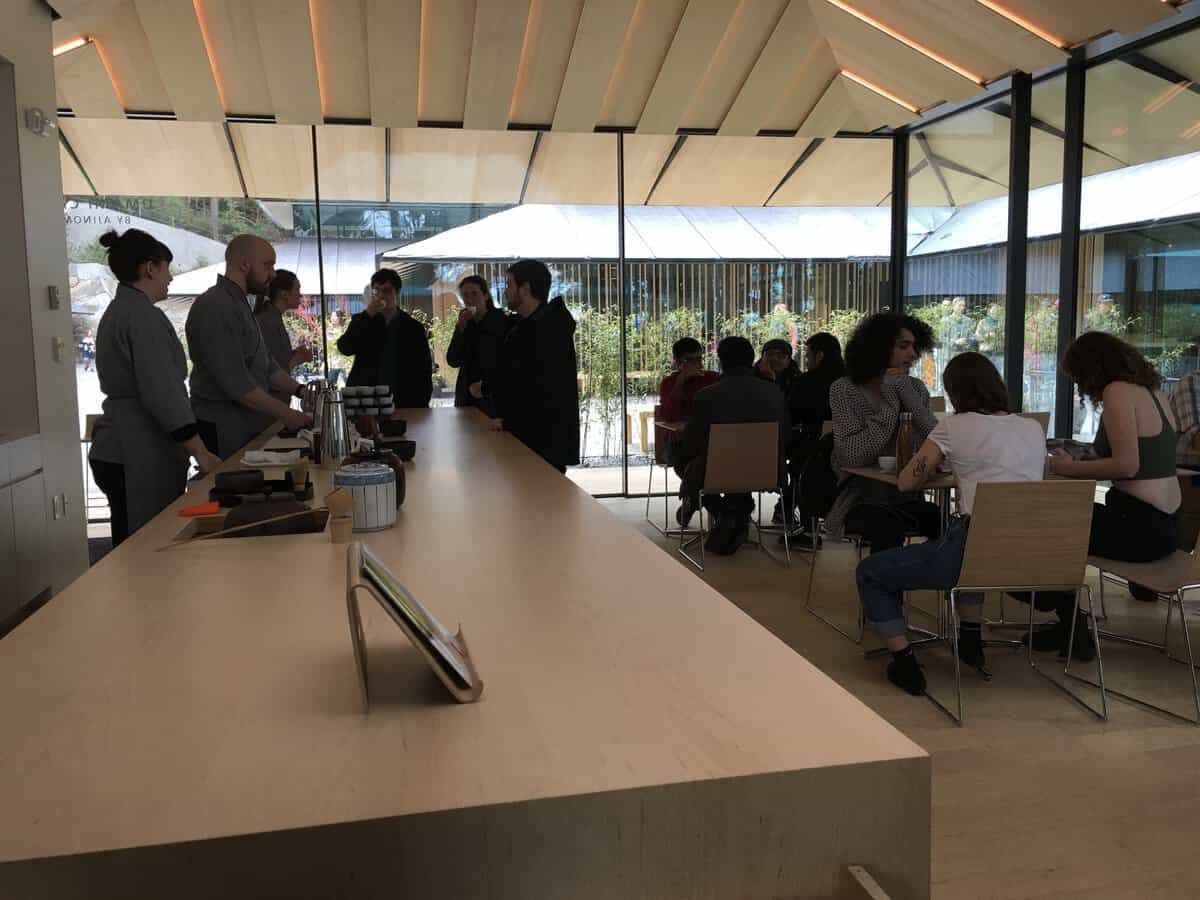
After you’ve finished strolling around the gorgeous gardens and interesting exhibitions, stop in and sample the fare at the new Umami Café. During our visit, just a week after the April 2 reopening, the café was not yet serving food but was offering complimentary samples of four delicious teas from Tokyo-based Jugetsudo Tea Company. (Update– Light snacks and sweets were available on subsequent visits.)

Stop in the new Umami Cafe for a restorative cup of tea and authentic Japanese sweets and snacks.

During our visit, guests were offered four different and delicious teas as part of a complimentary tea tasting.

When His Excellency Nobuo Matsunaga, the former Ambassador of Japan to the United States, visited the Portland Japanese Garden, he proclaimed it “the most beautiful and authentic Japanese garden in the world outside of Japan,” according to the organization.

Tranquil settings such as this one near the Upper Pond, have been drawing visitors since 1963.

They currently report more than 350,000 visitors annually, a number that will surely grow with the addition of the new Cultural Crossroads expansion. Be sure to add this spectacularly beautiful and serene spot to your Portland itinerary.  For updated information on tickets, events and hours click here.

Three Scoops: Where to Find the Best Gelato in Florence

After a long day of touring, or in the middle of a long day of touring, or just because you’re in Italy, in the beautiful city of Florence, you’ll want gelato. Even if it’s wintertime. Avoid the places with the big puffy gelato displays and colors not often seen in nature. Look for signs that say gelateria artigianale, naturale, or biologico.  Go for gelaterias that keep the ice cream in stainless containers—covered stainless containers are even better.

img_2847

Covered stainless steel containers keep gelato fresh and flavorful. Daily flavors will be listed on signs along with prices.

All the available flavors will be written on a sign and you already know what fragola (aka strawberry) looks like. We love that you can choose two or more flavors even for small cones or cups, so experiment with any flavor combination you fancy. Go wild! If someone behind the counter asks, “Panna?” Just say “Si” and your cono will be topped with delicious fresh whipped cream, often at no extra charge. Feel free to indulge.

img_2848

To make your gelato even more satisfying, say yes to panna montata– fresh whipped cream often offered gratis– free!

In Florence, some say Perche No! www.percheno.firenze.it can’t be beat. This is one of the oldest gelaterias in the city, serving it forth since 1939. It is good, really good, so if you’re in the city center you should definitely stop in for a cone.

img_8375

Many of the best gelaterias have lines, but they go quickly. It is worth waiting at places like La Carraia.

Often touted as the best in town, La Carraia www.lacarraiagroup.eu , with two shops in Florence, is branching out and opening a store in Rome, too. We like their gelateria on the Altro Arno just over the bridge of the same name. This is a line worth standing on– and there is always a line. They also have scrumptious looking cakes and other tempting confections but we single-mindedly stick to the gelato.

img_8376

You can choose at least two flavors even on small cones.

img_8378

It’s hard not to be happy with a cone in your hand.

Our little apartment’s location by the Duomo caused us to walk by Edoardo daily. www.edoardobio.it We don’t resist temptation often or easily so had ample opportunity to sample their delicious gelato. Just grab a number by the door and peruse the list of daily flavors while you inhale the intoxicating aroma of their handmade cones. Don’t worry–the line goes quickly.

img_3297

Grab a number and enjoy the heady aroma of fresh baked cones while you wait at Edoardo.

img_2849

This is what delicious looks like. Chocolate with chili (cioccolato con peperoncino) and cinnamon (cannella) are two of my favorite flavors.

Grom www.grom.it was the first of the “all natural” gelato we enjoyed many years ago and it’s still delicious. The company began in Torino and now you’ll find them in cities across Italy, including Florence, and around the world from New York to Jakarta. They even have an outpost in Los Angeles now.

img_3717

Grom is in cities throughout Italy and worldwide.

Gelato preferences are personal, of course, so go explore. Find your favorites and please share your discoveries with us.

Written and photographed by Jeanne Neylon Decker

Protected by US Copyright Laws.

Everything You Need to Know About Florence’s Famous Duomo: Il Grande Museo del’Opera del Duomo

Florence’s Il Grande Museo del’Opera del Duomo has nothing at all to do with opera. Instead, it is all about the work, or opera, involved in building, preserving and maintaining one of the most recognizable Renaissance buildings in the world—Florence’s Duomo, also known as the Cathedral of Santa Maria del Fiore.

img_2754

A spectacular view of Brunelleschi’s dome from Caffe La Terrazza.

If you’ve ever wanted to see how Brunelleschi’s magnificent dome was constructed, learn what the other options were for the Duomo’s facade, or see the remarkable art treasures once housed in the cathedral, this is the place to come.

img_2161

Welcome to the recently reopened and reimagined Museo del’Opera del Duomo.

img_2111

Soaring galleries give visitors a new perspective on the superb sculpture on display at the museum.

Re-opened in October 2015 after years of restoration and reconstruction, the Museo dell’ Opera del Duomo has an exquisite collection of sculpture, paintings and other masterworks displayed on three floors in 6,000 square meters of exhibit space, all designed to showcase the art to its best visual and historical advantage.

img_2104

A visitor gets an up close look at a statue in the museum.

Most of the works were at one time in, or outside the Duomo.

img_2128

These sculptures once graced niches in Giotto’s bell tower.

Some of the treasures to be found include the original North Doors created by Lorenzo Ghiberti for the Baptistry of San Giovanni along with the Doors of Paradise by Lorenzo and Vittorio Ghiberti. Replicas now hang on the Baptistry.

img_2181

Ghiberti’s stunning Doors of Paradise and North Door once graced the Baptistry of San Giovanni but can now be found inside the museum.

img_2178

Detail of door.

In all, the museum boasts 750 works of art covering 720 years of history.

img_2209

Arnolfo di Cambio’s stunning Christ with the Soul of Mary

img_2152

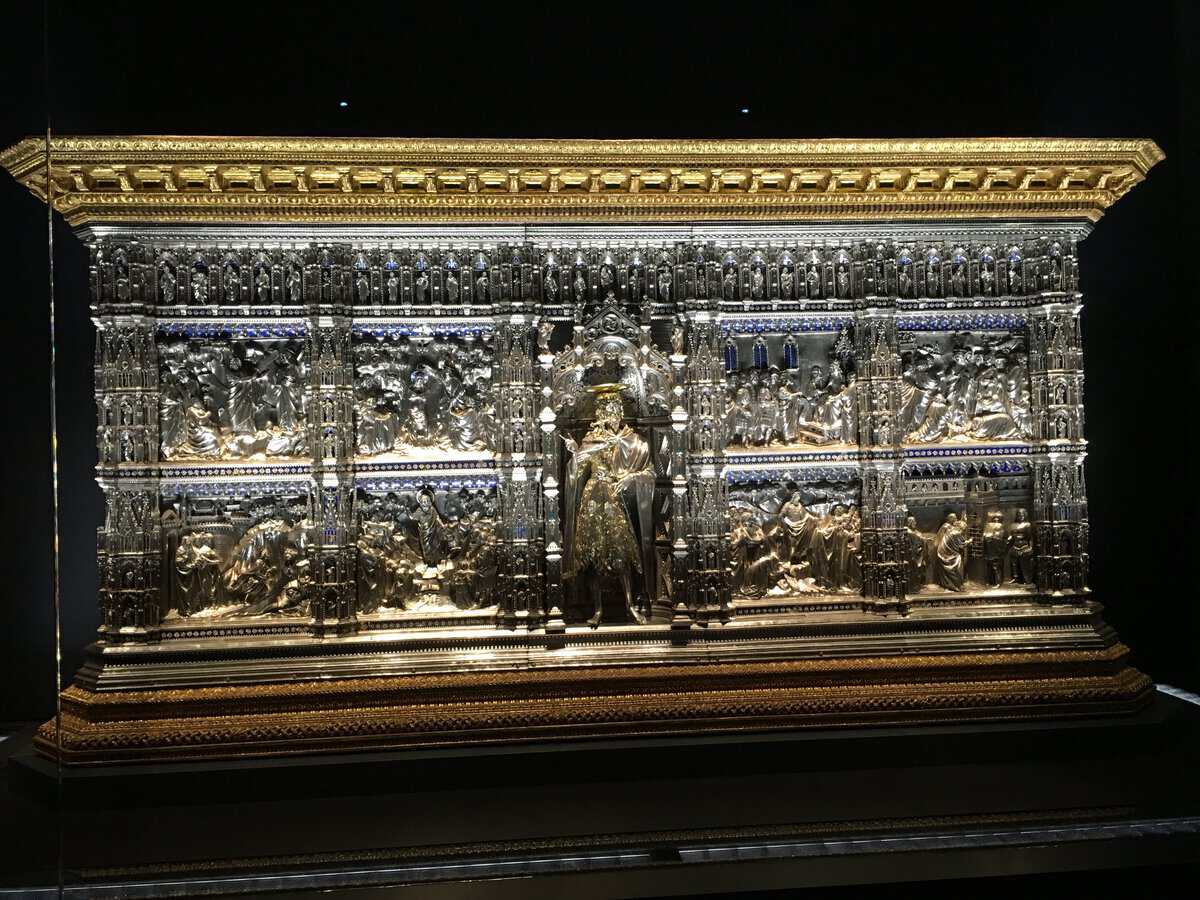
This exquisite silver alter features scenes from the life of John the Baptist and was created by Lorenzo Ghiberti, Betto di Geri, Bernardo Cennini, Antonio di Salvi, Francesco and Leonardo di Giovanni, Antonio del Pollaiolo and Andrea del Verrocchio.

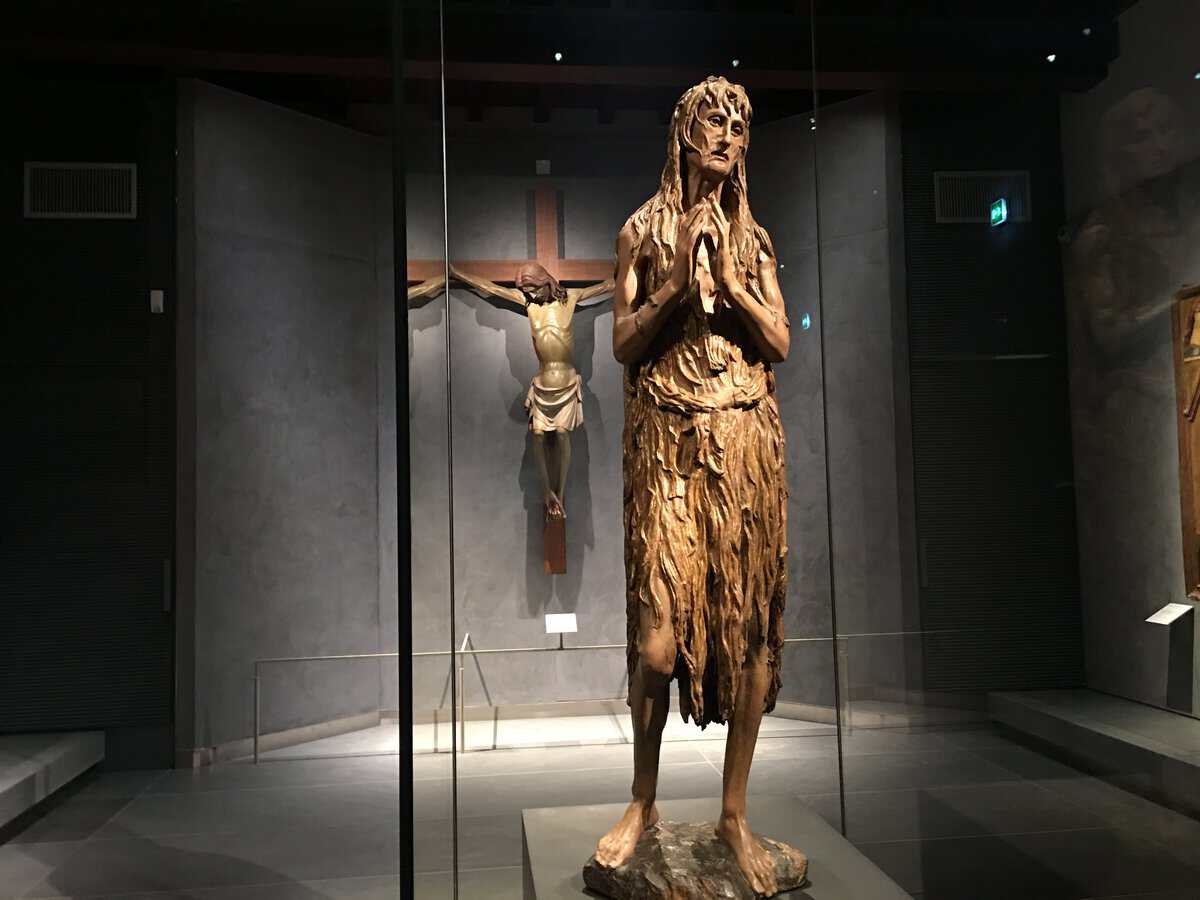
Michelangelo’s poignant pieta, sculpture by Donatello including his magnificent Mary Magdalene as Penitent, and works by Andrea Pisano, Antonio Pollaiolo, Arnolfo di Cambio and other highly regarded Medieval and Renaissance artists are on display.

img_2580

Michelangelo sculpted this pieta for his own tomb. He later destroyed it. It was reconstructed and acquired by Cosimo de Medici In 1671 and placed in the Duomo in 1722. It was the next to last sculpture Michelangelo ever created.

img_2176

Donatello’s Mary Magdalene as Penitent draws many visitors.

img_2579

Sacred items and iconography are part of the museum’s extensive collection.

img_2108In the Cappella Musicale, or music gallery, you will hear enchanting sacred music, and find works by Luca della Robbia and others, as well as rare illuminated music books.

img_2143

Beautiful music fills this gallery where rare illustrated books, sacred objects and art treasures are displayed.

img_2164Brunelleschi’s dome, still considered a marvel of engineering, remains one of Florence’s most iconic monuments.

img_2249

Models of Brunelleschi’s dome show how it was built and why it remains an engineering marvel.

In addition to the art treasures, the museum contains original building materials, equipment and tools, dating back to the Duomo’s 15th century construction.

img_2137

Wooden pulleys, ropes and other original construction equipment used to build the Duomo can be seen at the museum.

img_2140

Original 15th century tools and equipment used to build the Duomo are displayed near a continuously running film that explores the design and construction.

Also featured are drawings and models of the dome and Giotto’s bell tower, which was begun in 1334, after Giotto’s death. An outdoor terrace offers splendid views of the dome.

img_2133

Brunelleschi’s wooden model of the dome fascinates visitors.

img_2124

A detailed model of the bell tower designed by Giotto is on display near beautiful stained glass windows created by notables including Ghiberti, Donatello, Paolo Uccelli and Andrea del Castagno.

Visitors to the museum will learn about the history of this spectacular cathedral, designed by Arnolfo di Cambio and dedicated in 1412. The name Santa Maria del Fiore means St. Mary of the Flowers or Virgin of the Flowers. Once the largest church in all of Europe, today it is third in size, after St. Peter’s Basilica in Rome and London’s St. Paul’s Cathedral.

img_2134A film called Courage to Dare about Florence during the Renaissance and the creation and construction of the Duomo runs continuously in the museum.

img_2103

A number of possibilities considered for the Duomo’s facade are on display, including this one.

Combination tickets can be purchased for the Duomo Museum, the Baptistery, the bell tower and the Crypt of Santa Reparta, named for the 7th century church that once stood on the site of the Duomo. There is no charge to enter the Duomo, but paid tickets are required for visitors who wish to climb the more than 400 steps to the top of the bell tower.

img_2213

The Baptistry of San Giovanni always draws crowds. Tickets are required to enter.

Appropriate clothing is essential for entry. In other words, no shorts, short skirts or skimpy, shoulder baring tops on women or men. Bulky bags and backpacks must be checked. Visit www.ilgrandemuseodelduomo.it for information on ticket prices, hours and tours.

img_2215

Admission to the Duomo is free but take care to dress appropriately or you will be denied entry.

On our visit, we also had free access to a photographic exhibition called Opera di Viva by Michele Pecchioli, which paid tribute to the hundreds of men and women who have worked to preserve the artistic integrity and cultural heritage of the building and the art works within for more than 700 years.

img_2565

Michele Pecchioli’s photographs pay tribute to the men and women who restore and preserve the art and cultural heritage of Florence’s iconic Duomo.

img_2560The photos feature the restorers, artists, employees and security guards who play a role in safeguarding these treasurers and ensuring public access to the works for years to come. Note: This was a temporary exhibition and may now longer be available for viewing.

img_2561

A close up of a security guard charged with safeguarding the priceless treasures at the Duomo and its museum.

When the sun begins to set in Florence, head over to Piazzale Michelangelo for another perspective on the Duomo —and enjoy the gorgeous vista across the Arno over the city.

img_7935

Some of the most spectacular views of Florence can be had from the Piazzale Michelangelo. Don’t miss a visit to the beautiful San Miniato al Monte across the street. It’s the oldest church in Florence, after the Baptistry.

img_7939

Florence’s Duomo viewed from Piazzale Michelangelo.

img_2764

The department store La Rinescente has a terrace restaurant with fine views of the Duomo, as well as drinks and light fare.

If you crave an aperitivo with your sunset and Duomo views, go to La Rinascente, the department store on Piazza Repubblica. Go directly up to La Terrazza on the top floor and you’ll find a little rooftop café/bar with great views of the city and the iconic dome. It gets crowded so get there early or be prepared to wait.

img_2766

img_2771

Sensational sunset view over the Piazza della Repubblica from Caffe La Terrazza.

Cin Cin!

Written and photographed by Jeanne Neylon Decker

Protected by US Copyright Laws.

Want a Quick Bite? Try Florence’s Mercato Centrale

Craving a cappucino and a cornetto? Need a bouquet of fresh flowers or picnic provisions? How about fresh pasta to enjoy at home? Or maybe you’re just in the mood for pizza and a beer? Florence’s Central Market or Mercato Centrale Firenze is Florence’s answer to foodie heaven.  Housed in a historic building originally erected in 1847, and open from 10 a.m. to midnight, this is the place to go.

mercato caentrale nov 2015 - 8

Pick up picnic provisions like salami, cheeses, prosciutto and more at Florence’s Mercato Centrale.

mercato caentrale nov 2015 - 6

Fresh pastas and delicious sauces to go with them make a tasty and quick meal that’s easy to prepare in your vacation rental.

The market on the ground floor is fun to explore with every kind of seasonal produce, pastas, sauces, meats, cheeses, and flowers. Anything you could want that’s fresh and in season is right here.

mercato caentrale nov 2015 - 3

The Mercato Centrale has a bounty of seasonal produce, herbs and fresh flowers.

Upstairs at the Mercato Centrale is one of our favorite stops for for lunch, though you can also have breakfast, snacks, sweets, drinks and dinner here.

mercato caentrale nov 2015 - 16

Neapolitan-style pizza is done right at La Pizzeria Sud.

Go get some terrific Neapolitan style pizza at Pizzeria Sud. You can take your slices to one of the communal tables or go upstairs for table service. We opted for the former and enjoyed the hustle and bustle of the place.

mercato caentrale nov 2015 - 14

Lunch is ready!

There are lots of tasty options– pasta, panini, cheese and meat platters, fish, pizza, even burgers and fried chicken to choose from. There is also a coffee bar, wine, beer, pastries, gelato and delicious desserts–something to please most any palate.

mercato caentrale nov 2015 - 17

Choose your favorite foods from the array of vendors upstairs at the market and grab a seat at the communal tables. Mangia!

Everything on offer here from the hamburgers made from Chianina beef at La Toraia di Enrico Lagorio, the pasta from Raimondo Mendolia, Maurizio e Poala Rosellini’s fresh fish, the bufala mozzarella, beautiful baked goods, chocolates and gelato are all of the highest quality.

mercato caentrale nov 2015 - 20

A great selection of fresh or aged cheeses to eat now or enjoy later are readily available.

mercato caentrale nov 2015 - 11

If you’re looking to really splash out, try these fragrant truffles.

mercato caentrale nov 2015 - 12

If your tastes run more to fried foods, you’re in luck.

We even sampled the trippa fritta—fried tripe, a Florentine favorite, though not to my taste.

mercato caentrale nov 2015 - 15

Trippa fritta is a Florentine favorite.

After lunch (or dinner), you’ll probably want coffee and something sweet. Please remember that no self-respecting Italian would even consider ordering a cappuccino, latte or similar milky coffee drink after breakfast hours. Stick to the espresso. Ask for a caffe lungo if you miss your American coffee. Desserts are in abundance here and include gelato, pastries, cookies, and cannoli, which are stuffed while you wait—as they should be. Crushed pistachios on the ends are optional.

mercato caentrale nov 2015 - 19

These confections look almost too good to eat. Almost…

Upstairs is also where you’ll find Eataly, which features Italian grocery items, household goods, personal care items and my favorite Florentine soaps from Nesti Dante. You’ll also find a wine shop specializing in Chianti Classico selections, a cooking school, a bancomat (ATM)  and public restrooms which are in short supply in many cities like Florence.

mercato caentrale nov 2015 - 18

If you’re looking for Italian wines, particularly those from the Chianti Classico region, you’ve come to the right place.

mercato caentrale nov 2015 - 13

Students pay rapt attention at the Lorenzo de Medici Cooking School upstairs at the Mercato Centrale.

If you feel the need for yet more shopping, there are also stalls outside the building on the surrounding streets with scarfs, leather items, and souvenirs—all the typical Florentine goods you’d expect to find.

mercato caentrale nov 2015 - 10

Shoppers can find everything from dry pasta to Pinocchio at the market and stalls outside.

Buon apetito and happy shopping!

Written and photographed by Jeanne Neylon Decker

Protected by US Copyright Laws.

A Visit to Florence’s Salvatore Ferragamo Museum: Scarpe Diem

IMG_2791Descend the staircase in the stunning Palazzo Spini Feroni, which houses the flagship Ferragamo store and serves as company headquarters, and you’ll be greeted by walls of Salvatore Ferragamo’s strikingly beautiful shoes, artfully displayed, of course. Though they play a major role in the Museo Salvatore Ferragamo, a marvelous small museum on Florence’s posh Via Tornabuono, there’s much more to see than fabulous footwear.

IMG_2794

Ferragamo’s shoes may themselves be considered works of art.

The Museum tells the story of the man, who grew up outside of Naples, the eleventh of 14 children and became “shoemaker to the stars”; the company, which became synonymous with beautiful and comfortable shoes that were widely imitated; and the city of Florence itself.

IMG_2816

Visitors can learn about Florence’s fascinating history at the museum.

Stunning masterworks of 17th and 18th century Florentine art, a look at the palazzo’s chapel with frescoes by Bernardino Poccetti, artful fashion, and company’s history are all part of the museum experience www.ferragamo.com/museo.

IMG_2822

There is much more to see than shoes at the Museo Salvatore Ferragamo.

IMG_2800In addition to the innovatively designed shoes for which the company is known, the signed lasts created for Marilyn Monroe, Rita Hayworth, Sophia Loren and so many other movie stars and well-known names, past and present, are on view along with Ferragamo’s leather working tools.

IMG_2830

Wooden lasts created for movie stars, royalty and other recognizable names hang on the museum’s walls.

The company’s history is cleverly presented in photographs displayed on racks like tourist post cards.

IMG_2803

These “picture postcards” give visitors a glimpse of the company’s past.

IMG_2802

Video and still photos tell the story of Salvatore Ferragamo and the company he created.

Beautiful sculpture, noteworthy paintings, historic books, documents, and more from the family’s extensive collection compete for visitors’ attention. Classical music such as Corelli’s Le Sonata per Violino, Violone e Cimbalo plays in various gallery spaces, adding to the ambiance.IMG_2824

IMG_2819

IMG_2807Along with the permanent collection, the museum hosts rotating exhibitions. 

The famous building, constructed in 1289, is itself part of the museum. Among other things, the Palazzo Spini Feroni was once home to the City Council when Florence was the capital of Italy. Salvatore Ferragamo purchased the Palazzo in 1938, after returning from America, and it has served as Ferragamo’s headquarters since that time.

IMG_2792

During it’s long and colorful history, the Palazzo Spini Feroni was home to Florence’s City Council, a hotel and art galleries before becoming Ferragamo’s headquarters.

IMG_2836

Salvatore Ferragamo’s widow, Wanda, was instrumental in creating the museum.

Through the efforts of Ferragamo’s widow and family members, Museo Salvatore Ferragamo was founded in 1995 after an exhibition at Florence’s Palazzo Strozzi went on tour, hosted by New York’s Guggenheim Museum, the County Museum of Los Angeles, London’s Victoria & Albert Museum, and Sogetsu Kai Foundation in Tokyo among others. The traveling exhibition became the basis of the permanent collection at the museum.

IMG_2833

Private guided tours can be arranged via email.

Private guided tours can be arranged by emailing [email protected].The museum also hosts special events. Check the website for ticket information and additional details.

Written and photographed by Jeanne Neylon Decker

This and all materials published by TravelTawk.com are protected by US Copyright Laws.

This article contains affiliate links.  If you click and book, I may earn a small commission at no cost to you. Thank you for your support. I promise not to spend it all on gelato!

Picture Perfect Panzano in Chianti

Panzano in Chianti is right in the heart of Chianti’s wine growing region and has been one of our favorite Tuscan getaways for many years. The small town is located midway between Florence and Siena, on the Chiantigiana/Highway 222, making it the perfect location from which to embark on day trips to these beautiful Tuscan cities.  Other popular destinations like San Gimignano, Volterra and Pisa are also within easy driving distance, as are lovely nearby towns like Radda, Greve and Castellina in Chianti.

IMG_8645

Steps lead down to reception at Villa Pecille in Panzano.

We have always rented from Sammie Daniels, founder of Stay Italia.   In Panzano, we’ve stayed at Casa La Rota and Villa Pecille numerous times. Both are located on vineyard property owned by the family behind Fontodi Winery and are situated on the Conca del Ora, some of the most gorgeous countryside in Tuscany. Casa La Rota is surrounded by vineyards and is a five-minute drive into town. Villa Pecille overlooks the Conca del Ora and is a short walk into the village of Panzano.

IMG_8254

La Rota is surrounded by Fontodi’s beautiful vineyards.

IMG_7339

Casa La Rota.

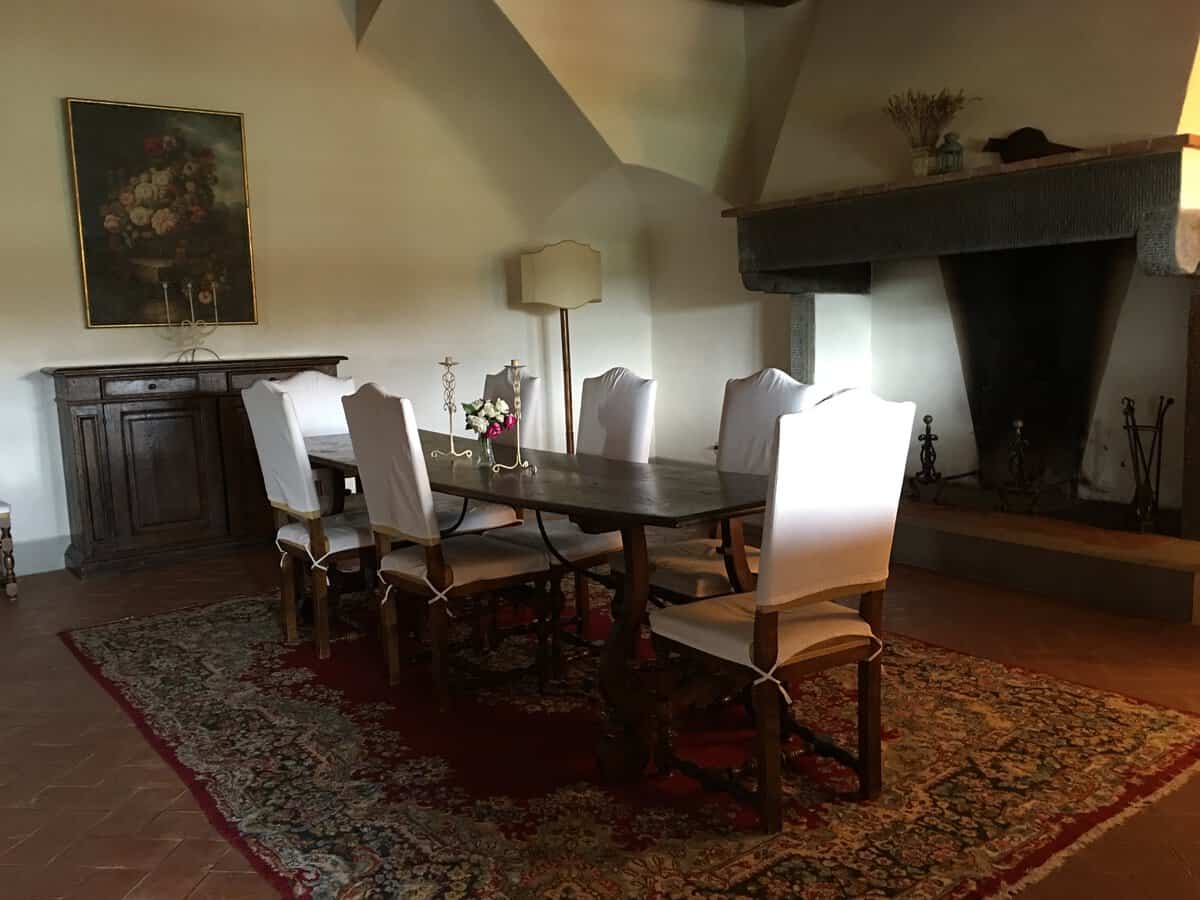
All the apartments at La Rota and Villa Pecille are fully furnished and equipped with just about everything anyone could need to feel at home. Some have fireplaces. The two properties offer a range of accommodations suitable for two to eight people and both have swimming pools, ample outdoor areas for relaxing, and laundry facilities.

IMG_8720

One of the terraces at Villa Pecille.

IMG_8627

The pool at Villa Pecille.

IMG_8652

Both La Rota and Villa Pecille have lots of lovely outdoor spaces to enjoy.

Sammie, who is American, is an expert on the area and has been here since 1985 when she opened a B & B in nearby Greve. She went on to remodel and manage the Vignamaggio Hotel, which was the setting for Much Ado About Nothing starring Kenneth Branaugh and Emma Thompson in 1993. In 1995, Sammie moved to Fontodi and opened Casa La Rota and has been there ever since. Sammie can assist guests with restaurant recommendations, wine tastings, even organizing dinners prepared in your villa.

IMG_8792

Our spacious, fully equipped kitchen at Villa Pecille’s La Loggia.

IMG_8798

La Loggia’s beautiful dining room is perfect for entertaining.

Sammie also has other properties in the area and several apartments in Florence.

IMG_8591

The Piazza Bucciarelli is at the center of village life in Panzano in Chianti.

While not a large town, Panzano has its own market every Sunday morning in the main square— Piazza Bucciarelli—until about 1 p.m. The market is a great place to pick up fresh produce, fabulous cheeses, hot roast chicken, pasta and sauces, clothing, and household goods.

IMG_7298

You can purchase Mr. Moreno’s superb selection of cheeses at Greve’s Saturday Market or in Panzano on Sunday mornings.

IMG_7302

Clothing, accessories, shoes and more are available at Panzano’s Sunday Market.

The stores in town including the Coop (supermarket), pharmacy, and smaller shops near the main square and on Via Giovanni de Verrazzano, the road that leads up the hill to Santa Maria Assunta, are also open on Sundays but only until 1 p.m. There is also a much bigger weekly market in nearby Greve on Saturday mornings.

IMG_7297

Fresh seasonal produce is at the heart of the market.

The town of Panzano is home to perhaps the most famous butcher in the world—the colorful, Dante- reciting Dario Cecchini.  His Antica Macelleria Cecchini is technically a butcher shop but really so much more. Walk into his macelleria on a Sunday morning and it’s like there’s a party going on. He has a great spread of complimentary appetizers including his famous “Tuscan butter” (lardo), salamis, cheeses, olive oil, bread and wine.

IMG_7321

Dario Cecchini may be the best known butcher in the world.

In addition to superb meats ready for your grill or oven, it is possible to purchase prepared dishes like porchetta—a delicious roast pork dish, polpetti—giant meatballs, and other local specialties for a picnic or easy meal at home. Service is friendly and English is spoken—Dario’s wife is a Californian. The ever-accommodating Dario is often willing to pose for photographs for international visitors who make the pilgrimage to Panzano to see him.

B8863793-AD55-44B6-9B1F-0EFD31CD4886

The very personable Dario Cecchini with our son this summer (top), and many years ago during one of our first holidays in Panzano.

Dario also has several restaurants: Solociccia, which is Tuscan slang for “only meat” and features cuts of beef from top to tail; Solociccino is a mini version of Solociccia and open for lunch only; Officina della Bistecca showcases sensational steaks including the famous Bistecca Fiorentina; and Dario DOC—which serves lunch from Monday through Saturday and is the only Dario restaurant where reservations are not required. All of the restaurants serve family style, multi course, prix fix meals, and while famous for top quality meat, vegetarian options are offered.

IMG_7320

Complimentary meats, cheeses, bread, wine and Dario’s famous “Tuscan butter” are a tasty treat for visitors to the macelleria.

The butcher shop and restaurants draw people from around the globe-a lot of people. Dario’s Sunday lunches are especially popular so book in advance if you’d like to partake in these multi course extravaganzas. In the warm weather diners are served outside on long communal tables. We’ve met interesting people from all over the world at these delicious, leisurely meals. Dario also offers classes/workshops in butchery, which must be reserved in advance. All the details for the shop, restaurants and classes are here.

IMG_8100

This sculpture welcomes visitors to Il Molino di Grace’s tasting room outside Panzano.

Wine tasting is a popular Tuscan past time and Panzano is a marvelous place to indulge in this pleasure. There are three wine bars or enoteca on or across from the main piazza—Enoteca Baldi at 25 Piazza Bucciarelli, Misticoteca at 13 Piazza Bucciarelli, and the newest, Il Cardo at 50 Piazza Bucciarelli. These are all about a three-minute walk (or less) from one another.

IMG_8601

Enoteca Baldi is popular with locals and visitors alike. Bring your beverage outside and enjoy it on the Piazza if you like.

Enoteca Baldi and Il Cardo offer a selection of light foods to accompany your wine.  Misticoteca, whose delightful owner Misty always has a warm welcome for visitors, has olive oils, specialty foods and gift items available for purchase. There almost always seems to be a crowd there.

IMG_8760

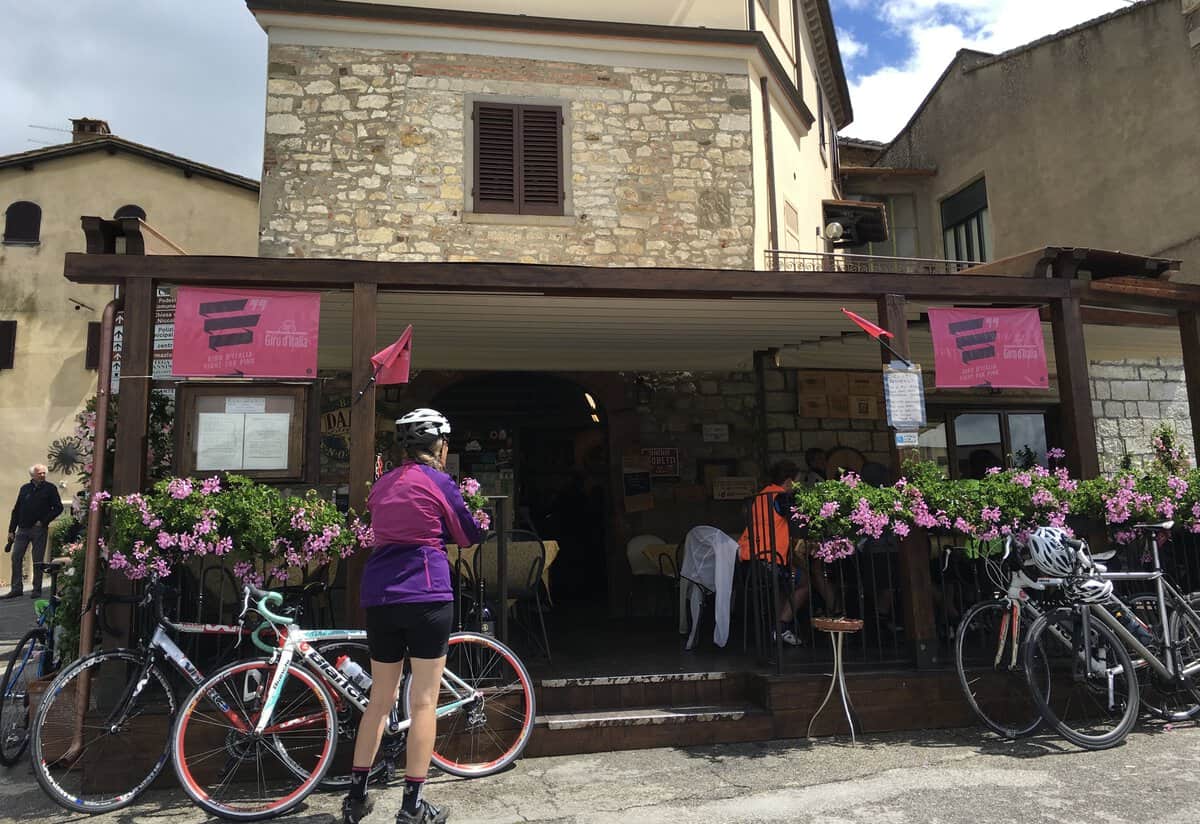
Misticoteca was a popular place to watch the Giro d’Italia but this enoteca always draws a crowd.

We were fortunate to have our recent visit coincide with the Giro d’Italia—a major bicycle race—and its attendant 15 Giorni di Rosa or 15 Days of Pink—an exhaustive calendar of public events ranging from bicycle themed films, musical concerts, theatrical performances, free lectures, and of course, wine tastings.

IMG_7968

The Bar Dante Alighieri in Radda is perfect for a coffee, light meal or a drink.

IMG_8121

Shopkeepers in Radda were thinking pink for the Giro d’Italia.

The events were held in Radda, where the race would begin; Castellina in Chianti, San Donato, Panzano, through which the race passed; and Greve, where the race would end.

IMG_8701

Greve welcomed racers and bicycling enthusiasts for the Giro d’Italia.

The day before the race, Unione Viticoltori de Panzano in Chianti presented Vino al Vino Miniatura, a smaller version of the wine tasting event the group hosts every September. All members of the organization had their wines available for tasting.

IMG_8587

Panzano’s vintners presented Vino al Vino in Minaturo the day before the big race.

Wineries represented at that festive Saturday afternoon event included Fontodi, Il Molino di Grace, Casaloste, La Massa, Cennatoio, Fattoria la Quercia, Tenuta degli Dei and Castello dei Rampolla, among other local producers, 20 in total by my count. A souvenir glass and the opportunity to taste all of the delicious wines on offer cost just 10 Euro. There was live music in the Piazza Bucciarelli as well as local art on display to keep participants entertained while they sipped.

IMG_8590

Great wines, music and a beautiful day brought people to Panzano’s Piazza Bucciarelli.

We visited Fontodi and Il Molino di Grace for wine tastings on this visit, and have toured and tasted at many others over the years. Here’s a list of local wineries, touring/tasting/direct sales availability, and other information.

IMG_7996

A visit to Fontodi– one of the region’s premier wine producers.

IMG_8049

The delightful and knowledgable Rina Lapini prepares to pour Fontodi’s flagship Flaccianello for visitors.

Contact wineries directly to make arrangements for private tours and wine tastings prior to arriving in Tuscany. Some are open to the public and some are not. Some offer complimentary tastings and some charge a fee.

IMG_7384

Doors on Via Giovanni de Verrazzano, the main street off Piazza Bucciarelli leading up the hill to Santa Maria Assunta.

Panzano is also a fine place to have custom shoes, belts and hand bags made by local leather artisan Carlo Fagiani; visit a gallery that specializes in local artists’ work (we enjoyed a photography exhibition by Jeferson Silva Castellari and purchased one of his photographs on canvas); pick up antique or modern hardware; stop into a beautiful church– Santa Maria Assunta, which has a painting of the Annunciation attributed to Ghirlandaio and a 14th century Madonna from Botticini; or just relax with a coffee at our favorite bar, Caffe la Curva (it’s called Bar of the Curve because that’s where it is), or stop by for gelato and apperitivi later in the day.

IMG_7373

Order custom made shoes, belts and handbags at Carlo Fagiani in Panzano.

IMG_8731

Caffe la Curva is a great place to start the day with a cappuccino and cornetto or end it with an apperitivo.

IMG_8804

Panzano’s bucolic beauty beckons us back again and again.

However you chose to spend your time in this beautiful place, enjoy la dolce vita in Italia and perhaps you’ll understand why we’ve returned to Panzano in Chianti again and again.

Pitstop in Pisa

If you’ve never been and you’re in the area, it’s worth a stop to see Pisa’s famous Leaning Tower and the Campo dei Miracoli or Square of Miracles.  The Tower, or Torre, which was begun in 1173 and not completed until 1399 almost 200 years later, is one of the most recognizable and visited sites in Italy.

IMG_7895

Go ahead– it’s why you’re here!

It’s easy to reach Pisa from Florence by car or train. We stopped on our way back to Panzano from Lucca. Park in one of the signed lots close to the piazza. There is a bit of an “element” looking to take advantage of tourists near the Campo dei Miracoli so it’s worth putting your car in an attended, paid lot. If you’ve arrived by train, take the LAM Rossa bus from the station in the direction of San Jacapo and get off at Torre.

IMG_7881

Site map of the Campo dei Miracoli shows where everything is located.

If you’re feeling energetic, you can climb the 251 steps to the top of the Tower, for a fee. Children under the age of 8 are not allowed up into the Tower for safety reasons and children between the ages of 8 and 18 must have an adult accompany them. Opening hours and ticket prices are available at here, the official tourism website for Pisa.

IMG_7884

Part of the fun is watching everyone else take their photos.

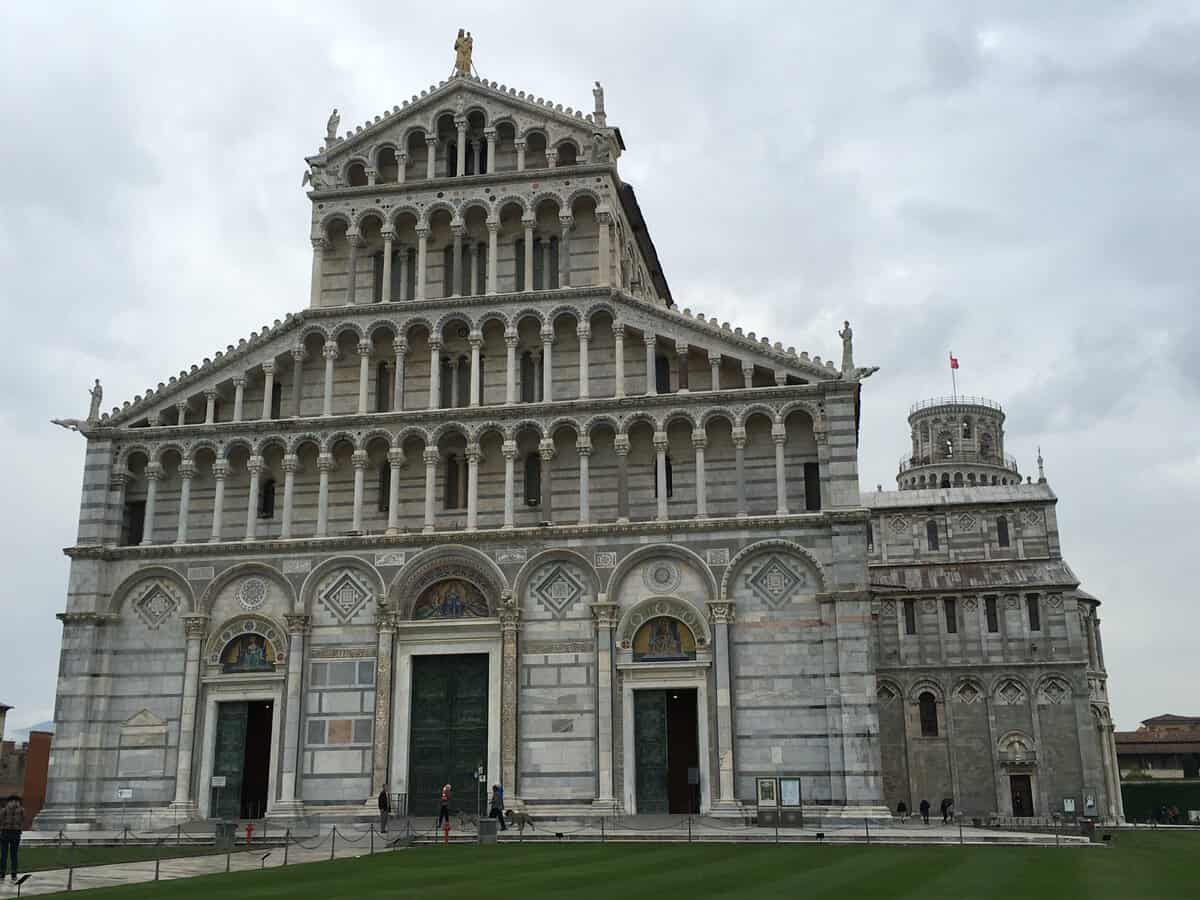
Take the requisite photos, enjoy watching others take theirs, and then visit Il Duomo, Pisa’s cathedral. It is really beautiful and has the holy doors or porta santa open for the Catholic Church’s Jubilee Year of Mercy. Inside, in addition to the spectacular architecture, you’ll find art treasures like 700-year-old depictions from the bible, works by Ghirlandaio, the tomb of the Holy Roman Emperor Henry VII, a beautiful mosaic by Cimabue, and a carved pulpit by Giovanni Pisano. Photos are not allowed inside.

IMG_7919

Take the time to come inside. There is no charge to enter Pisa’s magnificent Il Duomo.

The Baptistery, though not as spectacular inside as the duomo, is also worth seeing if time allows. The Museo dell’Opera del Duomo, which contains many of the artworks formerly housed in Il Duomo, the Baptistery and the Camposanto (cemetery) is also located on the Square of Miracles.

IMG_7883

Construction on the Baptistry began in 1152 and is the best known work of Pisan architect Diotisalvi.

Entrance to the Cathedral is free but you must collect an entry coupon at the ticket office on the square. For tickets and admission information for the Baptistry, Museum and Camposanto click here.