Browsing Tag

travel

How to Have a Wellness Weekend in the Black Forest

fall foliage surrounds a pond with ducks

The charming German town of Badenweiler in the foothills of the Black Forest has been drawing wellness seekers for millennia. They come for the healing, mineral-rich waters to relax and find relief for everything from stress to rheumatism. A tradition since the Romans were here, we devoted our weekend in Badenweiler to bathing, both ancient and modern.

In addition to lovely, wooded scenery, hiking trails, and the thermal waters that flow from under the Black Forest, Badenweiler boasts some of the most expansive and best-preserved Roman baths north of the Alps. We were excited to visit them. We followed a small group of people down a leafy walkway into a public park. There we found the glass pavilion that protects this archeological wonder.  We paid 3 euro each to pass through the turnstile and travel back in time, way back.

Roman Rituals

The extraordinary 2,000-year-old ruins include the caldarium, tepidarium, and frigidarium.  Our guide, Dominick, explained the hot, tepid, and cold baths were visited in that order. Cold plunges, popular today, are nothing new. Thousands of years ago the ancient Romans were well-versed in the therapeutic benefits of thermal waters of varying temperatures.

Community baths played an important role in Roman life. They were used not just to bathe, but also to socialize and keep up on politics and local news. Their baths also often included steam rooms and relaxing areas for this reason.

Ruins of a Roman bath complex
The extensive bathing complex is one of the best preserved north of the Alps.

Roman sculpture, grooming aids, and even a replica of typical Roman wooden bathing shoes are among the exhibits inside the pavilion.  These platform sandals protected bathers’ feet from the hot floors inside the caldarium. Dominick was brimming with historical and entertaining facts about the Romans who settled in this part of Germany and built this elaborate bathing complex.

Roman soldiers were often paid in land and encouraged to settle permanently in the areas they had been sent to conquer. This was the case in Badenweiler. Settler soldiers built these baths to enjoy the same rituals and amenities they would have enjoyed at home. Badenweiler’s healing thermal waters likely made these even more appealing.

Take the Tour

man in front of informational panels
Our guide helped bring the ancient ruins to life. He gave the tour and answered questions in German and English.

Visitors walk through and over the remarkable ruins on accessible walkways and have a bird’s eye view of all areas of the baths. Our guide explained the significance of each area in both German and English. Everyone in our small group spoke one or the other language. After a very informative hour-long walk through the Roman complex, Dominick led us out into the park surrounding the baths.

walkway over ancient ruins in the glass pavilion
Walkways over and through the ruins make the complex accessible to all.

Using our mobile phones to light the way we ducked through a small doorway, one by one.  Dark and dank, we had entered a recreated ancient Roman drainage channel which had originally served the baths in this very spot. It was constructed in 1998. What a relief it was to return to sunlight after a short time inside the channel.

people exiting a tunnel
The reconstructed subterranean drainage channel shows what masters of architecture the Romans were.

It is possible to enter the ruins without a guide, but self-guided visits do not include the drainage channel, well worth seeing, or the wonderful stories Dominick shared that sparked our imagination and brought the distant past to life.

Modern Baths

After exiting the drainage tunnel, we looked up and saw people relaxing on chaise lounges on a broad terrace overlooking the park. They were enjoying the popular Cassiopeia Therme. Next door to the ancient Roman ruins, the Cassiopeia Thermal Baths draw visitors and locals alike to the healing waters within. The modern baths are housed in an impressive classical-style building. 

Classical -style building with signage for Cassiopeia Therme
The Cassiopeia Therme is a popular attraction in Badenweiler and can get crowded on weekends and holidays.

Guests at these public baths enjoy the same thermal waters the Romans did, in a series of pools of varying temperatures and sizes indoors and out.  Temperatures range from 30 to 36 degrees Celsius and are seasonally adjusted. Families, couples young and old, and this pair of American wanderers settled in for a relaxing afternoon in the healing waters. 

Don’t Forget Your Towel

people waiting inside a large rotunda building
People waited patiently to check in for an afternoon at the Cassiopeia Thermal Baths.

This was our first experience in a public bath house. As we queued for entry, we realized we had already made a mistake not bringing towels from our hotel. Everyone else, we noticed, came equipped for the day with shower shoes, robes and towels. We had brought flip flops and swimsuits, but had to rent towels. We must not have been the only ones unprepared. Bathrobes, shower towels and sauna towels were available to rent at registration.

long hallway inside the Cassiopeia Therme
A long hallway led to the gender-specific locker rooms. The rest of the facility is co-ed.

Off to the changing rooms we went, locker keys in hand.  The changing rooms had large lockers, restrooms, and showers. The faint sulfurous aroma of thermal waters wafted through the humid air as we approached the bathing areas.

No Lazy River

Though the day was overcast and a little cool, we headed to the large heated outdoor pool. People of all ages were clearly enjoying themselves. We saw couples floating hand-in-hand, kids leaping from their parents’ arms, and teenagers racing one another around the pool.

overview of large outdoor pool
The giant whirlpool was a lot of fun and one of our favorite activities. Photo courtesy of Schwarzwald Tourismus GmbH.

There was a vast, oversized whirlpool at one end of the outdoor pool complex. We jumped in and let the water carry us, trying not to bump the other bathers as we circled, laughing as we moved through the swirling current. This was no lazy-river experience. We quickly figured out we would need an exit strategy to escape the strong current, but it was so much fun, we stayed in the fast-moving water for about a half an hour.

Take a Dip

There were many other pools to sample, so we held hands and made for one of the handles on the side of the pool.  It took a few attempts, but we finally grabbed hold and swam out. After a dip at the other end of the huge outdoor pool, we headed indoors. There were a series of smaller pools inside on the ground level. Each had different depths and temperatures that were clearly posted.  The smaller and shallower pools were popular (and populated) with young children. We avoided those. After exploring the options, we made a circuit from hottest to coolest pool and repeated it several times.

There were chairs and lounges around all the pools, indoors and out. Just like at home, people had “reserved” their chairs with towels and personal property. We took a short break on the comfortable lounges and enjoyed the view of the park outside.

Sauna Time

signage for thermal baths
Signs outside the Cassiopeia thermal baths let guests know what to expect inside, including a wellness oasis.

After enjoying almost all the pools on the ground level, we walked past the busy café and headed upstairs to the sauna area.  We had become aufguss enthusiasts during our recent stay at the Adler Balance in Italy’s Dolomites and were looking forward to experiencing Cassiopeia’s saunas. 

As we climbed the stairs, we noticed we were heading for an adults-only zone as well as a “textile free” area.  This was a relatively new term to us and means simply, no swimsuits (or any other garments) allowed. The policy was evident in the large co-ed pool adjacent to the saunas, where naked bathers swam and floated, blissfully unencumbered by swimwear or self-consciousness. 

Textile Free Zone

Another patron, perhaps sensing my foreignness, or hesitation, tapped me on the shoulder and pointed to the sign above the sauna, in German and English, when I failed to disrobe quickly enough.  She may have thought I planned to enter the sauna in a swimsuit, which I knew was just not done.

signs inside the baths indicate different services
These signs advertise the thermal baths and Roman-Irish bath, also in the textile free zone.

Leaving our inhibitions and our swimsuits at the sauna door, we stepped out of our pool shoes and into the least hot (coolest would be a misnomer) of the units first. Cassiopeia has a range of saunas from 55 to 90 degrees Celsius. They include aroma, herbal, Finnish, crystal and infusion saunas.

There is also a Roman-Irish bath in the textile-free zone. That would have been a new experience for us but it was not available during our visit. There was plenty to keep us busy without it.

As we had learned at the Adler, a cold plunge or shower is a must after a sauna, especially if you are hopping back into another, even hotter one, as we were. Sauna, shower, repeat, was our plan. We both decided we enjoyed the hotter saunas and spent most of our time there.  Interestingly, the saunas had little windows with a view of the pool. After several times in and out, we checked the posted schedule to see if aufguss was available.

The Aufguss Experience

Aufguss is a super-heated sauna experience usually enhanced by aromatherapy and music. It is led by an athletic (in my experience) and specially trained aufguss meister. Using towels and large handheld fans, the aufguss meister directs the hot air around the chamber and melts aroma-containing ice balls emitting scents ranging from relaxing pine forest to uplifting citrus into the sauna. Sadly, we had already missed the aufguss sessions scheduled for the day.

Glowing from our swim and sauna, and fully relaxed, we headed back to the locker room to shower and bid farewell to the Cassiopeia Thermal Baths. Our ancient and modern bathing experiences in Badenweiler were memorable.  We’d return to Cassiopeia Therme in a heartbeat, this time with our own towels and robes.

If You Go

Roman Baths

glass pavilion over roman ruins in a park setting
Take the guided tour to fully appreciate these extraordinary 2,000 year-old Roman baths.

Tours of the ancient bathing complex are offered Sunday mornings at 11 throughout the year, with an additional one on Tuesdays at 4 pm during summer months. It is possible to enter the ruins without a guide, but we felt ours added a great deal to our visit.

There is signage, but in German only. Our guide was very helpful and we also used Google Translate to decipher many of the signs. The tour inside the pavilion is accessible to all, but the underground channel is not. Tour group size is limited.  Book in advance.

Modern Baths

sign with historical information about the baths
SIgnage shows how the Cassiopeia Therme has been modernized over its long history.

Public baths are very popular in the Black Forest and Sunday is a busy day for them, as we learned first-hand.  Guests of all ages from toddlers to octogenarians enjoy their time there. Bring your swimsuit, shower shoes, a robe, and a towel. Leave jewelry and valuables in your hotel’s safe. You will need a credit card or other payment method for your day pass, any food or beverages, and towel rental if you forget your own.

Be prepared to shed your swimwear and inhibitions at the sauna door and anywhere you see signs indicating “textile free” areas. 

If you plan to shower in the locker rooms, bring your own grooming products.

The Cassiopeia Baths have a café for light meals and beverages. There is a lovely terrace overlooking the grounds and the Roman baths you can relax on.

We were guests of the Schwarzwald Tourismus GmbH for the Roman Baths tour and visit to Casseopeia Therme.

Sleeping and Eating

Schwartzmatt Hotel

large yellow hotel building
The Hotel Schwarzmatt made a great base for exploring the Black Forest and Badenweiler.

We stayed in Badenweiler at the very comfortable Hotel Schwartzmatt, a member of the luxury Relais & Chateau group. We opted for half-board as our stay was in low season and many restaurants in town were not open. The hotel restaurant, which served a varied and delicious menu focusing on local dishes, was open only to hotel guests in late autumn. There were a few coffee shops and boutiques open in town, but it was quiet.  Summer is the busy season here.

Wellness Oasis

The Hotel Schwarzmatt has a “wellness oasis” featuring a steam bath, Finnish and Bio saunas, an indoor pool, a sun pavilion and terrace. The spa offers massages and other treatments and there is a fitness room. These facilities are only available to hotel guests. We didn’t have time for any treatments but enjoyed the steam room, saunas and pool.

Written and photographed (I could not take photos in the baths for obvious reasons) by Jeanne Neylon Decker

This post contains affiliate links.  If you click and book, I may receive a commission.  Thank you for your support!

This and all materials published by Traveltawk.com are protected by US Copyright Laws and may not be reproduced without express permission from the publisher.

Friedrichshafen’s Fascinating Zeppelin Museum

zeppelin museum with playground in front of it

Can you resist looking up when the Goodyear blimp passes overhead? Imagine being among the first to spot a zeppelin as the strange looking aircraft floated by 125 years ago. Learn about the iconic airship that once captured the world’s imagination and transformed travel, commerce, and military strategy at a visit to Friedrichshafen’s fascinating Zeppelin Museum.

This engaging, family-friendly museum on Germany’s Lake Constance is perfect for fans of flight, military history, engineering, and adventure. The museum is a must for those fascinated by the Hindenburg disaster.

zeppelin suspended from ceiling
After 125 years, Zeppelins are still a source of fascination.

On the Shores of Lake Constance

museum signage about von Zeppelin
Retired German General von Zeppelin correctly foresaw a rewarding future in the rigid airship.

Housed in an enormous structure on the shores of Lake Constance, or the Bodensee in German, the Zeppelin Museum tells the story of the airship developed by Count Ferdinand von Zeppelin.  A retired German General and an inventor with a penchant for engineering, he foresaw a future where these large, lighter than air, rigid airships would play an important role in transporting goods and people, with both commercial and military applications. For decades, they did just that.

Visitors to the museum learn the science, technology, development and fascinating 125 year history of the airships. Compelling interactive and static exhibits tell the story. The first zeppelins, LZ 1 and LZ 2, were experimental aircraft and used to survey large swaths of Europe from their base in Friedrichshafen.

As von Zeppelin correctly surmised, the German military quickly saw their potential for surveillance and transportation. Consumer applications came soon after when zeppelins were used to transport goods over long distances.

First in Transatlantic Flight

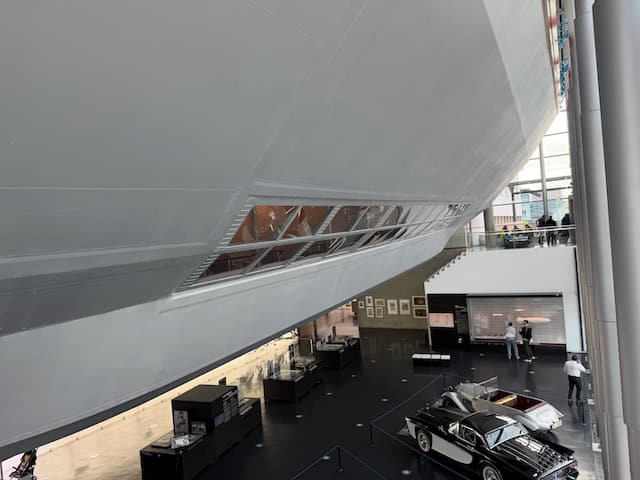
reconstructed zeppelin hull
The Hindenburg was the fastest way to cross the Atlantic for passengers and goods in 1936. The museum has a partial reconstruction of the airship and some of the wreckage from its crash.

Zeppelins were first flown to destinations within Germany and then across Europe. The fast, economical airships became the first aircraft to carry passengers across the Atlantic Ocean.

By 1936, the Hindenburg carried passengers and up to eight tons of perishable goods like flowers, food, and medicine in its cargo hold for the relatively speedy two-day transAtlantic journey. Zeppelins were also used for polar expeditions including Roald Amundsen’s last fateful trip to rescue Italian explorers at the North Pole. 

During Wartime

museum exhibits explain the zeppelin's history
Zeppelins changed military strategy in WWI but barely played a role in WWII.

The museum has fascinating exhibitions about the zeppelin’s role in WWI and the subsequent shut down of production demanded by the Allies after Germany’s loss in the conflict. Two of the already-built zeppelins were given as reparations to Italy and France. A third was sent to the USA. German engineers also came to the United States to work with the military to develop an American dirigible program. 

Let Your Imagination Soar Aboard the Hindenburg

One of the highlights at the Zeppelin Museum is exploring a partial reconstruction of the Hindenburg. It was one of the largest passenger-carrying zeppelins ever built. The reconstruction was faithfully built adhering to the airship’s original plans.

Enjoy the 1930s Bauhaus design of the surprisingly spacious lounges and public spaces and relax where passengers would have. Peek into the restrooms and down the halls where the passenger cabins are located aboard the luxury airship. It’s clear that traveling by zeppelin was for strictly for those with means.

During the zeppelin’s heyday, 50 to 70 passengers could comfortably travel across the Atlantic to Lakehurst, New Jersey just outside of New York City, or to Brazil’s then capital, Rio de Janeiro. In 1928, the journey to New Jersey aboard the LZ 127 Graf Zeppelin took more than four days, while less than a decade later the Hindenburg could make the crossing in about 50 hours.

The Hindenburg Disaster

The Hindenburg crash signaled the end of transatlantic passenger flights aboard zeppelins.

After a transatlantic journey on May 6, 1937, the Hindenburg crashed and burned while landing in Lakehurst, New Jersey. The zeppelin was carrying half its normal passenger load on that flight. Incredibly, of the 97 people aboard, which included 61 crewmen and 36 passengers; 65 lived through the catastrophe while 32 souls perished. The museum contains photos, newsreels and news clips of one of the world’s most infamous air disasters.

An aviation failure of epic proportions, the fiery Hindenburg crash has been studied in minute detail since then. Spoiler alert: While a number of factors (highly combustible hydrogen gas, weather conditions, the flammable coating of the rigid aircraft) may all have played a role, the exact cause of the crash is still a mystery. Many of the most sensational photographs of the burning Hindenburg in the exhibition were taken by Richard Fleischhut, who became known for his photographic portraits of stars like Marlene Dietrich.

An older man and young boy look at an exhibit together
The Zeppelin Museum is fascinating for visitors of all ages.

With the development of faster aircraft and public confidence dwindling after the Hindenburg disaster, the era of passenger travel aboard zeppelins came to a close. This was not the end of the zeppelin, however. The museum explores how Hitler’s National Socialist Party leveraged the airships for propaganda purposes and used slave and forced labor brought to Friedrichshafen from across Europe to build zeppelins before and during WWII, even though they knew the airships had limited military usefulness.

A Family Connection

We have a family connection to that dark period of history. We spotted signage in the museum that noted after Allied bombers attacked Friedrichshafen on March 18, 1944, Hitler ordered all military production, including the Zeppelin factory, to move to hastily constructed underground bunkers. It was on that March 18th bombing run that my father-in-law and his B-24 crew mates, who had taken off from Wendling Air Base in the UK, were shot down over Friedrichshafen. They managed to fly their crippled aircraft across Lake Constance and landed in Switzerland, barely avoiding Nazi capture.

photograph and handwriting in an open book
My father-in-law kept a journal during his internment in Switzerland in 1944. He is in the back row, second from the right, in the crew photo.

The men were interned in Adelboden, Switzerland for the remainder of the war. The 392nd bombing group had one of its deadliest days of the war on that mission. Only 10 of the 24 planes that flew to Friedrichshafen that day returned to England.

Models, Statistics, and A Flight Simulator

inside museum sign points to Hindenburg Hall
Hindenburg Hall is the first stop for many visitors to the Zeppelin Museum.

The museum has an entire gallery dedicated to the Hindenburg. In addition to models, photographs, and plenty of fascinating facts, the largest surviving pieces of Hindenburg wreckage are on display here; the rudder bearing arm and part of the tail unit.

In Zeppelin Hall, aviation fans can geek out over routes, statistics, comparisons, and models of various aircraft. There is a lot to see here. In addition to aircraft models, visitors can admire the luxurious Mercedes-Maybach custom-built for Herr Zeppelin, as well as other classic cars on exhibit. 

The museum explores the science, technology, and social impact of zeppelins. Be sure to see the advertisements for passenger travel.

Ever wonder what makes a gas balloon rise or how airship gears and engines work? Visitors can learn the basics of flight technology and the science behind airships, and use the museum’s NT Zeppelin flight simulator to embark on a scientific research mission. The interactive stations bring the technology of zeppelins to life and are a hit with visitors of all ages.

The Wunderkammer: A Cabinet of Wonders

The zeppelin’s soaring popularity in the 1930s created a huge market for all things airship-related including clocks, coins, toys, and tableware. Based on 16th century collector’s cabinets, the Wunderkammer is a treasure trove of 350 zeppelin-inspired items that can be further explored using the tablets near the displays. I could have spent hours in the Wunderkammer admiring everything from the carousel to miniature zeppelins.

Image and Power

After viewing the extensive exhibitions on the zeppelin’s history, development, role in two world wars, and the merchandise the zeppelin craze spawned; head upstairs to see the photography gallery. Image and Power: Photography in Focus contains fascinating photographs from the museum’s archives and explores the role photographs of the zeppelin played in promoting political agendas and national identity, among other things. The photographs will be on view until April 12, 2026.

Art and Restitution

Obligation of Ownership focuses on the provenance of the 40 works of art displayed here from the Bodensee Museum and the ongoing difficulties of reuniting art confiscated or stolen from victims of the Third Reich. The museum scrutinizes its own collection regarding Nazi looting and relocation of cultural treasures, along with a look at art dealers who played a role. Even 80 years after the end of the war, restitution work continues.

painting of a woman on a wall
The challenge of reuniting art with its rightful owners continues 80 years after WWII ended.

Take a Walk

After your visit to the Zeppelin Museum, take some time to explore Friedrichshafen. More than half of the city was destroyed by bombing during WWII, but today there are beautiful public gardens to stroll in, lovely churches to visit, and plenty of coffee shops, bars, and restaurants to relax in while you take in the views across Lake Constance to Switzerland’s magnificent mountains.

As you stroll along the Lake Constance shoreline take a moment to enjoy the public art including Helmut Lutz’s Sound Ship (above left), a carved wooden toad who appears to be watching the sunset over Switzerland (center), and a memorial to Herr von Zeppelin (right) in the park across from the water. There’s also a pedestrian shopping zone nearby if you’re looking for some retail therapy.

Practicalities: Plan Your Trip

We stayed at the charming Hotel Villino, a Relais & Chateau property in Bodolz, a 30-minute drive from Friedrichshafen. The Villino is a delightful, family-owned property with 21 beautifully decorated, comfortable rooms and suites. It is surrounded by gardens in a peaceful countryside setting and has a spa on the property. The hotel was the ideal base for exploring the Bodensee region and a pleasure to return to after day trips throughout the area.

The Villino boasts a Michelin-starred dining room with two elegant multi-course pre-fix menus with an Italian-Asian flair. We enjoyed the restaurant very much, both at breakfast and dinner. Reservations are essential for dinner.

Eat Like a Local

We also enjoyed dining in nearby Lindau at Hotel Restaurant Alte Post, known for traditional Styrian and Swabian cuisine like schnitzel, roasts, spaetzle, and fish dishes. It was the perfect place for dinner before catching a performance of Swan Lake at the Lindau Marionettenoper a few streets away. (Get tickets to see a show if you can; it’s a delightful experience.) In the warmer weather Alte Post’s beer garden is open, serving beverages and hearty fare. Be sure to reserve as the restaurant is very popular with residents and visitors.

For a very local experience, head to Bodolzer Dorfstubel in Bodolz.  This casual eatery offers German dishes like schnitzel, spaetzle, wurstsalat, steaks, and stews. Our waiter, who didn’t speak English comfortably (I relied on Google translate) pulled up the restaurant’s Instagram account and showed us photos of the food to help us choose. It was a tasty meal that left us too full for dessert.

The Bodensee

The Bodensee region encompasses Germany, Austria, Switzerland, and Lichtenstein, and offers travelers a world of cultural activities and culinary opportunities, along with boating, hiking, and other outdoor pursuits. The Zeppelin Museum is just one of the highlights in area filled with them. Be sure to get a Bodensee PLUS card for free admission to the Zeppelin Museum and 160 other attractions in the Lake Constance region. Visit traveltawk.com again soon for more stories on the fascinating cross-cultural Bodensee.

Written and photographed by Jeanne Neylon Decker

This article, photographs, and all materials published by TravelTawk.com are protected by US Copyright Laws and may not be reproduced without permission from the publisher.

This post may contain affiliate links. If you click and book, I may earn a commission at no cost to you. Thank you for your support. I promise not to spend it all on ice cream!

Autumn in Strasbourg: The Calm Before the Christmas Markets

Half- timbered buildings n Strasbourg's Petit France.

There’s much more to Strasbourg than its world-famous Christmas Markets, which attract visitors from around the globe every December. When we visited in early November, the city already felt festive, with a chill in the air and a palpable sense of anticipation.

Christmas tree with cathedral spire in background
Strasbourg’s Christmas tree stands ready for decorating in Place Kleber. The Cathedral’s spire towers in the background.

Galeries Lafayette unveiled its third-floor Christmas boutique and storefronts throughout the city were dressed for the season. The enormous Christmas tree was erected in Place Kleber, crews were testing the lights, and holiday decorations were beginning to sparkle across the city.

Galerie Lafayette department store with tram passing by.
Galerie Lafayette was already showing its holiday finery.

Residents told us that once the Strasbourg Christmas Markets officially open, from November 26 through December 24, the streets become nearly impassable. Markets pop up in every neighborhood, which adds to the magic, and the crowds, as December progresses. November felt like the perfect time to be in Strasbourg: festive and wonderfully uncrowded.

A Rich History

Strasbourg calls itself the Capital of Europe, not only because of its central position in the historic Alsace region, now part of France’s Grand Est, but also because it hosts both the European Parliament and the European Court of Human Rights.

Half- timbered building on the River Ill
Its captivating fusion of German and French culture, cuisine, and architecture makes Strasbourg a unique destination.

For centuries, Strasbourg shifted between French and German rule, and that cultural blend makes Strasbourg feel distinct from anywhere else in France. You’ll see it in the architecture, taste it in the food, and hear it echoed in the language. There’s no place quite like it.

What to Do and Where to Go in Strasbourg

Strasbourg Tourism Information office
Make the Strasbourg Tourism Office your first stop for a Strasbourg City Card, information, and recommendations.

Strasbourg has fascinating museums, beautiful churches, historic neighborhoods, lovely parks, walking tours, boat rides, and even tiny train tours. Make the Tourist Information Office in Cathedral Square your first stop and pick up a Strasbourg City Card, which gives discounts on museums, attractions, and transportation. Here are some highlights to help you plan your visit:

The Iconic Cathédrale Notre-Dame

Cathédrale Notre-Dame de Strasbourg is the city’s star attraction and the most visited cathedral in France after Paris’s Notre-Dame. Construction began in 1180 and continued until 1439. One of the first things you’ll notice is the single spire. Although builders had centuries to add a second one, wars, finances, and concerns about the stability of the landfill beneath the cathedral likely were the reason the spire is solitary. The result is an unforgettable, asymmetrical masterpiece. Its 142-meter tower made it the tallest building in Europe until the 19th century.

Notre Dame Cathedral de Strasbourg
Cathédrale Notre-Dame de Strasbourg is the city’s most visited site.

The cathedral has a wonderful blend of Romanesque and Gothic architecture. Remarkably, much of its medieval stained glass, including the spectacular rose window, has survived centuries of conflict and remains intact.

Note: The cathedral closes to tourists during mass but welcomes worshippers. Once mass ends, everyone must exit immediately. I learned this firsthand when I had to convince the guard to let me stay long enough to light a candle!

Tick Tock Don’t Miss This Clock!

The cathedral’s extraordinary astronomical clock is a must-see. More than three million people visit the clock each year. Check the sign outside the cathedral to see if it’s on display. The schedule varies. We finally saw it on our fifth and final day.

When the clock is available for viewing, enter through the side door near the gift shop. Arrive before noon to buy your 4 € ticket and claim a good spot for the 12:30 p.m. presentation. Tickets cannot be reserved. Even in November the area around the clock fills up quickly.

Strasbourg's astronomical clock
The skeleton hammers, the cock crows and the apostles circle around Christ at exactly 12:30 PM.

While you wait, watch the excellent video (German and French with English subtitles) explaining the clock’s history and inspired engineering. Commissioned in 1547 and completed in 1571, the mechanism tracks not only time but ecclesiastic holidays, phases of the moon, solar cycles, and the movement of the zodiac. This is an astonishing feat of 16th-century ingenuity, mathematics and craftsmanship.

At precisely 12:30 p.m., the show begins: a skeleton chimes the hour, a rooster crows, and the twelve apostles parade past the Christ figure three times. This exquisite centuries-old marvel is one of Strasbourg’s must-see experiences.

crowd of people looking at antique clock
Get to the Cathedral by noon to stake out the best viewing spot.

This is the third astronomical clock built for the cathedral. The first, built 1352–1354, stood in the south transept across from the current timepiece. It was replaced in 1574 by a clock whose complexity, precision, and craftsmanship brought fame to the mathematicians, clockmakers and artists who built it.

The second clock was dismantled in 1838. It has been displayed in the Decorative Arts Museum since 1924. The current clock, completed in 1840, incorporates parts of the earlier clock including several original figurines, and paintings by Tobias Stimmer who worked on the second clock.

After the presentation ends, you’re free to wander the cathedral. For an additional fee, climb the tower for panoramic city views.

Palais Rohan’s Three Must-See Museums

Just across the square from the cathedral, the elegant 18th-century Palais Rohan, often called “Little Versailles”, showcases lavish Baroque interiors, glittering gilding, and centuries of history in its three museums. Over the years it has housed nobility, monarchy, university offices, and now belongs to the municipality. With a Strasbourg City Card, admission to all three of its museums is only 8 €.

Palais Rohan courtyard
The beautiful Baroque Palais Rohan houses three important museums.

Musée des Beaux-Arts

The Fine Arts Museum features more than 2,000 works by European masters including Giotto, Raphael, Tintoretto, Tiepolo, Canaletto, Memling, Rubens, Van Dyck, Zurbarán, Goya, El Greco, Courbet, and Degas. The collection of paintings, sculpture, and religious art spans from the Middle Ages through the 20th century and is a must for classical art lovers.

Musée des Arts Décoratifs

Perhaps the palace’s most enchanting space and my favorite, the Decorative Arts Museum includes the opulent apartments of the Prince-Bishop, designed between 1732 and 1742 by Robert de Cotte, First Architect to the King, for Cardinal Armand Gaston Maximilien de Rohan-Soubise. Though damaged during the French Revolution and again during World War II, the palace has been meticulously restored. Visitors today can wander through the Guards’ Room, the Bishops’ Hall, the King’s Chamber, the Assembly Hall, the library, the private chapel, and rooms decorated for Napoleon I and Empress Josephine. Marie Antoinette, Louis XV and Charles X were among the royalty who slept here.

Opulent bedroom for Napoleon 1
This cozy study was converted to a bedchamber for Napoleon I.

Each of the stately palace rooms have signage in French and English explaining their use and describing the provenance of the furnishings and artworks. The tapestries, sumptuous furnishings, carved stucco and other materials are exceptional.

Hannong ceramic tureen and platter
The fanciful porcelain designed by Paul Hannong is a highlight at the Decorative Arts Museum.

Don’t miss the Paul Hannong ceramic and porcelain collection. From whimsical oversized cabbage-ware to ornate terrines shaped like a giant boar’s head and a large turkey, this is tableware fit for a king, or at least a Prince-Bishop, for whom they were designed. There are also playful platters of porcelain eggs and pickles that leave little space for actual food but are delightful to look at. The silver collection, with objects ranging from cutlery to liturgical vessels, is equally captivating.

astrolabe and clocks
Spend time with the historic astrolabe, clocks and globes on display. They’re truly extraordinary.

The Decorative Arts Museum is a treasure trove of art, furnishings, tableware, silver, books, manuscripts, religious objects, and other remarkable and well-preserved antiques like the astrolabe, clocks and globes in the museum’s collections. It is the perfect place for a history buff or would-be time traveller to spend an afternoon.

Musée Archéologique

The Archaeological Museum is the oldest museum in Strasbourg. Housed on the Palais Rohan’s lower level, it holds an extensive collection of artifacts dating from prehistoric times from to the first centuries of the Middle Ages; the period ruled by the Frankish Merovingian dynasty which lasted from the 5th century until 751. This is one of France’s most important archeological collections and we were sorry to miss it on this visit.

More Museums Worth Visiting

The Historical Museum of the City of Strasbourg offers an excellent overview of the city’s origins and development. Curious about how Strasbourg was founded, who lived here, and what daily life looked like in its earliest centuries? You’ll find the answers here.

Housed in a building originally used for butcher stalls, the museum’s exhibits cover 900 years of Strasbourg history and include everything from military artifacts to pottery. Most displays feature English-language signage and there are audio guides available.

Exhibit of a building at Strasbourg City Museum
Interactive and static exhibits tell the story of Strasbourg’s fascinating history at the City Museum.

There are also interactive exhibits that younger visitors will love. Try on a medieval helmet to feel its weight or lift one of the stone balls once used as cannon projectiles. The museum also houses an array of medieval weaponry and full suits of armor for both soldiers and horses, always a crowd pleaser! The museum was closing before we got through all the galleries, but we will be back!

The Museum of the Cathedral’s Treasures was closed during our stay due to a national holiday. The Alsatian Museum is closed for renovation at least through the end of the year.

As always, check websites for current hours and prices. Many museums offer discounts with the Strasbourg City Card.

Locks and Landmarks

A Batorama boat tour is a relaxing way to experience Strasbourg. Departing from a pier on the River Ill just a short walk from the Strasbourg Cathedral, the company offers several itineraries and operates both open and closed boats, depending on the weather. We had a closed boat due to threatening rain, though an open-top boat would have offered better views of the city’s landmarks during the 70-minute cruise.

Headphones provide commentary in multiple languages, including English, French, German, and Italian, as you glide through Strasbourg’s scenic and historic areas. Buy tickets in advance, especially on weekends and holidays. Tours often sell out.

Locks on the River Ill in Petit France
You’ll pass through locks in Petit France and learn a lot about this charming city on a Batorama boat tour.

Our itinerary was the most comprehensive and included Petit France, Strasbourg’s most picturesque neighborhood. Known for its half-timbered houses, Petit France’s cobblestone streets are lined with cafes, restaurants, and boutiques. In medieval times, the area was home to tanners and slaughterhouses. The upper galleries of the buildings used to dry animal hides are still visible.

The area was derisively nicknamed “Petit France” after a hospital for Napoleonic soldiers being treated for syphilis was built here. The area’s notorious past is quite a contrast to its modern day charm.

The boat also passes through Neustadt, or “New Town,” built by the Germans in the 1800s to showcase their influence and affluence. Grand boulevards, stately colonial buildings, and expansive public spaces characterize Neustadt. It is the opposite of the narrow, winding streets of Petit France. The area significantly expanded Strasbourg’s geographic footprint.

Neustadt is home to lovely parks and key government buildings, including the Ministry of Justice, the Courthouse, and the National and University Library (BNU). The BNU is the second largest library in France and holds about 3 million books, documents, rare works, ancient manuscripts, coins, and maps.

Park and government buildings in Neustadt
Stroll Neustadt’s grand boulevards and relax in one of the beautiful parks here.

During the tour, the boat passes through several locks, providing a fascinating look at how boats are raised and lowered along the river. Along the way, you’ll enjoy beautiful views of Strasbourg’s historic architecture, covered bridges, gardens, and modern structures like the European Court of Human Rights. You’ll likely want to return to many of the places the boat passes. We did.

Take a Walking Tour

I like to take a walking tour in every new city I visit. It’s a great way to get to know a place and ideal for first-timers. Our guide, Halima, shared fascinating stories and local lore from architectural quirks to quaint customs. Fun fact: In the Middle Ages, heart-shaped cutouts in shutters signaled marriageable daughters within!

yellow building with blue shutters with heart cut outs
Shutters with heart cutouts advertised daughters of marrying age in Medieval times.

Halima also provided us with recommendations for restaurants, bakeries and bars. We had a spontaneous stop at a bakery along the way to buy freshly baked macaroons. Though GuruWalk is technically “free”, participants generally give the guide 15-20 € per person at the end of the tour.

Tiny Train Tours

Strasbourg’s tourist train takes two routes; one leaves in front of the Cathedral in the historic center, and the other goes through Neustadt. We found Strasbourg extremely walkable, often clocking more than seven miles a day, but the train is fun option for families or travelers with mobility concerns.

tiny tourist train
All aboard! The Petite Tourist Train is fun for all ages and is a great option for those with mobility concerns.

A word of caution: cyclists are everywhere, and bike lanes aren’t always obvious, so be alert! If you’re staying in the city center, plan to walk or use Strasbourg’s excellent public transit system. Leave your car in the hotel garage; street parking is nearly impossible, driving is stressful, and the city center is a pedestrian-only zone.

Sip and Savor

Strasbourg is in the center of one of France’s important wine- growing regions. The Grand Est is known primarily for white wines including Riesling, Gewürztraminer, Pinot Blanc, and Pinot Gris. Pinot Noir is the predominant red wine here. It is best suited to the climate and terroir.

woman with wine bottles
There’s no need to leave the city to taste local wines and chat with winemakers.

We had planned to drive to the countryside to visit wineries, but instead discovered Comptoir des Vignerons right in Gutenberg Place. The wineshop specializes in local wines and features a Vignerons du Jour program, or winemaker of the day, where a local winemaker pours and discusses their wines. For 8 €, you’ll sample five wines and chat with the vintner. Guided tastings (20 €) are also available. The shop is closed Sundays and Mondays.

Strasbourg also has its own locally brewed beer, Meteor, which you’ll find in many bars and restaurants.

Where to Eat: Try Our Favorite Tables

The culinary combination of German and French cuisine makes Strasbourg a seriously delicious dining destination.  While there are plenty of international offerings, we focused on Alsatian cuisine, both traditional and innovative. Traditional dishes usually feature pork and sauerkraut, fish and sauerkraut, sausages, and hearty, meaty stews. Onion tarts, foie gras, charcroute garnie, veal kidney, and wild game are also popular Alsatian dishes. We ate most of them. Some of our favorite tables were:

  • Pompette: Small and elegant, the restaurant features locally-sourced dishes with a modern twist, like roasted endive with citrus to start and lamb with black olives for the main. Pompette is slang for tipsy!
  • Foundrefeu: We celebrated my husband’s birthday here with creative, vegetable- forward cuisine. Think mushroom mille-feuille with butternut cream.
  • Winstub Le Clou: Traditional, hearty Alsatian fare is served in a cozy atmosphere. We were surprised when the hostess sat another couple at our table, but we had a lovely evening with the English-speaking French couple from Normandy.
  • Restaurant Au Pont Corbeau: Popular with locals, expect classic Alsatian cuisine in a lively atmosphere. Dining here is also a communal experience. Chat with your neighbors! We met a nice Australian couple and three friends who work in the wine and hospitality industries. One happened to be bar manager at our hotel.
  • Vino Strada Restaurant: This is part wine bar, part restaurant. It’s got an Italian name, but the cooking is Alsatian and elegant. Beetroot with duck breast, figs and blackberries was an excellent starter. Our evening got livelier when a birthday group started a conga line through the restaurant!

Something Sweet

Judging by the sheer number of patisseries and bakeries in Strasbourg, Alsatians must have a collective sweet tooth. Try Patisserie Avelina for exquisite cakes and baked goods. L’Atelier 116 was also good but very crowded and there’s always a line.

cookies and baked goods
It’s easy to satisfy a sweet tooth in Strasbourg! Gingerbread and other seasonal sweets were already in the shops in early November.

Where to Stay: Art Deco Delight

Strasbourg offers hotels at every price point, but we loved Maison Rouge, a Marriott Autograph Collection property housed in a historic Art Deco building. It’s full of character and within walking distance of nearly everything we were interested in seeing.

The service at Maison Rouge was exceptional. Hotel staff were gracious, knowledgeable and incredibly helpful. On our first night, we were unsure how to get to the restaurant we had booked, and Paloma, the front desk associate who had checked us in, offered to walk us there on her way home. It was a generous gesture that we genuinely appreciated, along with her tips for navigating the city!

Why Go to Strasbourg in November?

Cathedral at night
Strasbourg’s iconic cathedral lights up the November night.

Visiting in early November turned out to be ideal. Hotel rates were still reasonable, the weather was cool but pleasant, and we could explore the city at a relaxed pace. River-cruise groups had begun to arrive, but nothing like the peak-season surge locals described. If you want to enjoy Strasbourg’s holiday spirit without the Christmas Market crowds, a late autumn visit offers the perfect blend of atmosphere and breathing room.

Written and photographed by Jeanne Neylon Decker

This article, photographs, and all materials published by TravelTawk.com are protected by US Copyright Laws and may not be reproduced without the permission of the publisher.

This post may contain affiliate links. If you click and book, I may earn a commission at no cost to you. Thank you. I promise not to spend it all on ice cream!

Here’s Why Everyone Wants to Go to the Dolomites!

You’ll see the imposing peaks of the Dolomites piercing the South Tyrolean sky long before you reach them. This stunning autonomous region the Italians call Sud Tirol has been a mecca for skiers for decades, but our sights were set on autumn hiking.

The Dolomites have long been a favorite destination for skiers but these mountains are also a hiker’s heaven in summer and fall!

Our destination was Ortesei in Val Gardena, host of the 2024 Skiing World Cup and a paradise for hikers before the snow falls. We headed North from Trento in late September, with a quick stop at Cisalfa, a huge sporting goods store, to pick up warmer hiking clothes for my husband whose plans to wear shorts were thwarted by early cold temperatures. Snow was already falling high in the mountains. Florescent green fleece and hiking pants in hand, off we went to Ortesei.

The views become more spectacular as you wend your way up into the Dolomites, part of the Italian Alps.

They Speak German…and Italian, English and Ladin

After exiting the freeway, the winding roads become increasingly steep as you climb higher into the mountains.  Austrian until after WWI when it became a part of Italy, German is the preferred language in this region where Italian and Austrian culture and cuisine mingle. Everyone we met spoke German, Italian and English (or two of the three languages) while some locals also speak Ladin, a culturally significant language particular to a this area of the Sud Tirol.

German, Italian and Ladin are the three languages spoken in this area of the Sud Tirol.

For this reason, most places have three names: Italian Ortesei is called St. Ulrich in German and Urtijei in Ladin. Along with Santa Cristina and Selva, these three towns comprise the Val Gardena.

You’ll see plenty of sheep, goats and cows as you explore the mountains in the Val Gardena.
Picture perfect, Ortesei is the largest town in the Val Gardena.

Welcome to Ortesei

We passed storybook dwellings and plenty of cows, sheep and goats before reaching the delightful Alpine town of Ortesei.  Shops specializing in locally produced high- quality carved wooden items, boutiques, art galleries, a lovely church, restaurants, cafes, and bars beckon visitors down the town’s main street. It’s an inviting pedestrian zone. 

Ortesei’s main street, a pedestrian zone, is lined with shops, restaurants, cafes and bars.

The bright yellow Hotel Adler-Dolomiti stands out in its prominent position at the top of the pedestrian zone. This will be our home for the next 10 days.

Market day brings vendors and visitors to town. You’ll find everything from sausage to ski wear for sale!

I’d chosen the Adler Dolomiti because a stay here includes plenty of autumn activities. Daily guided hikes for varying levels of expertise and fitness, Nordic trekking, Kniepp walks, e-bike tours, Tibetan sound baths, yoga and exercise classes, a world-class spa with a new sauna pavilion, two indoor/outdoor pools, jacuzzi (with spectacular mountain views), a salt grotto, wine tastings, and gourmet dining are all on offer. It’s like the ultimate upscale sleep away camp for adults!

The guided hike to Col Raiser is spectacular and popular with Adler guests. It includes a stop at the Unesco “balcony”.

Adler Dolomiti

Activities, events, nightly dinner menus, spa specials, local lore and more are all in The Carpe Diem, The Adler’s daily newsletter available at breakfast in English, German and Italian. Guests can also access this information, and sign-up for activities, at info.adler-dolomiti.com.

There are activities for most levels of fitness at the Adler-Dolomiti. Staff are happy to help you select from the many offerings.

Do As Much or As Little As You Like

There’s a lot to do here but don’t be surprised to see guests at breakfast, in the lobby, or wandering the premises in their fluffy white Adler robes and slippers.  Many people come just to relax and enjoy the spa. They don’t venture out, nor do they don street attire, except at dinner!

There’s nothing like enjoying a post-hike swim and watching the steam rise from the heated pool while snow falls in the mountains above.

Half Board

Half board, which we chose and highly recommend, includes an abundant breakfast buffet with cold selections like local yogurt and cheeses, charcuterie, made to order hot items, pastries and fresh baked breads, fruit, cereals, fresh squeezed orange juice and honeycomb—the hearty breakfast every hiker needs to start the day!

The Adler kitchen can pack a picnic lunch for hungry hikers. This first day hike to Furnes gave us a chance to get to know our fellow guests and reconnect with Alexander, who’d led us on hikes last year.

The lunch buffet is not included in half board but is available for a fee and includes hot entrees, cold items, salads, cheeses and dessert.

We chose half board which includes both an abundant breakfast buffet and gourmet dinners daily.
The dinner menu changes nightly and even after a week, there were no repeats.

Dinner starts at 7 pm with a menu that changes daily but always features a salad bar, a choice of appetizers, first courses, second courses and a very satisfying cheese selection and dessert bar. There’s also a nightly vegetarian option. You’ll have the same table and waitstaff each evening of your stay and if you don’t finish your wine, the staff will be happy to cork it and save it for your next dinner.

The weekly Tyrolean buffet included music by this gentleman who turned out to be a local cheese maker. His delicious cheeses were available that evening.

Tyrolean Favorites

Once a week local musicians entertain diners at the Tyrolean buffet of local specialties from charcuterie to entrees, and my new favorite dessert—Kaiserschmarrn, a fluffy crepe served with a delicious berry preserve and plenty of powdered sugar. Are you hungry yet?

Kaisserschmarrn! Order this local specialty every chance you get. You’re welcome.

There’s nightly entertainment in the piano bar which is also open in the afternoon for coffee, drinks, and complimentary cakes. It’s a relaxing place to meet for a drink with your fellow guests before dining and after. Aperitivo time is part of the culture!

Part of the fun of staying at the Adler is making new friends. After a busy day, meet up in the bar for an aperitivo before dinner!

Rooms are large, airy and comfortable and many have balconies overlooking the expansive grounds– ours did.  The photos on the hotel’s website  adler-resorts.com are a good representation.

Here’s our room with a view! Fluffy robes and slippers, refreshing toiletries, soothing teas, water and local apples are provided.

Both times we’ve stayed we’ve had a view over the pools, the mountains beyond, and the lifts to the Alpe di Siusi—less than a 10 -minute walk from the Adler. It’s sometimes difficult to leave all this in the morning, but the mountains beckon!

Wouldn’t you love to wake up to this? The new sauna complex is just beyond the pools.
The gondola to Alpe di Siusi is just a short walk from the Adler and there is a car park if you’re just visiting for the day.

Alpe di Siusi

Europe’s largest alpine meadow, the Alpe di Siusi (Seiser Alm in German and Mont Seuc in Ladin), is crisscrossed with hiking trails, handy lifts to get you up and down if you get tired of hiking, and plenty of mountain bike trails.

Hiking, biking and spectacular views bring visitors to Europe’s largest Alpine Meadow from all over the world during summer and autumn.
Book a carriage ride for your sightseeing if you don’t want to hike.

The mountains in the Val Gardena are dotted with huttes– rustic restaurants where you can relax with a drink or a hearty meal. Some have a few rooms to rent.

You’ll find these rustic restaurants throughout the Dolomites. This is Sanon Hutte on the Alpe di Siusi.
A typical hutte lunch menu–hearty food is always on offer.

Part of the fun of hiking with a group from the Adler is the conviviality. We enjoyed a great group lunch at Sanon Hutte and thanks to my friend Claudia—Kaiserschmarrn for dessert! Some days we also just stopped for a coffee- during our trek or after. Lucky for us our German, Austrian and Italian friends spoke English and let me practice my Italian, too. Conversation was never lagging!

We shared lots of lunches, coffees and laughs together with our new friends.

We spent several days exploring different areas of the Alpe di Siuisi with and without guides. There are trails and loops at varying lengths and degree of difficulty and plenty of mountain biking trails. Whichever you choose, the views are guaranteed to be spectacular!

Stunning scenery, like these views of the Sassolungo, make the Alpe di Siusi one of my favorite places to explore.
These are secretly the happiest cows– sorry California!

Seceda and Resciesa

The gondola to Seceda and funicular to Resciesa are also just a 10-minute walk from the Adler- Dolomiti and will bring you to some of the most spectacular peaks in the Val Gardena.

So many choices– and they’re all amazing!

Seceda, at 8,200 feet, is part of the Odle Group and means needles in Ladin. The views are breathtaking!

You’ll feel like you’re on top of the world when you’re hiking in the Dolomites.
The modern funicular whisks you to Rescieda in minutes.
The clouds were lifting just as we were heading to the summit.
We had the trail mostly to ourselves in Resciesa.

We hiked Resciesa on our own one day and found ourselves in the clouds. The summit at Resciesa has a large cross on top– our goal. You’ll go left when you exit the funicular to hike here. There’s a hutte along the way, if you’d like to stop for a break, enjoy the views and soak up the serenity up here.

Europe’s Highest Rose Garden

The Val Gardena has so much to offer and some of it is surprising! We visited Europe’s highest altitude rose garden in the neighboring town of Bulla, after a guided hike on a geo trail through the piney woods.  Who knew there would be a beautiful rose garden here? The roses at Rosarium Uhrenhof were having their second bloom and were robust in spite of the autumn chill. Admission to the garden is free but donations are welcome.

We hiked all kinds of trails in all sorts of conditions. The Adler’s complimentary hiking poles came in very handy, especially on the downhill slopes.
The Rosarium Uhrenhof is beautful even in the rain. Our guide, Pauli, showed us some of his favorite flowers.
The Dolomiti Rose was one of our favorite blooms.

Another day, we trekked along the Way of the Cross in Selva with our guide Alexander. After a relatively flat hike, we climbed to the ruins of the Wolkenstein Castle, which is built into the mountainside. Though we couldn’t enter, we enjoyed our picnic lunch on the “terrace” with amazing views over the valley.

Nearby Selva de Gardena is home to the ruined Wolkenstein Castle. It’s difficult to see from the path below but the trail to reach it is well signed.
Not everyone in our group chose to climb the narrow, rocky trail to the castle, but we did. There’s no pressure to do more than you’re comfortable with.
The castle is built right into the mountainside– a perfect defensive position!
The interior of the castle is posted but there are benches and stone walls you can sit on. Take in the views over the Val Gardena and relax for awhile.
Our guide Alexander shared history, geography and local lore on our hikes.

BBQ

While we saw lots of sheep and goats on our hikes, we also had an encounter with alpacas on our hike back from the Adler BBQ, which the hotel offers weekly (weather permitting) on Monte Pana.  If you stay at the Adler, sign up for the BBQ. It’s a great hike there and back and they serve a hearty, multi-course lunch of local specialties. Bonus: there’s Kaiserschmarrn for dessert!

Our chefs prepared an enormous pot of polenta, plus lots of local specialties from charcuterie to Kaiserschmarrn.
We may have been the only Americans here but everyone was really friendly and very patient with my halting Italian.
After lunch, many guests took time to relax and enjoy the splendid views from Monte Pana before hiking back to Ortesei. A shuttle bus was also available.
Alpacas! We passed a farm with these friendly animals on our hike back to Ortesei after a fun afternoon BBQ.

Take a Hike

We also learned the basics of Nordic trekking in the Val D’Anna with a small group from the Adler and returned to the area on our own a few times.

If you’re hiking on your own, it’s handy to have Alltrails downloaded on your phone.

According to Alltrails.com, there are 54 hiking trails, 34 backpacking trails and 17 mountain biking trails in the Val Gardena. If you are setting out on your own, be sure to research current weather conditions (mountain weather can change quickly), difficulty of the hike, and bring necessary provisions with you.

The Sauna Pavilion is adults only and includes several saunas, cold plunge, and aufguss every afternoon.

Spa Time

We spent every day outdoors hiking, knowing that the Adler’s amazing spa awaited us after our exertions.  The big decision was whether to swim, sauna, take a class or just relax with a book.

Afternoons at the Adler include twice daily Aufguss. Aufguss is a super-heated wellness experience led by a specially trained Aufgussmeister. It lasts from 10 to 15 minutes and features aromatherapy and music. Modesty note: swimsuits are not permitted in the saunas but you can wrap yourself in a light sauna towel. Follow your aufguss with a cold plunge or a cold shower.

Not pointing a finger at my husband, but I did hear some snoring during the very relaxing Tibetan sound bath!

We treated ourselves to a few well-deserved massages and enjoyed new- to- us experiences like the Tibetan Sound Baths and the relaxing salt grotto. Be sure to book some time for this semi-private therapeutic experience where you’ll float blissfully in an underground pool surrounded by salt walls.

Our friend Mario and his wife have been coming to the Adler for 25 years! We met at dinner our first night and hiked together many times during the week.

Many of the Italian and Austrian guests we’ve met return to the Adler annually.  One couple from Bergamo have been coming for 25 years. We met one other American couple during our stay who were also returning guests. What a surprise to learn they were from San Diego, too. We hiked most days with the same small group of guests and formed friendships we know will last far longer than the vacation. 

Happy hikers! We’ve already booked our return to the Adler for next fall!
You won’t find scenery like this anywhere else. Go discover the Dolomites for yourself!

The exquisite beauty of the mountains, our new friendships, and the Adler’s outstanding hospitality will bring us back to Ortesei.  In fact, we’ve just finished booking our next visit and I’ll bet once you’ve experienced the Val Gardena and the dazzling Dolomites, you’ll return time and again, too!

Written and photographed by Jeanne Neylon Decker

This and all materials published by TravelTawk.com protected by US Copyright Laws.

This post contains affiliate links. If you click and book through TravelTawk.com, I
may earn a small commission at no extra cost to you. I promise not to spend it all on gelato. Grazie!

An Afternoon with Ötzi  the Iceman: International Man of Mystery

He’s an international man of mystery, media darling, and a murder victim. Ötzi the Iceman was brutally killed about 5,300 years ago and is the oldest known natural human mummy in Europe. A German couple hiking the Ötzel Alps discovered his body on September 19, 1991 on a glacier in Northern Italy about 100 meters across the Austrian border. That’s how he got his nickname.  We spent an afternoon with Ötzi, in Bolzano Bozen not far from his birthplace in the Dolomites.

Ötzi ‘s final resting place is the South Tyrol Museum of Archeology in Bolzano Bozen, not far from where he was born and where his body was discovered 5,300 years later.

Custody Battle for Mummy

After a brief custody dispute (both Austria and Italy laid claim to Ötzi) research on his mummified body began at Innsbruck University in Austria. He has found a final resting place at Italy’s South Tyrol Museum of Archeology in Bolzano Bozen.  Today, the entire museum is dedicated to Ötzi  and life in the Copper Age.  Visitors can peek through a small glass window to view Ötzi’s body, which is kept in a climate controlled, sealed vault.  Be patient, there is always a line to see him.

Ötzi‘s body is preserved in a viewable, climate- controlled vault but signage asks visitors to be respectful and refrain from photographing his remains. This acrylic model is provided for photos.
Scientists have created a remarkably life-like reconstruction of Ötzi, one of the world’s most fascinating murder victims and Europe’s oldest natural human mummy.

A 3-D reconstruction gives a surprisingly lifelike depiction of what Ötzi would have looked like. He was believed to be 45 years old when he met his untimely death. At 5’3’’ and 110 lbs., he was short and stocky, but muscular. He wasn’t in the pink of health when his life was cut short, though.  He had tooth decay, parasites and H. pylori, which would have caused numerous gastric issues.  Scientists were able to retrieve and identify the contents of his stomach which included his last meal. He ate red deer meat, unleavened bread, fruit, and an herb called hop hornbeam.  He likely took that to ease his tummy troubles. His hair had high levels of arsenic and copper particles, possibly from smelting copper, which may also have contributed to his ill health. None of these things killed him though.

Ötzi‘s goat hide leggings, bearskin hat, and other garments were remarkably well preserved after 5,300 years entombed in a glacier.
Ötzi ‘s leggings would have extended into his shoes for warmth and protection from the snow and rain.

What He Wore

The garments and accessories Ötzi  was wearing when he met his demise were remarkably well preserved by his years of glacial entombment.  His lambskin loincloth, goat hide coat and leggings, and bearskin hat are all on exhibit, along with what remains of his shoes with their cow hide laces.  His shoes are really something to see. They were made from bearskin soles, deer hide uppers and tree bark netting, and were lined with grasses that acted like socks and cushioned his feet for the long treks he made through the mountains.  

Bearskin, deerskin, tree bark netting and hay-like grasses went into the construction of his shoes. Here you can see the structural foundation as well as what remains of his well worn shoes.

Even his deerskin quiver and arrows survive.  Because of the variety of animal skins used in his clothing and accessories, researchers believe that Ötzi kept and herded domesticated animals like sheep, goats and cows. Domestication of these animals was earlier than was previously thought, thanks to research done on Ötzi.

Scientists discovered blood, not his own, on Ötzi ‘s goat skin coat, adding to the mystery around his murder.

He also had a grass cape with him, either to wear as a raincoat or to sleep upon. Maybe both.  Displays show how all of his garments fit together to protect him from the elements. It was pretty complicated!

Drawings indicate how Ötzi would have dressed. Fitting each item together was a lot more complicated than you’d imagine.

Ötzi Liked Ink

Ötzi is in the Guinness Book of World Records for being the oldest person on earth to sport tattoos. His body is adorned with 61 of them made by rubbing charcoal dust into fresh wounds. These are certainly not the elaborate tattoos seen today. They’re mostly crosses and lines on his back, ribs, wrist and legs and may have been used for pain relief.

The copper head on Ötzi‘s axe came from far-away Tuscany, which meant he traveled widely or traded, or both.

Researchers have been able to piece together a great deal about the life and times of Ötzi  the Iceman based on his clothing and the items found alongside him.  He had a copper-bladed axe, which would have made him a high-status individual.  The copper was from Tuscany, quite a distance away, so he traveled or traded, or both. He also had a flint dagger from the Lake Garda area, arrows, incomplete shafts and longbow, plus a net.  Ötzi  was definitely a hunter.  

The articles found near his body give us great insights into Ötzi ‘s lifestyle and activities. A backpack frame, shown here, was one of many personal belongings discovered with him in 1991.

He had several wooden tools used to fashion clothes or utensils. He would have needed these to make repairs or construct needed items on his long treks.  He also had a birch bark cylinder likely used to carry hot embers for quickly starting a cook fire and a complex fire-starting kit. These would have been handy on his journeys for cooking and for warmth.  Ötzi has shown us that people traveled more widely than previously believed during the Copper Age, trading goods, services and knowledge.

Visitors can examine Ötzi ‘s clothing, weapons, even the contents of his last meal, and learn what scientists have finally determined was his cause of death.

Who or What Killed Ötzi ?

Researchers know what the iceman wore and ate and likely what he did for a living, but mystery surrounded his murder until 2012.  Was he struck in the head with a blunt object? Stabbed? Shot in the back with an arrow? Was there a fight?  Or all of these things? Scrappy Ötzi  was definitely a hunter and a fighter. Blood from four different individuals was found on his dagger, coat and on one of his arrows which could mean a battle. He had several broken ribs that had healed before death, and he had been struck in the head.  His brain had evidence of clots which could have been from blunt force trauma that then caused stroke or embolism.  He also had stab wounds on his hands. The likeliest cause of death was the arrow lodged in his left shoulder.  Finally, in 2012, researchers agreed that Ötzi had bled to death from the arrow wound.

Ötzi and the mysteries surrounding him have made him a popular media subject across the globe.

Ötzi’s discovery made quite a stir worldwide and was also marked by controversy.  Once the significance of the find was reported, numerous people claimed to have found the body. The museum has an exhibit detailing much of the media coverage around him. He is so scientifically important; the museum has a specific evacuation plan for him should a crisis arise that could damage him. He has opened a window into life in the Copper Age that would have remained closed, had those hikers not stumbled upon him back in 1991.

Helmut and Erika Simon, a German couple, were credited with finding Ötzi s body on the Tisenjoss Pass, just over the Austrian border in Italy, while hiking in the Otzel Alps.

Otzi’s Lineage Continues

In 2012 Ötzi’s genome was sequenced using a bit of his hip bone, revealing he had brown eyes, type O blood, a predisposition to heart disease, was lactose intolerant, and may have had Lyme disease. His maternal line is extinct, but his paternal lineage is intact. In 2013, 19 Austrian men from a group of 3,700 tested, shared a unique genetic mutation with him. Scientists believe that his descendants would have settled between the Dolomites and Sardinia. His genetic profile has much in common with Sardinians today. Scientists suspect that there are likely more of his descendants alive in Sardinia today.

Our afternoon with Ötzi  was fascinating and we’d highly recommend a visit if you’re in the Bolzano Bozen area.

Written and photographed by Jeanne Neylon Decker

All material published by TravelTawk.com are protected by US Copyright laws.

Go Play Outside in Beautiful Bend Oregon

If you like spending your sunny days outdoors, head to Bend, Oregon. Hiking, biking, fishing, rock climbing, floating, kayaking, and paddle boarding are just a few of the outdoor pursuits that make Bend (and nearby Central Oregon communities) enormously popular in summer months. Spectacular waterfalls, lakes, and lava flows are close by and the mighty Deschutes River winds its way right through the city. 

The Deschutes River runs right through Bend, Oregon providing plenty of summer fun for kayakers, paddle boarders and floaters.

I noticed a sign saying, “Defund Visit Bend,” posted on a bridge on a recent stay, but I’ve always found the locals friendly and happy to share the attractions their city offers.  As a frequent visitor, here are some of my favorite places to go out and play:

Floating Away

Ready, set, float!

I think floating on the Deschutes River is one of the best ways to while away a summer afternoon in Bend, and I’m not alone in that opinion. Between Memorial Day and Labor Day, one quarter of a million people take to the river on floats, paddle boards and kayaks, according to VisitBend.com.  Weekends get really crowded. If you can, do your floating mid-week.  There are rules for everyone’s safety. Wear your personal flotation device (there are no lifeguards on the river), and alcoholic beverages are not permitted. It’s the law.

Early on a midweek morning, you’ll share the river with more ducks than people.

What You’ll Need

We’ve seen plenty of dogs floating with their humans, but it is not recommended, even with doggie life jackets.  Neither are pool toys and floats; they aren’t sturdy enough for the rocks and branches you’ll encounter.  If you don’t have your own, rent equipment at Park & Float or Riverbend Park. PFDs are free to borrow at both places. Reserve your floats in advance since it’s first come, first served, at the rental places.

Along with your water bottle, sunscreen, hat, and rash guard, remember your aqua socks. Get a pair with sturdy soles to protect your feet from rocks. Leave your flip flops at home. You’ll also want a dry bag to keep your car keys, wallet and phone safe while you float along. If you didn’t bring one, there’s an REI in the Old Mill District.

There’s a short section of the Deschutes with rapids, but you can choose to go over them or not.

Keep an eye out for the white water rapids under the Colorado Avenue Bridge. Fear not, it’s a short segment of the river. If you’re not up for the adrenaline rush, it’s easy to leave the river just before the rapids and put back in after you pass them.  There are warning signs in the river that show where to go.

It’s fun to watch people navigate the rapids on their floats, paddle boards, kayaks, and sometimes, surf boards, from the safety of the shore. Depending on where you put in (and the currents) your river “cruise” will take between one and two hours.

Surf’s up on the Deschutes! Bring your board and enjoy the ride.

The Old Mill District: Go for the Music, Bird Watching, and More

Hayden Homes Amphitheater hosts high wattage talent all summer long.

You’ll have floated (or paddled) right by the Old Mill District on your river outing. The towering smokestacks you passed have become a Bend landmark, and are all that remain of what were once two highly productive lumber mills. 

Now the Old Mill District is a thriving gathering place with restaurants, bars, shops and Hayden Homes, the largest outdoor music venue in Oregon. The amphitheater has 8,000 seats, including lawn spots, and features chart toppers in every genre from alt rock to cowboy crooners all summer long.  It’s the perfect place to enjoy a sultry summer night!

Paved paths along the Deschutes beckon bike riders and dog walkers.

The inviting pathways along both sides of the Deschutes at the Old Mill make it easy to walk, jog, or bike along the river. If you don’t have your own two wheels, Wheel Fun bike rentals are open seasonally. Bend is a dog-friendly town so bring your furry friend for a stroll here, but please obey leash laws.

This is also a great place for bird watching. Pick up a free guide at the Ticket Mill or the Bend Visitor Center before you set out. Raptors, woodpeckers, songbirds, waterfowl and shorebirds as well as owls and quails call Bend and its environs home or are migratory visitors. The East Cascades Bird Alliance occasionally offers free guided “bird walks” along the river.

Bird watching is a popular pastime at the Old Mill.

If you’re looking for retail therapy, the Old Mill has everything from clothing to fine jewelry, accessories and sporting goods. There are also plenty of places to eat and drink. But let’s get back to the great outdoors.

Climb Smith Rock

Smith Rock State Park draws rock climbers from around the world. It’s a great place to hike and bike, too.

Some claim rock climbing was invented at Smith Rock State Park in nearby Terrebonne.  Whether that’s true or not, with a ridge elevation of 3,200 feet, the high volcanic walls are a big draw for climbers from around the world.  That’s not for me, but the scenic hiking trails are. 

Choose the well-marked trails that best match your abilities from the easy Canyon Trail to the aptly named Misery Ridge Trail. You’ll enjoy spectacular vistas on whichever trail you follow, especially the ones overlooking Crooked River. Smith Rock is also popular for fishing and mountain biking. It’s a beautiful place to spend the day.

The scenic trails along Crooked River are my favorite.

There is little to no shade at Smith Rock State Park, and it gets really hot in Central Oregon in the summertime. Try to get out on the trail early and bring plenty of water. Rangers recommend 16 oz. per person per hour. Wear sunscreen and appropriate footwear and be mindful that this is a wilderness area. Watch out for wildlife and snakes.

There is a $10 day use fee for Oregon residents ($12.50 for all others), unless you have an annual Oregon State Park pass. Smithrock.com has all the details you’ll need to plan your outing. Check in at the Welcome Center in the parking lot for passes, maps and information.

Ice Cream

There are no services in the park, but plan to stop at nearby Juniper Junction. Rockhard has the most delicious huckleberry ice cream I’ve ever tasted.  Reward yourself after your exertions! The small store also has local crafts, souvenirs, and snacks. Contact them for rock climbing guides.

Alpacas!

On your way back to Bend, stop at the Crescent Moon Alpaca Ranch. Walk around the enclosure, learn about, and feed these fuzzy creatures whose wool is so prized. These alpacas are super friendly and so are the people who work here. We saw new babies in the barn and you might, too.  Crescent Moon has a terrific gift shop with all things alpaca from gorgeous knitwear to stuffed toys and lotions and potions made locally. They sell the alpaca food there, too.

Newberry National Volcanic Monument

Volcanic activity began here 500,000 years ago and produced 400 cinder cones, lava tubes, and vents amid a flow area that covers 1,200 square miles. Newberry National Volcanic Monument in the Deschutes National Forest covers 57,384 acres of that area, which means there are plenty of places to explore the fascinating geological formations created by volcanoes in Central Oregon.

Some sites in the Newberry National Volcanic Monument are accessible to all, others are not for the mobility challenged. Big Obsidian Flow is in the latter category. Formed only 1,300 years ago, it is the youngest lava flow here.

Big Obsidian Flow
This is the “trail” up the Big Obsidian Flow. Figuring out where to safely put my feet was a challenge.

Beware Changeable Weather

Somehow we thought it would be fun to climb what turned out to be an extremely treacherous one- mile loop to the top of the razor-sharp flow. It was all about the views of surrounding mountains and Paulina Lake for us.  While we were enjoying the sights from the top, suddenly lightning flashed, thunder roared, and the rain poured down.  Realizing we were the tallest things up there, we ran for our lives as carefully as we could down the hazardous, barely- there trail, getting soaked to the skin. It was an adventure we laugh about now.

We’d gone from sunshine to torrential rains and back to sunshine by the time we reached nearby Paulina Lake. We knew we’d find restrooms, shelter and food there. A kind woman on the restroom line took one look at my soaking wet hair and clothes and offered me her beach towel. I gladly accepted.  Paulina Lake is popular for boating and fishing and has a lodge with a casual restaurant. They rent boats ranging from canoes to motorboats, but I’d had enough water for one day.

Welcome to Lava Lands!

There are spectacular views across the lava fields to the mountains beyond at Lava Lands.

Lava Lands Visitor Center with its Chitwood Exhibit Hall is a great place to begin your exploration of the Newbury National Volcanic Monument.  Named for a former geologist with the U.S. Forest Service, the Chitwood Exhibit Hall is full of educational, interactive exhibits on the geology and cultural history of the area including a 3D topographical map. There are daily films and helpful Forest Service Ranger talks.

Step outside the visitors center and you’ll enter Lava Land. There’s a 5.5-mile fully accessible Sun Lava Trail as well as the Trail of Molten Land over the 7,000-year-old lava that flowed down from nearby Lava Butte.  There are plenty of informative signs about the geological features, the wildlife, and the original inhabitants on these lands. A seasonal shuttle takes visitors to Lava Butte for a fee, or you can hike up. There’s also a pleasant walk through a young forest along the Trail of the Whispering Pines.

Had we come here first, we would have been better prepared for Big Obsidian Flow! There are picnic tables and restrooms here as well as a well-stocked gift shop.

Spooky and Surreal Lava Cast Forest

All that remains of a majestic forest are these otherworldly lava casts.

Once upon a time, an enormous forest stood where lava casts of this old growth forest now lie. About 7,000 years ago molten lava caught the trees on fire, and the resulting steam formed the casts. It’s an extraordinary place and fascinating to see. 

The beginning of the trail from the parking lot is paved and accessible to all, but further out into the Lava Cast Forest the trail becomes rough and nearly disappears in places. Strollers or wheelchairs should turn back, but hikers can continue down the switchback through the Ponderosa Pines. There are no services and no shade here so be prepared for heat and sun, and pack accordingly.

Waterfalls

You’ll need to hike to see this waterfall in Deschutes County.

The Northwest Waterfalls Survey lists more than 60 waterfalls in Deschutes County, some unnamed. At almost 100 feet, Tumalo Falls is the tallest and one of the most popular waterfalls in Central Oregon. It’s easy to reach and busy with bikers and hikers. For fewer crowds, head halfway between Bend and Sunriver to see both Dillon and Benham Falls. We visited both one afternoon.

It’s a thrill to watch the whitewater race by at these atypical waterfalls in the Deschutes National Forest.

These are very different from the typical cascading waterfalls you might expect, but well worth a visit. Reach these falls by either hiking the Deschutes River Trail between the two or driving to each. We drove and hiked the trails along the river at each of the falls.

Take a moment. Breathe in the fragrant pines and enjoy the spectacular white water views!

The one-mile accessible trail from the day use/parking area at Dillon Falls takes you through the towering Ponderosa pines to a lookout point over the river. The river narrows here, and you can view the raging rapids furiously funneling through the channel as it drops, creating Dillon Falls. The lava flow on the opposite shore is impressive, too.

Beware! The river here runs tremendously fast and turns into Class-V whitewater. It is as treacherous as it is beautiful and a recent tubing accident resulted in fatalities. If you are not an expert on the water, the views are best enjoyed from the trail. Hike along the riverbank to enjoy the spectacular scenery.

Dillon Falls has roiling rapids and class-5 whitewater. It’s a beautiful hike along the riverbank and a much safer place to enjoy these raging waters.

South of Dillon, you’ll find Benham Falls.  At 25 feet, Benham is the largest waterfall on the Upper Deschutes River. There’s no monumental cascade of water, instead you’ll see a series of powerful rapids rushing over steep volcanic rock. The drop forms Benham Falls. You may see rafters and kayakers paddling through the fast-moving river here, surrounded by high volcanic walls. We also spotted hardy mountain bikers on the rugged trail as we relaxed with our picnic lunch.

Just beyond the Newbury Caldera, 80 feet high Paulina Falls is another favorite. There’s a short, accessible trail to the double-plumed waterfall and a picnic area.  Hike further along to view the majestic falls from above, which we did. You won’t be alone here; these falls are popular.

You’ll need a $5 day use pass, Northwest Forest annual pass, or a lifetime America the Beautiful pass available to people age 62+ for $80 wherever you see signs saying, “Recreation fee required.” Click here for pass and permit information.

But Wait, There’s More

Bend has plenty to offer in all seasons, and it’s especially enjoyable in summertime. Visitors can explore the Ale Trail, High Desert Food Trail, and Roundabout Art Route. Downtown Bend is a delight with boutiques, restaurants, breweries, and bars. There are world-class golf resorts, and even a tea producer in this growing city.

Bend Oregon welcome sign
Bend has something for everyone.

Woman-owned Metolius blends responsibly- sourced teas from family farms and small co-ops, along with delicious handcrafted syrups. You can sample their popular chai, Earl Gray and other teas at local cafes including Sisters Coffee and the Backporch. They’ll ship your online order or you can pick it up when you’re in Bend. I love their teas and was lucky enough to have a private tour there.

There are also notable museums in and around Bend, including the High Desert Museum, my favorite! More on that in another article.

Have some outdoor fun in Bend before the sun sets on summer.

Whether you’re traveling solo, as a couple, or taking the whole family; go and enjoy this outdoor paradise while the summer days are long.

Written and photographed by Jeanne Neylon Decker

This and all materials published by TravelTawk.com are protected by US copyright laws and may not be reproduced without permission.

This post contains affiliate links. If you click and book, I may earn a small commission at no cost to you. I promise not to spend it all on ice cream. Thank you for your support!

For National Park stories visit carryonqueen.com.

Into the Woods: A Visit to Bomarzo’s Monster Park

We made our way to Bomarzo’s Monster Park on a beautiful autumn day. It was early enough that the morning fog still hung over the woods adding a decidedly forbidding atmosphere to the place. 

With its strange and beautiful sculptures, eerie wooded pathways and vertigo-inducing tipsy house, I wondered for a moment if Lewis Carroll had taken inspiration from Bomarzo for his Alice’s Adventures in Wonderland.

The dragon symbolizes time and wisdom, rather than destruction. At Bomarzo, the dragon fights a dog, lion, and wolf representing spring, summer and winter.

While appearing completely contemporary, this unconventional garden near Viterbo, Italy was commissioned by Prince Pier Francesco “Vicino” Orsini in 1552.    Known for their balance, order and harmony, classical 16th century Italian gardens with their careful geometric designs and extravagant water features seemed to celebrate man’s control over nature. Not so, the wild and woodsy Bomarzo.  

Bomarzo’s winding, woodsy paths are full of surprises.
The giant jaws of the whale warn visitors away from the water.

Created by architect Pirro Ligorio in the Mannerist style, this garden is almost a rebellion against order and a tribute to life’s unpredictability. That’s what makes it so much fun to visit.

Proteus, Neptune’s son, comes from the legend of Glauco, a fisherman who became a sea god.

Instead of being adjacent to or surrounding the owner’s villa like most gardens of the period, this one flourishes in a nearby wood, nearly hidden from view from the palace above.

Il Sacro Bosco, the Sacred Wood, is the opposite of the well-ordered classical 16th century Italian garden.

There is no rhyme or reason to this garden. There doesn’t seem to be a relationship between the sculptures and their placement in the park, though that could have everything to do with the fact that they were all carved from gigantic rocks where the stone stood.

Statues were carved on-site from stones where they stood.

Il Sacro Bosco or the Sacred Wood, as the Monster Park is also known, is home to mermaids, sphinx, dragons, nymphs, fountains, a giant tortoise, and a heroic Hercules, among other fantastical sculptures.

The tortoise symbolizes the feminine powers of water and ancient knowledge.

Originally the sculptures would have been painted in bright colors.  None of that remains today though some pieces are covered in downy green moss. I was slightly disappointed to see the tortoise had recently had her nice coat of soft green moss removed. She was still a striking figure though. 

An elephant carrying a castle was a popular medieval symbol and reference to Hannibal’s use of elephants to invade the Italian peninsula.
This elephant, holding a wounded or dead soldier, represents Rome’s victories and defeats.

Many of the Bomarzo’s sculptures have historical, religious and cultural significance.  Some are meant to be puns or puzzles.  Others may have had meanings long lost over the nearly 500 years since the garden was created. 

The brochure we received with our tickets gave explanations for all of the 35 key sculptures, as well as serving as a guide through the park.  

The sleeping nymph, which represents purity in Greek mythology, is both human and divine.

The Ogre, or L’Orco, king of the underworld, is at the center of the garden and one of the most popular sculptures at Bomarzo. Who doesn’t want to climb inside?

I found a photo of surrealist artist Salvador Dali sitting in the “Mouth of Hell” in 1938. He was so inspired by the Monster Park that he made a short film about the gardens.

A school group posed in front of the giant sculpture amid much jostling and laughter, clearly enjoying the monsters and whimsical creatures throughout the park.

The inscription above the entrance says, “Abandon all thought,” a reference, and maybe a tribute, to Dante Alighiere’s Divine Comedy- Inferno. Dante writes a warning above the Gates of Hell, “Abandon all hope, ye who enter here.” Don’t be put off. Inside the mouth, visitors will find cool respite and a small built-in table and seats.  It’s a perfect place for contemplation and perhaps a picnic.

Just try to walk around inside the Leaning House without losing your balance! I couldn’t do it.

Another popular stop, the Leaning House doesn’t seem so disorienting until you get inside and try to explore the rooms. It is a vertiginous experience at best and not a place to linger; purposefully, scholars think. There’s not much to see inside other than the family crest and motto. Some believe that the house represents the Orsini family’s falling fortunes, but nearly 500 years on, the house still stands!

Proserpina welcomes visitors to the hippodrome area.

Hiding around every corner or peeking through the trees are heroic and monumental figures.  Proserpina, wife of Pluto, stands in for Diana and Juno greeting visitors with open arms.  An enormous Hercules, a protector of good, is shown subduing the evil Caucus.  Ceres appears with her circle of babies.

Hercules, protecting the poor, vanquishes Caucus, who stole food from them.

Neptune towers over the basin, while the open jaws of a whale warn visitors away from the water. Nearby, a giant nymph is both human and divine, a reference to the sleeping Ariadne. There are the Furies, a pegasus, dolphins, lions, and other mythical and magical creatures throughout the garden.

The Winged Fury is of Greek origin and also played an important role in Roman religion. The Furies were considered guardians of national glory and the fertility of the soil.

There are large vases with inscriptions no longer decipherable, benches with messages in Latin, and much more that surprise and delight visitors around every turn.

Some of the benches have Latin inscriptions.
Scholars think this sculpture represents Bacchus’s descent into hell, goblet in hand. Medusa’s head is carved into the bottom of the giant vase.

Il Sacro Bosco was created as a memorial to Prince Orsini’s late wife, Guilia Farnese, of the wealthy Farnese family.  Their money helped fund the garden, which her broken-hearted husband intended as a manifestation of his grief and a place of shock and surprise.

Il Sacro Bosco was created as a tribute to Orsini’s late wife, Guilia Farnese.

A Pegasus in the garden represents the Farnese family; Orsini’s in-laws. The Temple of Eternity was built 20 years after the original garden as a memorial to Guilia and was designed with roses associated with the Orsini family.

Wander as you like, but if you follow the suggested trail in the park’s brochure you’ll see all of the key sculptures and sights in this fascinating garden.

Visitors are welcome to wander freely through the paths, but following the trail outlined on the brochure’s itinerary will ensure that you won’t miss a single one of the extraordinary sculptures and sights waiting in the Sacred Wood at Bomarzo. While the traditional gardens of the period we visited, including Villa Farnese, Villa Lante and Villa D’Este, are stunning, Bomarzo is absolutely fascinating. We’ve never experienced anyplace like it!

Written and photographed by Jeanne Neylon Decker

This and all content published by TravelTawk.com is protected by US Copyright Laws.

This post contains affiliate links. If you click and book, I
may earn a commission at no extra cost to you, and I
promise not to spend it all on gelato!

Liguria: The Coastal Magic of Camogli, Portofino and the Cinque Terre

Liguria is the place you imagine when you think of Italy’s spectacularly scenic Mediterranean coastline. Think stylish Europeans sipping spritzs behind oversized sunglasses, perhaps aboard fabulous yachts bobbing in crystalline waters. I’d traveled to Italy 15 times and when a friend asked why I’d never been to Liguria, I had no answer.  It was time! 

Ligurian Coast

There are many lovely small cities and towns dotting the Ligurian coast, all with their own particular charms.  Though we’d gotten suggestions from La Spezia to Santa Margherita Ligure, we settled on Camogli.

Midway between the bustling seaport city of Genoa to the north, and Riomaggiore, the southernmost of the exceedingly popular Cinque Terre—the Five Towns, Camogli made sense as a base from which to explore this stretch of Italy’s coastline.

We planned to drive to the Ligurian Coast from Ortesei in the Val Gardena, where we’d spent a week at the Adler Dolomiti hiking in the beautiful Italian Alps.

Stuck

The freeways were fine, but rain and traffic slowed us down considerably.  We’d been driving for nearly six and half hours for a trip that should have taken just over five, when 90 minutes shy of our destination we entered another of an endless string of tunnels. The Italians call them galleries. We quickly noticed that not only had traffic completely stopped, but everyone around us had turned off their engines. Did I mention I was claustrophobic?  Just as I was beginning to hyperventilate, the people in a car ahead of ours jumped out, skateboard and a soccer ball in hand.

I needed that distraction for the next hour until miraculously, engines started, and traffic began to move ever so slowly out of the tunnel.  What a relief to finally arrive at the Cenobio dei Dogi in Camogli.

Camogli- Under the Radar but Not for Long

We chose the Cenobio after reading about it in a Frances Mayes book. It’s a stylish grand dame of a hotel, with a prime location at the end of the esplanade overlooking the sea and the town below. It has a private beach, a pool with plenty of lounge chairs, a well-reviewed restaurant, and an outdoor terrace for drinks and lunch, all with amazing sea views. It is steps away from the main pedestrian street, Largo Luigi Simonetti, and a five-minute walk to the train station. 

Dinner With a View

We had phoned ahead from the tunnel, and they had a table was waiting for us in Il Doges restaurant. After admiring the sea view, we tucked into a fresh mushroom salad, spaghetti al vongole (with clams), and a tower of fritto misto del mare with every kind of fish imaginable. Stuffed, we headed upstairs where we were lulled to sleep by the sound of the waves below.

Our room was on the top floor of the bright pink building behind the main hotel. The room was amply sized, and simply but comfortably furnished with a private balcony. I could have spent every waking moment admiring the sea view.

Camogli boasts a bevy of tall pastel- hued buildings, most at least six stories high, looking out to the sea, where historically, many in this community have earned their livelihood.  There are more working boats than pleasure craft in Camogli’s harbor and townspeople go about the business of living among the tourists who descend on the pedestrian main street in search of fresh seafood, focaccia, and beachy souvenirs.

Famous Fish Fry

We devoted the next day to exploring Camogli, wandering the harbor area, window shopping, and learning about the Sagra del Pesce. Since 1952, the town has hosted a huge annual fried fish feast, originally served free to all.  The event happens the second weekend in May, and honors the patron saint of fishermen, San Fortunato. 

The early festivals used smaller cookware, but in 1954, the first of a series of massive pans was introduced.  That one was four meters in diameter. Two of these immense pans are displayed on a wall on Via Guiseppe Garabaldi near the Largo Luigi Simonetti. In 2025, they served three tons of fish fried in 3,000 liters of olive oil. In all, volunteers prepared 30,000 portions. They even fry up gluten-free portions of fish!

The festival is free but hungry attendees are asked for a 6 Euro charitable donation. The fish fry is in the Guiness Book of World Records as the largest in the world.

Around Town

The Largo Luigi Simonetti, an elevated esplanade above the sea, serves as the main thoroughfare and is where you’ll find most of the town’s restaurants and shops.  Families gather and children ride bicycles around the small piazzetta, which is also a perfect place for a sunset aperitivo and dinner.

One of the joys of staying in a seaside town is all the fresh fish. Camogli has so many excellent places to eat it was hard to choose, but Izoa was one of our favorites.

Camogli has its share of tourists who visit, eat, shop, and mostly depart by nightfall. The crowds here do not compare to towns further south, particularly in the Cinque Terre, and we were very grateful for that.

Camogli has a scenic harbor area and basilica to explore. The popular public beach is perfect for relaxing in the sunshine. Bring aqua socks. Beaches in this area are covered in stones, not sand.

San Fruttuoso

A trip to the Abbey at San Fruttuoso is a highlight of a stay in Camogli. This beautiful Benedictine abbey dates to the 10th century and can only be accessed by foot – an arduous hours-long hike to the end of the peninsula, or a pleasant less than 30 -minute jaunt aboard a boat. You can catch the regularly scheduled boat, which is well signed-posted, on Camogli’s pier near the Basilica di Santa Maria Assunta.

A Day Trip to the Abbey

After a quick stop at Punta Chiappa, we landed on the beach below the abbey. Upon arrival, you have options. You can climb the stone stairs up to reach the abbey immediately, take a hike up the hill beside it for the views, or just relax on the beach, as we saw a number of people doing. 

Pack your aqua socks. Many beaches in Liguria are covered with stones rather than sand. The cobbles are really hard on tender feet.

There are two small restaurants on either side of the beach. Both were busy but we didn’t eat at either. We climbed the steps, past the old rowboats and went inside to explore the maritime art, medieval artifacts, and antiquities housed on several floors of the abbey. We also visited the 10th century chapel and the crypt.

Though the abbey was important in the 11th and 12th centuries, it fell into disrepair and in 1467 was abandoned by the Benedictine monks who founded it. Genoa’s Doria family assumed patronage which lasted until 1885. Many members of the prominent family are buried here in the striking grey and white marble crypt.

We spent a few hours exploring the Abbey and the grounds and were back in Camogli in time for a leisurely late lunch on the hotel’s terrace and a swim.

The Cinque Terre: Beautiful But…

Since we were so close to the Cinque Terre, we planned to take a train early the next morning to Riomaggiore, the southernmost of the five towns, and make our way back up the coast by boat, stopping in each of the towns as we went. We had a car, but parking is almost impossible in these small Ligurian towns.

It was a gorgeous, sunny October day — perfect for exploring, or so we thought.  We caught a local train and less than an hour later disembarked along with a shocking number of other visitors. We could not believe how crowded the town was in the so-called off season.

Riomaggiore

We made our way through the heaving throngs down to the pier only to find a sign announcing there would be no boats “due to adverse weather.” Too nice to spend the day at work was our guess.

No boats today! Sunny skies, calm seas–we couldn’t fathom the “adverse weather conditions” noted on the sign.

Riomaggiore was an exercise in patience and ours wore thin quickly. We waited to climb up the stone steps to enjoy the views out over the water, waited to climb back down, waited to get a cup of coffee, until we couldn’t wait anymore. The highly touted charms of Riomaggiore were lost on us. We got on a train heading north to Vernazza, reputed to be the most beautiful of the five towns.

Vernazza

If Riomaggiore was crowded, Vernazza was mobbed! Even climbing the stairs to exit the train station was a challenge. There were tour groups galore. We finally made our way down to the water, and after noting the crowds, headed for the 11th century church of Santa Margherita d’Antiocchia for a bit of peace and quiet.

After a walk around the main square, Piazza Marconi, we decided to head back to Camogli.

The ticket machine at the station wouldn’t take our credit cards or our cash. We asked the information person what to do since we didn’t want to get a fine, or worse, for traveling without a valid ticket. He laughed, said the machines had been broken for some time and advised us to get on the train with the tickets we’d used to come south.

On we went, back down through the masses to the tracks below and northward to Camogli. We treated ourselves to gelato, headed for the hotel, and spent the rest of the afternoon at their private beach, enjoying the serenity of our beautiful little town.

Picture Perfect Portofino

By now we had explored Camogli, visited the much-vaunted Cinque Terre, had gone swimming in the Ligurian Sea’s crystal-clear waters, enjoyed a spritz or two, but still hadn’t seen any yachts.  One stop on the local train took us to Santa Margherita Ligure and then a short bus ride brought us to picture-perfect Portofino. 

What to See

The pretty town boasts upscale boutiques, inviting restaurants, and a gorgeous harbor filled with yachts. There were plenty of tourists, which we expected.  We had a nice wander around town but the sculpture garden we had planned to visit was closed. We’d checked the website for Museo del Parco but that’s the way things are here sometimes.

We hiked up the hill to the lovely church of San Giorgio, lit a few candles and enjoyed the views. We realized we could probably see at least some of the art from above and took a winding path back down from the church to the harbor, enjoying the sculpture as we went. 

We decided to take a boat back to Santa Margherita Ligure—an excellent choice as it turned out.  The boat took us on a scenic tour of the harbor where we saw plenty of pleasure craft, and spotted magnificent homes in the hills above the town. 

I’ll always say yes to a boat ride– especially on a day as beautiful as this one.

After our all too brief boat ride, we enjoyed a walk around Santa Margherita Ligure’s waterfront and headed to the train station for the one- stop train ride back to Camogli.

Genoa

Here’s where our well-planned day took a turn. Santa Margherita Ligure’s station was small and didn’t have the large electronic signs with train numbers, expected arrival times and destinations you typically find in Italian train stations. Five minutes before ours was due, a train pulled in and I insisted we get on.  My husband reluctantly climbed aboard and as soon as the doors closed, I sensed I’d made a mistake. 

This train was much more luxurious than the locals we’d been taking up and down the coast.  Sure enough, when I asked another passenger if the next stop was Camogli, he shrugged and said, “No lo so, Camogli.” He didn’t know Camogli.  Not a good sign. When I showed the conductor our tickets, he laughed and announced we were on an express train to Genoa which, by the way, had nine different stations.  He advised we keep our tickets, get off at Piazza Principe, and take the next local train back to Camogli. 

We arrived in Genoa in less than 30 minutes.  The leisurely ride back to Camogli took more than an hour and stopped no fewer than eleven times, but the views over the sea were spectacular.  Lesson learned. Trains in Italy may be delayed, but they do not arrive early. Ever.

Though I still struggle with the appeal of the tourist- packed Cinque Terre and our misadventures landed us in Genoa, I loved our time in Liguria. It is a beautiful area with enormous charm, delicious food and wine, and absolutely worth a visit.  I’ll definitely return to Camogli, may explore Genoa, but will give the Cinque Terre a miss next time!

Written and photographed by Jeanne Neylon Decker

This post contains affiliate links. If you click and book, I may receive a small commission at no cost to you. Thank you for your support. I promise not to spend it all on gelato or lemons.

This article, photographs and all materials published by TravelTawk.com are protected by US Copyright Law and may not be reproduced or used without permission from the publisher.

What To Do In Bilbao: The Basque Country’s Exciting Capital Has So More Than the Guggenheim To See

I’ve met more than a few people traveling in Spain who take a day trip to Bilbao to visit the Guggenheim Museum and then they leave. The museum is incredible both for its collections and Frank Geary’s astounding architecture and you should definitely go, but there is so much more to experience in the Basque region’s largest and most important city.   

There is art everywhere in Bilbao! To enjoy it all you’ll need more than a day in this vibrant Basque city.

After a quiet stay on the beautiful Costa Verde, we felt the energy of this revitalized city on arrival. We dropped our car with the valet at the centrally located Hotel Ercilla Bilbao and took a walk around to get our bearings. We couldn’t help but notice the public art, pedestrian only streets, and parks everywhere we went.

The Guggenheim Museum Bilbao

Architect Frank Geary’s spectacular design has come to represent the city of Bilbao since the Guggenheim opened in 1997.

We planned a four-day stay in this vibrant city. Like most visitors, the Guggenheim was at the top of our list, so we booked tickets for our first full day in Bilbao. Tickets are timed and the museum is the number one attraction in the city. Buy your tickets online as soon as you have your dates and get them for as early in the day as you can. There is much to see, so book lunch at one of the two restaurants in the museum and you can stay all day.  Bistro Guggenheim Bilbao is the more casual of the two, while the Michelin one-star Nerua offers a fine dining option.

Jeff Koon’s Puppy serves as the official greeter at the Guggenheim Bilbao.

Great Art Outside

We could see the top of the iconic building as we headed towards the Guggenheim, enjoying Bilbao’s bustling streets as we walked the short distance from our hotel. We spotted Puppy by Jeff Koons, waiting out front. People were vying for a turn to take selfies and group pictures in front of the enormous floral sculpture.

The building is spectacular and even more so in person. There are monumental masterworks to experience even before you enter the museum. Louise Bourgeois’ giant spider called Maman, Daniel Buren’s Arcos Rojos and Anish Kapoor’s Tall Tree are all outside the museum, along with the fog “sculpture” by Fujiko Nakaya that creeps out from under the building every hour.

Richard Serra

The first enormous gallery you’ll encounter inside is dedicated to Richard Serra’s site-specific work The Matter of Time. His massive steel structures spiral, snake, and defy gravity. Walking through the huge sculptures can be vertiginous, claustrophobic, even isolating, though you are hardly alone here. Feel the texture of the steel, which changes, as does the temperature. Make some noise! People were whistling and yelling to create echoes inside the sculptures. It was a sensory experience on all levels.

Richard Serra’s monumental The Matter of Time is a multi-sensory experience. Here’s the view from above.

There’s a viewing deck above the gallery where you can take in the entire exhibition at once, something you can’t really do on the ground level. It’s fascinating to watch people going into the work, standing in the center of some of the larger pieces, moving in a single file through the narrow spaces in others, and just wandering around and enjoying it all. I could’ve spent the day just in that gallery.

How It’s Made

Steps from the sculpture is a smaller gallery that has models of each piece, information about Serra’s work and process, and details about the steel’s origins. We learned that only gravity is keeping these gigantic sheets of steel upright and in place! There are photos and information about other works Serra has created–many, like this one, site-specific. I was particularly taken with the history of a piece designed for the City of New York which the artist took back, after the city wanted to move the work.

Special Exhibitions

After you’ve spent some time with Richard Serra’s installation, head upstairs to the special exhibitions and the museum’s excellent permanent collection. Highlights during our visit included an extensive Miro exhibition and Yayoi Kusama’s Infinity Mirrored Room— there was a line to enter this small room, but it was worth the wait to step inside the enchanting world she created!

Read about current exhibitions here.

The museum focuses on art from 1945 on—all modern and contemporary pieces, primarily by American artists. Works by many of the artists you’d expect, including Andy Warhol, Jeff Koons, Ellsworth Kelly, Sol Lewitt, Rothko, Oldenburg, Jackson Pollock, Jean-Michel Basquiat, Willem de Kooning, and their contemporaries are all here, along with works by other less familiar artists.

Our day at the Guggenheim Bilbao was definitely a highlight of our travels through the North of Spain.

Mercado de la Ribera

Take time to explore the oldest covered market in the world– and have a little lunch.

There are other iconic structures in this Basque city, some with significantly more history than the Guggenheim. Built in 1929, the Mercado de la Ribera (Erriberako Merkatura in Basque)is the largest covered market in the world and features beautiful stained-glass windows and original iron works throughout. In the heart of the old city, it is the perfect place for a quick, casual meal, snack or drink.

The ground level is a massive food hall offering just about everything—vermouth bars, coffee bars, beer bars, tapas bars, and sweets shops! We went on a busy Saturday afternoon and it was really crowded, but the lines went fast. Look around to see what appeals, order, and then grab a seat at a communal table. This is food hall dining at its best.

Upstairs you’ll find purveyors of fresh fish, produce, meats, cheeses, spices—all the things that made me wish I had a kitchen in Bilbao.   There’s also a cooking school. If you’d like to take classes, reserve online here.

It was a sunny Saturday afternoon when we set out to explore to the market and old town and it felt like everybody in Bilbao was outside enjoying the fine day. We stopped at the lively and bustling Plaza Mayor, full of cafes and shops, as you’d expect, along with kids playing soccer (and subsequently soccer balls breaking glasses), people at tables and sitting on the ground having tapas and wine, and everyone generally having a lovely time!  We saw a bridal group in tutus with the maid of honor hoisting a megaphone making regular announcements—all fun to experience! Plaza Mayor is the perfect place to stop and have a drink or a coffee—and people watch.

Bilbao’s Cathedral and Church of San Anton

While we were in the old town, we visited the beautiful Cathedral, as we do in every European city. Bilbao’s cathedral, Gothic in style, is dedicated to Saint James or Santiago, the city’s patron saint.

There’s also the much smaller Church of Saint Anton, the oldest building in Bilbao, right next to the market.  Purchase a combo ticket at the Cathedral so you can visit both splendid sanctuaries. The entrance fee includes an audio guide available in seven languages, including English.

We took a 20-minute walk through an interesting and diverse neighborhood to reach the market/old town area and walked back another route, through an upscale shopping area. These very different experiences showed us two opposing sides to this Basque city.

Beaux Art Museum

Rainy days and museums were made for each other!

Where better to spend a rainy day than a museum—or two? The Fine Arts Museum (also called Beaux Arts Museum) is the second most visited museum in Bilbao. They have an impressive collection of contemporary art, special exhibitions, and European art from the 16th, 17th and 18th centuries.

You’ll find many well-known Spanish artists like Goya, Picasso, and Velazquez, plus others you may not have heard of, with Basque artists known for their mostly modern and contemporary works in this category.  We bought tickets onsite, though if you are visiting during busy summer or holiday times, it is best to get tickets for everything online in advance.

ITSAMuseum

Head to the waterfront to find ITSAMuseum.

Also known as the Maritime Museum, ITSAMuseum surprised us by the scope of its offerings. Naturally, the focus of the museum is the sea, which has created a livelihood for so many in the area. In addition to all the seafaring/maritime themed exhibitions, artworks and even a surfing exhibit, we saw a terrific video and exhibit on Bilbao’s history and the enormous impact that the Guggenheim Museum has made on the growth and revitalization of the city.

The video also focused on the role Basque culture has played in the city’s history and development, the importance of shipping and trade, and what the future may look like for the area. You’ll see what a sad, industrial wasteland Bilbao was not so long ago, and what it took to become the beautiful, vital city that it is now.

Take a Break

There’s a bar next door if you’d like a drink and a snack. While we were visiting, they were celebrating Earth Day there. There was a band and lots of people, including families with kids, singing along to Basque songs, drinking beer (not the kids), and having a good time.

Azkuna Zentroa– Cultural Center

Surprising art and architecture await just inside Bilbao’s Cultural Center.

The Cultural Center –Azkuna Zentroa is worth a visit. The façade is all that remains of the original building but the Philippe Starke- designed interior is the real draw. There are three separate structures under one roof and within the walls. Eight hundred different columns were created for the building and from those, the architect chose 47 to become a part of the edifice. Each one is unique and designed from different materials.

There is art displayed in various spaces on the ground floor between the columns.  Several pieces were by an artist whose work we had seen at the Fine Arts Museum. The Bilbao public library is also in the building and has free art exhibitions in addition to being a lending library. We saw a comic-themed show. There are also some small shops selling arts and artisanal goods produced by local artists and an information center on the ground floor. The building and the library are free to visit.

Can you spot the swimmers?

On the top floor, there’s a gym and a public swimming pool available to everyone. Look up and you’ll see the swimmers overhead—the pool bottom is transparent.

Practicalities: Where to Stay and Delicious Places to Eat

Ercilla Bilbao

Like every large city there are lodging options at all price points in Bilbao. We stayed at the Autograph Collection Ercilla Bilbao, which is in a great location right in the center of the city on a pedestrian shopping street. It is walking distance to all the major sites and there are plenty of restaurants and shops nearby. Our room was spacious (Vintage King) and overlooked a courtyard, so it was very quiet. Disclosure—I have status with Marriott/Bonvoy that gives me perks like room upgrades and free breakfast, so I often choose a hotel from the brand.

Be sure to book a table at Ercilla’s rooftop bar, even if you’re a guest.

The Ercilla has a great rooftop bar with fabulous views over the city—perfect for an aperitivo or an after-dinner drink! They also have light fare available. You don’t have to be a guest to visit the bar but you should make a reservation.

Restaurants We Loved

We ate extremely well in Bilbao—everywhere in the Northern Spain, in fact. As in any Spanish city, it is important to book a table unless you’re having stand up tapas. Here’s where we went in Bilbao—all different and all excellent!

La Vina del Ensanche

We had a wonderful, casual dinner our first night in Bilbao at La Vina del Ensanche.  They offered a prefix menu for €45 per person along with the regular menu. We had an enormous plate of beautiful Iberian ham, fresh fish, vegetable croquettes, and two desserts.

The wine was not expensive and selections were almost all Spanish with plenty of local choices. Service was attentive and very helpful describing different dishes and assisting with wine selection. They also had a little shop with specialty food and wine you could buy to take away.  This would be a great place for provisions if you had a kitchen!

Viejo Zorti

We also had an excellent dinner at Viejo Zorti, a popular upscale restaurant with a long history. We had shrimp with garlic to start, followed by a whole turbo which they presented at the table with Pil Pil sauce—you’ll see that sauce everywhere!  It was a delicious meal but pricey, which we expected because the fish was “price by the kilo” but so fresh and worth every euro.  The wine list was extensive and again, service was attentive and extremely helpful.

Bistro Salitre

Bistro Salitre is a lively, buzzy place catering to a younger, hipper crowd than Viejo Zorti. They had both traditional Basque dishes and updated versions of classics.  It was fun on a Saturday night and they had music, too!

Serantes II

It can be hard to find a restaurant that’s open on Sunday night, so we were happy to have Serantes II reserved. This one also specializes in fish dishes and was recommended by the hotel. It was quiet and elegant and a nice respite after a day of touring.

We’ll Be Back

Bilbao was a city of surprises and there was more I wanted to see and do there than we could accomplish, even in four days. I’m excited to return to this beautiful Basque city of outstanding art, notable culture, rich history and exemplary cuisine!

Written and photographed by Jeanne Neylon Decker

All materials published by Traveltawk.com are protected by US Copyright Laws and may not be reproduced without express consent of teh publisher.

This post contains affiliate links. If you click and book, I may earn a commission at no extra cost to you. I
promise not to spend it all on ice cream. Thanks for your support!

How to Explore Rome’s Ancient Wonders and (Mostly) Avoid the Crowds

Rome is the destination of choice for tens of millions of visitors annually. Last year, a jubilee year in the Catholic Church, was a record-breaker for tourism with nearly 23 million visitors and almost 53 million overnight stays.

Where do all those tourists go? Only the Vatican gets more visitors than the Colosseum and both boast more than 4 million each year. If this is your first time visiting, you’ll understandably want to see both but Rome has more monuments than any other city in the world, so why fight the crowds when there are so many other archeological marvels to see?

The Vatican Museums are astounding and should be on everyone’s itinerary but even with timed entry tickets, be prepared for enormous crowds.

Get a Pass

The savvy traveler to Rome will purchase an Archeological Museum Pass. The last time we checked, 25 Euro will buy you an expedited entrance to several of Rome’s most important archeological sites and museums.

The Colosseum, Forum, Palatine Hill, Baths of Diocletian, Crypta Balbi, Palazzo Massimo, Palazzo Altemps, and Baths of Caracalla are all included. The pass is available for purchase at any of these sites and is good for seven consecutive days.

Roma Pass

The Roma Pass also includes these sites plus additional museums and public transportation. It is available for 32 Euro for a two- day pass or 52 Euro for a three- day pass. Decide which sites you’re interested in and pick the pass that offers access to those.


The Baths of Diocletian

The Baths of Diocletian are just across the busy Piazza Repubblica near Rome’s main train station Stazione Termini.

We have visited the Baths of Diocletian many times and have never had to wait on line to enter. On our first visit a few years ago, an expansive Henry Moore exhibition was on display throughout the baths. Seeing Moore’s sculpture, large and small, in this remarkable setting was an incredible experience.

The largest and best preserved thermal baths the Romans constructed, the Baths of Diocletian provide a respite from the crowds, outstanding architecture, art and history.


We were fortunate to see a marvelous Henry Moore exhibition staged at the Baths of Diocletian on one of our first visits here.

This museum should be on your list even without a special exhibit. Built in the 4th century, these are the largest and among the best preserved of all the thermal baths built by the Romans. The Baths are easy to reach. They are across the Piazza della Repubblica from Rome’s main train station—Roma Termini.

Remarkably preserved Roman mosaics line the floors and some walls within the Baths of Diocletian.


A memorable experience awaits visitors to this archeological and architectural wonder.


Water was stored in these great halls where sculpture now stands.

If you happen to visit the in the evening, walk inside the enormous baths bathed in blue light. It’s a simulation of sorts of what the ancient Roman experience may have been. Day or evening, don’t miss this astounding repository of Rome’s magnificent history.

The large marble-clad pool, called the natatio, was about 4,000 square meters and one meter deep. Visitors are free to wander throughout the pool areas and great halls.

Basilica Santa Maria degli Angeli

In 1561, Michelangelo was given the job of converting the Bath’s frigidarium into a church. He created the beautiful Basilica Santa Maria degli Angeli on the site, along with the cloister he designed. He likely did not live long enough to oversee its construction though it is referred to as Michelangelo’s Cloister. More than 400 works of art, including sculpture, reliefs, altars and more are displayed in the cloister and gardens.

The cloister of Santa Maria degli Angeli e dei Martiri, referred to as Michelangelo’s Cloister, contains hundreds of statues, sculpture, altars and sarcophagi.


This is one of several colossal animal heads that were found near Trajan’s Column in 1586 and brought to the cloister.

National Roman Museum

Inside the National Roman Museum, which has been housed at the Baths of Diocletian since 1889, visitors will find three floors of extraordinary exhibitions and works of art ranging from important documents related to Roman life, culture and commerce through the centuries, to classic sculpture, funerary objects, mosaics and much more.

Art and artifacts from the 5th century BC to the 4th century AD are displayed in the area known as the Epigraphic Museum, part of the National Roman Museum.


Fascinating documents and antiquities relating to Roman life, culture and commerce through the centuries bring the Roman experience to life.

We have visited the Baths of Diocletian numerous times and always spend many more hours than we planned– wandering through the Baths, the garden and cloister, and of course, the marvelous museum and beautiful Michelangelo-designed church, all located on this easy- to- reach site. There is so much to see here. Don’t miss it!

Palazzo Massimo alle Terme

Built at the behest of Jesuit priest Massimiliano Massimo, whose family had owned the land prior to the construction of Rome’s Termini Station, Palazzo Massimo was constructed between 1883 and 1887.

Near the Baths of Diocletian you’ll find the stunning Palazzo Massimo alle Terme. This is another of Rome’s great treasures not found on many traveller’s itineraries. The Palazzo Massimo gives visitors a rare look into what life was like for upper class Romans during the empire’s heyday.

Detail of one of the many beautifully preserved mosaics on display at Palazzo Massimo alle Terme.

Here you’ll discover beautifully preserved mosaics, frescoes, stuccoes and entire rooms rebuilt inside the museum from Imperial Roman villas. The beautiful painted garden from Livia’s Villa (constructed 75-50 BC) now displayed here, offers a serene escape in the heart of the busy city.

These carefully restored painted walls once adorned the villa belonging to Livia, wife of Augustus.


This reconstructed room from Villa Farnesina gives a glimpse into upper class Roman life in the 1st century BC.


These bronze arms were fittings from one of two ceremonial vessels owned by Caligula and recovered from Lake Nemi between World Wars I and II. The ships were destroyed during WWII.

Portraits from the Republican to the Imperial era, Greek and Roman sculpture (including the famous Hermaphroditus Asleep from the 2nd Century), jewelry, furnishings, and even a mummy of an eight-year old are included in the museum’s collections.

The Boxer (also called The Pugilist) seems to gaze plaintively at visitors through his lost eyes. This magnificent sculpture may date from the 4th century BC and was found on Quirinal Hill.


The Lancellotti Discobolos, in the foreground, is another important sculpture from the Antonine period on view at Palazzo Massimo.

Palazzo Altemps

This peaceful courtyard gives visitors to Palazza Altemps quiet respite from the busy Piazza Navona just outside.

Just off the busy Piazza Navona is Palazzo Altemps. This gorgeous 15th century palace was once home to Cardinal Altemps and has been a part of the Roman National Museum since 1997. I am always surprised at how uncrowded the Palazzo is.

Classical sculpture and elaborately decorated ceilings line the loggia.

The Palazzo includes works ranging from Egyptian antiquities, Greek and Roman sculpture, original frescoes, and the spectacular Ludovisi Collection.

The Ludovisi Fury is thought to be a copy of a Greek work, likely from the 2nd century. The left side of the face was cut horizontally to provide stability and is sometimes called the Sleeping Fury.


Ancient sculpture and reliefs from important collections, notable Egyptian artifacts, frescoes from 70-100 AD, and other antiquities are all housed in the museum’s galleries.

The 104 sculptures that comprise the collection, begun by Cardinal Ludovico Ludovisi in the early 1620s and purchased by the Italian government in 1901, is widely regarded as the centerpiece of the Palazzo Altemps. Be sure to see the famous Ludovisi Throne.

Detail of one of the colossal sculptures displayed at the Palazzo.

Dragon Collection

The museum also houses several other important collections including the Mattei and “Dragon Collection” which has nothing to do with mythical beasts but is instead the works owned by the del Drago family. Visitors will also find the Pallavicini Rospigliosi Frescoes, which date from 70-100 AD, and notable art and significant artifacts in the Altemps’ Egyptian and Antiquarian collections.

The beautiful Church of San Aniceto is located within the Palazzo Altemps– a serene spot for contemplation and prayer.

Step inside the Church of San Aniceto, which is located within the palazzo and was built in 1617 to house the saint’s remains, for a meditative moment or two and leave the noise and crowds behind.

Crypta Balbi

Crypta Balbi’s excavations show how Rome developed from antiquity through the 20th century, building layer upon layer from its ancient beginnings.

You will not be fighting crowds at Crypta Balbi, also part of the National Roman Museum. It is a wonderful archeological site and should be on your list of remarkable places to see. A subterranean tour through excavations of ancient buildings, combined with fascinating exhibitions, takes visitors on a historical journey from Rome’s earliest beginnings through the 20th century.

The excavations, which give visitors a fascinating look at the city’s earliest development, began in 1981.


Frescoes, such as these from Santa Maria in Via Lata can be found upstairs in the “Rome from Antiquity to Middle Ages” section of the museum.


Ceramics, glass fragments, coins, tools and other items from Roman daily life centuries ago are on display.

Be aware that there are not always English speaking guides available to accompany you through the excavations below the museum but the exhibitions upstairs have information in English. Even without a guide, it is worth exploring the lower level. The museum is at Via delle Botteghe Oscure 31.

Largo di Torre Argentina

Just around the corner from Crypta Balbi is the Largo di Torre Argentina. Here’s where you’ll find more interesting ruins, a sunken excavation site and a cat sanctuary and adoption point. Donations are welcome at the non-profit sanctuary, even if you aren’t interested in a new feline family member.

The Largo di Torre Argentina is home to ancient Roman ruins and a cat sanctuary.

An Ancient Architectural Wonder

Don’t miss the Pantheon. It’s one of Rome’s most important and most visited ancient wonders.

The Pantheon is one of ancient Rome’s most glorious structures. It has been in continual use since it was built by Marcus Agrippa in 31 BC and rebuilt by the Emperor Hadrian 125-118 AD. Illuminated by the oculus in its magnificent dome, the Pantheon boasts the largest masonry vault ever constructed. Ticket prices increased from 5 to 7 Euro July 1, 2026 and are available online and onsite. Be prepared to wait if you haven’t purchased in advance.

Originally built in 31 BC by Marcus Agrippa, this is the largest masonry vault ever constructed and it is spectacular.

We have been here when the sun is streaming in through the oculus as well as when the rain is pouring down—a visit here is a memorable experience at any time.

Sculpture, paintings and sacred art adorn the interior of the Pantheon.

The esteemed Italian painter Raphael and Italy’s first king, Vittorio Emanuel II, are both buried here. Go early in the morning to beat the crowds.

Arrive here any time after early morning and be prepared for large crowds and the occasional, “Silencio,” shouted by guards.

After you’ve finished marveling at the immense beauty inside the Pantheon, take a walk around the exterior. You can see excavations of the shops and dwellings that surrounded the building during the era of Imperial Rome.

Shops and homes were once built into the Pantheon’s exterior walls. Visitors can see the remains today.

Close to this magnificent building you’ll find the classic Armando Al Pantheon. Open for lunch and dinner, except on Saturday nights and Sundays, this place serves traditional Roman cuisine. Reservations are essential as it’s popular with locals and tourists.

The Colosseum

If you’ve never visited Rome before, you’ll need to brave the crowds and see the Colosseum.

I’m not suggesting you skip the Colosseum. In fact, if you’re planning to head over that way, be sure to include the Forum and Palatine Hill in your plans. Just be prepared. Lines are less long early in the morning, but there are always lines. If you have an Archeological Pass or Roma Pass you get to go on a much shorter line than those without, just look for the signs. Note: You do not need a guide to enter. Beware of unscrupulous people hanging around outside who will tell you otherwise. The Colosseum, which took just under 10 years to build, was completed in 80 AD and is the largest amphitheater ever constructed.

Pack your patience and your most comfortable walking shoes. Crowds are huge and steps are steep and unforgiving at the Colosseum–one of Rome’s most visited sites.


There are rules, though apparently not always observed.

You’ll be hiking up and down some very steep stone steps and rocky, uneven walk ways in both the Colosseum and the Forum. There is no shade. Wear a hat or take an umbrella to keep the sun off and bring a bottle of water if it’s a hot day. There are no services or shops. Some areas are handicapped accessible but inquire before setting off.

The Forum

The Forum tempts the imagination with incredible Imperial Roman ruins.

The Roman Forum was the heart of the ancient city and the ruins are spectacular. Some of the highlights include the Arch of Titus (through which most visitors enter), the Temple of Saturn, and the Temple of Vesta. The Sacra Via, or sacred road, runs through the ancient site.

Uneven walkways and cobbled paths at the Forum call for comfortable shoes. Bring a hat and water– there’s no shade and no conveniences inside the gates.

Be aware that unlike the Colosseum, there are no facilities once you are in the Forum—no bathrooms, snack shops, water fountains or souvenir vendors inside the gates. Beware of pickpockets and “for hire” guides at both the Colosseum and the Forum. The latter often dupe visitors into thinking they must buy a guided tour to get inside, which is not true.

Visitors take a walk through ancient history on original Roman roads. Most significant sites are signed in English and Italian but a guidebook will be handy here.

Lunchtime or La Pranza

All that walking gave us an appetite. We had a good lunch across from the Colosseum at Angelino ai Fori dal 1947 at 40, Largo Ricci. While we expected high prices and mediocre food since it’s so close to several major tourist sites, we were pleasantly surprised by both the quality of the meal and the price.

We enjoyed a delicious lunch on the patio at Angelino ai Fori.

Head Out of Town

Take a trip just outside the city to Ostia Antica. Ancient Ostia was once a bustling seaside town built on the Tiber River where it enters the Mediterranean Sea. Now, 2,000 years later, it is four kilometers from the water. We found the ancient site even more interesting than the Forum and far less crowded.

We enjoyed a picnic here one fine afternoon and learned, once we had secured a knowledgeable guide of the area, that we’d had our lunch seated on a burial site. There are spectacular ruins of baths, a theater, apartment houses (some with interior wall paintings still intact), mosaics, and much more to see in the excavations of this once fortified city.

These are just a few of the astounding archeological treasures found nowhere else but Rome. Put on your walking shoes and go explore this ancient and vibrant city.

PS If you’re looking for restaurant recommendations near the historic center or want to know where to go for gelato, reach out!

If You Go

We usually stay at the Grand Flora, a wonderful historic hotel near the Borghese Gardens at the top of the Via Veneto. They have a marvelous rooftop with views over the city where breakfast is served. It’s fun to get a drink in the bar and bring it upstairs for sunset. Watch the lights go on at St. Peter’s as the sun goes down.

Public transportation is inexpensive and easy to use. Buses, trams and subways will take you to the far reaches of the city. You don’t need a car in Rome and driving can be chaotic. Parking is expensive. Be aware of pickpockets on public transportation, as you would in any large city. Taxis and Ubers are also convenient and easy to use. Be sure to use only licensed taxis– they’re usually white.

There are so many enchanting places to explore in Rome. Use the links below to get the most updated information about some of the places mentioned in this article:

Vatican, Colosseum, Crypta Balbi, Baths of Diocletian, Archeological Museum Pass.

Written and photographed by Jeanne Neylon Decker

This article and all materials published by TravelTawk.com are protected by US Copyright Laws and cannot be reproduced without permission. 

This post contains affiliate links. If you click and book, I
may earn a commission at no extra cost to you. I
promise not to spend it all on gelato. Grazie!

SaveSave