Browsing Tag

Art

Puppets in Palermo—A Stopover in Sicily’s Biggest City


Welcome to Palermo.

We took a drive right up the center of Sicily on SS624 to reach Palermo. The ride is scenic, beautiful and pretty straightforward. As you approach, you’ll be greeted with breathtaking views of the city sprawl and the bay—bellissimo!

Palermo is Sicily’s capital city and it’s most populous. Its Romanesque, Gothic and Baroque architecture, cultural attractions, and incredible cuisine draw visitors from around the world.

Palermo is the largest and busiest city in Sicily and has plenty to offer the visitor looking for a bustling urban experience. We had less than two full days in Palermo and there is far more to see and do than we had time for.

The simple facade of Monreale Cathedral gives no indication of the superb golden mosaics inside this “must see” church.

Let your first stop in Palermo be a visit to Monreale Cathedral. This stunning cathedral has golden mosaics that rival, and some say surpass, those at Venice’s Basilica San Marco (St. Mark’s). This is truly a spectacular church, considered to be the finest example of Norman architecture in Sicily, and should not be missed. The somewhat plain façade belies the beauty that awaits inside.

The breathtaking golden mosaics inside Monreale Cathedral rival those at St. Mark’s (San Marco) Basilica in Venice.

Narrow, busy streets and overcrowding make parking a challenge in Palermo and the area surrounding the cathedral is no exception. There is a well-marked, supervised pay parking garage just down the road from the cathedral. Walk carefully along the alley- like street back up to the church.

The clear message here is: Do not park in front of this garage. Parking is always tricky in Palermo. When in doubt, find a pay lot.

After enjoying the splendor of the cathedral, we had a terrific lunch at Bricco e Bacco Brasserie, just kitty corner from the cathedral. It was a lovely place with good, local specialties and friendly service. Since we arrived after the lunch crowd, it was also quiet. You’ll find the restaurant at Via B. D’Aquisto, 13, Monreale, Phone for a reservation +39 091 641 7773. It’s a popular spot.

Driving in Palermo can be a harrowing experience and is not for the faint hearted.

Wind your way down into the city proper, navigating traffic carefully. All bets are off in Palermo and traffic can be heavy. Stop signs seem to be a mere suggestion and traffic signals are also sometimes ignored.

Farm fresh fruits and vegetables are sold at stands throughout the city. Be aware that in Sicily, what we call broccoli is cauliflower here.

Street markets like this one, selling clothing, dry goods, kitchen wares and other necessities can be found throughout Palermo. Ask for a “piccolo sconto”– a discount. Bargaining is part of the fun.

We really enjoyed walking all around the city to get the flavor of it and to get our bearings on our first visit.  We covered a lot of ground, including the Corso Vittorio Emmanuel, which is Palermo’s “high street.” Here you’ll find upscale shops and stylish boutiques, cafes and bars. Palermo also has numerous street markets with household necessities, clothing and dry goods, fruit stands, and food stalls, including the well known Vucciria and Ballaro markets.

Hands down, our favorite cultural institution in Palermo was the Museo Internazionale delle Marrionette. Yes, it is a puppet museum and far more compelling than you might expect. Sicily has a strong tradition of puppetry used for both entertainment and political commentary dating back centuries.

In addition to providing entertainment, puppet shows were often used to express political and social view points, particularly when the literacy rate was low.

Plan to spend at least a few hours enjoying the expansive collection and exhibits at the International Museum of Puppetry.

The museum’s collection includes more than 3,000 puppets of all kinds from around the world.

Marionette soldiers in full armament along with their battle- ready horses are on display in this large gallery.

The attention to detail and historical accuracy of the costumes is impressive.

They have puppets and marionettes from around the world, from the simplest paper puppets to the most elaborate marionettes. You’ll see everything from fairy princesses and dragons to entire armies dressed in armament from throughout the ages, all with remarkable attention to detail.

Even Laurel and Hardy make an appearance here.

You’ll find examples of puppets from the primitive to the extraordinarily elaborate.

Puppets from around the world including Africa, Indonesia and Japan are represented.

There are also a variety of settings and backdrops on view. We found our visit to the marionette museum to be an absolutely enchanting experience. The museum hosts puppet shows, too, of course.

Enjoy these fine examples of Japanese Bunraku puppets.

The museum often hosts puppet shows and has videos of productions on view.

For more information and show times, please visit www.museomarionettepalermo.it The museum is at the end of Via Butera on the Piazzetta Antonio Pasqualina, 5.

Known for its medieval art collection, the Galleria Regionale della Sicilia at Palazza Abatellis is a former palatial residence dating back to the 1490s, which went on to become a convent and then a monastery. It is now a regional gallery and museum.

Built for the Kingdom of Sicily’s Port Master, this fine former residence now houses an impressive collection of Medieval art and other treasures.

Here you will find sculptures, frescoes and paintings by Italian artists, as well as Flemish and other European masters, sacred art, weaponry and more.

Sculpture, paintings, religious art and more await visitors at the Palazzo Abatellis.

Though the building suffered terrible damage during Allied bombing raids in WWII, frescoes such as these from the 1400s survived.

Unfortunately the website has not been updated for some time so it is best to call the museum at +39 091 623 0011. It is located at Via Allora, 4.
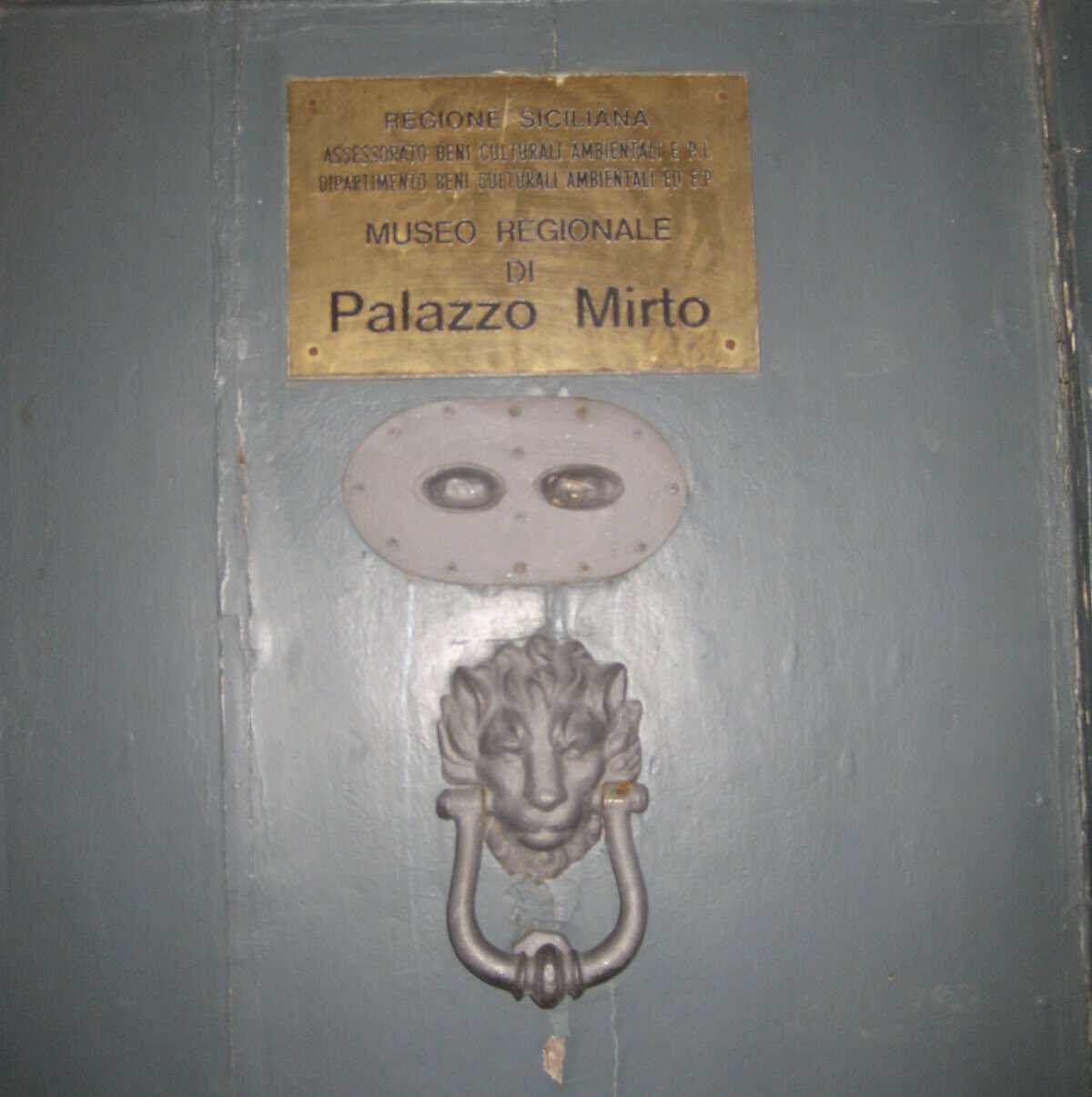
To see how the upper class lived centuries ago, visit the Palazzo Mirto www.casemuseoitalia.it/en.   The Palazzo Mirto is part of a network of “house museums” found throughout Italy. It was originally built for the Filangeri family in the mid 17th century and falls into the ancestry category of homes.

The Palazzo Mirto provides a glimpse at the opulence the upper classes enjoyed during the time of the Kingdom of Sicily.

The palazzo is filled with beautifully appointed rooms featuring elaborate furnishings, ceramics, antique musical instruments, and art. One of the most spectacular is the Chinese Room, likely decorated in 1876 when the house was renovated.

The Chinese Room was the height of fashion when it was designed in the mid 1800s.

There are also classic carriages on display along with other historic treasures that paint a picture of Sicilian life for the upper class in the days before the Risorgimento when Sicily was still a kingdom.

Splendid furnishings and elegant porcelain are among the items on display at Palazzo Mirto.

The museum is located at Via Merlo, 2 and telephone is +39 091 616 4751 for updated information.

Enjoy a performance or take a guided tour– these are the only ways to get inside the magnificent Teatro Massimo.

If there is a performance at the Teatro Massimo, get a ticket and go. Regularly scheduled dance, opera, and classical music are all performed here. If you’re feeling flush, you, too, can rent the royal box —you just have to purchase all 27 seats in it.

The Teatro Massimo is known for its excellent acoustics and grand stage.

If time does not permit you to attend a performance, take a guided tour, which is the only other way to see the inside of this magnificent and historic building.

This beautiful and historic theater is among the largest in Europe.

A model of the theater is displayed in the lobby.

The theater boasts one of the largest stages in Europe and is worth seeing. Built in 1897, it is known for its outstanding acoustics and is still the largest theater in Italy with 1,300 seats. It is appropriately located on the Piazza Verdi. +39 091 6053580 www.teatromassimo.it.

The Politeama Garabaldi Theater hosts regular performances in Palermo’s historic city center.

We wanted to visit the highly regarded National Archeological Museum but it was closed for renovations during our visit. Please go to www.regione.sicilia.it/beniculturali/salinas for current information.

A stroll through Sicily’s capital city yields surprises.

We did not visit the Catacombe dei Cappuccine, the home of about 8,000 dead bodies, amassed over the course of several hundred years, all dressed up and on display. We find the entire enterprise rather ghoulish and having seen the Capuccine Chapel in Rome, which features skeletons of dead monks, felt no obligation to see this seemingly far more ambitious enterprise. Apparently it is a popular place on many tourist itineraries and so we mention it here.

Flags fly outside the Porta Felice Hotel on the small but busy Via Butera.

There are lodgings at all price points and with all levels of service, as you would expect in a large city like Palermo. We stayed at Hotel Porta Felice www.hotelportafelice.it/en at Via Butera, 45. Tele. 091 6175678. This is in the old section of town near the port.

Pleasure craft and fishing boats crowd the marina at the end of Via Butera.

Even though the hotel is on what appears to be a small side street, it is pretty busy. We were upgraded to a nice suite, even though we’d booked through www.venere.com. The location was very convenient and we walked everywhere we wanted to go, after turning in our rental car.

Friendly service and excellent Sicilian specialties await diners at L’Ottava Nota.

We only had two nights in Palermo and wound up having dinner both evenings just down the street from our hotel at L’Ottava Nota Ristorante, via Butera 55 091 6168601 www.ristoranteottavanota.it.   The restaurant was small and lovely with fantastic food and great service. The fish dishes were all spectacular. Everything was fresh, artfully prepared and delicious.

Perfectly prepared pasta makes a delicious first course.

White fish in a light curry broth was a favorite.


Seafood dishes were the star attraction for us, but L’Ottova Nota has superb meat and vegetable dishes, too.

A fish in a light curry broth with vegetables was so good I still think about it, though it is no longer on the menu. We mentioned we were staying at the Porta Felice and were happily surprised to learn we’d get a 20 percent discount on our meal because we were guests there. We cannot confirm that the special pricing is still available but it never hurts to ask, should you dine here. The restaurant is just a few doors down from Porte Felice on Via Butera, 55. The telephone is +39 091 616 8601.

We had an excellent lunch at Trattoria Piccolo Napoli, www.trattoriapiccolonapoli.it. Piccolo Napoli had been recommended by an Italian friend in the wine business but apparently Anthony Bourdain had once dined here and the owner told us that lots of Americans had been showing up ever since. Our welcome was much more cordial when we told him (in Italian) that his friend Sasha had sent us! Try the panisse (chick pea fritters) to start and have any seafood you like—it is all super fresh and simply, but deliciously, prepared.

Snack on some panisse as you peruse the menu.

Simply but perfectly prepared pastas and seafood dishes shine at Piccolo Napoli.

Through a small window into the kitchen, we watched the chef toss a whole octopus into a pot, plate it and serve it to a young girl who devoured every bit. We had pasta with shellfish and then I had a beautiful swordfish dish. For dessert, they brought us the ubiquitous “winter melon.” The melon is sweet and refreshing and so called winter melon because it can be picked in the summer and stored throughout the winter.  We saw it on menus throughout Sicily. The restaurant is on the Piazzetta Mulino a Vento, 4. Telephone is +39 091 320431.

Palermo is a fascinating and vibrant city and certainly worth a visit. We’ll be back.

Our final meal in Palermo was an extremely casual, but excellent pizza lunch at the airport, which we enjoyed out on the observation deck with a view of planes coming and going, and of course, the beautiful sea!


Touring Taormina: The “Must Sees”

The town of Taormina offers several “must sees” including the Greek Theater and the Public Gardens.  The Greek Theater, or Teatro Greco Taormina, was built by the Greeks, possibly in the 3rd Century BC, and rebuilt and expanded by the Romans. The arena is spectacular and is still a venue for all kinds of entertainment ranging from rock to classical music, ballet, and theatrical performances. It is also the home of the Taormina Film Festival. The views over the Bay of Naxos and up to Mt. Etna are amazing. There will be lots and lots of other people sharing the views at what is possibly the most famous, and certainly among the most visited site in Sicily. Even when it’s crowded, it is worth waiting to enter and enjoy the setting.

Taormina's Teatro Greco is one of the most visited sites in Sicily.

Taormina’s Teatro Greco is one of the most visited sites in Sicily.

Stunning landscaping at Taormina's Greek Theater.

Stunning landscaping at Taormina’s Greek Theater.

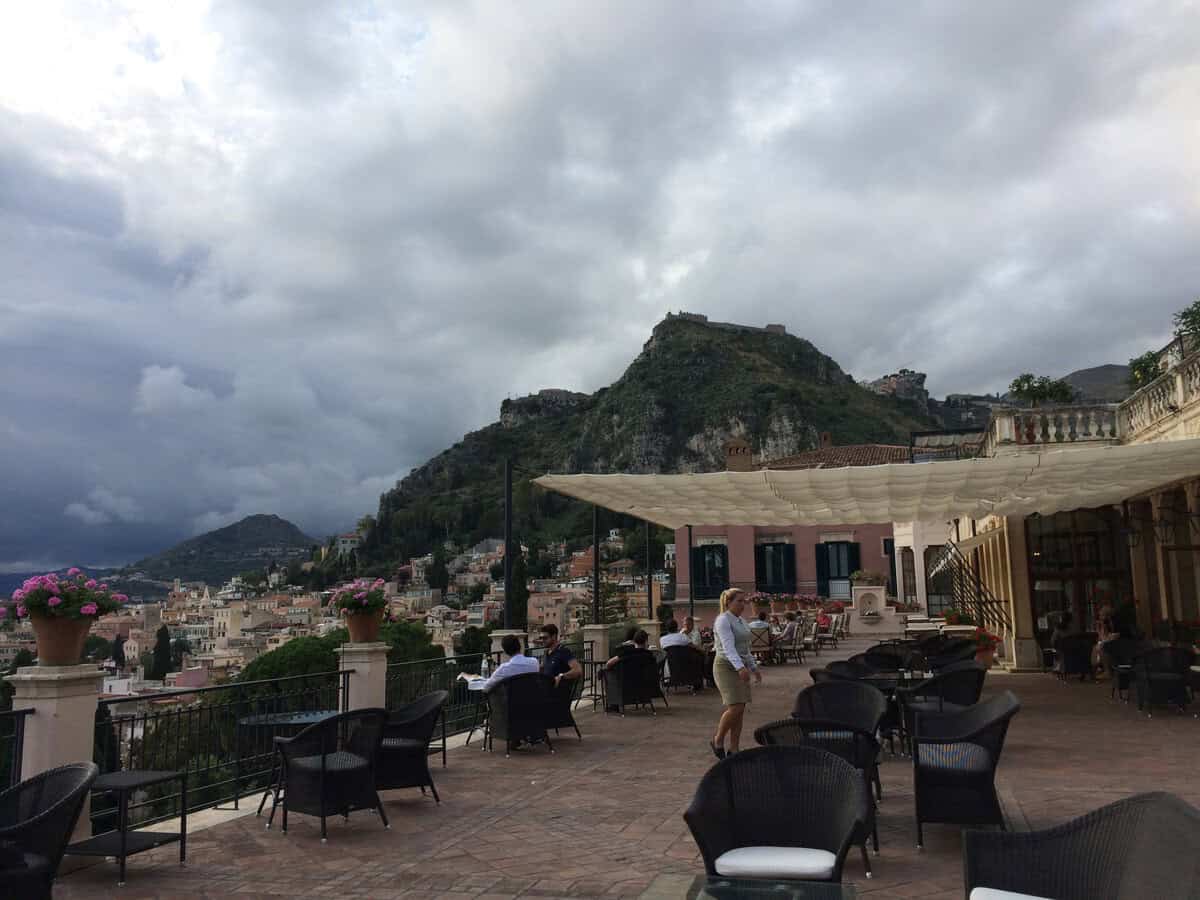
After braving the crowds, go next door to the luxurious Grand Hotel Timeo at Via Teatro Greco, 59.  If you are staying here, you are indeed fortunate. While we did not, several friends have and loved it. Even if you are not a guest, you can relax with a drink or coffee on their expansive verandah—and once again, enjoy the incredible views.  There are many, many lodging options in Taormina at all price points. The Grand Timeo is among the more expensive choices, but it is a very grand property and if you want a location in the heart of Taormina and price is not a consideration, why not?

The lovely terrace at the Grand Hotel Timeo is a fantastic place to relax with a drink or coffee.

The lovely terrace at the Grand Hotel Timeo is a fantastic place to relax with a drink or coffee.

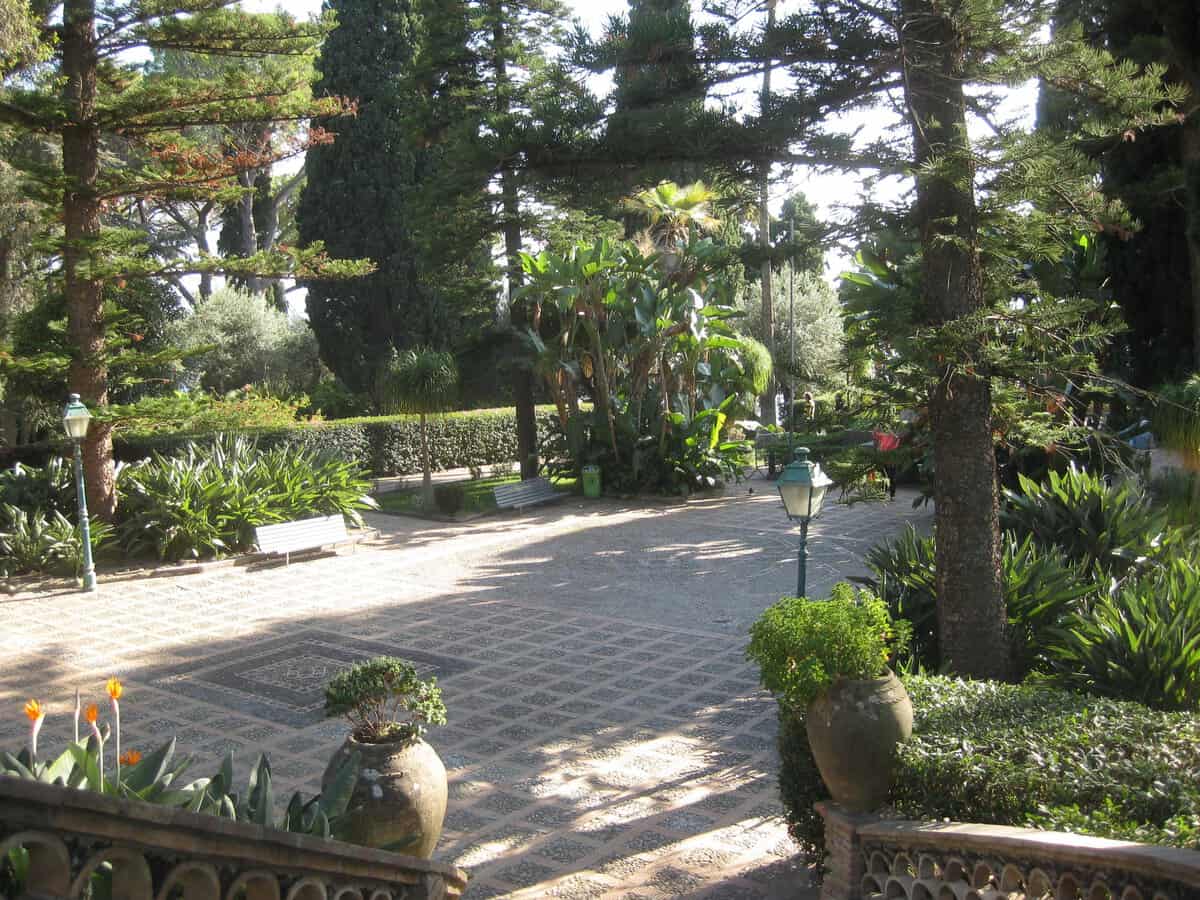
The public gardens, Giardini della Villa Comunale, located on Via Bagnoli Croce are gorgeous and blissfully peaceful. Even though they are quite near to the Greek Theater, you’ll rarely encounter crowds while strolling the lovely manicured grounds, which also afford spectacular views.

Taormina's beautiful public gardens are a peaceful oasis in a busy tourist town.

Taormina’s beautiful public gardens are a peaceful oasis in a busy tourist town.

Giardini Villa Comunale

Giardini della Villa Comunale, Taormina, Sicily.

The gardens were the creation of Lady Florence Trevelyan, an Englishwoman known for her dalliances as well as her botanical interests. Lady Trevelyan included a number of “follies,” buildings included for visual interest but no other real purpose, in her gardens.

A so-called "folly" at the Giardini della Villa Comunale in Taormina, Sicily.

A so-called “folly” at the Giardini della Villa Comunale in Taormina, Sicily.

Along with beautiful Mediterranean and exotic flowers, plants and trees that keep the garden colorful all year long, you’ll find a human driven “torpedo” from World War II at Taormina’s Giardini della Villa Comunale. The craft, which operators in the Italian Navy referred to as the Maiale (pig) was electronically propelled and driven by two crewmen in dive suits who steered the torpedo to an enemy ship, detached the warhead, and affixed it to the enemy ship’s hull. Mission accomplished,  the divers rode away on the torpedo before the explosion. An interesting find in the public gardens!

The human torpedo nicknamed "Miaile" or pig, at Taormina's beautiful public gardens.

The human torpedo nicknamed “Maiale” or pig, at Taormina’s beautiful public gardens.

Next, we’ll join the crowds and see the town.

Villa Romana del Casale’s Magnificent Mosiacs

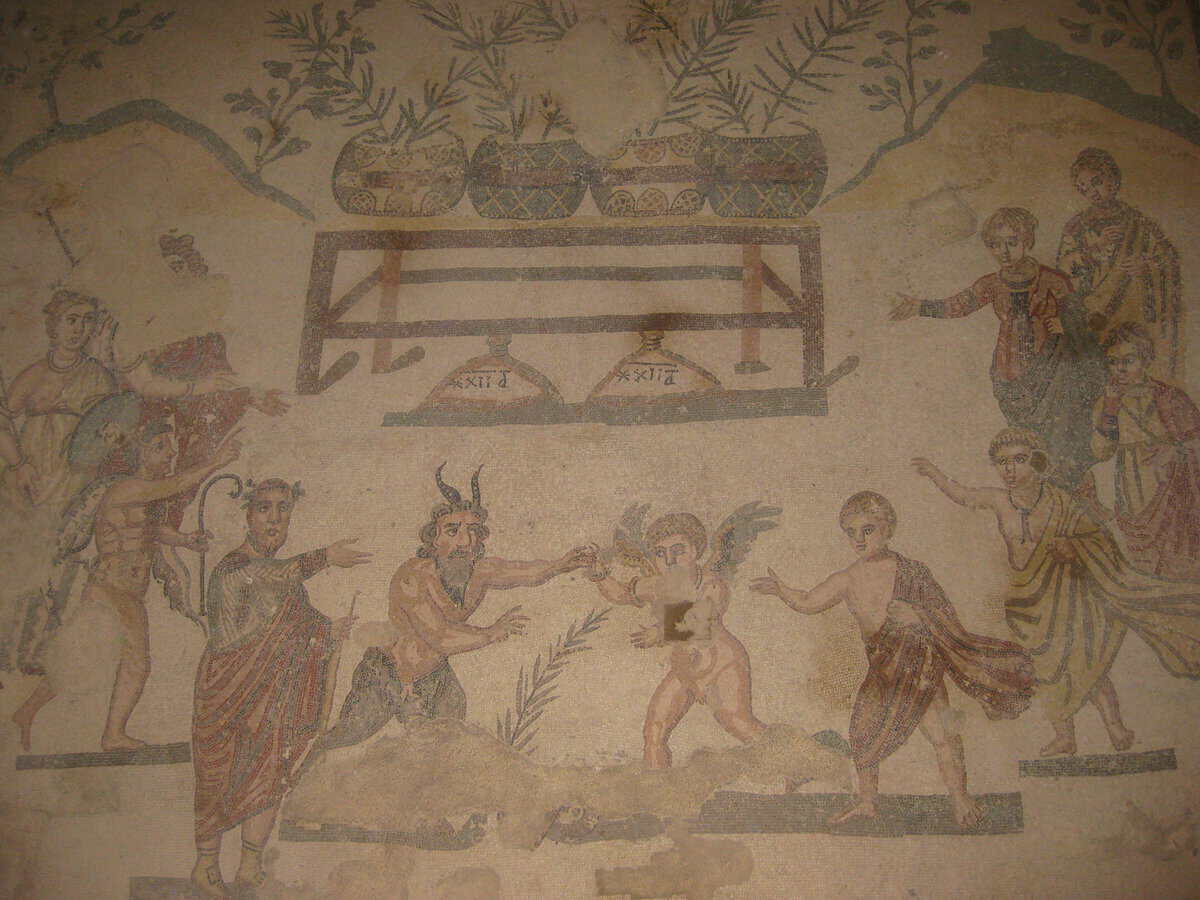
Heroic hunting scenes, chariot races, beautiful birds, wild beasts, cherubs, mythical sea creatures, even girls in bikinis—are all here at Villa Romana del Casale depicted in mosaics so vibrant that they almost come to life.

One of the polychrome floor mosaics at Villa Romana del Casale, near Piazza Armerina, Sicily.

One of the polychrome floor mosaics at Villa Romana del Casale, near Piazza Armerina, Sicily.

Almost in the dead center of Sicily, about 5 km southwest of the town of Piazza Armerina, Villa Romana del Casale is home to the largest, best preserved and most exquisite Roman mosaics anywhere in the world. You won’t come upon these splendid ruins by chance and it is well worth a side trip to see them. We chose to visit the Villa Romana del Casale on our way from Taormina to La Planteta’s La Foresteria near Menfi. You may be scratching your head if you’re looking at a map right now, but for our purposes and itinerary, it seemed the best time to go. It was a very long drive to get here but it was worth it.

Mosiac at Villa Romana del Casale near Piazza Armerina, Sicily.

The African animals depicted in the mosaics at Villa Romana del Casale show the far reaches of the Roman Empire.

Protected as a UNESCO site since 1997, the Villa was likely constructed in the 4th century, possibly for a Roman senator. The structure was built upon a more rustic villa dating between the 1st and 3rd centuries AD. The exacting detail illustrating dress, hairstyle and even footwear, shown in the mosaics’ depictions of daily life, as well as those more fantastical scenes, helped archeologists date the villa’s construction.

Villa Romana del Casale was built between the 2nd and 4th centuries AD.

Villa Romana del Casale was probably built 4th centuries AD atop an older structure.

The mosaics are so well preserved primarily because they were covered in a mudslide in the 12th century and remained buried until excavations began in the 1950s. Once subject to the elements, the ruins are now covered and walkways connect the four buildings at different elevations, allowing visitors to view many of the intricate mosaic floors from above and at ground level. Various rooms including private apartments, baths, and courtyards are open for viewing.  Different themes and mosaic motifs indicate who was most likely to inhabit or use the rooms: adults, children, servants, or guests.

Extensive ruins at Villa Romana del Casale, near Pizza Armerina, Sicily.

Extensive ruins at Villa Romana del Casale, near Pizza Armerina, Sicily.

Villa Romana del Casale was not at all crowded when we were there in October, but if the enormous car parks and tour bus lots are any indication of the number of visitors that arrive during the busy summer months, beware.  Try to go early or late in the day to avoid the crowds and the heat. Please visit the Villa’s website www.villaromanadelcasale.it for updated ticket prices and hours of operation, as well as for downloadable visitor’s guides in English, French and Italian.

Whenever you go, you’ll be rewarded with a glimpse into Imperial Roman daily life, and fantastic flights of fancy, as you view this incredible record of the past preserved in the form of magnificent mosaics.

Note: If you go to see the villa, have a delicious lunch or dinner at nearby Al Fogher. We had a lovely multi -course lunch before our visit to the villa. We were told Al Fogher was one of the best restaurants in the area but was not at all busy when we were there. Book a table to be sure you get one if you travel during the high season.  There was a cafeteria onsite at the Villa Romana but it was not particularly inviting and most of it was closed—likely because we visited off-season. We were happy to have a cold drink there though. It can get very hot, even in October, in Sicily and the day of our visit was no exception.


Treasures of Berlin’s Museum Island

Take a stroll through the Brandenburg Gate, down Unter den Linden, to the banks of the River Spree. There you’ll find some of the world’s most intriguing and important cultural treasures—the Ishtar Gate, the bust of Nefertiti and so many extraordinary antiquities, classical sculpture and masterworks, it is impossible to imagine they could all be in one place—but they are—Berlin’s Museum Island.

IMG_0852

Museumsinsel http://www.smb.museum is home to five separate historical museum buildings, each designed by a well-regarded architect of the time and now part of a UNESCO world heritage site. Here you will find the Pergamonmuseum, Altes (Old) Museum, Alte Nationalgalerie, the Bode-Museum, and the Neues (New) Museum.

IMG_0626

The museums on Berlin’s Museumsinsel are a treasure trove of important paintings, sculpture, and antiquities from around the globe.

According to Visit Berlin, more than 3 million people come each year to view the collections that range from prehistory to 20th century art. Savvy travelers will want to purchase a Museum Pass, which provides entry to 50 major and lesser-known museums, including the five on Museum Island, over three consecutive days for one low fee. The price was 24 Euro when we visited in November. Passes are available at Berlin Tourist Info points, in the museums, and online at Shop.visitberlin.com.

IMG_0859

The magnificent Ishtar Gate, believed to date from 170 AD, was dedicated to Zeus and Athena. It was brought to Berlin from Western Turkey in 1903.

The long lines and crowded galleries attest to the fact that the Pergamon Museum is on nearly every visitor’s short list of places to visit in Germany’s capitol city.   It should be. The magnificent Pergamon Altar, Ishtar Gate, and marvelous sculpture and other works from ancient Sumeria, Babylon, Assyria, and modern day Iraq, Turkey and Syria are all on display here.  Restoration is underway on the Ishtar Gate, but it remains open for viewing. The Pergamon Altar was closed for restoration during our recent visit and will reopen in 2019. We were fortunate to see it several years ago.

IMG_0866

Detail from the Processional Way, which leads to the Ishtar Gate, at the Pergamon.

IMG_0869

Stunning Roman mosaics cover the floor in the gallery that contains the Market Gate of Miletus, built in the 2nd century AD in Turkey and excavated and brought to Berlin in the early 1900s.

IMG_0901

The stunning Aleppo Room at the Pergamon, seen through protective glass walls.

IMG_0907

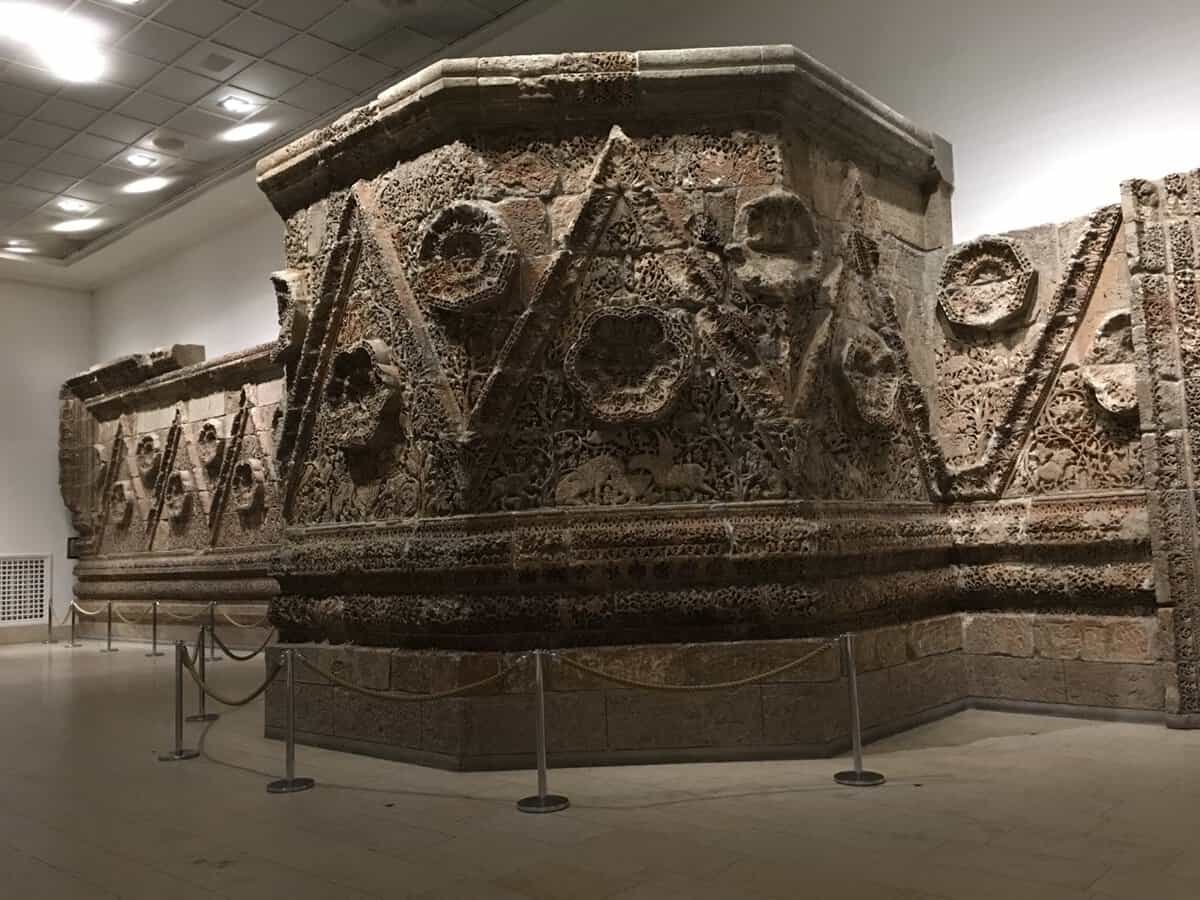
Facade of the Caliph Palace Mshatta from Amman/Jordan from the 8th century. The 33 meter long, 5 meter high facade was brought to Berlin in 1903 to the Bode Museum. In 1932 it was reconstructed in the Pergamon.

We practically had the galleries to ourselves when we visited the Bode-Museum in November. This beautiful museum boasts art from the Byzantine and Roman Empires, a spectacular sculpture collection spanning from the early Middle Ages to the late 18th century, and one of the most extensive numismatic collections in the world. We could not understand why the Bode wasn’t full of people enjoying these art treasures.

IMG_0842

Pedro Roldan’s Our Lady of Sorrows (Mater Delorosa) at the Bode-Museum.

IMG_0784

The Bode-Museum is known for it’s sculpture collection. Friezes, sacred art and other cultural treasures are also on display.

IMG_0838

Don’t miss the extensive numismatic collection at the Bode. It’s one of the most comprehensive in the world.

The Bode also has a lovely café where we enjoyed a delicious and very reasonably priced lunch along with views over the Spree. The cafe balcony overlooks the museum’s grand entrance below.

IMG_0815

IMG_0814

The comfortable cafe at the Bode was perfect for a light lunch.

IMG_0817

Save room for dessert!

If Impressionist works are more to your liking, visit the Alte Nationalgalerie, home to 19th century works by Renoir, Manet, Monet, and Cezanne, Adolph von Menzel and other well regarded artists of that time period. The Alte Nationalgalerie was the third museum to open on Museum Island.

IMG_0617

The Alte Nationalgalerie is home to a fine collection of 19th century paintings– part of Berlin’s State Art Collection.

Housed in one of Berlin’s most impressive neoclassical buildings, the Altes Museum was dedicated in 1828 by Friedrich Wilhelm III for “the study all antiquities and the free arts”. The museum’s permanent collection centers on classic antiquities covering Etruscan, Roman and Greek art and includes urns, vases, sarcophagi, friezes, pottery and sculpture.

IMG_0769

The Altes Museum is a popular destination for student and tour groups.

The 3300 year-old bust of Nefertiti is among the highlights at the Neues Museum, or New Museum. After sustaining significant damage during World War II, the building, which was designed by Friedrich August Stuler and constructed between 1843 and 1855, was abandoned. In 2003, extensive restoration began and the museum opened in 2009 with three main collections—Egyptian art from the Egyptian Museum and Papyrus Collection, prehistoric objects from the Museum for Prehistory and Early History, and classical antiquities. Visitors will find works from around the globe including the Middle East, North Africa, and Northern Europe at the Neues Museum.

For updated information on each of the museums on Berlin’s Museum Island and details on permanent collections, temporary exhibitions, admission, hours and directions, please visit http://www.smb.museum.

Note: The banner image is the Cathedral of Berlin known also as Berlin Dom, located on Museum Island.  In addition to church services, the Berlin Dom is open for tours. Numerous concerts and other events are also held there throughout the year. To the right is the Berlin TV Tower, constructed by the Soviets during the Cold War and now a popular tourist destination.

Seeking Serenity at Portland’s Spectacular Japanese Garden

Gorgeous grounds, stunning views and an authentic Japanese experience have been delighting visitors to Portland’s spectacular Japanese Garden since 1963. Now, the beautiful 12-acre oasis, which includes five separate gardens with plenty of peaceful seating areas for reflection, a Japanese Tea House, tranquil ponds, and meandering paths perfect for contemplation, has even more to offer. Last month the new $33.5 million Cultural Crossing opened to visitors.

Follow the footpaths, steps and bridges that lead to each of the separate and distinctive garden spaces within Portland’s Japanese Garden.

The new $33.5 million Cultural Crossings expansion project includes new exhibition space, library, tea house and additional garden areas, all designed to enhance the authentic Japanese experience for visitors.

Designed by respected architect Kengo Kuma, the Cultural Crossing’s new buildings provide the perfect showcase for traditional Japanese arts and culture and serve as a venue for family-friendly activities and interesting demonstrations. An already popular attraction is even more appealing with the new expansion project. No wonder the lines for tickets are long. Purchase tickets online and check-in at the membership desk, exchange your voucher for a ticket there, and avoid the serpentine lines that are sure to continue for some time.

Minutes away from Portland’s busy streets, the Portland Japanese Garden is an oasis of tranquility.

Many visitors take the complimentary shuttle up to the gardens and walk back down to the parking area along the paved pathways.

Visitors can either take a complimentary shuttle bus or walk up the pathway to the open and airy Japanese Arts Learning Center–the heart of the new project with performance space, library and classroom.

Young visitors take a break on the steps inside the new Jordan Schnitzer Japanese Arts Learning Center.

The ground level Tanabe Gallery currently hosts an exhibition of ceramics, calligraphy, and sculpture by former Japanese Prime Minister Hosokawa Morihiro.

A delightful display of ceramics, calligraphy, and sculpture by former Japanese Prime Minister Hosokawa Morihiro are currently on exhibit in the Tanabe Gallery and Pavilion Gallery.

The expansive display, Hosokawa Morihiro: The Art of Life, a Rebirth in Clay, continues in the Pavilion Gallery, which also includes a portable teahouse.   Two additional “Art in the Garden” showcases, one featuring Kabuki costumes and the other, Noh masks and costumes, are scheduled for later in the year. The Japanese Garden will host related events and activities associated with both.

A portable tea house with the implements needed to perform a classic Japanese tea ceremony are part of the current exhibition. Noh masks and costumes and Kabuki costumes will be featured in the galleries later this year.

Now, to explore these magnificent gardens! The Strolling Pond Garden was our first stop, after a visit to the Learning Center and Gallery. Visitors can walk across the “iconic Moon Bridge” over the Upper Pond and enjoy the views.

Stroll the “Zig-Zag Bridge” over the Lower Pond which is surrounded by iris. It had not quite bloomed at the time of our visit, but was close. The aptly named Heavenly Falls provide the perfect backdrop to the Lower Pond and were a popular “selfie stop.”

The Heavenly Falls provide the perfect backdrop for contemplation or photo opps.

Follow the rough stepping stones along a lantern- lined path through the beautiful Japanese Tea Garden to the authentic Kashintei Tea House. Typically, the tea garden is a place to appreciate nature’s beauty and “the art of living in harmony” while leaving the cares of the world behind. This is certainly the case at the Portland Japanese Garden—it is so serene it’s easy to forget you are mere minutes from busy city streets.

Visitors are invited to leave their worldly cares behind when they explore the authentic tea garden and Kashintei Tea House.

The Kashintei Tea House, which is where tea demonstrations and related events are held, was brought to Portland from Japan and reassembled here.

Contact the Japanese Garden to learn when tea demonstrations and other events are scheduled for the Kashintei Tea House.

The Portland Japanese Garden has a lovely Sand and Stone Garden, created by Professor Takuma Tono, the Garden’s chief designer in the 1960s. These “dry landscape” gardens are sometimes called “Zen Gardens” because they are often found at Zen monasteries and are meant to invite quiet contemplation. The Sand and Stone Garden here illustrates an important Japanese concept—“the beauty of blank space.”

Enjoy your moments of Zen at the Sand and Stone Garden.

Recent additions to Portland’s Japanese Garden include the Natural Garden, which features local plants not typically associated with Japanese gardens and depicts seasonal change.

The cherry blossoms were in full bloom during our recent visit to Portland’s Japanese Garden.

The small courtyard garden (Tsubo-Niwa) and the Ellie M. Hill Bonsai Terrace are both new and located near the Tateuchi Courtyard in the Cultural Village.

Visitors are treated to an exquisite display of bonsai at the new Ellie M.Hill Bonsai Terrace.

The Flat Garden, which highlights each of the four seasons with specific plantings and trees is popular with visitors. The weeping cherry tree on the left represents spring while a 100- year old maple depicts autumn.

The Flat Garden is meant to be viewed from a single angle either from inside a home, where the door or window serves as a frame, or from a verandah, as these visitors are doing.

The gravel stands in for water, signifying summer in the Flat Garden.

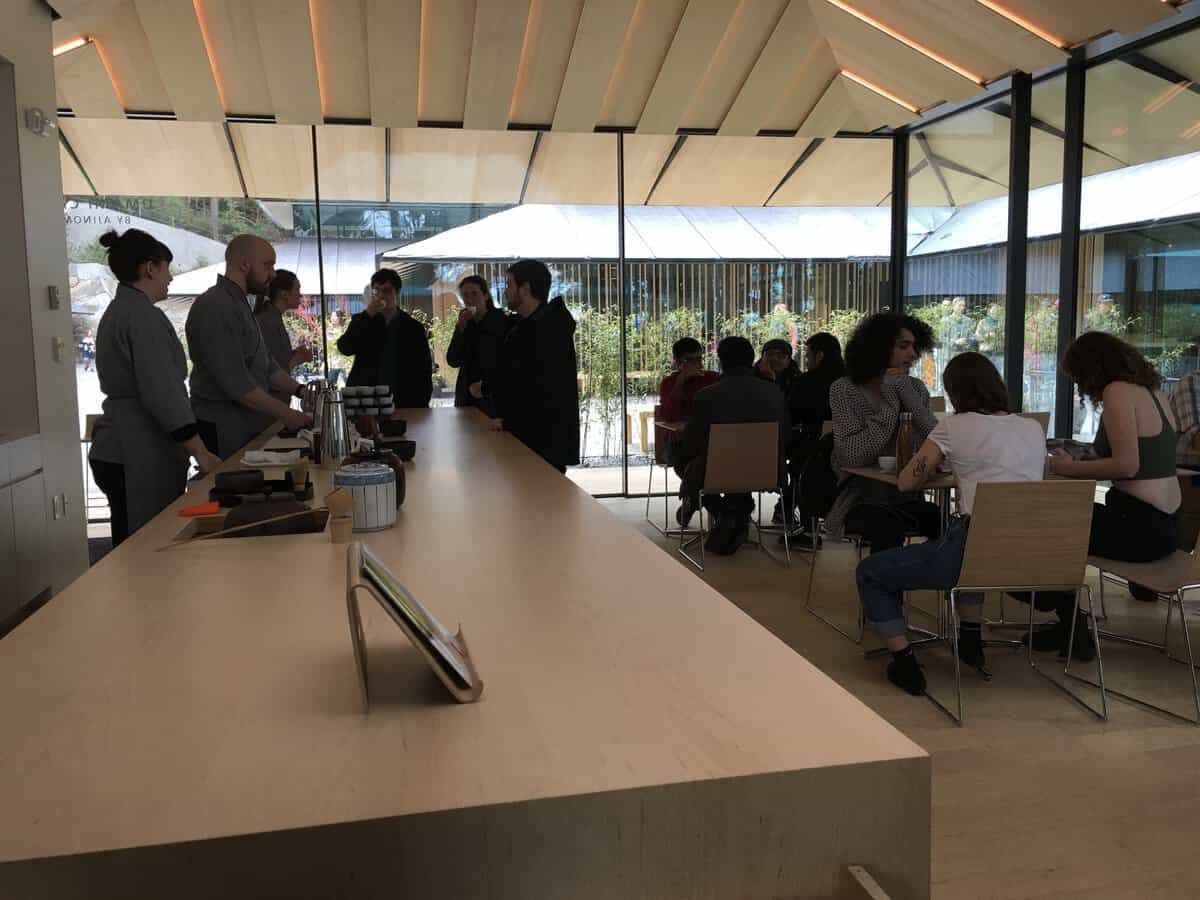
After you’ve finished strolling around the gorgeous gardens and interesting exhibitions, stop in and sample the fare at the new Umami Café. During our visit, just a week after the April 2 reopening, the café was not yet serving food but was offering complimentary samples of four delicious teas from Tokyo-based Jugetsudo Tea Company. (Update– Light snacks and sweets were available on subsequent visits.)

Stop in the new Umami Cafe for a restorative cup of tea and authentic Japanese sweets and snacks.

During our visit, guests were offered four different and delicious teas as part of a complimentary tea tasting.

When His Excellency Nobuo Matsunaga, the former Ambassador of Japan to the United States, visited the Portland Japanese Garden, he proclaimed it “the most beautiful and authentic Japanese garden in the world outside of Japan,” according to the organization.

Tranquil settings such as this one near the Upper Pond, have been drawing visitors since 1963.

They currently report more than 350,000 visitors annually, a number that will surely grow with the addition of the new Cultural Crossroads expansion. Be sure to add this spectacularly beautiful and serene spot to your Portland itinerary.  For updated information on tickets, events and hours click here.

Art and More at Seattle’s Free Frye Museum

IMG_8920

Welcome to the Charles and Emma Frye Art Museum.

Charles and Emma Frye began collecting art in 1893 focusing primarily on French and German artists from the 19th and early 20th centuries. The couple built an impressive Founding Collection of 230 paintings, now on permanent display at their namesake museum in Seattle’s Capitol Hill area. The museum is open to the public at no charge, as the Fryes intended when they established the Charles and Emma Frye Free Public Art Museum in 1952.

IMG_8925

The museum has expanded and been updated since it opened at its current location in 1952.

The Fryes had a particular interest in German painters of the mid-19th Century Munich School including Wilhelm Leibl, Franz von Lenbach and Max Slevogt whose works, along with other prominent painters of the period, are part of the Founding Collection.

IMG_8897

Henry Raschen’s 1913 portraits of Emma and Charles Frye hang in the Frye Salon.

The Frye’s Permanent Collection includes not only those works collected by Charles and Emma, but also later acquisitions made by the Frye Foundation. These later aquisitions expanded the collection to include American artists as well as European painters other than the French and German artists the couple built their original collection upon.

IMG_8896

Acquisitions by the Frye Foundation expanded the collection to include American artists.

Gilbert Stuart and John Singleton Copley’s Colonial Period paintings hang alongside the American Realism works of Winslow Homer and Thomas Eakins. Mary Cassatt, James McNeil Whistler, and John Singer Sargent are among the ex-pat painters whose Impressionist works are displayed.

IMG_8888

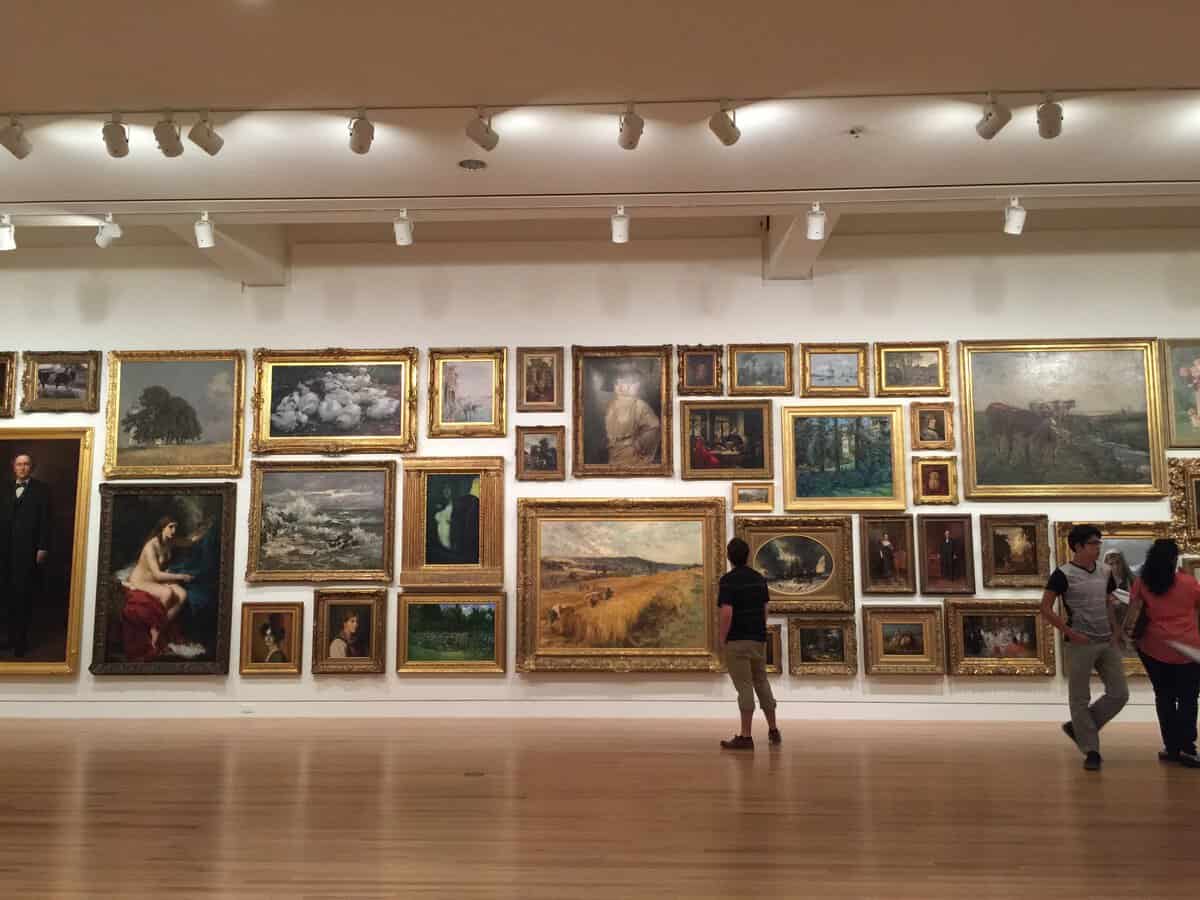
Paintings are hung as they once were in the Frye home gallery.

IMG_8891

Portrait of Chief Seattle by Henry Raschen, 1916.

The vast collection of paintings covers every wall in the Frye Salon with the works hung as they once were in the Frye’s home gallery. The Frye Salon is reminiscent of Boston’s Isabella Gardener Stewart Museum. In other words, there is not much space between the works and they are not hung in any apparent order— historical, religious and allegorical paintings hang beside portraits, landscapes and seascapes. There are several copies of a hardcover guide available to visitors in the gallery that identifies and describes each work and artist.

IMG_8902

Visitors reference gallery guide to identify paintings and artists.

IMG_8903

The helpful guide is available only in the gallery. There are several other books about the museum and its collection for sale in the shop, but not the gallery guide.

In addition to the Permanent Collection, there are several changing contemporary exhibitions.

IMG_8877

The Frye features contemporary art as well as European and American paintings from the 19th and 20th centuries.

We enjoyed the two Andy Warhol exhibitions on view during our visit. During the 1970s, Warhol recorded a reported 40,000 Polaroids documenting his personal and professional endeavors. Warhol’s Little Red Book #178 is a collection of 19 Polaroid pictures of his friends and other celebrities taken in 1970 while he made his film L’Amour.

IMG_8883

Little Red Book #178 has 19 of the reported 40,000 Polaroid photos Warhol took in the 1970s.

From 1964-1966, Warhol recorded hundreds of visitors to his studio, called The Factory, using a Bolex camera. Warhol’s 12 Screen Tests features artists and celebrities who were instructed to sit still for the length of a 16 mm film—about three minutes. Subjects featured in 12 Screen Tests include Dennis Hopper, Edie Sedgwick, Susan Sontag, Lou Reed, Bob Dylan, Marcel Duchamp and Brooke Hayward. Not everyone was capable of the task assigned. Bob Dylan’s Screen Test shows him smoking a cigarette and fidgeting throughout.

IMG_8906

Hundreds of Warhol’s Factory visitors were filmed for his series of “Screen Tests.”

IMG_8905

Subjects were meant to be still for the three minute films, but Bob Dylan fidgeted and smoked throughout his “Screen Test.”

Also on view was Structure and Ornament, a multi media exhibition of Leo Saul Berk’s work based on the iconic Chicago-area Ford House, his childhood home.

IMG_8868

Berk’s dream about sleeping on the floor at Ford House was the inspiration for “Heat Signature.”

The artist refers to his work as “a riff on the house,” which has historical significance and was designed by architect Bruce Goff. The exhibition includes the history of the home, photographs and films, along with Berk’s sculptures and other works, based upon the unique structure and the artist’s memories of living there.

IMG_8861

Leo Saul Berk’s childhood residence, the iconic Ford House, was the basis for the “Structure and Ornament” exhibition.

IMG_8876

“Cone Twelve,” Berk’s aluminum composite and stainless steel sculpture.

IMG_8865

“Mortar and Marbles” is a to-scale representation of a section of the Ford House’s curved coal walls.

We also saw American Portraits: 1880-1915– a selection of portraiture by artists whose works are included in the Founding Collection.

IMG_8907

Museum visitors relax and enjoy the “American Portraits: 1880-1915” exhibition.

The Museum has a nice little café with an outdoor garden. Sandwiches, soups, sweets and other simple but satisfying offerings are available at very reasonable prices.

IMG_8927

The Frye’s cafe has a lovely garden area and is a nice option for lunch or coffee.

On our first visit to the Frye Museum, we were told that one of the galleries was closed for yoga, but would soon reopen. While yoga is no longer offered at the museum, the Museum hosts art classes for everyone from pre-schoolers to life-long learners, Mindful Mediation on the first and third Wednesday of the month, art history lectures, jazz concerts, activities for those with memory loss and their families, film presentations and more.  Find the complete schedule here.

Charles and Emma Frye would no doubt be pleased to see their wish– that the public enjoy free access to art, that ‘perfection of good-nature,’ continues to be a reality today, thanks to their free art museum.

Written and photographed by Jeanne Neylon Decker

Protected by US Copyright Laws.

Seattle: Whirlwind Weekend in the Emerald City

Art, food and fun highlighted our three-day weekend in the Emerald City. We started off our Saturday morning with a monorail ride from the central shopping area to the Center City area, home of the iconic Space Needle. The monorail, which was built for the 1962 World’s Fair, costs just $4.00 and is only $2.00 for seniors, children under 12, disabled, and active duty military.

IMG_8615

It’s a quick but fun ride on Seattle’s monorail.

The trip takes only minutes between Westlake Center Station at 5th and Pine Streets and The Seattle Center Station. Purchase your ticket at the kiosk or from the cashier as you enter the train. The monorail runs every 10 minutes or so from 8:30 a.m. on weekends (7:30 a.m. during the week) and closes between 9 p.m. and midnight, depending on the date and what’s happening downtown. Be sure to check the schedule.

IMG_8777

Sonic Bloom greets visitors walking to EMP or Chihuly Garden and Glass. The “sunflowers” move and emit sound.

The monorail drops you off steps from at the Space Needle, Chihuly Garden and Glass and MoPOP Museum (Museum of Pop Culture).

Seattle's iconic Space Needle was built for the 1962 World's Fair.

Seattle’s iconic Space Needle was built for the 1962 World’s Fair.

We’d been to the Space Needle on previous visits so headed right to the Chihuly Garden and Glass.

IMG_8698

There’s a reason Chihuly Garden and Glass is on everyone’s Top 10 list. Don’t miss it!

We should have bought our tickets online—the lines were long for the cashiers inside and at the outdoor kiosks, and cost more than the online price. Plan ahead! Once you have your ticket and have reached the admission area, ask to have your arm stamped so that you can return in the evening to view these magnificent glass works illuminated. The sun sets quite late in Seattle during the summer months so keep that in mind when planning your return visit.

IMG_8643

Prepare to be amazed.  Detail of Chihuly’s Sealife Tower.

The Chihuly Garden and Glass is included in Seattle’s City Pass so if you plan to visit more than one of the included attractions—yes, the Space Needle is one of them—you may want to opt for the City Pass. You’ll save money and time since you won’t wait on line.

IMG_8636

Tabac Basket in the Northwest Room.

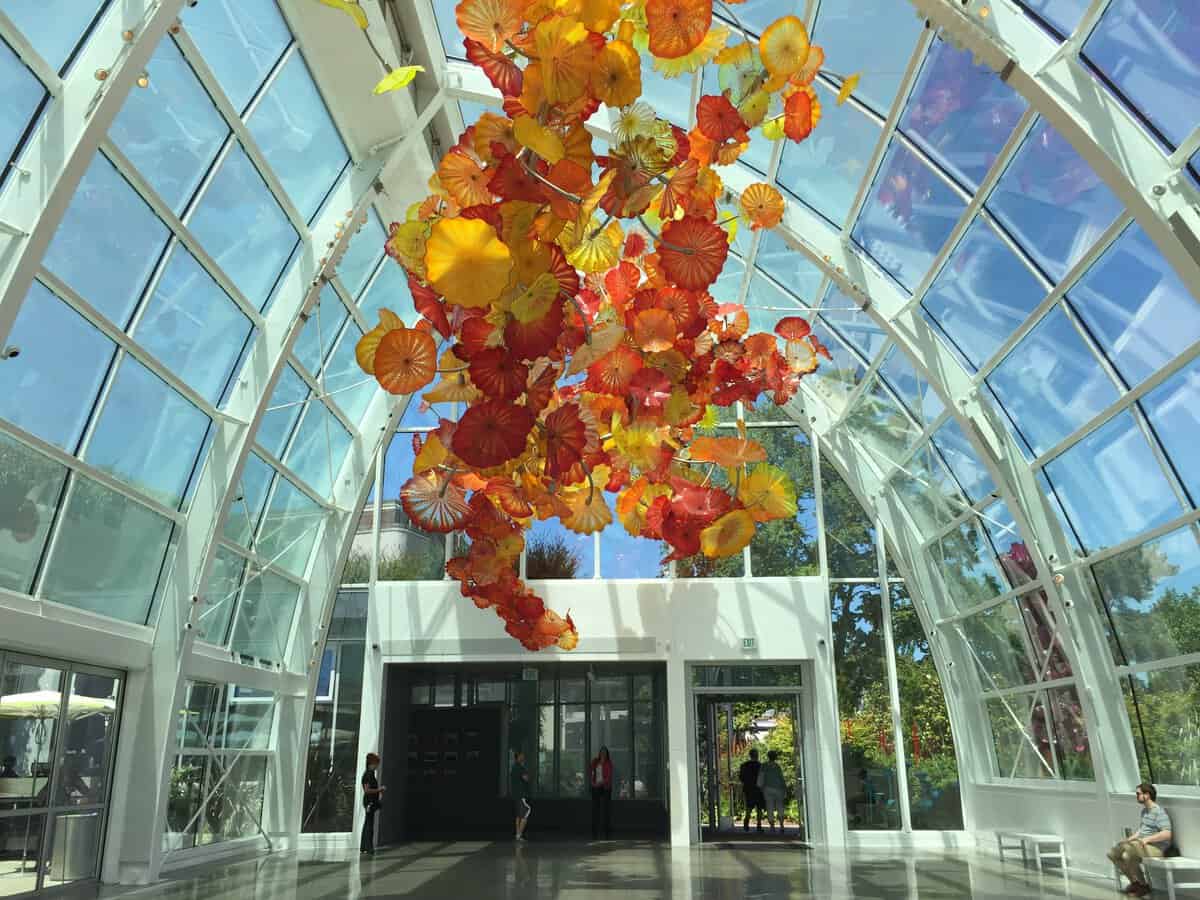
Once inside, be prepared to be awed. There is a reason Chihuly Garden and Glass is on everyone’s “must see” list. We heard more than a few “wows” as soon as we stepped into the first gallery. Dale Chihuly’s glass art works are artistic, whimsical and beyond stunning.

IMG_8675

Mille Fiori– A thousand flowers- delight the senses.

These photos cannot capture the splendid forms, movement, intricacy and vibrant colors in Chihuly’s work but they do give an hint of what you’ll experience at Chihuly Garden and Glass.  It is a magical place.

IMG_8656

Persian Ceiling floods the room with color from above.

It seems as you move from gallery to gallery the works get progressively more beautiful and intricate.   The lighting, staging and even the music in the galleries combine to create a magnificent experience.

IMG_8754

Ikebana and Float Boats capture the viewer’s imagination.

A stroll through the gorgeous gardens is another delight. The art is so beautifully integrated in the various plantings that you’ll want to linger.

IMG_8722

A view in the garden.

IMG_8723

IMG_8727

Northwest timber is integrated in the glass garden.

IMG_8731

We had the added benefit of a spectacular day—clear, blue skies and temperatures in the mid-70s.  The soothing background music being performed by a gentleman playing the Eyhu on the street just outside the garden added to our enjoyment.

IMG_8765

Soothing music further enhanced our enjoyment of the gardens.

The works on display are included in a fairly comprehensive catalog titled, Chihuly Garden and Glass, available in the gift shop in the lobby.  It is one of many available volumes featuring Mr. Chihuly’s art. In addition to the usual museum gift shop items like books and calendars featuring the artist’s work, original pieces of Chihuly’s glass art are also on offer.

IMG_8779

This is no ordinary gift shop.

IMG_8781

A spectacular souvenir.

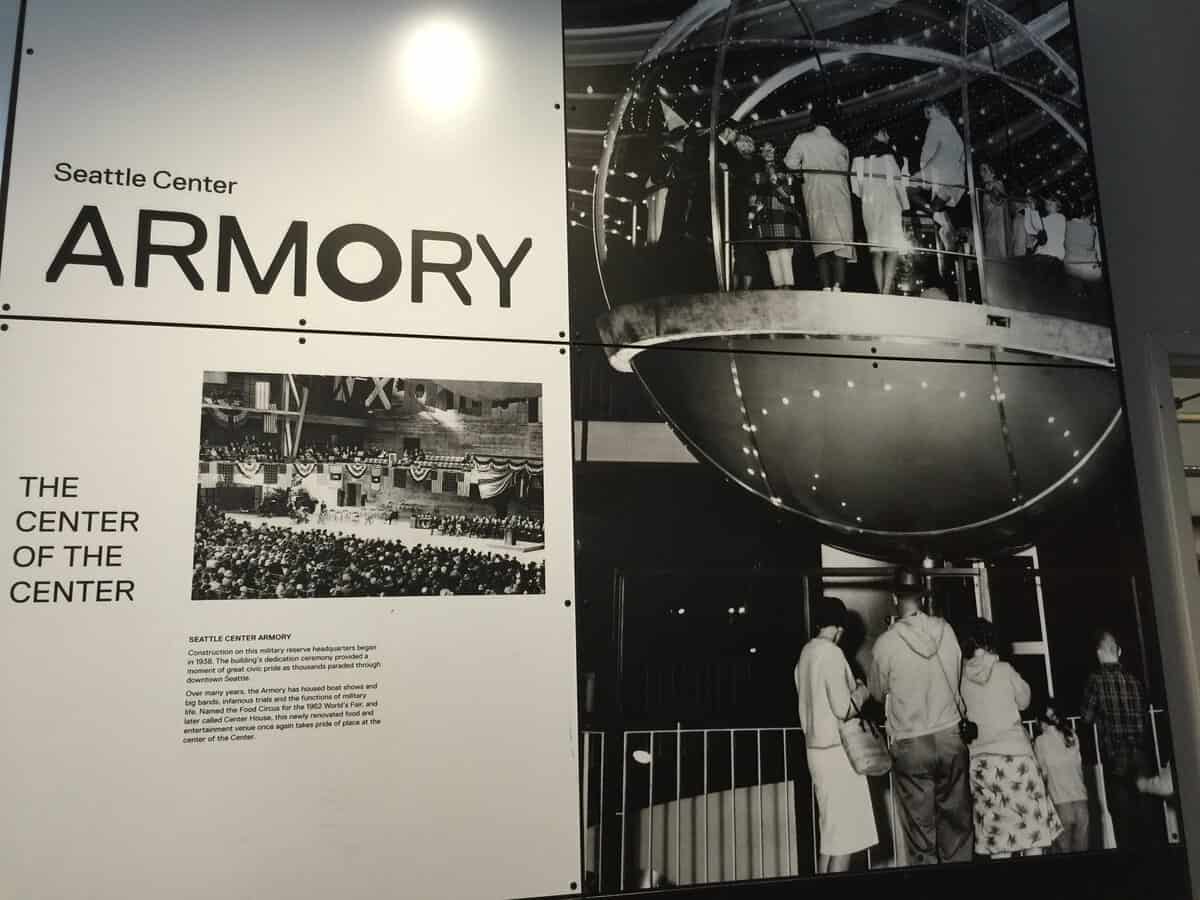
If you’ve worked up an appetite after your stroll through the garden, head over to the Seattle Center Armory a few steps away. Originally built in 1939 to house the 146th artillery and its half-ton tanks, it was repurposed for the 1962 World’s Fair and became the city’s first vertical shopping mall, called the Food Circus.

IMG_8775

Once home to an artillery unit and half-ton tanks, the Armory now features food and family fun.

Today, in addition to a public space that hosts more than 3,000 free family entertainment and cultural events each year, you’ll find a food court that’s got something for everyone. Though Starbuck’s and Subway do have a presence here, they share the main floor with more interesting offerings from the likes of Eltana’s Wood- Fired Bagel Café, Seattle Fudge, MOD Pizza, Kabab, Cool Guys Fry Bar, Ceres Roasting Company, Bigfood BBQ, Quincy’s (burgers and seafood) , Blue Water Taco, Plum Pantry (vegan and organic selections), The Confectional and Skillet Counter.

IMG_8770

The Seattle Center Armory is a busy place at lunchtime.

Mediterranean street food, beef baracoa, fish tacos, Belgian style fries, individual cheesecakes, pizza, vegan fare, and a terrific fried chicken sandwich are among the tantalizing possibilities we deliberated for lunch.

IMG_8769

So many choices…

We chose Skillet Counter where the Fried Chicken Sammy with a fennel seed crust, kale, and jalapeno aioli on a potato roll called out to my traveling companions. I had a delicious curried carrot soup and a salad. We met Chef Mike “Mookie” who kindly shared his recipe for the soup and the aioli. Looking forward to whipping up some of that at home!

IMG_8773

Skillet Counter’s Chef Mike aka “Mookie”

If you’ve got little ones in tow—you’re in luck—Seattle’s Children’s Museum is just downstairs. Here you’ll find interactive exhibitions, hands on, and age appropriate activities for children ages 10 months to 10 years.

IMG_8776

Seattle Children’s Museum is lots of fun for the little ones.

IMG_8784

After our satisfying lunch at Skillet Counter, we headed down towards Elliott Bay to the Olympic Sculpture Park, part of the Seattle Art Museum.  So much to see and do in the Emerald City!

Written and photographed by Jeanne Neylon Decker

Protected by US Copyright Laws.

Note: Things change.  Please be sure to verify opening times and pricing for any and all places and activities mentioned.

Carneros: Art, Bubbles and Fine Dining

IMG_8382

This lovely path leads to the di Rosa Collection– one of the most extensive contemporary art collections in Northern California.

If you’re ready for a break from wine tasting and need to get off the well-trodden and always busy wine road that is Route 29, head over to the tranquil Carneros District and stop in at the di Rosa Collection. This lovely property has been open to the public since 2000, when it was incorporated as a nonprofit public trust.

IMG_8353

The Gatehouse Gallery features rotating exhibitions of contemporary art.

Rene and Veronica di Rosa’s extensive contemporary art collection includes some 2,000 works by 800 artists including Richard Shaw, Bruce Nauman, Larry Sultan, John Buck, Allan Rath, Paul Kos, Viola Frey and many others and is considered to be one of the most important collections in Northern California.

IMG_8354

Book a tour to see the entire collection both inside the buildings and around the gorgeous grounds.

The works are displayed in three buildings and throughout the property. The modern Gatehouse Gallery is home to rotating exhibitions of modern paintings, sculpture, multi-media and interactive pieces.

IMG_8373

A recent exhibition in the Gatehouse Gallery.

IMG_8377

An interactive piece lets visitors…

IMG_8355

…blow giant smoke rings!

IMG_8370

Tongue-In-Cheek, a recent exhibition at Gatehouse.

Gallery admission allows access only to the current exhibition on view in the Gatehouse and is self-guided. To experience the entire collection, set aside 1-1/2 to two hours for the superb guided tour of the outbuildings, including the chapel, and the exquisite grounds. It is best to book the guided tour in advance to avoid disappointment.

IMG_8360

Take a tour and experience the art outdoors.

You’ll likely see peacocks racing through the tall grass around many of the outdoor sculptures including, “Field Hands.” The catalog of the permanent collection, Local Color, makes a great souvenir or a gift for an art-loving friend. Click here for updated information.

IMG_8363

Outside art.

IMG_2536

Domaine Carneros is right across the road from di Rosa.

After your tour of the di Rosa Collection, go across the street to the elegant Domaine Carneros—it’s home to Tattinger’s California sparkling wines. Reservations are required.

Domaine Carneros-- Taittinger's California Sparkling Wine.

Domaine Carneros– Taittinger’s California Sparkling Wine.

There are numerous options for tasting from flights to single glasses. Take your glass out onto the beautiful terrace and enjoy the spectacular view across the vineyards of the Carneros District.

IMG_8411

Enjoy a drink in this pleasant lounge area at Farm.

One of my favorite dining destinations is in the Carneros, just a short distance away—Farm at the Carneros Inn. We have celebrated many memorable meals here and the last, which happened to be an anniversary, was no exception. Start with your libation of choice and relax outside on the comfy couches that surround the open fire. Depending on the hour, you’re likely to see children running happily around the lawn—much better here than in the dining room!

IMG_8417

The dining room is casual but elegant.

The menu at Farm changes often to reflect the restaurant’s commitment to local, seasonal and sustainable produce, fish and meat. The cuisine is contemporary Californian and the wine list draws almost entirely from California producers.

IMG_8423

The wine list focuses on Californian bottlings. Our somm gave us terrific recommendations like this Philip Staley 2012 Viognier.

Service is impeccable and the room is spare yet elegant. The restaurant is open daily for dinner only and reservations are a must.

IMG_8422

A complimentary amuse bouche began our dining adventure.

IMG_8430

Even a chicken breast is elevated to new culinary heights at Farm.

IMG_8427

The halibut was sublime.

IMG_8433

A chocolate lover’s dream dessert.

IMG_8436

A lovely finish to a beautiful meal.

The hotel also has a casual option called Boon Fly, which is open for breakfast, lunch and dinner. Reservations are only available at dinner. This is great place to stop if you want a quick and tasty lunch and are in the mood for a burger, salad or sandwich.

Mix it up a bit and add Carneros to your itinerary. You’ll be glad you did!

Note– I have updated this post to reflect the need for reservations during the current coronavirus crisis, though other elements of your visit may also  change.  Please check with individual wineries, restaurants and galleries for details and requirements.

Art and Wine in Napa Valley—A Visit to Mumm Napa and Hall Wines

A surprising number of Napa wineries also have art galleries on their premises. The Hess Collection, Clos Pegase, and Hall Wines –more on that winery later—are among our personal favorites.

IMG_8216

Mumm Napa is a great place to stop for a glass of sparkling wine and a visit to their photo gallery.

We frequently stop by Mumm Napa to see what’s new in their gallery, which features fine art photography. This time, we grabbed a glass of their California sparkling—always choosing one that is not readily available outside the winery, like the Santana or a DVX Cuvee – and headed off to see the Graham Nash photos then on view.   The primarily black and white photos focused mostly on Nash’s days as part of the band Crosby, Stills, Nash and Young.

IMG_8206

Mumm Napa’s gallery features fine art photography and exhibitions changes frequently.

IMG_8209

A color photo by singer/songwriter Graham Nash on view at Mumm Napa’s photography gallery.

Mumm’s permanent collection includes a sizable collection of Ansel Adam’s black and white photos of Yosemite and other beautiful California locations.

Mumm’s photo exhibits change frequently and you may be lucky enough to visit while they’re hosting an artist’s reception.There is no charge for admission to the Mumm gallery nor are you required to purchase wine, but why wouldn’t you? After viewing the photos, relax on their expansive verandah with another glass and enjoy the pleasant views out over the vineyards.

IMG_8210

Hall Wines has a truly marvelous contemporary art collection and they make delicious wines, too, which were two reasons we chose to stop in. Located on Route 29 in St. Helena, visitors can’t help but notice the huge metal rabbit that appears to be leaping over the vineyards (shown above).   Lawrence Argent created the sculpture. He is also the artist responsible for the gigantic red rabbit titled, “Leap,” in the Sacramento, CA airport. Hall’s owners, Kathryn and Craig Hall, were quite taken by the airport piece and had a similar one commissioned for the winery.

IMG_8476

Baldessari’s camel greets visitors to Hall Wines in St. Helena.

IMG_8477

Please don’t ride the sheep!

Guests at Hall are greeted by a whimsical flock of sheep by Francois- Xavier Lalanne and a camel sculpture by John Baldessari, both positioned close to the main entrance. Other contemporary pieces on view include a an enormous piece constructed of “temperamental” index cards by Peter Wegner and a huge wall hanging fashioned from embroidered and bedazzled textiles (read repurposed sweaters) by Nick Cave. You’ll find fiber optic art, a crazy kaleidoscope by Alyson Shotz that looks out over the vineyards behind the modern tasting facility, and many more edgy pieces to capture your imagination by highly regarded artists like Russell Crotty, Joel Shapiro, Anya Gallaccio, Jaume Plensa, Jesus Moroles, Ivan Navarro, Spencer Finch and others.

IMG_8481

Wenger’s “temperamental” index cards are prominently displayed in the visitor’s center.

IMG_8480

This piece by Nick Cave was fashioned from repurposed textiles like embellished sweaters.

Outside, you’ll find more art including a number of structures by Patrick Dougherty reminiscent of the “Big Bamboo” installation that was on display, and available for climbing, at Rome’s Macro Museum in the Testaccio during one visit. Please do not climb any of the art at Hall. There are plenty of benches to rest on to contemplate life and watch the grapes grow. There is also a barn on the property available for private functions.

IMG_8515

It’s fun to explore these “structures” on the grounds at Hall Wines.

IMG_8519

Hall hosts private events in this barn.

After touring the collection outside, head back in to the LEED® Gold certified building for what the Halls tout as #crazygoodcabernet—and it is. The attentive and very knowledgeable wine hosts will tell you everything you want and need to know about the provenance of the grapes, the processes used and the excellent wines you will taste here. There is a fee for tasting and several options are offered. Reservations are requested.

IMG_8487

Step inside the beautiful tasting room for some #crazygoodcabernet.

Hall also has a well-stocked gift shop with just about anything the wine aficionado could want, including a suitcase designed to carry those precious bottles back home on the plane.

IMG_8483

The gift shop has something for every wine fan.

Wineries cannot compete with their own distributors by discounting prices so sometimes it’s wise to wait until you get home to buy—this applies to all wineries in California. If you fall in love with a wine that’s only available at the winery, buy it! California wineries ship to most states.

Looking for more art? Click here.

Note– I have updated this post to reflect the need for reservations during the current coronavirus crisis, though other elements of a visit may also have changed.  Please check with individual wineries for details and requirements.

Motorcycle Mania—Moto Talbott Collection

Note: The Moto Talbott Collection closed permanently on September 30, 2024.

I’m not much of a motorcycle aficionado myself, but I have been married to one for enough years to recognize the distinctive sound of a Ducati from a distance. On our recent trip to California’s Monterey Peninsula, we drove up to Carmel Valley to indulge in some wine tasting and discovered the Moto Talbott Collection. My husband’s delight quickly faded when he saw the motorcycle museum was closed, but fate smiled once again when founder Robb Talbott appeared in the courtyard.

Moto Talbott is a “must see” for motorcycle aficionados.

We had a nice chat, but Mr. Talbott was off to an appointment so no chance for a sneak peek behind the gates that day. We left with the promise to return later that week; my husband clutching the newly printed brochure Robb had kindly given him.

Rare, vintage, award- winning and beautifully restored motorcycles, all with stories to tell, await visitors to Moto Talbott.

Bright and early that Friday morning, we returned to Moto Talbott. In the courtyard were the museum’s newest acquisitions—two BMW Isetta 300s. Originally produced in Italy in the 1950s, Issetas are known as micro cars or “cabin scooters.” These two had been languishing in a hayloft in a Northern California barn for more than 40 years. Robb had picked them up just the night before.

These Isseta micro cars had just arrived after languishing in a hayloft for 40 years.

The Moto Talbott Collection opened in November 2016 and has been  attracting motorcycle fans from all over the world ever since. The collection is mostly motorcycles (more than 170 of them) but also features scooters, vintage transportation- themed toys, motorcycle memorabilia and more. The bikes are artfully displayed in a 6,000 square foot building with walls of snow barrier board trucked in from Wyoming and constructed by hand. Every detail has been carefully thought through.

This BMW is handsomely displayed against a handcrafted wall of Wyoming snow barrier board.

There are some real gems in the collection, including the Ducati Marianna that won the very last Motogira D’Italia in 1956 and is credited with saving the Ducati Company from possible closure. There’s a terrific photo of the wining rider, Guiliano Maoggi, with a cigarette clenched in his teeth on the wall above the bike, along with the fascinating story of his victory.

Visitors can learn about the last Motogiro d’Italia and the winning Ducati’s intriguing victory tale.

Steve McQueen’s 1931 VL Harley is there, as is a demonstration bike from WWII with the gas tank and engine covering cut away so soldiers training on it could learn what went where. This particular bike, which is quite a rare find, came to the collection complete with troop movement maps, gloves and a fully- functioning Thompson sub-machine gun, which has since been rendered inoperable.

Every bike has a fascinating story and a great deal of history behind it, including this rare WWII demo bike.

There’s a Vespa specially designed to promote Coach’s leather goods, a motorcycle that was buried in the backyard to protect it from certain destruction in a fire, race and award winners, beautiful restorations, trial bikes, rare and vintage motorcycles—they’re all here.

Each Coach logo was carefully hand painted on this promotional Vespa.

What really makes a trip to Moto Talbott special is the opportunity to learn the history and stories behind these bikes from the engaging and knowledgeable docents. We were fortunate to spend the morning with Rich Watson, former Economics professor at UC Santa Barbara and a lifelong lover of motorcycles. Rich could not have been more informative and entertaining. We were captivated by the intriguing tales he told, from his description of riders being impaled by enormous splinters during the American board racing days of the early 1900s to stories of unbeatable BSAs.

Engaging docents like Rich Watson enrich the visitor’s experience by sharing the stories and history behind the bikes.

These Indians from the early 1900s were used for American board racing– an extremely dangerous form of motorcycle racing not permitted for decades.

The impressive collection currently features road bikes and dirt bikes from 16 countries, from the Czech Republic to Mexico. MV Agusta, BSA, Bultaco, BMW, Indian, Harley Davidson, Kawaski, Maico, Gilera, Triumph, Honda—nearly every notable motorcycle company is represented here.

Road bikes and dirt bikes from around the globe are part of the collection at Moto Talbott.

The “Riders for Health” motorcycle under the orange vest traveled more than 80,000 kms bringing health care and aid to those in need in Zimbabwe.

The former proprietor of the highly regarded Talbott Vineyards and chairman of the board of the eponymous clothing company his family founded, Robb Talbott’s commitment to excellence and quality is as apparent in the Moto Talbott Collection as it was in his previous endeavors. The museum was at least three years in the making and was created so that he could “…share his passion for bikes and beauty… And mostly to share the stories of these bikes and their history.” The museum’s mission statement rings especially true after talking with Robb—”preservation, restoration and education…all driven by passion.”

Some of founder Robb Talbott’s vintage toys are displayed here.

We also had the chance to meet Bobby Weindorf, the museum’s curator and chief restorer.   Motorcycles have been part of Bobby’s life since he was 12 years old. His career was built on his passion: five years with American Honda’s factory road race and Supercross/Motocross teams; a dealership in Santa Barbara for 10 years, and several years in Italy working with motorcycle race teams. When asked about his three favorite bikes in the collection, he chose the 1977 MV Agusta 850SS because, “It’s big, powerful and makes a bold Italian statement,” a 1977 Hodaka Super Combat Wombat, “…cute dirt bike with an awesome name,” and a 1965 BMW R 69S in Granada Red, for it’s “pure elegance in a rare color…”

Moto Talbott is dedicated to preservation, restoration and education–and doing a spectacular job in all three area.

Bobby noted that Moto Talbott will continue to evolve: expanding and changing the collection, offering events, and continuing to educate visitors, preserve the “survivors,” and restore the classic motorcycles that he and the others involved in this marvelous museum have worked so tirelessly to make accessible to motorcycle lovers from around the world.

Update–The museum has been temporarily closed due to Covid-19.  For more information click here.