Archives

Tuscan Tables: Where to Eat In and Around Panzano

IMG_2801

Finding great places to enjoy the local cuisine can be part of the adventure when you’re traveling, but sometimes it’s nice to have at least a couple of dining recommendations. Here are a few of our “go to” restaurants in and around Panzano in Chianti:

IMG_2800

One of our all time favorites for an elegant and delicious dinner and/or lunch in the countryside near Panzano is La Locanda di Pietracupa in San Donato in Poggio.  The restaurant’s dining room is understated and polished but it’s the cuisine here that really shines. Credit for the inventive, refined rifts on Tuscan cuisine go to the two young couples who own the restaurant. They take fresh, local ingredients and give them a delightful and sophisticated twist. In the autumn, enjoy lighter than air ravioli stuffed with pumpkin, while summer brings tagliolini topped with delicate zucchini blossoms and truffle. The filet of beef may be wrapped in a paper thin sheet of lardo or accompanied by a rhubarb sauce, depending on the season. The Fritto della Locanda, their version of fritto misto, comes with chicken, rabbit and seasonal vegetables fried in the lightest batter possible.   Everything is spectacular here but save room for dessert—those are too delicious to miss. La Locanda di Pietracupa has a lovely outdoor terrace for warm weather dining and has four rooms available for rent upstairs over the restaurant. Be sure and book in—it is very popular. We’ve met people from Florence who’ve driven down just to dine here. They also have several rooms for rent and offer cooking classes.

IMG_8423

Many of our favorite restaurants feature outdoor terraces for warm weather dining. Here is Osteria Alla Piazza’s, which in summertime will be very busy for lunch and dinner.

There is a bend in the road between Panzano and San Donato where you’ll find a tiny hamlet called La Piazza. The hamlet has little more than a few stone houses and a terrific restaurant called Osteria Alla Piazza. This area favorite has several appealing small dining rooms and an expansive terrace for warm weather dining.

IMG_7769

Tagliolini with fresh truffles is a seasonal favorite.

Osteria Alla Piazza changes their menu regularly to capture the freshest seasonal ingredients at their peak. During an autumn visit a few years back we feasted on the porcini—presented beforehand in a big basket for our appraisal, and served in every course we ordered. With great anticipation, we returned just a few days later to further satisfy our craving for these meaty mushrooms only to be told, “funghi finito”—no more, all gone, season’s over!

IMG_8268

The elegantly prepared guinea fowl was superbly satisfying.

IMG_8270

The beef tenderloin–filetto all’ aceto balsamico was a standout at Osteria Alla Piazza.

IMG_8274

Save room for dessert. This panna cotta with strawberries was delicious.

Several dinners we enjoyed earlier this summer confirmed that the kitchen at Osteria Alla Piazza is still clearly committed to providing diners with the season’s best. Don’t miss the tantalizing tagliolini with truffles, the melt in your mouth filet of beef with cippolini (tiny onions), or the fritto misto, which someone in our party seemed to order everywhere we went. The restaurant is open for lunch and dinner and reservations are strongly suggested.

IMG_7989

Passing through Lucarelli on the road from Panzano to Radda, you’ll find Osteria Le Panzanelle — a local favorite—and one of ours, too. It’s always busy and always good. Friends who live in nearby Radda in Chianti complained it was getting harder for area residents to get a table during the busy summer months, so reservations are a must.

IMG_7924

Osteria La Panzanelle is a local favorite– and for good reason.

At Le Panzanelle you’ll find classic Tuscan cooking in a casual, lively setting. Begin with platter of local charcuterie, the Affettati Toscani—a nice big plate of prosciutto and delicious Tuscan salami. The involtini di melanzane, which is sliced eggplant rolled around cheese and baked with a tomato sauce and capers is also a tasty starter.

IMG_8439

A heaping platter of prosciutto and local salami is a great way to start a meal at La Panzanelle.

IMG_7930

The eggplant is hearty and big enough to share.

There are plenty of terrific pastas to choose from—you can’t go wrong here. For the main course they offer an enormous Bistecca alla Fiorentina for two, roasted rabbit with capers and anchovies, hearty cinghiale con olive (wild boar with olives), scottadito di angello (lamb chops) and other Tuscan specialties like peposo—a delicious slow cooked beef dish.

IMG_8444

You’ll find delicious Tuscan classics at Le Panzanelle.

IMG_8448

Simple scottodito–lamb chops with a translation meaning “burn your fingers.”

IMG_7939

Hearty meat dishes are popular in most Tuscan restaurants. Le Panzanelle’s kitchen turns out a superb selection.

We’ve eaten here many times over the years and have tried most things on the menu. We’ve always been delighted with our meals and service is always friendly. It’s just a short 10 to 15 minute drive from Panzano and well worth it. Unlike many local restaurants, which close in November and reopen in late spring, Le Panzanelle is open nearly year round except for their vacation closing sometime in January/February.

IMG_8550

For fabulous food and amazing views go to Ristoro di Lamole in the tiny hamlet of Lamole. You’ll drive up a beautiful winding road in the hills near Greve, passing orchards, vineyards and country homes, and when you reach the top—the friendly staff at Ristoro di Lamole will be waiting with a warm welcome.

IMG_8545

Fillipo will be sure you’re well looked after at Ristoro di Lamole.

Be sure to reserve a table on the terrace so you can enjoy the stunning countryside views along with their innovative and sophisticated take on Tuscan cookery.

IMG_8553

Enjoy the spectacular views from Ristoro di Lamole’s terrace.

House made burrata makes a great starter and the ravioli with pear and pecorino should not be missed.

IMG_8524

The creamy burrata was served with locally sourced mushrooms.

IMG_8535

Meat courses like the tender pork filet and rabbit are outstanding and the fritto misto was perfect. Everything we ate– from the antipasti to dessert– reflected a refined sensibility and was absolutely delicious.

IMG_8708

Pasta with truffles was perfectly prepared at Ristoro di Lamole.

IMG_8539

Pastas range from the delicate truffle enhanced, to hearty fare like this papparadelle with wild boar.

IMG_8541

The filet of pork reflects the kitchen’s sophisticated take on classic Tuscan cuisine.

The Lamole Lamole wine from this area is just one of the more than 300 bottles on Ristoro di Lamole’s extensive wine list. Open for lunch and dinner.

IMG_8686

Oltre il Gardino is a family-run restaurant right off Panzano’s main square, the Piazza Bucciarelli. We ate here for the first time on our recent trip and were very pleased with their solid, classic Tuscan cookery.

IMG_8692

IMG_8688

Ravioli with spinach, pecorino and sage was a hit.

IMG_8689

The papparadelle with wild boar was a favorite, too.

The menu focuses on Italian comfort food and includes favorites like bruschetta al pomodoro, ribolita (tomato soup with bread), house made pastas like papparadelle with cinghiale (wild boar) and tagliatelle with pigeon.The ubiquitous Bistecca alla Fiorentina, peposa, and other typical dishes, were all well prepared.

IMG_8691

Tender fried chicken is representative of the comfort food served at Oltre il Gardino.

The dining room in the converted farmhouse is cozy and well appointed. Every table was taken the night we were there, mostly by Italian diners, and everyone seemed to be having a good time. Even though it was a full house, service was attentive.

IMG_8683

In the warm weather, the restaurant opens their summer bar—an expansive terrace with beautiful views overlooking the Conca del Ora, the shell of gold. Lunch, aperativi and dinner are served on the terrace.

IMG_7407

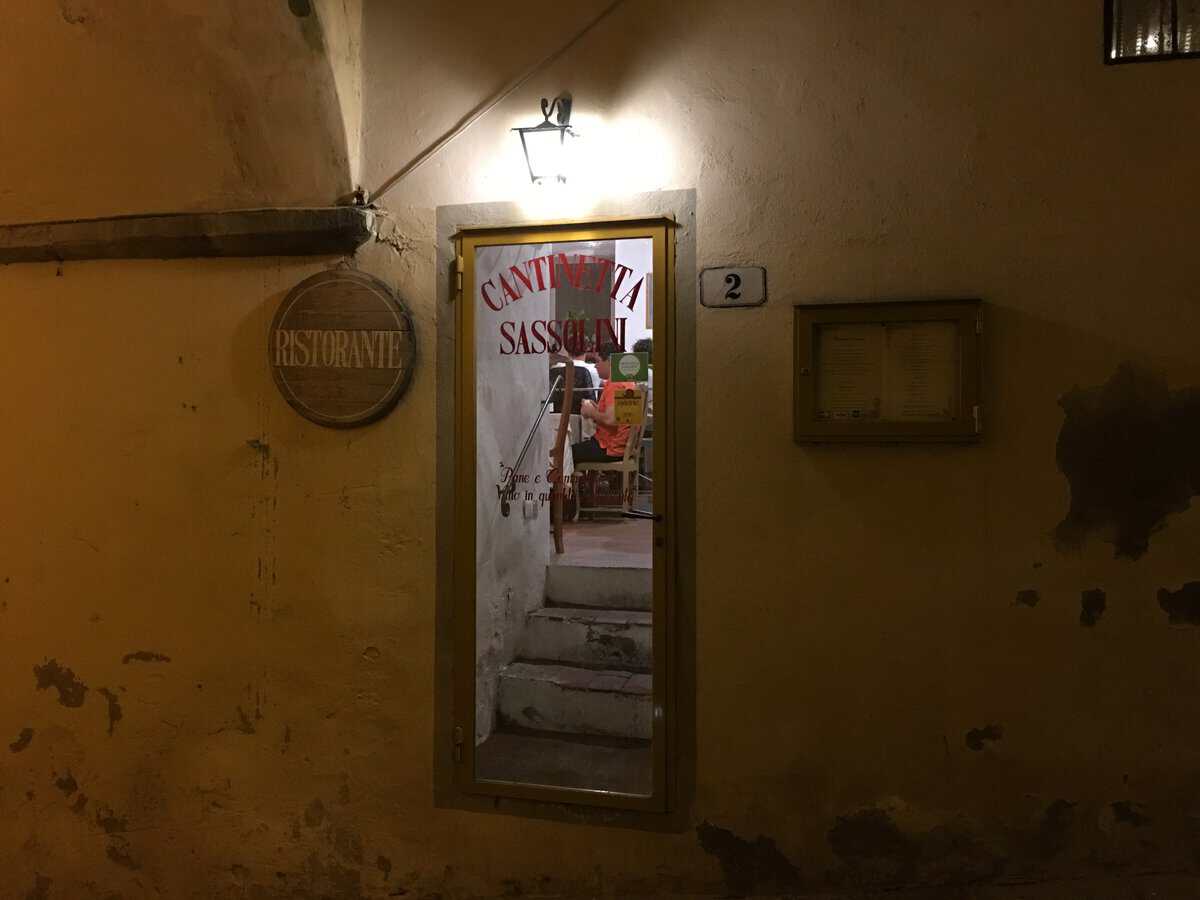
La Cantinetta di Sassolini is off the Piazza Ricasoli at #2, in the old part of Panzano up the hill from the main square near the church of Santa Maria Assunta.

IMG_7389

The dining room at La Cantinetta di Sassolino.

The menu centers on typical Tuscan dishes. Dinners can begin with assorted local cheeses like pecorino, a sheep’s milk cheese often served with jam, crespelle—delicate crepes stuffed with vegetables, which happened to be asparagus on this occasion, and one of our favorites, sformata, a light savory custard of seasonal vegetables.

IMG_7387

A delicate savory sformata was sensational at Sassolino.

Next up are pastas, which are often sauced with game or meat here. Main courses like tagliata di manzo- sliced beefsteak, roasted meats, lamb chops, or chicken fricassee are served in ample portions.

IMG_7388

It’s perfectly fine to share a pasta course. Just say, “Uno per due, per favore.”

IMG_7396

Tagliata di manzo makes a great Sunday supper.

The dining room is lovely and boasts a large fireplace, which is a welcome addition in the colder months. The restaurant also has a terrace for outdoor dining in the summer. Note: Enter through the doors on Via Giovanni di Verrazano, though you can park in the piazza if there’s space.

IMG_7404

Service is warm and welcoming at La Cantinetta Sassolino in Panzano.

We didn’t have a chance to return to Il Vescovino on our visit to Panzano this summer, but would recommend it based on earlier visits. The menu features Tuscan favorites; beginning with antipasti of Tuscan salami and prosciutto, chicken liver pate, olives and fennel. Pastas include local specialties like pici, which is a thick hand made spaghetti, and tagliatelle with funghi or papperadelle with a ragu. Grilled chicken, braised beef, Bistecca Fiorentina (from Dario Cecchini’s macelleria), porchetta and tagliata di manzo—the grilled, sliced steak popular in Italy, round out the menu. The restaurant has gorgeous views from inside and out on the terrace, which looks over the vineyards below. Il Vescovino is at via Ciampolo da Panzano, 9, 50022 Panzano, Greve in Chianti, Italy +393383648446.

IMG_7831

Dinners at Dario Cecchini’s restaurants are multi course, family style affairs. Bring your appetite!

We mentioned Dario Cecchini, the uber popular butcher from Panzano with a worldwide following in another post. We would be remiss not to include his terrific restaurants here: Solociccia, which is Tuscan slang for “only meat” and features cuts from all parts of the cow; Solociccino, a mini version of Solociccia open for lunch only; Officina della Bistecca showcases sensational steaks including the famous Bistecca alla Fiorentina; and Dario DOC—just for lunch from Monday through Saturday and the only Dario restaurant where reservations aren’t needed. All of the restaurants serve family style, multi course, prix fix meals, and while famous for top quality meat, vegetarian options are available.

IMG_7322

“Tuscan butter” (center) and other delicious meat products on display at Antica Macelleria Cecchini in Panzano.

Panzano and environs are very popular travel destinations, particularly in the summertime. Avoid disappointment and make reservations. These are some of our favorite places to dine in and around Panzano. We’d love to hear about yours, so please leave comments.

Mangia bene!

Puppets in Palermo—A Stopover in Sicily’s Biggest City


Welcome to Palermo.

We took a drive right up the center of Sicily on SS624 to reach Palermo. The ride is scenic, beautiful and pretty straightforward. As you approach, you’ll be greeted with breathtaking views of the city sprawl and the bay—bellissimo!

Palermo is Sicily’s capital city and it’s most populous. Its Romanesque, Gothic and Baroque architecture, cultural attractions, and incredible cuisine draw visitors from around the world.

Palermo is the largest and busiest city in Sicily and has plenty to offer the visitor looking for a bustling urban experience. We had less than two full days in Palermo and there is far more to see and do than we had time for.

The simple facade of Monreale Cathedral gives no indication of the superb golden mosaics inside this “must see” church.

Let your first stop in Palermo be a visit to Monreale Cathedral. This stunning cathedral has golden mosaics that rival, and some say surpass, those at Venice’s Basilica San Marco (St. Mark’s). This is truly a spectacular church, considered to be the finest example of Norman architecture in Sicily, and should not be missed. The somewhat plain façade belies the beauty that awaits inside.

The breathtaking golden mosaics inside Monreale Cathedral rival those at St. Mark’s (San Marco) Basilica in Venice.

Narrow, busy streets and overcrowding make parking a challenge in Palermo and the area surrounding the cathedral is no exception. There is a well-marked, supervised pay parking garage just down the road from the cathedral. Walk carefully along the alley- like street back up to the church.

The clear message here is: Do not park in front of this garage. Parking is always tricky in Palermo. When in doubt, find a pay lot.

After enjoying the splendor of the cathedral, we had a terrific lunch at Bricco e Bacco Brasserie, just kitty corner from the cathedral. It was a lovely place with good, local specialties and friendly service. Since we arrived after the lunch crowd, it was also quiet. You’ll find the restaurant at Via B. D’Aquisto, 13, Monreale, Phone for a reservation +39 091 641 7773. It’s a popular spot.

Driving in Palermo can be a harrowing experience and is not for the faint hearted.

Wind your way down into the city proper, navigating traffic carefully. All bets are off in Palermo and traffic can be heavy. Stop signs seem to be a mere suggestion and traffic signals are also sometimes ignored.

Farm fresh fruits and vegetables are sold at stands throughout the city. Be aware that in Sicily, what we call broccoli is cauliflower here.

Street markets like this one, selling clothing, dry goods, kitchen wares and other necessities can be found throughout Palermo. Ask for a “piccolo sconto”– a discount. Bargaining is part of the fun.

We really enjoyed walking all around the city to get the flavor of it and to get our bearings on our first visit.  We covered a lot of ground, including the Corso Vittorio Emmanuel, which is Palermo’s “high street.” Here you’ll find upscale shops and stylish boutiques, cafes and bars. Palermo also has numerous street markets with household necessities, clothing and dry goods, fruit stands, and food stalls, including the well known Vucciria and Ballaro markets.

Hands down, our favorite cultural institution in Palermo was the Museo Internazionale delle Marrionette. Yes, it is a puppet museum and far more compelling than you might expect. Sicily has a strong tradition of puppetry used for both entertainment and political commentary dating back centuries.

In addition to providing entertainment, puppet shows were often used to express political and social view points, particularly when the literacy rate was low.

Plan to spend at least a few hours enjoying the expansive collection and exhibits at the International Museum of Puppetry.

The museum’s collection includes more than 3,000 puppets of all kinds from around the world.

Marionette soldiers in full armament along with their battle- ready horses are on display in this large gallery.

The attention to detail and historical accuracy of the costumes is impressive.

They have puppets and marionettes from around the world, from the simplest paper puppets to the most elaborate marionettes. You’ll see everything from fairy princesses and dragons to entire armies dressed in armament from throughout the ages, all with remarkable attention to detail.

Even Laurel and Hardy make an appearance here.

You’ll find examples of puppets from the primitive to the extraordinarily elaborate.

Puppets from around the world including Africa, Indonesia and Japan are represented.

There are also a variety of settings and backdrops on view. We found our visit to the marionette museum to be an absolutely enchanting experience. The museum hosts puppet shows, too, of course.

Enjoy these fine examples of Japanese Bunraku puppets.

The museum often hosts puppet shows and has videos of productions on view.

For more information and show times, please visit www.museomarionettepalermo.it The museum is at the end of Via Butera on the Piazzetta Antonio Pasqualina, 5.

Known for its medieval art collection, the Galleria Regionale della Sicilia at Palazza Abatellis is a former palatial residence dating back to the 1490s, which went on to become a convent and then a monastery. It is now a regional gallery and museum.

Built for the Kingdom of Sicily’s Port Master, this fine former residence now houses an impressive collection of Medieval art and other treasures.

Here you will find sculptures, frescoes and paintings by Italian artists, as well as Flemish and other European masters, sacred art, weaponry and more.

Sculpture, paintings, religious art and more await visitors at the Palazzo Abatellis.

Though the building suffered terrible damage during Allied bombing raids in WWII, frescoes such as these from the 1400s survived.

Unfortunately the website has not been updated for some time so it is best to call the museum at +39 091 623 0011. It is located at Via Allora, 4.

To see how the upper class lived centuries ago, visit the Palazzo Mirto www.casemuseoitalia.it/en.   The Palazzo Mirto is part of a network of “house museums” found throughout Italy. It was originally built for the Filangeri family in the mid 17th century and falls into the ancestry category of homes.

The Palazzo Mirto provides a glimpse at the opulence the upper classes enjoyed during the time of the Kingdom of Sicily.

The palazzo is filled with beautifully appointed rooms featuring elaborate furnishings, ceramics, antique musical instruments, and art. One of the most spectacular is the Chinese Room, likely decorated in 1876 when the house was renovated.

The Chinese Room was the height of fashion when it was designed in the mid 1800s.

There are also classic carriages on display along with other historic treasures that paint a picture of Sicilian life for the upper class in the days before the Risorgimento when Sicily was still a kingdom.

Splendid furnishings and elegant porcelain are among the items on display at Palazzo Mirto.

The museum is located at Via Merlo, 2 and telephone is +39 091 616 4751 for updated information.

Enjoy a performance or take a guided tour– these are the only ways to get inside the magnificent Teatro Massimo.

If there is a performance at the Teatro Massimo, get a ticket and go. Regularly scheduled dance, opera, and classical music are all performed here. If you’re feeling flush, you, too, can rent the royal box —you just have to purchase all 27 seats in it.

The Teatro Massimo is known for its excellent acoustics and grand stage.

If time does not permit you to attend a performance, take a guided tour, which is the only other way to see the inside of this magnificent and historic building.

This beautiful and historic theater is among the largest in Europe.

A model of the theater is displayed in the lobby.

The theater boasts one of the largest stages in Europe and is worth seeing. Built in 1897, it is known for its outstanding acoustics and is still the largest theater in Italy with 1,300 seats. It is appropriately located on the Piazza Verdi. +39 091 6053580 www.teatromassimo.it.

The Politeama Garabaldi Theater hosts regular performances in Palermo’s historic city center.

We wanted to visit the highly regarded National Archeological Museum but it was closed for renovations during our visit. Please go to www.regione.sicilia.it/beniculturali/salinas for current information.

A stroll through Sicily’s capital city yields surprises.

We did not visit the Catacombe dei Cappuccine, the home of about 8,000 dead bodies, amassed over the course of several hundred years, all dressed up and on display. We find the entire enterprise rather ghoulish and having seen the Capuccine Chapel in Rome, which features skeletons of dead monks, felt no obligation to see this seemingly far more ambitious enterprise. Apparently it is a popular place on many tourist itineraries and so we mention it here.

Flags fly outside the Porta Felice Hotel on the small but busy Via Butera.

There are lodgings at all price points and with all levels of service, as you would expect in a large city like Palermo. We stayed at Hotel Porta Felice www.hotelportafelice.it/en at Via Butera, 45. Tele. 091 6175678. This is in the old section of town near the port.

Pleasure craft and fishing boats crowd the marina at the end of Via Butera.

Even though the hotel is on what appears to be a small side street, it is pretty busy. We were upgraded to a nice suite, even though we’d booked through www.venere.com. The location was very convenient and we walked everywhere we wanted to go, after turning in our rental car.

Friendly service and excellent Sicilian specialties await diners at L’Ottava Nota.

We only had two nights in Palermo and wound up having dinner both evenings just down the street from our hotel at L’Ottava Nota Ristorante, via Butera 55 091 6168601 www.ristoranteottavanota.it.   The restaurant was small and lovely with fantastic food and great service. The fish dishes were all spectacular. Everything was fresh, artfully prepared and delicious.

Perfectly prepared pasta makes a delicious first course.

White fish in a light curry broth was a favorite.


Seafood dishes were the star attraction for us, but L’Ottova Nota has superb meat and vegetable dishes, too.

A fish in a light curry broth with vegetables was so good I still think about it, though it is no longer on the menu. We mentioned we were staying at the Porta Felice and were happily surprised to learn we’d get a 20 percent discount on our meal because we were guests there. We cannot confirm that the special pricing is still available but it never hurts to ask, should you dine here. The restaurant is just a few doors down from Porte Felice on Via Butera, 55. The telephone is +39 091 616 8601.

We had an excellent lunch at Trattoria Piccolo Napoli, www.trattoriapiccolonapoli.it. Piccolo Napoli had been recommended by an Italian friend in the wine business but apparently Anthony Bourdain had once dined here and the owner told us that lots of Americans had been showing up ever since. Our welcome was much more cordial when we told him (in Italian) that his friend Sasha had sent us! Try the panisse (chick pea fritters) to start and have any seafood you like—it is all super fresh and simply, but deliciously, prepared.

Snack on some panisse as you peruse the menu.

Simply but perfectly prepared pastas and seafood dishes shine at Piccolo Napoli.

Through a small window into the kitchen, we watched the chef toss a whole octopus into a pot, plate it and serve it to a young girl who devoured every bit. We had pasta with shellfish and then I had a beautiful swordfish dish. For dessert, they brought us the ubiquitous “winter melon.” The melon is sweet and refreshing and so called winter melon because it can be picked in the summer and stored throughout the winter.  We saw it on menus throughout Sicily. The restaurant is on the Piazzetta Mulino a Vento, 4. Telephone is +39 091 320431.

Palermo is a fascinating and vibrant city and certainly worth a visit. We’ll be back.

Our final meal in Palermo was an extremely casual, but excellent pizza lunch at the airport, which we enjoyed out on the observation deck with a view of planes coming and going, and of course, the beautiful sea!


Picture Perfect Panzano in Chianti

Panzano in Chianti is right in the heart of Chianti’s wine growing region and has been one of our favorite Tuscan getaways for many years. The small town is located midway between Florence and Siena, on the Chiantigiana/Highway 222, making it the perfect location from which to embark on day trips to these beautiful Tuscan cities.  Other popular destinations like San Gimignano, Volterra and Pisa are also within easy driving distance, as are lovely nearby towns like Radda, Greve and Castellina in Chianti.

IMG_8645

Steps lead down to reception at Villa Pecille in Panzano.

We have always rented from Sammie Daniels, founder of Stay Italia.   In Panzano, we’ve stayed at Casa La Rota and Villa Pecille numerous times. Both are located on vineyard property owned by the family behind Fontodi Winery and are situated on the Conca del Ora, some of the most gorgeous countryside in Tuscany. Casa La Rota is surrounded by vineyards and is a five-minute drive into town. Villa Pecille overlooks the Conca del Ora and is a short walk into the village of Panzano.

IMG_8254

La Rota is surrounded by Fontodi’s beautiful vineyards.

IMG_7339

Casa La Rota.

All the apartments at La Rota and Villa Pecille are fully furnished and equipped with just about everything anyone could need to feel at home. Some have fireplaces. The two properties offer a range of accommodations suitable for two to eight people and both have swimming pools, ample outdoor areas for relaxing, and laundry facilities.

IMG_8720

One of the terraces at Villa Pecille.

IMG_8627

The pool at Villa Pecille.

IMG_8652

Both La Rota and Villa Pecille have lots of lovely outdoor spaces to enjoy.

Sammie, who is American, is an expert on the area and has been here since 1985 when she opened a B & B in nearby Greve. She went on to remodel and manage the Vignamaggio Hotel, which was the setting for Much Ado About Nothing starring Kenneth Branaugh and Emma Thompson in 1993. In 1995, Sammie moved to Fontodi and opened Casa La Rota and has been there ever since. Sammie can assist guests with restaurant recommendations, wine tastings, even organizing dinners prepared in your villa.

IMG_8792

Our spacious, fully equipped kitchen at Villa Pecille’s La Loggia.

IMG_8798

La Loggia’s beautiful dining room is perfect for entertaining.

Sammie also has other properties in the area and several apartments in Florence.

IMG_8591

The Piazza Bucciarelli is at the center of village life in Panzano in Chianti.

While not a large town, Panzano has its own market every Sunday morning in the main square— Piazza Bucciarelli—until about 1 p.m. The market is a great place to pick up fresh produce, fabulous cheeses, hot roast chicken, pasta and sauces, clothing, and household goods.

IMG_7298

You can purchase Mr. Moreno’s superb selection of cheeses at Greve’s Saturday Market or in Panzano on Sunday mornings.

IMG_7302

Clothing, accessories, shoes and more are available at Panzano’s Sunday Market.

The stores in town including the Coop (supermarket), pharmacy, and smaller shops near the main square and on Via Giovanni de Verrazzano, the road that leads up the hill to Santa Maria Assunta, are also open on Sundays but only until 1 p.m. There is also a much bigger weekly market in nearby Greve on Saturday mornings.

IMG_7297

Fresh seasonal produce is at the heart of the market.

The town of Panzano is home to perhaps the most famous butcher in the world—the colorful, Dante- reciting Dario Cecchini.  His Antica Macelleria Cecchini is technically a butcher shop but really so much more. Walk into his macelleria on a Sunday morning and it’s like there’s a party going on. He has a great spread of complimentary appetizers including his famous “Tuscan butter” (lardo), salamis, cheeses, olive oil, bread and wine.

IMG_7321

Dario Cecchini may be the best known butcher in the world.

In addition to superb meats ready for your grill or oven, it is possible to purchase prepared dishes like porchetta—a delicious roast pork dish, polpetti—giant meatballs, and other local specialties for a picnic or easy meal at home. Service is friendly and English is spoken—Dario’s wife is a Californian. The ever-accommodating Dario is often willing to pose for photographs for international visitors who make the pilgrimage to Panzano to see him.

B8863793-AD55-44B6-9B1F-0EFD31CD4886

The very personable Dario Cecchini with our son this summer (top), and many years ago during one of our first holidays in Panzano.

Dario also has several restaurants: Solociccia, which is Tuscan slang for “only meat” and features cuts of beef from top to tail; Solociccino is a mini version of Solociccia and open for lunch only; Officina della Bistecca showcases sensational steaks including the famous Bistecca Fiorentina; and Dario DOC—which serves lunch from Monday through Saturday and is the only Dario restaurant where reservations are not required. All of the restaurants serve family style, multi course, prix fix meals, and while famous for top quality meat, vegetarian options are offered.

IMG_7320

Complimentary meats, cheeses, bread, wine and Dario’s famous “Tuscan butter” are a tasty treat for visitors to the macelleria.

The butcher shop and restaurants draw people from around the globe-a lot of people. Dario’s Sunday lunches are especially popular so book in advance if you’d like to partake in these multi course extravaganzas. In the warm weather diners are served outside on long communal tables. We’ve met interesting people from all over the world at these delicious, leisurely meals. Dario also offers classes/workshops in butchery, which must be reserved in advance. All the details for the shop, restaurants and classes are here.

IMG_8100

This sculpture welcomes visitors to Il Molino di Grace’s tasting room outside Panzano.

Wine tasting is a popular Tuscan past time and Panzano is a marvelous place to indulge in this pleasure. There are three wine bars or enoteca on or across from the main piazza—Enoteca Baldi at 25 Piazza Bucciarelli, Misticoteca at 13 Piazza Bucciarelli, and the newest, Il Cardo at 50 Piazza Bucciarelli. These are all about a three-minute walk (or less) from one another.

IMG_8601

Enoteca Baldi is popular with locals and visitors alike. Bring your beverage outside and enjoy it on the Piazza if you like.

Enoteca Baldi and Il Cardo offer a selection of light foods to accompany your wine.  Misticoteca, whose delightful owner Misty always has a warm welcome for visitors, has olive oils, specialty foods and gift items available for purchase. There almost always seems to be a crowd there.

IMG_8760

Misticoteca was a popular place to watch the Giro d’Italia but this enoteca always draws a crowd.

We were fortunate to have our recent visit coincide with the Giro d’Italia—a major bicycle race—and its attendant 15 Giorni di Rosa or 15 Days of Pink—an exhaustive calendar of public events ranging from bicycle themed films, musical concerts, theatrical performances, free lectures, and of course, wine tastings.

IMG_7968

The Bar Dante Alighieri in Radda is perfect for a coffee, light meal or a drink.

IMG_8121

Shopkeepers in Radda were thinking pink for the Giro d’Italia.

The events were held in Radda, where the race would begin; Castellina in Chianti, San Donato, Panzano, through which the race passed; and Greve, where the race would end.

IMG_8701

Greve welcomed racers and bicycling enthusiasts for the Giro d’Italia.

The day before the race, Unione Viticoltori de Panzano in Chianti presented Vino al Vino Miniatura, a smaller version of the wine tasting event the group hosts every September. All members of the organization had their wines available for tasting.

IMG_8587

Panzano’s vintners presented Vino al Vino in Minaturo the day before the big race.

Wineries represented at that festive Saturday afternoon event included Fontodi, Il Molino di Grace, Casaloste, La Massa, Cennatoio, Fattoria la Quercia, Tenuta degli Dei and Castello dei Rampolla, among other local producers, 20 in total by my count. A souvenir glass and the opportunity to taste all of the delicious wines on offer cost just 10 Euro. There was live music in the Piazza Bucciarelli as well as local art on display to keep participants entertained while they sipped.

IMG_8590

Great wines, music and a beautiful day brought people to Panzano’s Piazza Bucciarelli.

We visited Fontodi and Il Molino di Grace for wine tastings on this visit, and have toured and tasted at many others over the years. Here’s a list of local wineries, touring/tasting/direct sales availability, and other information.

IMG_7996

A visit to Fontodi– one of the region’s premier wine producers.

IMG_8049

The delightful and knowledgable Rina Lapini prepares to pour Fontodi’s flagship Flaccianello for visitors.

Contact wineries directly to make arrangements for private tours and wine tastings prior to arriving in Tuscany. Some are open to the public and some are not. Some offer complimentary tastings and some charge a fee.

IMG_7384

Doors on Via Giovanni de Verrazzano, the main street off Piazza Bucciarelli leading up the hill to Santa Maria Assunta.

Panzano is also a fine place to have custom shoes, belts and hand bags made by local leather artisan Carlo Fagiani; visit a gallery that specializes in local artists’ work (we enjoyed a photography exhibition by Jeferson Silva Castellari and purchased one of his photographs on canvas); pick up antique or modern hardware; stop into a beautiful church– Santa Maria Assunta, which has a painting of the Annunciation attributed to Ghirlandaio and a 14th century Madonna from Botticini; or just relax with a coffee at our favorite bar, Caffe la Curva (it’s called Bar of the Curve because that’s where it is), or stop by for gelato and apperitivi later in the day.

IMG_7373

Order custom made shoes, belts and handbags at Carlo Fagiani in Panzano.

IMG_8731

Caffe la Curva is a great place to start the day with a cappuccino and cornetto or end it with an apperitivo.

IMG_8804

Panzano’s bucolic beauty beckons us back again and again.

However you chose to spend your time in this beautiful place, enjoy la dolce vita in Italia and perhaps you’ll understand why we’ve returned to Panzano in Chianti again and again.

Pitstop in Pisa

If you’ve never been and you’re in the area, it’s worth a stop to see Pisa’s famous Leaning Tower and the Campo dei Miracoli or Square of Miracles.  The Tower, or Torre, which was begun in 1173 and not completed until 1399 almost 200 years later, is one of the most recognizable and visited sites in Italy.

IMG_7895

Go ahead– it’s why you’re here!

It’s easy to reach Pisa from Florence by car or train. We stopped on our way back to Panzano from Lucca. Park in one of the signed lots close to the piazza. There is a bit of an “element” looking to take advantage of tourists near the Campo dei Miracoli so it’s worth putting your car in an attended, paid lot. If you’ve arrived by train, take the LAM Rossa bus from the station in the direction of San Jacapo and get off at Torre.

IMG_7881

Site map of the Campo dei Miracoli shows where everything is located.

If you’re feeling energetic, you can climb the 251 steps to the top of the Tower, for a fee. Children under the age of 8 are not allowed up into the Tower for safety reasons and children between the ages of 8 and 18 must have an adult accompany them. Opening hours and ticket prices are available at here, the official tourism website for Pisa.

IMG_7884

Part of the fun is watching everyone else take their photos.

Take the requisite photos, enjoy watching others take theirs, and then visit Il Duomo, Pisa’s cathedral. It is really beautiful and has the holy doors or porta santa open for the Catholic Church’s Jubilee Year of Mercy. Inside, in addition to the spectacular architecture, you’ll find art treasures like 700-year-old depictions from the bible, works by Ghirlandaio, the tomb of the Holy Roman Emperor Henry VII, a beautiful mosaic by Cimabue, and a carved pulpit by Giovanni Pisano. Photos are not allowed inside.

IMG_7919

Take the time to come inside. There is no charge to enter Pisa’s magnificent Il Duomo.

The Baptistery, though not as spectacular inside as the duomo, is also worth seeing if time allows. The Museo dell’Opera del Duomo, which contains many of the artworks formerly housed in Il Duomo, the Baptistery and the Camposanto (cemetery) is also located on the Square of Miracles.

IMG_7883

Construction on the Baptistry began in 1152 and is the best known work of Pisan architect Diotisalvi.

Entrance to the Cathedral is free but you must collect an entry coupon at the ticket office on the square. For tickets and admission information for the Baptistry, Museum and Camposanto click here.

Day Tripping– Lovely Lucca

The lively and lovely small city of Lucca is the birthplace of Giacomo Puccini and a wonderful place to spend one day or several. We’ve had a few day trips from our home base in Panzano in Chianti (www.stayitalia.com more on that in another post) and keep promising ourselves to spend more time here.

IMG_7826

Lucca is a popular destination for visitors to Tuscany and easy to reach by car or train from Florence.

You cannot drive inside the walled city. You must park in one of the lots outside. Be sure to look for the pay station if you park in any area with blue lines. White lines mean free parking, but blue lines require payment. We were so excited to get a spot near the Porta Santa Maria that we didn’t even notice we were in a pay zone and came back to find a parking ticket on our windshield. Note—if you get a parking ticket, pay it while you are still in Italy at any Post Office. You can do so with cash or credit card and you’ll avoid paying your car rental company the fee they charge to provide the Italian government with your information plus you’ll avoid the hassle of paying via wire transfer/foreign currency once you return home.

IMG_7836

Bicycling is a popular means of getting around in Lucca– inside the city walls and on top of them.

Once you get inside the walls, Porte San Pietro is the main gate–find an Info Point—Porta Santa Maria or Porta San Donato both have them. Pick up a tourism map which has several itineraries for exploring the town. Itineraries are in Italian, English and German and include opening times, closing days, and other important information for the major sites such as museums and churches.

IMG_7875

Visitors and locals alike stroll or bicycle around Lucca’s famous medieval walls. Bicycle rentals are readily available.

Lots of people go to Lucca to “walk the wall” or ride bicycles around the city on the top of its ancient fortifications—Passaggiata delle Mura. The medieval walls built in 1544 replaced earlier Roman ones and extend 4,195 meters around the perimeter of Lucca. There are plenty of bicycle rental places just inside the walls, particularly near the Porta Santa Maria. It was a blustery, rainy day when we were there a few weeks ago, so we put this on our list for next time.

IMG_7878

Now a place for picnics and soccer practice, the grassy area around the walls was once a moat.

IMG_7788

If you have time for a delicious and leisurely lunch (or dinner), go to la Buca di Sant’Antonio, Via della Cervia 3, 55100 Lucca +39058355881 www.bucadisantantonio.com. The restaurant specializes in traditional cuisine of the area and the food is delicious.We’ve had several memorable meals here.You must reserve a table because the restaurant is quite popular.

IMG_7776

Put Buca di Sant’ Antonio on your list of delightful restaurants in Lucca.

IMG_7779

Maccheroni lucchesi al sugo di coniglio– housemade pasta with rabbit sauce– as delicious as it looks.

IMG_7782

Puntarella alla Romana– a crisp, bitter salad topped with anchovies widely regarded as a Roman specialty.

IMG_7781

Petto di faraona all’ uva moscato– guinea fowl in a wonderful moscato wine sauce with crispy pancetta. Yum!

The Church of St. Michele in Foro is one of Lucca’s “must visit” sites. It was built on the site of the Roman forum in the 11th and 12th centuries and is still the center of city life. The church has works by Luca della Robbia and Fillipino Lippi, among others.

IMG_7792

This beautiful church is worth seeing both for its architecture and the wonderful art inside.

IMG_7811

San Michele in Forno.

Piazza San Martino is home to Lucca’s duomo of the same name. Built in the Gothic Romanesque style, this beautiful church contains some important artworks by Ghirlandaio, Tintoretto and Fra Bartolomeo as well as the Holy Face of Lucca, a wooden Christ on a crucifix attributed to Nicodemus, as legend has it.

IMG_7808

The anfiteatro is another of Lucca’s attractions. Built in the second century AD, the amphitheater’s former arena is now home to many shops and restaurants built into the ancient Roman walls, which are interesting to see from both inside and outside.

IMG_7828

IMG_7832

This Roman amphitheater once hosted games and gladiators. Now it’s a popular dining and shopping destination.

The Torre delle Ore, or clock tower, dates back to 1390. It is the tallest tower in town and has 207 wooden steps that ambitious visitors are welcome to climb.  In its early days, the time was announced by bells alone but a clock face was added in 1752.

IMG_7818

Hardy souls who climb the tower can see the hand-wound clock mechanism from the 18th century. It’s still working!

Lucca has a Puccini Museum, of course, which is at Corte San Lorenzo 9 (near the Piazza Citadella)– the composer’s birthplace. The museum features furnishings, artworks, pianos, musical scores and other personal belongings including letters and notes from and to Puccini.

Shopping seems to be a popular past time in Lucca and there is no shortage of brand names from which to choose.

IMG_7821

Lucca has plenty of stores to keep shoppers happy.

IMG_7822

This giant sewing machine is a clever advertisement for the Milanese menswear maker.

Lucca is perfectly suited to those who like to wander, and we do, but after awhile we needed a break and stopped in for a gelato at De’Coltelli, 10 Via San Paolina, www.decoltelli.it . Definitely seek this one out for their terrific artisanal gelato offered with complimentary panna (thick, sweetened whipped cream), which just adds to the deliciousness!

IMG_7815

Panna is offered free as a thank you to gelato lovers here.

If it’s a drink or coffee you crave, pop in to The Dark Side—a cool little bar at 24 Via San Frediano at the corner of Via Angillara near the Church of San Frediano.

IMG_7870

Come over to the Dark Side. You’ll be glad you did.

IMG_7839

Step inside San Frediano for the beautiful baptismal font and works by Sienese sculptor Jacapo della Quercia, Matteo Civitali, and Amico Aspertini. The stunning facade features a golden mosiac depicting the Ascension.

Although we had come in for a quick coffee, we stayed for more than a half hour. The bartender was really friendly and he gave us tastes of some popular aperitivos along with descriptions of everything we sampled.

IMG_7868

Our knowledgable and friendly bartender at the Dark Side.

The Dark Side’s complementary snacks, served with drinks, looked abundant and delicious, but we were off to Pisa.


Berlin’s Little Istanbul and the Turkish Market

Berlin is home to the largest Turkish community outside of that country. In fact, approximately 200,000 Berlin residents claim Turkish heritage making them the city’s largest ethnic minority.  The Kreuzberg neighborhood in central Berlin, known as Little Istanbul, is home to many of them, including our server at the Ritz Carlton. It was she who suggested we visit the popular Turkish market on Maybachuferstrasse.

IMG_0393

Berlin’s Turkish Market is held Tuesdays and Fridays from 11 a.m. until 6:30 p.m.

Tuesday morning we jumped on the Number 2 Ubahn line at Potsdamerplatz, changed at Alexanderplatz (a major transit hub) to the Number 8 line and took it to Schonleinstrasse. We walked a few short blocks on Schinkestrasse heading East towards the Landwehrkanal and Maybachuferstrasse—home of Berlin’s largest outdoor Turkish market.

IMG_0386

Kreuzberg in central Berlin is known as Little Istanbul for its large number of Turkish residents, the largest community outside of Turkey.

IMG_0378

Fresh produce, spices and herbs are in abundance at the Turkish Market on Maybachuferstrasse.

IMG_0394

Shoppers line up to take home these kabobs.

Vendors set up shop from 11 a.m. until 6:30 p.m. on Tuesdays and Fridays and draw quite a diverse crowd from young mothers pushing their strollers to older residents in traditional garb to tourists looking for a quick bite from one of the many food stalls.

IMG_0408

The Turkish Market draws a diverse crowd.

IMG_0400

Fresh baked breads are one reason people flock to the market.

IMG_0416

Fish doesn’t get much fresher than this.

Merchants hawking fresh produce, baked goods, fresh fish, cheese, spices, flowers, clothing, toys, electronics, leather goods, table linens and a surprising quantity of fabric and sewing notions line the approximate half-mile on Maybachuferstrasse.

IMG_0410

Thread, buttons, ribbons, trim, and other sewing needs are all available at Berlin’s Turkish Market.

IMG_0385

Stalls with brightly colored bolts of fabric for clothing and household needs line Maybachuferstrasse.

Young people lounge along the canal enjoying impromptu musical performances by buskers while neighbors shop and chat. It’s a very lively scene.

IMG_0418

A cup of subtly spiced saklep, a hot beverage akin to a milky tea, is just the thing on a chilly autumn day.

IMG_0422

It was hard to resist these delicious looking, aromatic Anatolian delights.

We were very tempted by the delicious looking food on offer at the market but had reservations for lunch at Hasir, so we continued on.

IMG_0436

Hasir is a popular Turkish restaurant with authentic cooking and a casual vibe.

Though we probably could have walked, we were really hungry so we got back on the Ubahn and took the Number 8 one stop to Kottbusser Tor. A quick walk northeast on Adalbertstrasse brought us to the heart of Kreuzberg’s Turkish neighborhood and Hasir, located at Adalbertstrasse 10.

The casual restaurant features traditional Turkish dishes with lamb and kabobs playing a major role on the menu. The service was efficient but friendly, and the meals were well priced.  They get quite a crowd here and even after the typical lunch period, the restaurant was full.

IMG_0433

Lamb, salad and roasted pepper with traditional bread made a delicious lunch at Hasir.

IMG_0434

Entree portions are large enough to share.

After a delicious lunch we walked past several other eateries that were also part of the Hasir group, including a Hasir Express.

IMG_0441

We stopped into a local bakery and treated ourselves to some just baked baklava—delicious!

IMG_0440

We weren’t really hungry but the pastry looked so good we had to stop in.

On our way back to the Ubahn, we took a detour at the Istanbul Supermarket—an enormous Turkish grocery fronted by fresh produce stands.

IMG_0445

From the fresh produce outside, to the bounty within, this supermarket has everything a well-stocked kitchen needs.

IMG_0446

Tea time!

The market had everything from meats, cheeses, canned and packaged goods, to walls of teas and spices. I would have happily filled my shopping bag had we not been staying in a hotel on this trip.  Next time!

Note: This post has been updated from one I published earlier and contains affiliate links.  If you book through TravelTawk.com, I will earn a small commission at no cost to you.  Thank you for your support!


Written and photographed by Jeanne Neylon Decker

This article and all materials published by TravelTawk.com are protected by US Copyright Laws.

Treasures of Berlin’s Museum Island

Take a stroll through the Brandenburg Gate, down Unter den Linden, to the banks of the River Spree. There you’ll find some of the world’s most intriguing and important cultural treasures—the Ishtar Gate, the bust of Nefertiti and so many extraordinary antiquities, classical sculpture and masterworks, it is impossible to imagine they could all be in one place—but they are—Berlin’s Museum Island.

IMG_0852

Museumsinsel http://www.smb.museum is home to five separate historical museum buildings, each designed by a well-regarded architect of the time and now part of a UNESCO world heritage site. Here you will find the Pergamonmuseum, Altes (Old) Museum, Alte Nationalgalerie, the Bode-Museum, and the Neues (New) Museum.

IMG_0626

The museums on Berlin’s Museumsinsel are a treasure trove of important paintings, sculpture, and antiquities from around the globe.

According to Visit Berlin, more than 3 million people come each year to view the collections that range from prehistory to 20th century art. Savvy travelers will want to purchase a Museum Pass, which provides entry to 50 major and lesser-known museums, including the five on Museum Island, over three consecutive days for one low fee. The price was 24 Euro when we visited in November. Passes are available at Berlin Tourist Info points, in the museums, and online at Shop.visitberlin.com.

IMG_0859

The magnificent Ishtar Gate, believed to date from 170 AD, was dedicated to Zeus and Athena. It was brought to Berlin from Western Turkey in 1903.

The long lines and crowded galleries attest to the fact that the Pergamon Museum is on nearly every visitor’s short list of places to visit in Germany’s capitol city.   It should be. The magnificent Pergamon Altar, Ishtar Gate, and marvelous sculpture and other works from ancient Sumeria, Babylon, Assyria, and modern day Iraq, Turkey and Syria are all on display here.  Restoration is underway on the Ishtar Gate, but it remains open for viewing. The Pergamon Altar was closed for restoration during our recent visit and will reopen in 2019. We were fortunate to see it several years ago.
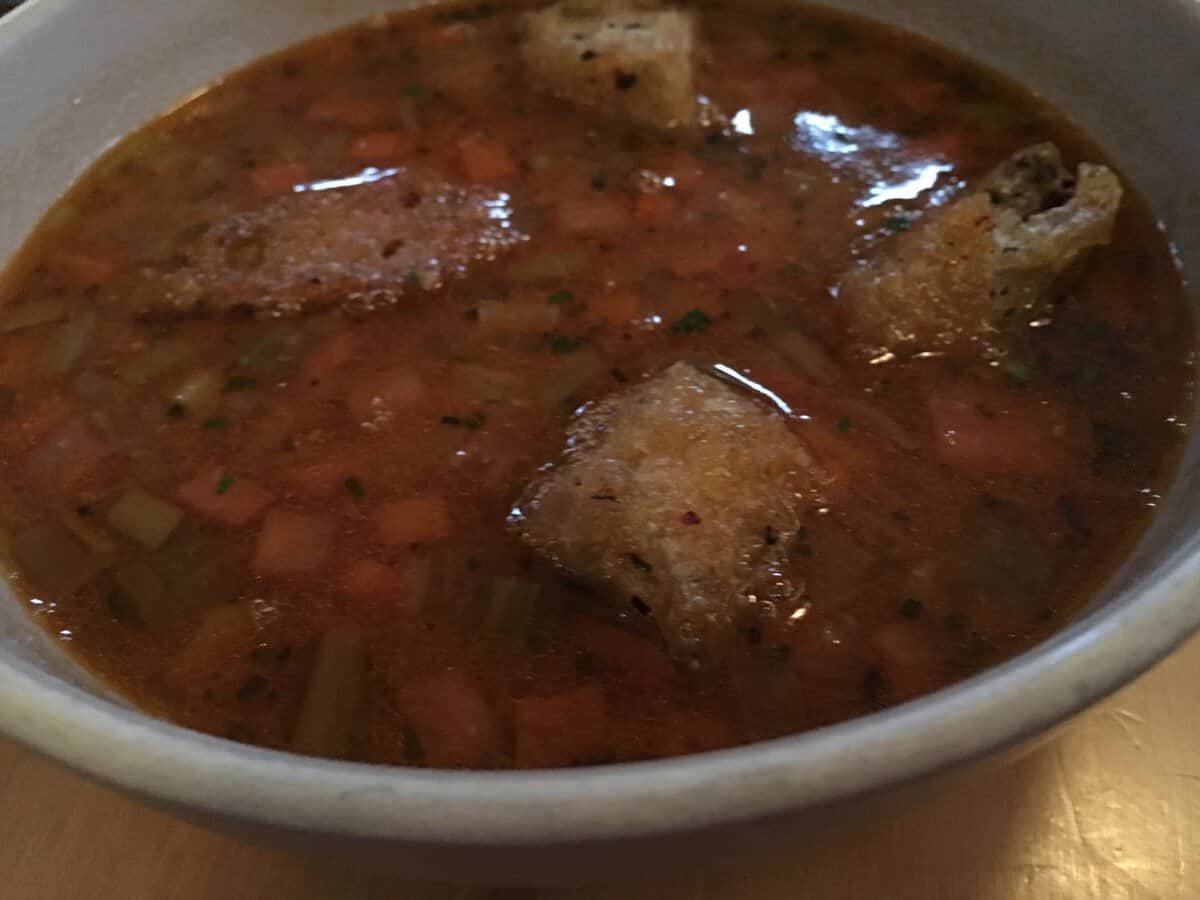
IMG_0866

Detail from the Processional Way, which leads to the Ishtar Gate, at the Pergamon.

IMG_0869

Stunning Roman mosaics cover the floor in the gallery that contains the Market Gate of Miletus, built in the 2nd century AD in Turkey and excavated and brought to Berlin in the early 1900s.

IMG_0901

The stunning Aleppo Room at the Pergamon, seen through protective glass walls.

IMG_0907

Facade of the Caliph Palace Mshatta from Amman/Jordan from the 8th century. The 33 meter long, 5 meter high facade was brought to Berlin in 1903 to the Bode Museum. In 1932 it was reconstructed in the Pergamon.

We practically had the galleries to ourselves when we visited the Bode-Museum in November. This beautiful museum boasts art from the Byzantine and Roman Empires, a spectacular sculpture collection spanning from the early Middle Ages to the late 18th century, and one of the most extensive numismatic collections in the world. We could not understand why the Bode wasn’t full of people enjoying these art treasures.

IMG_0842

Pedro Roldan’s Our Lady of Sorrows (Mater Delorosa) at the Bode-Museum.

IMG_0784

The Bode-Museum is known for it’s sculpture collection. Friezes, sacred art and other cultural treasures are also on display.

IMG_0838

Don’t miss the extensive numismatic collection at the Bode. It’s one of the most comprehensive in the world.

The Bode also has a lovely café where we enjoyed a delicious and very reasonably priced lunch along with views over the Spree. The cafe balcony overlooks the museum’s grand entrance below.

IMG_0815

IMG_0814

The comfortable cafe at the Bode was perfect for a light lunch.

IMG_0817

Save room for dessert!

If Impressionist works are more to your liking, visit the Alte Nationalgalerie, home to 19th century works by Renoir, Manet, Monet, and Cezanne, Adolph von Menzel and other well regarded artists of that time period. The Alte Nationalgalerie was the third museum to open on Museum Island.

IMG_0617

The Alte Nationalgalerie is home to a fine collection of 19th century paintings– part of Berlin’s State Art Collection.

Housed in one of Berlin’s most impressive neoclassical buildings, the Altes Museum was dedicated in 1828 by Friedrich Wilhelm III for “the study all antiquities and the free arts”. The museum’s permanent collection centers on classic antiquities covering Etruscan, Roman and Greek art and includes urns, vases, sarcophagi, friezes, pottery and sculpture.

IMG_0769

The Altes Museum is a popular destination for student and tour groups.

The 3300 year-old bust of Nefertiti is among the highlights at the Neues Museum, or New Museum. After sustaining significant damage during World War II, the building, which was designed by Friedrich August Stuler and constructed between 1843 and 1855, was abandoned. In 2003, extensive restoration began and the museum opened in 2009 with three main collections—Egyptian art from the Egyptian Museum and Papyrus Collection, prehistoric objects from the Museum for Prehistory and Early History, and classical antiquities. Visitors will find works from around the globe including the Middle East, North Africa, and Northern Europe at the Neues Museum.

For updated information on each of the museums on Berlin’s Museum Island and details on permanent collections, temporary exhibitions, admission, hours and directions, please visit http://www.smb.museum.

Note: The banner image is the Cathedral of Berlin known also as Berlin Dom, located on Museum Island.  In addition to church services, the Berlin Dom is open for tours. Numerous concerts and other events are also held there throughout the year. To the right is the Berlin TV Tower, constructed by the Soviets during the Cold War and now a popular tourist destination.

36 Years After the Fall of the Berlin Wall–Take a Peek Behind the Iron Curtain

IMG_0606

A Look at Life in the DDR (German Democratic Republic)

Much of the world rejoiced when the Berlin Wall came down on Nov 9, 1989. Now 36 years later, two of Berlin’s museums give visitors a frighteningly clear view of what life was like for those caught behind the Wall when it was erected in 1961. Berlin’s DDR Museum ddr-museum.de on Museum Island, is a good starting point to witness life behind the Iron Curtain.

IMG_0468

Interactive displays show career paths available to East German residents.

The museum has an actual Trabant which was the only car manufactured in East Germany. Though costly, constructed partially from cardboard, and with a waiting list that could take 6 years or more– these small sedans were in high demand. It’s not surprising that Communist Party officials preferred Volvos. Visitors line up to sit in the driver’s seat and take a video- simulated drive through the countryside and city streets of the former East Berlin.

IMG_0466

Visitors can take a simulated spin in a Trabant at the DDR Museum.

A typical East Berlin apartment has been recreated inside the museum giving visitors a very clear idea what home life was like, right down to to what usual furnishings would have looked like.

IMG_0474

Books, magazines, television and decor give visitors a glimpse into home life in East Berlin during the Cold War.

IMG_0472

Garden gnomes were a popular addition to patios and lawns.

Even an outdoor patio area has been included– complete with a lawn chair and the ever-popular garden gnome that apparently graced a good many gardens.

IMG_0476

See what’s cooking in a typical East German kitchen.

Food supplies were limited for most East German residents, as a glimpse inside a typical kitchen cupboard shows. Selections were extremely restricted and canned goods played a major role in menu planning.

IMG_0479

Kitchen cupboard contents show a heavy reliance on canned and packaged foods.

Party higher ups had access to all the best the West had to offer and more, of course.

IMG_0485

There was no shortage of Western goods for those at the top echelons of the Communist Party.

The DDR Museum has wardrobes full of clothing and advertisements of the “fashions” at the time– 10 to 15 years behind the styles those in the West were sporting.  The fabrics used were ugly and uncomfortable and because fasteners were expensive, most garments had neither zippers nor metal closures of any kind. Levi’s and designer wear were reserved for those at the top, as the exhibits show.

IMG_0470

Fashionista frauleins in frumpy evening fashions.

Leisure activities are also featured, particularly the East German penchant for nude bathing and sun bathing which was in direct opposition to Communist Party policies. The Museum portrays these activities as subversive acts undertaken by far more than half the population. Photos show happy naked families enjoying outings in the great outdoors.

IMG_0491

Life in the former GDR is captured in photos, films and video displays at the DDR Museum.

The museum also has news clips, videos and more that tell stories of daring escapes made to the West, including one failed attempt made inside the belly of a stuffed cow.  Sadly, many failed attempts are heartbreakingly documented, as are some spectacular success stories.

IMG_0484

A bleak, solitary cell is on display at the museum. Would-be escapees could well have landed in a cell like this one.

Propaganda videos of East Berlin residents discussing their life experience are included and some of those filmed even complain that their housing is inadequate, though they are optimistic that their next family lodging will be more expansive.

IMG_0480

Military recruitment posters, Communist Party propaganda, social protocols– State sanctioned of course, are all part of the displays at the DDR Museum. It’s definitely worth a few hours to tour and explore this fascinating look at how people in the Eastern Sector really lived.

The DDR Museum is on the Berlin Welcome Card.

I Spy: The Stasi Museum

IMG_0528

The Stasi Museum is located in the secret police service’s former headquarters.

As we saw at the DDR Museum, life was not easy for most people trapped by the Berlin Wall in the East. Operating under the auspices of the Ministry of State Security, the Stasi, East Germany’s secret police, made sure that any dissent, real, or imagined, was immediately quashed. Known for their horrific methods of dealing with dissidents or provocateurs, they were indeed a force to be reckoned with and the Stasi Museum stasimuseum.de shows in great detail exactly how this secret organization carried out their reign of terror against ordinary citizens and perceived “enemies of the State.”

IMG_0538

Residents watch construction of the “Wall” that divided Berlin from 1961-1989.

The Stasi’s responsibilities included recruiting spies to inform not only on those behind the Iron Curtain, but also on Western residents and businesses. It was not unheard of for the Stasi to grab people off the streets on both sides of the Wall, using vans disguised as delivery vehicles.  The museum has an example of one of these and visitors can see how the inside of the van has been completely retrofitted into small individual prison cells.  Many who were picked up in these vehicles were never seen again.

IMG_0530

These ordinary looking vans were fitted out inside with individual cells for those unfortunate enough to be picked up by Stasi.

Neighbors were encouraged to report on one another as were family members, and as the records show, when the Berlin Wall crumbled, many relationships did too. It was not unusual for husband and wife to report on the other’s activities and when this came to light after Stasi records became public, divorces, already high in the East, increased dramatically.

IMG_0531

Informants were everywhere as the museum displays depict.

People were not paranoid to think that their activities were being monitored.  The Stasi photographed people at such mundane tasks as grocery shopping with cameras built into shopping bags.  The museum has examples of ties with cameras, belt cameras, cigarette packages that are actually cameras and more. Those old spy movies were not far from the truth.

IMG_0553

Cameras were built into everything from cigarette packets to watering cans during the Stasi’s reign.

IMG_0549

The tape on this radio indicates the only “approved” stations Stasi office workers were permitted to listen to.

A training film on view shows how agents would enter a home, photograph anything they found of interest, steal items and in some cases, deliberately move items around to make the person “under investigation” feel like they were losing their mind.  One case documented at the museum involved a psychologist who suffered from depression.  The Stasi regularly entered her apartment, moved things around, even substituted her tea bags with another brand, and did other strange things that eventually led to her suicide.

Another former DDR resident learned that the Stasi let the air out of her tires daily making her late to work—something that had puzzled her for a very long time. This was another kind of psychological sabotage in their large arsenal of such trickery—all documented at the Stasi Museum. The videos of the subjects of such subterfuge were fascinating.

IMG_0560

A “subversive” in custody measured, photographed and his “aroma” captured in the jar to the right.

The museum has plenty of exhibits that document those who were responsible for the devastation this corrupt government organization wreaked upon those on both sides of the Iron Curtain. In fact, visitors can see the office of Erich Mielke, the last Minister of State Security, which is presented almost exactly as he left it.

IMG_0545

This diagram shows exactly how Minister of Security Erich Mielke liked his breakfast presented.

Interestingly, many of the faces on displayed documents are blacked out likely because these individuals, who have never been prosecuted, are alive and well today.

For a chilling look at the Stasi’s operations, add this museum to your Berlin itinerary.

Note: This is an updated version of an article I wrote previously and contains affiliate links.  If you book through traveltawk.com, I may earn a small commission at no cost to you.  Thank you for your support!

Written and photographed by Jeanne Neylon Decker

This and all materials published by TravelTawk.com  are protected by US Copyright Laws.

Around Town in Taormina, Sicily

Even in October, the streets of Taormina are jam packed with tourists, many trailing their tour guides. Large, slow, name tags and fanny packs in evidence, many of these groups of visitors disembark from their cruise ships early in the morning, and after a long day of souvenir shopping for the likes of Homer Simpson as The Godfather tee shirts, thankfully get back on their boats before sunset.

The streets are Taormina are packed with people--even in October.

The streets are Taormina are packed with people–even in October.


Both the sheer numbers of people and the shops offering absolute junk surprised me. I don’t think I’ve ever seen so many souvenir shops selling so many of the same silly things.

Godfather tee shirts are in abundance at Taormina's shops.

Godfather tee shirts are in abundance at Taormina’s shops.

IMG_3837

How do all these shops stay in business?

How do all these shops stay in business?


Despite the crowds and questionable merchandise, the main street, Corso Umberto I, is certainly worth a stroll and there are lovely churches and galleries to stop in and admire as you make you way through the throngs. There are gates at each end of Corso Umberto I– Porta Catania and Porta Messina, through which you enter this pedestrian thoroughfare.  Piazza del Duomo and Piazza IX Aprile are the two main squares in the town with the requisite cafes and shops, though there are also bars and restaurants, along with countless shops, all along the Corso and on the smaller streets. Cafe Wunderbar on the Piazza IX Aprile looks inviting and always seems to have a crowd.

Piazza IX Aprille, Taormina.

Piazza IX Aprile, Taormina, Sicily.


IMG_3834

Piazza del Duomo, Taormina, Sicily.


IMG_3851

La Fontana, Taormina.

Ceramics are a really popular souvenir all over Sicily and Taormina is no exception. Ceramic heads of kings and queens are especially sought after in the Taormina area. There are a number of stories around this with slight variations, but all have a grisly ending.

IMG_3816

Ubiquitous ceramic king and queen heads.

Taormina, Sicily.

Taormina, Sicily.

More, more, more.

Modern ceramics are popular, too.

Modern ceramics are popular, too.

Leave the main streets and piazzas and you’ll be rewarded by Taormina’s quiet corners.


IMG_3874


IMG_3825

Find lovely galleries and shops on Taormina’s small narrow streets off the Corso Umberto I.

IMG_3873

This deconsecrated church is now a gallery on a small street off the Corso Umberto.

Taking a break in Taormina.

Taking a break in Taormina.

There are restaurants to suit all tastes and budgets in Taormina, but if you like arancini—a Sicilian specialty that is basically a big rice ball stuffed with delicious cheese, meats and/or vegetables, (tastes so much better than it sounds) you must go to Antica Rosticceria da Cristina. It’s at 2 Via Strabone—a little alley off the Piazza del Duomo near the Excelsior Hotel  This is a carry out place so you’ll queue up, choose your favorite (I like the original), grab a drink and then either eat at one of their very few tables or walk up to the little park outside the Porta Catania (go left after you walk back up the alley towards the main street) and enjoy your al fresco lunch.

IMG_3856

Try da Christina for arancini in Taormina.

The humble but tasty arrancino.

The humble but tasty arancino.

Afterward, treat yourself to some gelato for dessert. My favorite is Gelateria Artigianale O’sciality on Piazza Antonio Abate, just outside the Porta Catania. Yum!

IMG_3878

IMG_3877

Delicious artisanal gelato in Taormina.


If you’re feeling quite fit, or just need to walk off the arancini and gelato, take a walk up the 700+ steps through the town to the Madonna Della Rocca and the Castello Saraceno. Look for the signposts.

The cross of the church of Madonna della Rocca can be seen from the town of Taormina below.

The cross of the church of Madonna della Rocca can be seen from the town of Taormina below.

The steps can be steep and are narrow in some areas, but the views are superb and there are sculptures marking the Stations of the Cross along the way.

Stations of the Cross mark the steps between Madonna della Rocca and the town of Taormina below.

Stations of the Cross mark the steps between Madonna della Rocca and the town of Taormina below.

Some of the 700+ steps that lead to Madonna della Rocca from Taormina, Sicily.

700+ steps lead to Madonna della Rocca from Taormina, Sicily.

There are also benches in some spots so that you can stop and rest. Once you reach the top, visit the small but beautiful church of the Madonna della Rocca, so named because it is built into the rock on which it stands.

The church of Madonna della Rocca is built into the rock on which it stands.

The church of Madonna della Rocca is built into the rock on which it stands.

The Castle of the Saracens is not open for touring but you can admire the ruins from a distance.

You can choose to walk down those many, many steps back to town, take a bus which passes just a block below in front of Villa Ducale on Via Leonardo da Vinci or, depending upon the time of day, have the Al Saraceno restaurant or Villa Ducale call a taxi for you.  Villa Ducale offers its guests a complimentary shuttle service into town and back.  Full disclosure—we walked down the steps into town and took a taxi back up to our hotel. A word about public transportation– there are local ASM city buses, which we took when the schedule was convenient, though no buses ran for several hours in the afternoon, and those run by Interbus  (these are blue). Both run regularly and on a schedule.  The Interbus goes farther afield than the local bus. Tickets can be purchased on the bus in both cases.  Look for the main bus stop just outside the Porta Messina. There is also a taxi stand there.

The views are amazing on the steps between the town of Taormina and Madonna della Rocca.

The views are amazing on the steps between the town of Taormina and Madonna della Rocca. We walked down to town, not up.

If you’ve managed to walk up all those steps, reward yourself with lunch or dinner at Al Saraceno, Via Madonna della Rocca. The food is delicious, well priced and if the weather is nice, the expansive outdoor terrace is open. Again, the views are spectacular.  We enjoyed several terrific dinners here.


IMG_3938

If you choose to dine at Al Saraceno, make reservations– it’s popular with locals.


Next, we’ll explore a few of Taormina’s beach clubs.

Touring Taormina: The “Must Sees”

The town of Taormina offers several “must sees” including the Greek Theater and the Public Gardens.  The Greek Theater, or Teatro Greco Taormina, was built by the Greeks, possibly in the 3rd Century BC, and rebuilt and expanded by the Romans. The arena is spectacular and is still a venue for all kinds of entertainment ranging from rock to classical music, ballet, and theatrical performances. It is also the home of the Taormina Film Festival. The views over the Bay of Naxos and up to Mt. Etna are amazing. There will be lots and lots of other people sharing the views at what is possibly the most famous, and certainly among the most visited site in Sicily. Even when it’s crowded, it is worth waiting to enter and enjoy the setting.

Taormina's Teatro Greco is one of the most visited sites in Sicily.

Taormina’s Teatro Greco is one of the most visited sites in Sicily.

Stunning landscaping at Taormina's Greek Theater.

Stunning landscaping at Taormina’s Greek Theater.

After braving the crowds, go next door to the luxurious Grand Hotel Timeo at Via Teatro Greco, 59.  If you are staying here, you are indeed fortunate. While we did not, several friends have and loved it. Even if you are not a guest, you can relax with a drink or coffee on their expansive verandah—and once again, enjoy the incredible views.  There are many, many lodging options in Taormina at all price points. The Grand Timeo is among the more expensive choices, but it is a very grand property and if you want a location in the heart of Taormina and price is not a consideration, why not?

The lovely terrace at the Grand Hotel Timeo is a fantastic place to relax with a drink or coffee.

The lovely terrace at the Grand Hotel Timeo is a fantastic place to relax with a drink or coffee.

The public gardens, Giardini della Villa Comunale, located on Via Bagnoli Croce are gorgeous and blissfully peaceful. Even though they are quite near to the Greek Theater, you’ll rarely encounter crowds while strolling the lovely manicured grounds, which also afford spectacular views.

Taormina's beautiful public gardens are a peaceful oasis in a busy tourist town.

Taormina’s beautiful public gardens are a peaceful oasis in a busy tourist town.

Giardini Villa Comunale

Giardini della Villa Comunale, Taormina, Sicily.

The gardens were the creation of Lady Florence Trevelyan, an Englishwoman known for her dalliances as well as her botanical interests. Lady Trevelyan included a number of “follies,” buildings included for visual interest but no other real purpose, in her gardens.

A so-called "folly" at the Giardini della Villa Comunale in Taormina, Sicily.

A so-called “folly” at the Giardini della Villa Comunale in Taormina, Sicily.

Along with beautiful Mediterranean and exotic flowers, plants and trees that keep the garden colorful all year long, you’ll find a human driven “torpedo” from World War II at Taormina’s Giardini della Villa Comunale. The craft, which operators in the Italian Navy referred to as the Maiale (pig) was electronically propelled and driven by two crewmen in dive suits who steered the torpedo to an enemy ship, detached the warhead, and affixed it to the enemy ship’s hull. Mission accomplished,  the divers rode away on the torpedo before the explosion. An interesting find in the public gardens!

The human torpedo nicknamed "Miaile" or pig, at Taormina's beautiful public gardens.

The human torpedo nicknamed “Maiale” or pig, at Taormina’s beautiful public gardens.

Next, we’ll join the crowds and see the town.