Browsing Tag

Local Spots

Adventures in Fatima and a Day in the Douro Valley

There are two things travelers must bring along on every trip—a sense of humor and resilience, because sometimes, maybe even often, things do not go to plan. That’s where a sense of humor comes in handy. This was the case one Sunday in Portugal on what was to be our longest driving day– from Evora in the Alentejo, to the mountains above the Douro River in the north of Portugal, with a stop at the Shrine of Fatima. I had wanted to visit Fatima for a long time and since it was right off the freeway, we thought this was a perfect plan.

It was time to leave the beautiful Alentejo in Portugal’s southwest and head north to the Douro Valley.

We did not get an early start, which is no surprise to anyone who knows us, but instead enjoyed a delicious, and leisurely, last breakfast at Convento do Espinheiro before setting off for the Douro Valley.

Each year the Shrine of Our Lady of Fatima welcomes more than 4 million pilgrims.

Imagine our surprise when two and half hours hours later we turned off the freeway heading for Fatima and were greeted by plenty of police and even more motorcyclists– thousands of them. Many of the roads leading to the Shrine were closed and everywhere we looked there were motorcyclists—young, old, families, even dogs—all on two wheels.

Apparently everyone in Portugal, with the notable exception of these two visiting Americans, knew there was a special mass for motorcyclists that day at the Shrine of Fatima. After spending about an hour in the traffic jam, we realized there was no possible way we could visit that day. We very sensibly decided to come back on a weekday on our return to Lisbon. I wish I had taken photos of all those motorcyclists but didn’t want to risk offending anyone and there was no possibility of a speedy getaway.  On our return visit, things were decidedly quieter.

 On Oct. 13 each year nearly hundreds of thousands crowd this immense plaza to celebrate the anniversary of the apparition. On the day we visited, a week after our first attempt, there were very few visitors.

Turns out the plaza at Fatima between the basilica and the chapel can accommodate 1 million people– as it did when Pope John Paul II visited in 1987—and we imagined that nearly as many motorcyclists had made the pilgrimage that Sunday morning, too.

The open air Chapel of the Apparition was built on the site where the Virgin Mary appeared to the children.

Each year the Shrine of Our Lady of Fatima welcomes more than 4 million people. When we returned on a Tuesday afternoon a week later, there were no motorcyclists in sight and relatively few visitors.  It could have been the 114 degree heat that kept people away.

Many visitors light candles at the shrine and pray for intentions and interventions.

We visited the beautiful basilica and the Chapel of the Apparition where nuns recited the rosary in numerous languages.  We also took the time to light a few candles, which were available for sale at the shop and ranged in size from standard to enormous. Some were bigger than my arm!

There is a full schedule of masses, reciting the rosary and confessions offered every day.

It was so terribly hot, and since there was no shade on the plaza, we chose not to cross it to see the enormous rosaries and crucifix on the other side. That will have to wait for another visit. But now, back to our journey to the beautiful Douro Valley—

We enjoyed the drive from the Alentejo in the south to the Douro Valley in the north of Portugal. Be sure your rental car comes equipped with the Portuguese version of the Fast Pass.

Back to the freeway and on to our pousada we went, over winding mountain roads and bridges, through tunnels, and burned out forested areas. The main roads in Portugal are well- paved and well-marked. Smaller side roads are a little bit trickier, but we never had trouble finding our way even out in the countryside.  We ate our picnic lunch in the car to save time and arrived in Alijo about three and a half hours later. It had been a long day.

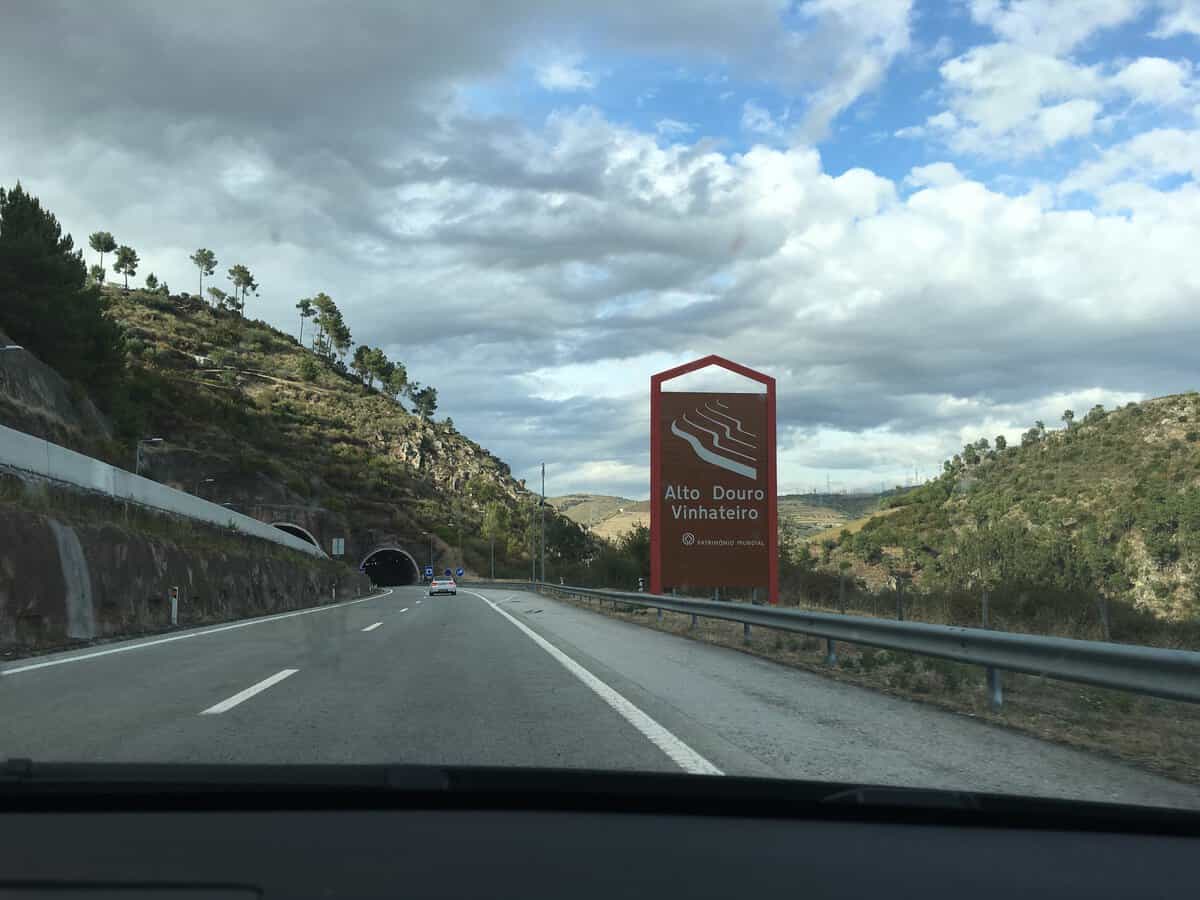
Scenic mountain roads took us north to the vineyards of the Douro Valley.

When we finally arrived at the Palacete Alijo, the first thing we noticed was the laundry hanging out to dry on the balconies. Inside, the pousada didn’t come close to living up to the photos we’d seen online. Perhaps someone had carefully cropped out the propane tanks next door and the rust marks surrounding the pool.

Sadly, this pousada in Alijo didn’t live up to expectations and we left without staying.

The website’s images didn’t deliver an accurate portrayal of the property. This was the view from the room we were meant to have.

The website indicated the place was part of the well-respected Pestana Group. The friendly front desk clerk told us that it hadn’t been for nearly five years and offered us a “welcome” drink. He also mentioned that the air conditioner was broken, brought up a few other housekeeping issues and again offered a welcome drink. We had planned to stay for four nights but after seeing the accommodations, we turned down the drink and summoned up Trip Advisor on our phones.

This was the splendid view across the river to Pesa de Regua from our room at the Vila Gale Douro.

Vila Gale (a hotel group popular in Portugal and Spain) had a river view room available for two nights in the town of Peso de Regua, right on the Douro River. Back to the car we went, grateful we hadn’t brought our bags inside—we never do until after we’ve seen the room. After another hour of driving, this time in the dark through the winding mountain roads, and did I mention it was raining?—we arrived at the Vila Gale Douro.

The Vila Gale Douro, part of a popular group of hotels in Portugal and Spain, is well- located across the river from Peso de Regua.

While my husband parked the rental car in the garage, I went to the hotel’s restaurant to secure a table before they closed. It was 10:30 p.m. at this point and we were really hungry. I thought I was imagining things when I my heard my name called out and turned to find two dear friends from home finishing their dinners. Had we not changed our hotel, we would never have had the chance to spend time with them. We agreed to meet for breakfast the next morning.

Our Vila Gale room was large, comfortable and contemporary and had terrific views from the private balcony.

It was lovely to wake up to this beautiful view from our balcony.

Portuguese wine aficionados know that the steep terraced hillsides of the Douro Valley are home to numerous well-regarded producers of table wines and of course, port. Our friends were free in the morning but had to return to Porto in the afternoon. We agreed that a visit to a nearby winery would be the perfect outing.

We spent a fun and informative morning with our friends at Quinta do Vallado.

Grapes grow seemingly everywhere on the Douro Valley’s steep hillsides.

Like the wineries in the Alentejo, you must make reservations to tour and taste in the Douro Valley. My husband had his heart set on a visit to Quinta do Vallado but when he telephoned, was told that the morning’s English- speaking tour was already full. With the help of our front desk clerk, we secured four spots.

Quinta do Vallado is a highly regarded producer of Douro wines and port. They also have a small hotel on property.

The winery is located high up on the terraced hillside across the river from where we were staying, just about a 10- minute drive away. One of the oldest in the Douro Valley, the winery celebrated its 300th anniversary in 2016. Once owned by Dona Antonia Adelaide Ferreira (of the Ferreira Port family), production was geared towards port for the company’s first 200 plus years. In 1993, they decided to restructure and expand into producing Quinta do Vallado label table wines and in 2009 construction on the new winery was completed.

Our tour began in the vineyards where some grapes had already been harvested.

We followed our guide from the vineyards, through the production facilities, and into the cellars, as she explained each stage of wine making to the group in English. Tours are also given in Portuguese several times daily. We always ask if English tours are available, though rather than miss out, we’ve taken some in Italian, French and Portuguese at numerous places.

Our knowledgeable tour guide explained the wine making process in detail– and in English.

We saw everything from the grapes growing, to high tech, temperature controlled stainless steel tanks, to the traditional granite legares in which grapes are crushed by foot, to the cellars where the barrels are stored and wines are aged before they’re bottled.

We saw state of the art temperature controlled stainless steel tanks…

…and traditional granite legares where grapes for port are crushed by foot.

Antique barriques are still in use.

New French oak barrels are also used, depending on the kind of wine they’re aging.

After the very informative tour, we all gathered around a communal table and tasted Quinta do Vallado’s wonderful wines, working our way from crisp whites to delicious ports. Many of us made purchases in the quinta’s well-stocked shop.

After our tour we gathered around for a wonderful wine tasting.

During the tasting, we sampled crisp whites, full-bodied reds and finally, ports.

The well-stocked shop beckoned many of the visitors, including our friends and ourselves.

Though we were not able to tour it, Quinta do Vallado has a small hotel on property with 13 rooms—five in the manor house built in 1733, and eight in the modern wing constructed in 2012.

The roads in the Douro are narrow and winding but exceptionally scenic.

There were two things we planned to do in the Douro—wine taste and take a boat ride. After saying goodbye to our friends at the winery, we headed to Pinhao to check out the river cruise options.

The Douro has been used to transport people, port and other products down river to Porto for centuries.

The Douro River meanders from Spain through the heart of northern Portugal down to Porto where it empties into the sea. For centuries, port wine has been transported by boat down river to the city that shares its name with the wine. Day trippers from Porto, cruise boats from lines like AmaWaterways and Viking, private pleasure craft, and charter boats large and small ply the waters of the Douro River.  Getting out on the river sounded like a perfect plan on that hot day.

Tourism is big business in the small town of Pinhao.

Pinhao is a small town seemingly fully committed to the tourist trade. There are souvenir shops everywhere and numerous choices for boat rides on the river. A one-hour ride was 10 euro from any of the vendors. We chose our boat based on schedule. They all come and go from the same place and follow a similar route.

River boats all leave from the same place and follow similar routes. Schedules differ but pricing does not. 10 Euro is typical for a one-hour boat ride.

Once aboard, you’ll learn all about the port trade and see many well-known names as you pass by the quintas. We had a delightful time and enjoyed chatting with newlyweds from the Netherlands and a Spanish couple. It was a relaxing and informative hour that passed in a heartbeat. We wished we’d opted for a longer ride.

Our convivial group included newlyweds from the Netherlands and a couple from Spain.

Bridges large and small cross the Douro.

Hillsides, which reminded us of California, are dotted with wineries.

You’ll see quintas with familiar names like Croft along with others that have been producing wine for centuries here.

Our journey was so peaceful and enjoyable we wished we’d booked a longer trip. Next time!

After our boat ride, we walked over to the historic Pinhao train station, which has been in service since 1880. The station is notable for its lovely azulejos—the blue and white tiles for which Portugal is famous.

Trains have been transporting travelers to and from the Pinhao station since 1880.

The station is known for its azulejos– the stunning blue and white tiles famous throughout Portugal.

These particular azulejos tell the story of the port trade in 25 large panels that were installed in 1937. There is also a café and shop in the station perfect for a coffee, glass of wine or edible souvenirs.

Pinhao’s 25 panels tell the story of the port trade.

The azulejos were installed in 1937.

The shop inside the station is a pleasant place for a coffee, glass of wine or a snack.

After a leisurely stroll through town and a stop for ice cream and souvenir shopping, we headed back to Pesa de Regua and dinner.

This former industrial building has a new life as home to shops and restaurants.

Just across the bridge from our hotel is a renovated industrial building on R. Jose de Vasques that now houses several restaurants and shops.

Picnic provisions and edible souvenirs are available here.

The contemporary dining room at Castas e Pratos was full on the Monday night we ate here.

We browsed a bit and then headed to Castas e Pratos for our meal. Part wine bar, wine shop, and restaurant, the place was buzzing when we arrived. We were glad we had a reservation upstairs in the airy and modern dining room.

Our starter was a plate of succulent scallops in a rich pea puree.

The tender veal medallions in roquefort sauce was served with a delicious wild mushroom risotto.

Larger parties were sharing dishes like this “Duck Rice”– a local specialty. It looked and smelled divine.

The menu has something for most tastes and includes fish, meat and vegetarian options.

Wines from all over Portugal were featured on the extensive wine list.

We started with a refreshing sparkling rose and ended with a nice tawny port.

Castas e Pratos has an extensive wine list featuring wines from the Douro and as well as all of the other wine producing areas of Portugal. Service was attentive and friendly and we enjoyed every bite of our meal from the scallop starter through desert. Happy and full, we returned to the Vila Gale to plan our next day’s adventure.

Lisbon’s Beautiful Belem

The Belem district is a fascinating and historic area of Lisbon that ought to be on every traveler’s itinerary—and it appeared that it was on the Sunday we spent there! Packed with monuments, museums and many of Lisbon’s “must see” spots, it’s just about five miles from the downtown area. It’s easy to reach via bus, tram or cab. We took a 10 Euro taxi ride for the 20-minute trip from Lisbon’s city center. The tram costs less but takes nearly an hour and with so much to see, we opted to save time.

There’s plenty to see and do in Lisbon’s busy Belem area.

Belem was the launching point for many sea voyages during Portugal’s Age of Discovery. The Tower of Belem was the last thing sailors would see as they left port and the first site to welcome them home.

The Church of St. Jeronimos and its monastery are beautiful examples of the decorative Manueline architectural style.

Before setting off, many sailors would stop at the stunning Church of St. Jeronimos and its spectacular monastery to pray for a successful journey and a safe return. These gorgeous buildings are wonderful examples of the decorative Manueline architecture popular in Portugal in the late 1400s through 1500s.

St. Jeronimos and it’s spectacular monastery are among Lisbon’s most popular sites.

The entry fee for the monastery is 10 Euro and worth it. It’s stunning and surprisingly peaceful in spite of the crowds. Admission is free for the church. If you plan to attend mass, be punctual. We arrived late and no amount of pleading would make the guards open the church doors for us until services were over.

Visitors to the church can see the tomb of famed Portuguese explorer Vasco da Gama and the memorial to writer Luis de Camoes.

Entry to the Church of St. Jeronimos is free but there is a fee for the monastery.

We were directed to the end of a very, very long line. After standing around for quite some time, we realized there were no lines at the other end of the building and decided to go check it out. That’s when we found the National Archeology Museum.

Avoid the long lines at St. Jeronimos by buying a combo ticket for the Archeology Museum next door for an extra two Euro.

Here’s a tip we wished we’d known–walk right past those long lines in front of the monastery and church and make your first stop in Belem the National Archeology Museum.

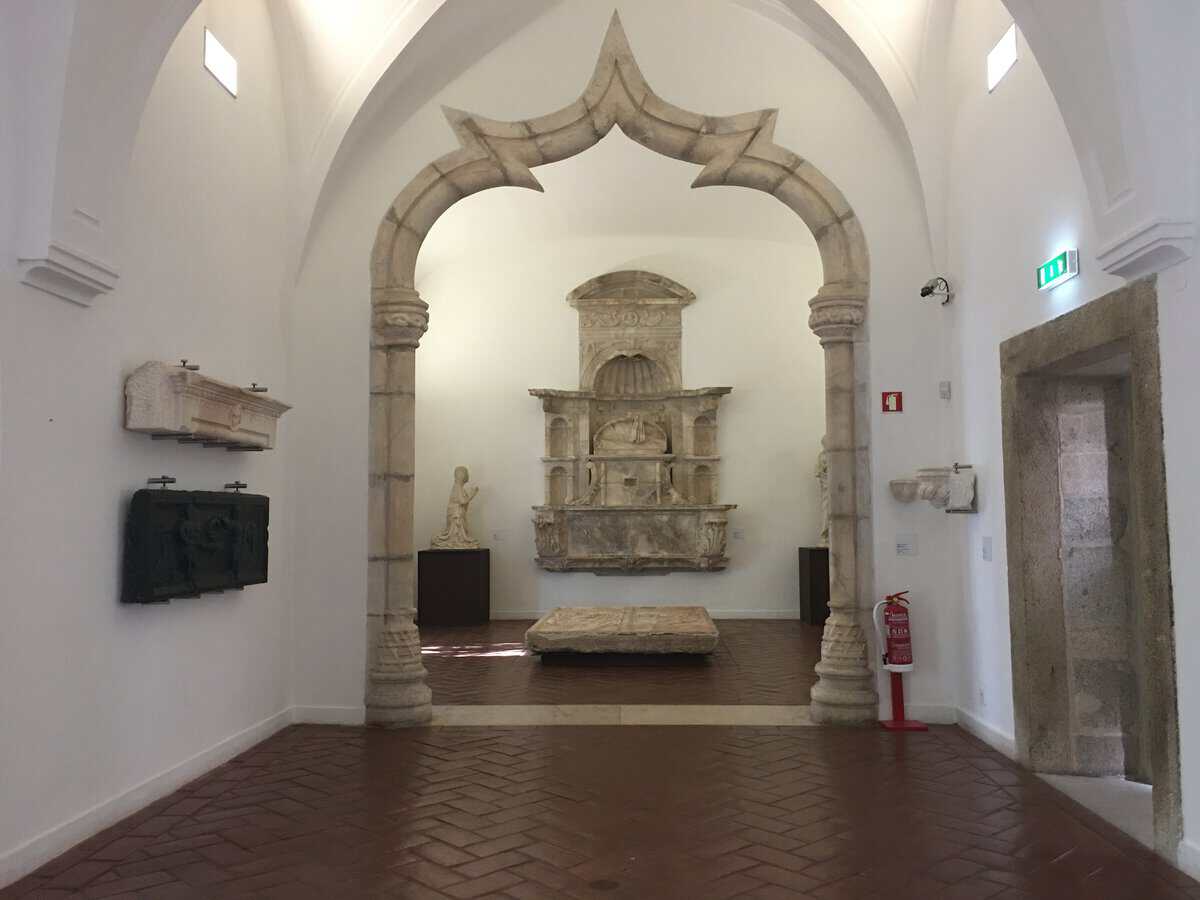
The museum is full of ancient treasures and antiquities, some dating back to the Iron Age.

Buy a combo ticket for the museum and the monastery (the monastery is actually in the same building as the museum). For an extra two Euro, or 12 Euro total, you can enjoy the museum’s terrific exhibitions and avoid the crowds. The museum is a treasure trove of Egyptian, Roman, Greek, and Moorish artifacts. After touring the galleries, you’ll go directly into the monastery from the museum without waiting on the ever-present line.

This was the first megalith we saw and it inspired us to seek out the Almendres Cromeleque, home to 95 of these fascinating stones near Evora in the Alentejo area.

The museum has a rich collection of Egyptian, Greek, Roman and Moorish art and antiquities. Be sure to visit the Room of Treasures in the museum. No photography is allowed in that area but the display of coins and jewelry from 1800 to 500 BC is impressive.

After touring the galleries in the National Archeology Museum, you’ll enter the Monastery directly without waiting on any additional lines.

This fascinating time line inside the monastery captures 500 years of world history in words and images.

In spite of the crowds, there are numerous serene spaces within the monastery perfect for quiet contemplation.

You may notice long lines around the bakery just up the street from the monastery. If you’ve been to Portland, Oregon, this may remind you of the lines around Voodoo Doughnuts. I’m always amazed by the patience people seem to have in their quest for particular baked goods, but back to Belem…

Lines for Casa Pasteis de Belem snake around the corner. Worth the wait? You decide.

This is the place that claims to have the original and the best Pasteis de Belem. These are little custard pastries in a flaky filo- like crust. Locals say these are good, but you’ll have to decide if they’re worth waiting for. We didn’t, but we haven’t ever waited for doughnuts either. They sell Pasteis de Belem in the Starbuck’s next door without the wait, though buying them there doesn’t quite have the same cachet. You can find these delicious pastries all over the country though they’re called Pasteis de Nata (nata is cream) or Pastel de Nata, if you’re only having one,  everywhere else except Belem. Try one or two and remember to add a healthy shake of cinnamon and powdered sugar on top!

Time for lunch or dinner? Turn down this little street to find Enoteca de Belem.

If you’re hungry for a meal, we highly recommend the Enoteca de Belem   (+351) 213 631 511 Travessa do Marta Pinto, 12. Located on a little alley off the main street in Belem, this is a terrific choice for lunch or dinner.   It’s very small so book a table or prepare to be disappointed.

We were delighted with our lunch at Enoteca de Belem. Here’s a peak at the menu.

Sitting at the bar gave us a chance to learn about and taste delicious Portuguese wines.

We sat at the bar since we had missed our reservation time—the museum and monastery were so fascinating we spent far longer than we had anticipated. The bar turned out to be perfect for us because in addition to a fabulous lunch, we had a great chat and learned quite a bit about Portuguese wines and history.

The perfectly prepared scallops with cauliflower puree and quail eggs were as delicious as they looked.

The freshly caught grouper was the fish of the day. Served with “clam rice,” it was an incredibly flavorful dish.

Portuguese cuisine often pairs fish and pork. The tender grilled octopus and spicy chorizo was perfection on a plate.

This classic dessert, Papo de Anjo, reminded us of an upgraded rice pudding. Comfort food at its best!

Our lunch was incredible and one of the best meals we had in Lisbon. Try the scallops to start and the grouper or cod if they have it.

When we asked for the wine list, we were handed these vintage binoculars and instructed to look around and choose whatever we were interested in from the shelves above the bar. There was a printed list, as well, but selections change regularly– thus the binoculars.

We opted for wines by the glass so we could sample several. The staff were well- versed in the wide selection available and happy to make suggestions and answer questions.

The knowledgeable staff will be glad to help you match the appropriate wines to your food selections.

Sailboats and other pleasure craft ply the waters off the embarcadero. The Hippotrip looked like Lisbon’s version of the Boston Duck Tours. Could be fun, but we didn’t try it.

Next, take a walk along the water down to the Monument to the Discoveries, which honors Prince Henry the Navigator, and was built in 1960 to commemorate the 500th anniversary of his death. Henry’s mother, Queen Filipa of Lancaster, Vasco da Gama, Magellan, King Manuel I and the poet Camoes are all depicted on the monument.

The busy waterfront is the perfect place to stroll and people watch. It’s possible to go inside the Monument to the Discoveries, which commemorates the 500th anniversary of the death of Henry the Navigator.

The Tower of Belem was the last bit of home Portuguese sailors saw as they set off to sea. It offers beautiful views but be prepared for long lines if you’d like to climb the 120 steps to the top.

Further on, you’ll see the famous Tower of Belem. It’s possible to climb 120 steps to the top of the tower for the views. Lines can be quite long. Let’s face it—there are lines for nearly everything you’ll want to see in this area so just be prepared for that. There’s an Atlas Hotel along the way with a nice terrace, perfect for an apperitivo if you’re ready for a break from touring– and the lines.

There is a lovely park near the waterfront and we happened to catch a good- sized open air market there on our visit.

On our walk back, we came upon an open air market selling everything from hand crafted ceramics, art and jewelry, to tea towels and mass-produced souvenirs. There was also a lively folk dance competition taking place in the park and we simply had to stop and watch for a while. It was delightful!

Troupe after troupe of talented folk dancers took the stage in the park. We joined the crowd to cheer them on.

Near the stage where the dancers competed, we spotted this pavilion. It was a 2012 gift from the Royal Thai Government to Portugal, celebrating 500 years of bilateral relations between the two nations.

We wished we had more time in Belem. We would like to have seen the Maritime Museum, Coaches Museum and the Ajuda Palace. Next time for sure!

Written and photographed by Jeanne Neylon Decker

Protected by US Copyright laws.

Evora: The Alentejo’s Capital City

The Vasco da Gama bridge led us away from lively Lisbon to the rural beauty of the Alentejo.

An easy 90- minute drive southeast of Lisbon takes you to the expansive Alentejo region. Home to medieval villages, castles, palaces, pousadas, megaliths, wine producers, and vast agricultural lands, this beautiful area has something to please nearly all visitors. We made Evora, the capital of the region, and a UNESCO World Heritage Site, our headquarters. This delightful small city is a great base from which to launch day trips to the many attractions in the area.

The Alentejo’s capital city is best explored on foot– wearing comfortable shoes, of course.

Remember to look up as you wander!

The historic city of Evora has interesting sites and several museums to explore. Just walking the winding streets is a fine way to spend a day, especially in the area around the Largo Conde de Vila Flor. After a pleasant stroll through the Praca do Giraldo, Evora’s bustling main square, we considered our options.

The busy Praca do Giraldo is at the heart of the city. Numerous shopping streets fan off from the Praca.

Cork is king in the Alentejo and is featured in souvenirs from sandals to handbags.

Portuguese pottery is also a popular souvenir.

Time was short so we had to make choices.  We decided to save the Contemporary Art Museum for our next visit and headed over to the Museum of Evora, which was hosting a Chinese porcelain exhibition along with its permanent collections.

The Museum of Evora is housed in a former Episcopal palace built in the 17th century.

Beautiful Azulejos tiles line the stone staircase inside the museum.

Teapots, serving pieces, jewelry and other treasures from China are featured in the current exhibition at the museum.

Placards describe the fine Chinese porcelain plates on display in Portuguese and English.

The museum features paintings from the 15th through 19th centuries, drawings, engravings, 17th and 18th century furniture, and Roman sculpture from the 1st and 2nd centuries.

The museum is known for it’s 17th and 18th century painting and sculpture. This piece is by Antonio Teixeira Lopes.

Religious articles, like St. Blaise’s arm reliquary from the 17th century, are part of the permanent collection.

Visitors can see this striking bronze sculpture, statuary, mosaics and other artifacts from the Roman era.

Interesting archeological finds from the Neolithic Age and a collection of silver and gold religious pieces, and jewelry are also on display. There were few visitors on the day we were there.

Antiquities from numerous ancient civilizations are on view.

Artifacts from the Roman era line a courtyard hallway.

Just outside the museum is the Roman Temple from the 1st century AD. Today, the ruins are undergoing restoration and are under wraps, but it is possible to see several of the Corinthian columns.

The Roman Temple which dates from the 1st century is mentioned in all the guide books, but until the restoration is complete, there isn’t much to see.

There is a small park behind the temple that offers nice views over the area beyond Evora and across the way you’ll find a lovely pousada, once a monastery that is now an upmarket hotel called Pousada dos Loios. Feel free to wander inside and take a step back into Portugal’s past. The restaurant here is open to the public.

Here’s a peek at the courtyard and restaurant at Pousada dos Loios.

This small park behind the Roman Temple provided a nice place to relax and enjoy the views over the city and surrounding countryside.

Many people line up at Evora’s Church of St. Francis to visit the Chapel of the Bones or Capela dos Ossis. The 16th century chapel displays the bones and skulls of monks. We’ve seen the creepy Capuchin Crypt in Rome so felt no need to stop in after our visit to the church. The public gardens beside the church were much more appealing.

Inside the Church of St. Francis.

The Chapel of the Bones is a popular tourist attraction inside the Church of St. Francis.

If you have time, stop into Evora’s Cathedral or Se.  It’s one of the largest medieval cathedrals in Southern Portugal and is said to be built on the site of a former mosque.

Here are the marvelously mismatched spires of Evora’s cathedral.

Close to the Church of St. Francis, you’ll find Evora’s morning market.  The market is indoors and was smaller than some we’ve visited, but we also arrived fairly late in the morning after many of the vendors had closed up shop.  Happily, there were several purveyors of tasty cheeses, cured meats, and fruits and vegetables still open.

Many vendors had already packed up and gone home by the time we arrived at the market but there was still plenty to choose from.

Everything you need for a nice picnic is right here–local pork products, sheep and goat’s milk cheeses and other tasty treats.

Evora has lodging options to fit many budgets and preferences. We chose to stay at two very different, but both delightful properties in and near the city. We began our stay at the lovely Albergaria do Calvario, just inside the walls of the city [email protected].


We enjoyed our stay at the small, well-located Albergaria do Calvario.

Located just inside the ancient Roman walls, it was easy to walk all around the city and access the freeway quickly for daytrips from our hotel.

The location made it easy to walk to Evora’s important sites as well as to dinner each evening. It was also convenient to reach the freeway for our day trips further afield. We’ll discuss dining and day trips in additional posts.

The comfortable bar area welcomes guests for drinks and light bites.

Ours was a large, comfortable room with a big balcony overlooking the hotel’s courtyard where many guests enjoyed breakfast, aperitifs, and conversation. Rooms vary substantially in size so be sure to explore your options when booking.

Our room was large and bright with a huge balcony overlooking the courtyard.

The marble used here is mined nearby. There is a Museum of Marble in Vila VIcosa we”ll visit next time.

There is no restaurant per se in the hotel, but they do provide a substantial breakfast buffet and have small meals, snacks, and drinks on offer in the bar. Anything ordered can be enjoyed in the courtyard, the bar area or one of the comfortable sitting areas.

This is just a small part of the bountiful buffet breakfast greeting guests each morning.

The courtyard provides a pleasant place to enjoy breakfast, drinks, or just relax.

Friendly staff are happy to help with restaurant bookings, excursion ideas or whatever you need to make your stay memorable.

The staff is extremely helpful and will even park and retrieve your car for you. Parking is available onsite at no additional charge. Laundry service is also available at a very reasonable price. The only thing we missed at this charming, small hotel was a pool, but we got that at our next hotel–Convento do Espinheiro Hotel & Spa.

Welcome to the Convento do Espinheiro.

We also spent several nights about 15 kilometers outside of Evora at the stunning Convento do Espinheiro. The converted convent was built in 1458 and when we stayed, was part of the Luxury Collection group managed by www.starwood.com. The property has traditional rooms in the original buildings as well as two modern wings.

We had a large room in the modern wing of the hotel, complete with a nice balcony.

We enjoyed our stay in the modern wing where we had a very large room with a balcony and views over the property towards to the inviting swimming pool. After nearly 10 days of non-stop touring it was the perfect place to take break.

The pool provided the perfect place for relaxation, lunch, drinks and a refreshing dip.

There is also an indoor pool and a nice spa on site where I enjoyed a relaxing massage. There are tours given daily of the expansive Convento which covers the property’s fascinating history.

Ancient olive trees dot the property which dates back to 1458.

These stone benches have been here since the property was a functioning convent.

There is no charge for the tour, which includes a visit to the beautiful church (still in use), monk’s cistern where a complimentary wine tasting is held each evening, the former dining area and kitchen, as well as the vaulted storage cellar which now houses the hotel’s terrific restaurant.

Convento do Espinheiro was one of the three wealthiest convents in Portugal. The church is still in use today.

The bells, one original, ring out to announce a wedding has taken place.

The wine cellar is housed in the monk’s former cistern, which was once filled with water.

A complimentary wine tasting take place each evening at 6 p.m. in the wine cellar.

We ate dinner there each night of our stay. The food is artfully prepared and beautifully presented by top-notch staff. Be sure to reserve for dinner or prepare to be disappointed—the dining room fills up. Should you choose to go offsite for your dinner and prefer not to drive, the helpful staff can arrange for a taxi into Evora.

Fresh local fish elegantly prepared is served with flair.

Luscious lamb chops with squash puree are featured on the menu.

Save room for dessert.

Where monks once stored their wine, olive oil and honey, hotel guests now enjoy a bountiful breakfast buffet. It is possible to enjoy your morning repast out on one of the terraces or in the courtyard area, as we did.

The former storage for olive oil, wine and honey, now serves as the hotel’s elegant dining room.

We also arranged to see some of the traditional rooms including the “royal suite” used by many honeymoon couples. It is truly spectacular in a beautiful old-world way and features a  contemporary bathroom and private rooftop terrace.

The “royal suite” often used by honeymooners offers old world charm and opulence.

The suite’s bathroom features modern fixtures like this free standing tub.

A private rooftop terrace, one flight up from the suite provides glorious views of the area around the Convento.

If your travel plans include a trip to Portugal, don’t miss the beautiful Alentejo. We’re looking forward to our return to this fascinating area.


It’s Time to Stop and Smell the Roses in Portland

A visit to Portland’s world famous International Rose Test Garden is truly a treat for the senses. The heady fragrance of thousands of roses greets you even before you see them. Here on 4.5 acres in the city’s Washington Park, high above Portland’s hustle and bustle, visitors will delight in the sights and aromas of more than 10,000 individual plants and 650 different varieties of gorgeous roses.

About 700,000 people visit Portland’s International Rose Test Garden each year.

With whimsical names like Angel Face, Candy Cane Cocktail, Carmel Kisses, Champagne Wishes, First Crush, Falling in Love and Jump for Joy, giant blooms and tiny tea varieties give approximately 700,000 visitors a year something to smile about.

How about Gold-medal winning Sunshine Daydream to brighten your day?

These beautiful blooms are a delight to the senses.

Barbra Streisand, Bishop Desmond Tutu, Pope John Paul II, Dale Chihuly, Ingrid Bergman, George Burns, Coretta Scott King, Dick Clark, Marilyn Monroe and England’s Queen Elizabeth are among the luminaries who have a namesake rose here.

Well-known people from around the globe including artists, philanthropists, world and religious leaders have namesake roses here.

While the peak month for rose viewing is June, our visit in August was sensational. According to the Portland Parks & Recreation Department, which owns and manages the Rose Garden, roses are in bloom from May through October.

These floral favorites were glorious even in August.

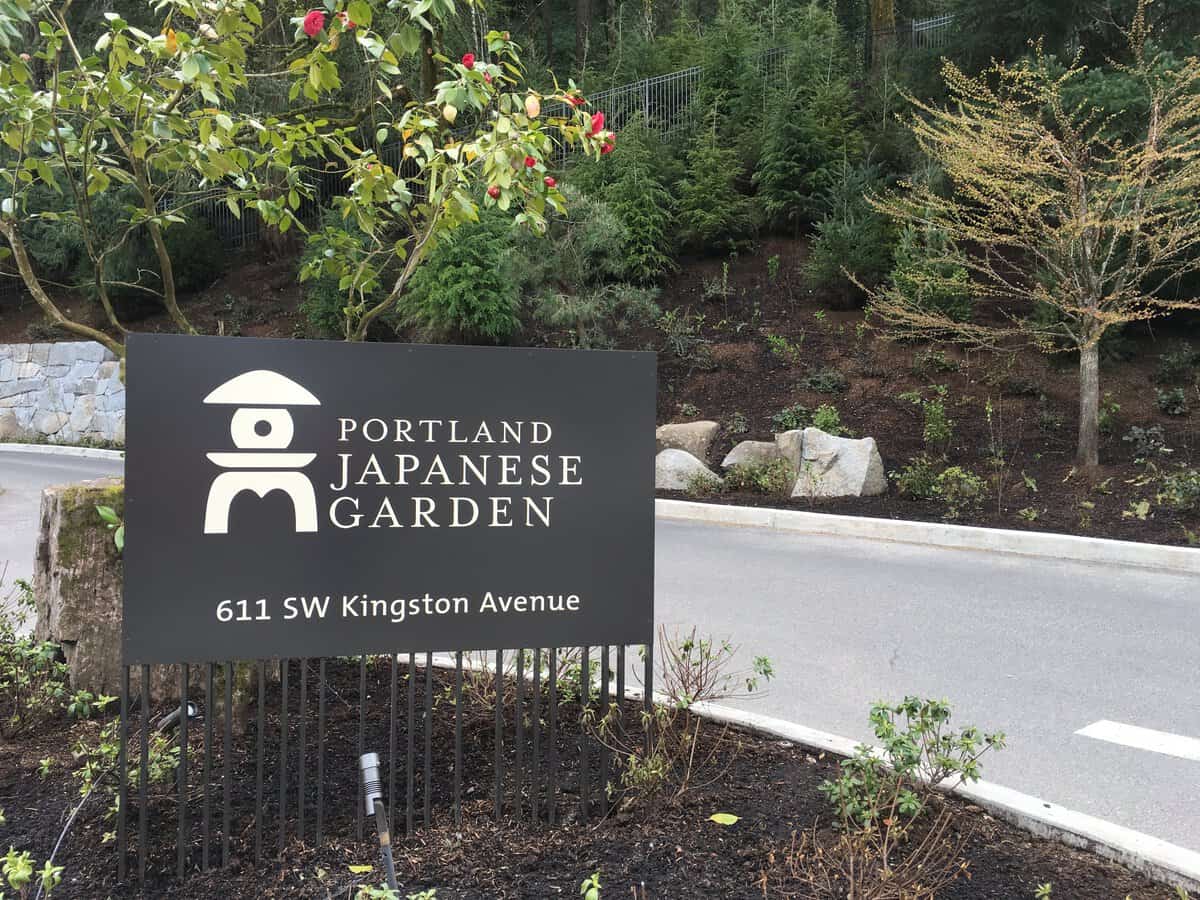
Plan accordingly–we arrived in April one time and were disappointed to see we’d come too early. We enjoyed a stroll through the lovely Japanese Garden across the street instead.

More than 650 varieties of roses are grown here.

“Hot Cocoa” seems right, even in the summer.

The oldest continuously operating public rose test garden in the U.S., Portland’s International Rose Test Garden just celebrated its 100th birthday. The centennial was marked this August with music and other activities.

Portland recently celebrated 100 Years of Roses– that’s why it’s called the Rose City.

During its 100 years of operation the Rose Test Garden has served as just that—a testing ground for new varieties of this floral favorite. During World War I, the Garden also became home and protector of European-grown rose varieties threatened by bombing.

Admission is free and so are guided tours given at 1 p.m. daily from Memorial Day through Labor Day.

To get the most from your visit, download a self-guided tour or join one of the free guided tours offered daily at 1 p.m. from Memorial Day through Labor Day. Enjoy the roses during your visit but remember, absolutely no plantings or cuttings can be removed from the Garden.

Dick Clark’s namesake rose won “Portland’s Best Rose” last year.

Admission to the Rose Garden is free. There is limited metered parking available. Consider taking public transportation or a ride share to reach the Garden. Take Trimet MAX to Washington Park and then use the free shuttle from the station that runs throughout the Park.

The next time Portland, Oregon is on your itinerary, treat yourself to a visit here and find out why it’s called the Rose City. And take time to smell, the well… you know!

A Walk in the Woods—Portland’s Hoyt Arboretum

If you enjoy a walk on the wilder side, visit Portland’s Hoyt Arboretum. Just up the hill in Washington Park from the refined and well-manicured Japanese Garden, nature lovers will find 12 miles of rustic trails that run through the 187-acre park.

Visitors can explore 12 miles of rustic trails, many fairly rugged. There are two miles of trails suitable for strollers and wheelchairs.

Trails are well marked and lead to “family” groupings of trees.

The Hoyt Arboretum boasts 6,000 plants and trees representing 1,100 species and it’s free to visit. The trees, first planted in the 1930s by John W. Duncan, are grouped with others they are related to, in areas closest to their natural, native habitat.

The Hoyt Arboretum is a nature lover’s paradise in Portland’s Washington Park.

Visitors can meander down the Magnolia Trail to the Magnolia Grove or view a broad array of holly on the Holly Loop. You’ll find Oak Trail, Beech Trail, Maple Trail, Hawthorn Trail, Walnut Trail, Redwood Trail, Bristlecone Pine Trail— you get the picture. If you have a favorite kind of tree, chances are you can find it here, along with its closest relatives.

Volcano Vista is one of many scenic spots in the 187-acre “living museum.” Mt. Ranier, Mt. St. Helens, Mt. Adams and Mt. Hood are off in the distance.

Be aware that many of the trails are fairly rugged and not well suited to people with ambulatory challenges. There are, however, two miles of trails appropriate for strollers, wheelchairs and less sure-footed visitors. Be sure to wear comfortable walking shoes for your Arboretum adventure.

The Magnolia Grove was a personal favorite. There are so many varieties of this beautiful flowering tree to enjoy at the Hoyt Arboretum.

The Hoyt Arboretum hosts 90-minute tours on many Saturdays, but it’s best to call or check the website www.hoytarboretum.org to confirm the schedule. In the autumn, there are Fall Color Tours and during April, which is Arbor Month, volunteer docents guide visitors on the Magnolia and Spring Blossom Tours. A $3 donation is suggested for the tours.  Check with the Arboretum for other tours and events throughout the year.

Check out the guided Magnolia and Spring Blossoms tours, held on Saturdays in the Spring.

The Hoyt Arboretum is pet and family friendly.  We encountered a number of families with cavorting canines and energetic children frolicking in the meadow areas.

Daffodils, a sure harbinger of Spring, were blooming in the Winter Garden during our recent visit.

The Visitor Center, which includes a small nature center and a research library, was closed when we visited, but the restrooms were open. There were brochures available, which included handy trail maps.

There was something to delight the eye in every area of the Hoyt Arboretum. This is a view of the Winter Garden.

There is a Winter Garden to explore and a picnic area when you’re ready for a break. There are no cafes or restaurants on the Arboretum’s grounds so come prepared. We often stop by Elephant’s Deli on NW 22nd Avenue. It’s a great place to pick up provisions on your way to Washington Park. You can order everything from pizza to black bean burgers, prepared while you wait, or order ahead for sandwiches, sack lunches, full picnics, and platters. They also have “grab and go” items, a full bakery, and plenty of specialty foods and gift items. A complete menu is available at www.elephantsdeli.com.

Specialty foods, full picnics, platters, pre-packaged salads and sandwiches, side dishes, baked goods and more are on offer at Elephant’s Deli.

Get a pizza, fried chicken, burgers and other entrees to bring to the park or enjoy before you go. There are no dining facilities at the Hoyt Arboretum so be prepared.

There is a small pay parking lot at the entrance to the Hoyt Arboretum or take the free Washington Park shuttle bus up from the transit center (Max Red or Blue lines to Washington Park). The complimentary shuttle runs around the park from April through October. For current information, please visit www.explorewashingtonpark.org and enjoy your walk in the woods in this remarkable spot in Portland.


Seeking Serenity at Portland’s Spectacular Japanese Garden

Gorgeous grounds, stunning views and an authentic Japanese experience have been delighting visitors to Portland’s spectacular Japanese Garden since 1963. Now, the beautiful 12-acre oasis, which includes five separate gardens with plenty of peaceful seating areas for reflection, a Japanese Tea House, tranquil ponds, and meandering paths perfect for contemplation, has even more to offer. Last month the new $33.5 million Cultural Crossing opened to visitors.

Follow the footpaths, steps and bridges that lead to each of the separate and distinctive garden spaces within Portland’s Japanese Garden.

The new $33.5 million Cultural Crossings expansion project includes new exhibition space, library, tea house and additional garden areas, all designed to enhance the authentic Japanese experience for visitors.

Designed by respected architect Kengo Kuma, the Cultural Crossing’s new buildings provide the perfect showcase for traditional Japanese arts and culture and serve as a venue for family-friendly activities and interesting demonstrations. An already popular attraction is even more appealing with the new expansion project. No wonder the lines for tickets are long. Purchase tickets online and check-in at the membership desk, exchange your voucher for a ticket there, and avoid the serpentine lines that are sure to continue for some time.

Minutes away from Portland’s busy streets, the Portland Japanese Garden is an oasis of tranquility.

Many visitors take the complimentary shuttle up to the gardens and walk back down to the parking area along the paved pathways.

Visitors can either take a complimentary shuttle bus or walk up the pathway to the open and airy Japanese Arts Learning Center–the heart of the new project with performance space, library and classroom.

Young visitors take a break on the steps inside the new Jordan Schnitzer Japanese Arts Learning Center.

The ground level Tanabe Gallery currently hosts an exhibition of ceramics, calligraphy, and sculpture by former Japanese Prime Minister Hosokawa Morihiro.

A delightful display of ceramics, calligraphy, and sculpture by former Japanese Prime Minister Hosokawa Morihiro are currently on exhibit in the Tanabe Gallery and Pavilion Gallery.

The expansive display, Hosokawa Morihiro: The Art of Life, a Rebirth in Clay, continues in the Pavilion Gallery, which also includes a portable teahouse.   Two additional “Art in the Garden” showcases, one featuring Kabuki costumes and the other, Noh masks and costumes, are scheduled for later in the year. The Japanese Garden will host related events and activities associated with both.

A portable tea house with the implements needed to perform a classic Japanese tea ceremony are part of the current exhibition. Noh masks and costumes and Kabuki costumes will be featured in the galleries later this year.

Now, to explore these magnificent gardens! The Strolling Pond Garden was our first stop, after a visit to the Learning Center and Gallery. Visitors can walk across the “iconic Moon Bridge” over the Upper Pond and enjoy the views.

Stroll the “Zig-Zag Bridge” over the Lower Pond which is surrounded by iris. It had not quite bloomed at the time of our visit, but was close. The aptly named Heavenly Falls provide the perfect backdrop to the Lower Pond and were a popular “selfie stop.”

The Heavenly Falls provide the perfect backdrop for contemplation or photo opps.

Follow the rough stepping stones along a lantern- lined path through the beautiful Japanese Tea Garden to the authentic Kashintei Tea House. Typically, the tea garden is a place to appreciate nature’s beauty and “the art of living in harmony” while leaving the cares of the world behind. This is certainly the case at the Portland Japanese Garden—it is so serene it’s easy to forget you are mere minutes from busy city streets.

Visitors are invited to leave their worldly cares behind when they explore the authentic tea garden and Kashintei Tea House.

The Kashintei Tea House, which is where tea demonstrations and related events are held, was brought to Portland from Japan and reassembled here.

Contact the Japanese Garden to learn when tea demonstrations and other events are scheduled for the Kashintei Tea House.

The Portland Japanese Garden has a lovely Sand and Stone Garden, created by Professor Takuma Tono, the Garden’s chief designer in the 1960s. These “dry landscape” gardens are sometimes called “Zen Gardens” because they are often found at Zen monasteries and are meant to invite quiet contemplation. The Sand and Stone Garden here illustrates an important Japanese concept—“the beauty of blank space.”

Enjoy your moments of Zen at the Sand and Stone Garden.

Recent additions to Portland’s Japanese Garden include the Natural Garden, which features local plants not typically associated with Japanese gardens and depicts seasonal change.

The cherry blossoms were in full bloom during our recent visit to Portland’s Japanese Garden.

The small courtyard garden (Tsubo-Niwa) and the Ellie M. Hill Bonsai Terrace are both new and located near the Tateuchi Courtyard in the Cultural Village.

Visitors are treated to an exquisite display of bonsai at the new Ellie M.Hill Bonsai Terrace.

The Flat Garden, which highlights each of the four seasons with specific plantings and trees is popular with visitors. The weeping cherry tree on the left represents spring while a 100- year old maple depicts autumn.

The Flat Garden is meant to be viewed from a single angle either from inside a home, where the door or window serves as a frame, or from a verandah, as these visitors are doing.

The gravel stands in for water, signifying summer in the Flat Garden.

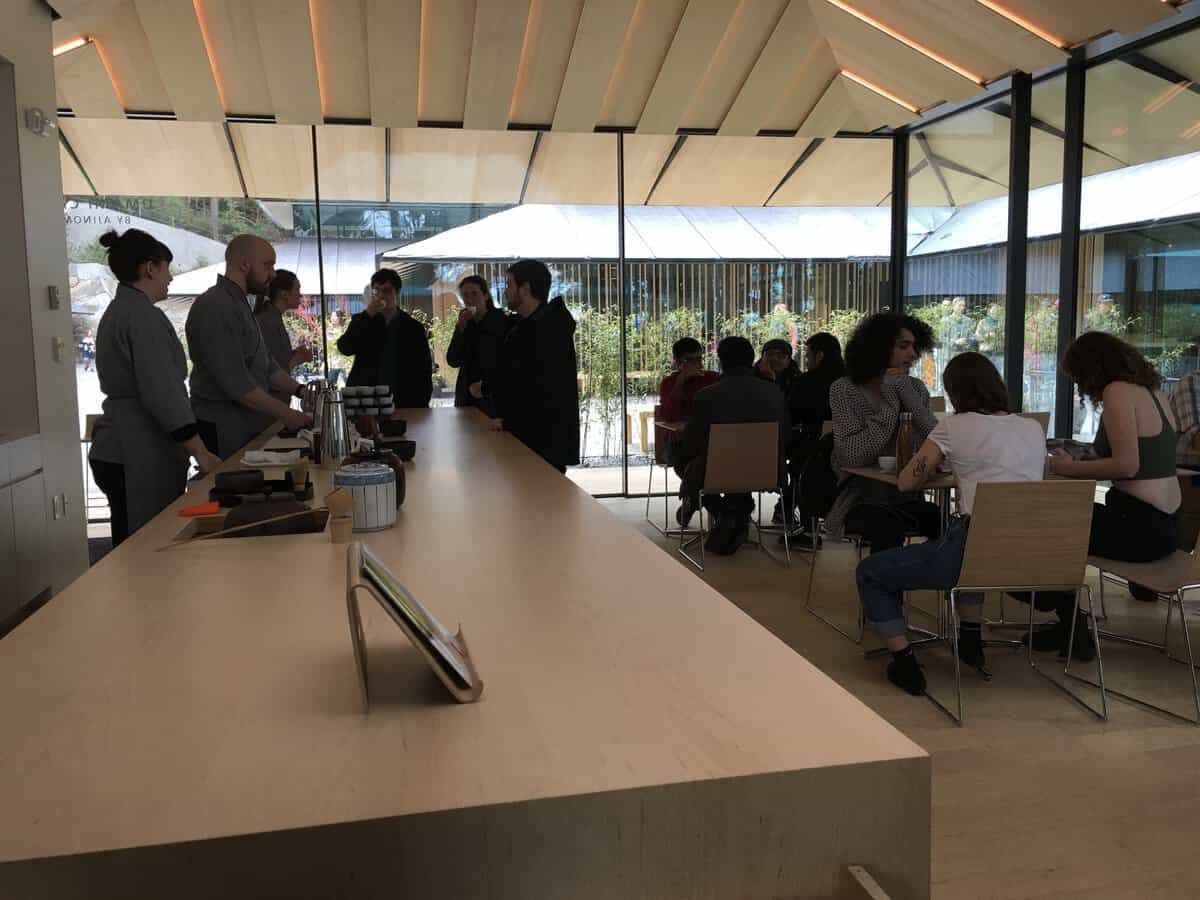
After you’ve finished strolling around the gorgeous gardens and interesting exhibitions, stop in and sample the fare at the new Umami Café. During our visit, just a week after the April 2 reopening, the café was not yet serving food but was offering complimentary samples of four delicious teas from Tokyo-based Jugetsudo Tea Company. (Update– Light snacks and sweets were available on subsequent visits.)

Stop in the new Umami Cafe for a restorative cup of tea and authentic Japanese sweets and snacks.

During our visit, guests were offered four different and delicious teas as part of a complimentary tea tasting.

When His Excellency Nobuo Matsunaga, the former Ambassador of Japan to the United States, visited the Portland Japanese Garden, he proclaimed it “the most beautiful and authentic Japanese garden in the world outside of Japan,” according to the organization.

Tranquil settings such as this one near the Upper Pond, have been drawing visitors since 1963.

They currently report more than 350,000 visitors annually, a number that will surely grow with the addition of the new Cultural Crossroads expansion. Be sure to add this spectacularly beautiful and serene spot to your Portland itinerary.  For updated information on tickets, events and hours click here.

Three Scoops: Where to Find the Best Gelato in Florence

After a long day of touring, or in the middle of a long day of touring, or just because you’re in Italy, in the beautiful city of Florence, you’ll want gelato. Even if it’s wintertime. Avoid the places with the big puffy gelato displays and colors not often seen in nature. Look for signs that say gelateria artigianale, naturale, or biologico.  Go for gelaterias that keep the ice cream in stainless containers—covered stainless containers are even better.

img_2847

Covered stainless steel containers keep gelato fresh and flavorful. Daily flavors will be listed on signs along with prices.

All the available flavors will be written on a sign and you already know what fragola (aka strawberry) looks like. We love that you can choose two or more flavors even for small cones or cups, so experiment with any flavor combination you fancy. Go wild! If someone behind the counter asks, “Panna?” Just say “Si” and your cono will be topped with delicious fresh whipped cream, often at no extra charge. Feel free to indulge.

img_2848

To make your gelato even more satisfying, say yes to panna montata– fresh whipped cream often offered gratis– free!

In Florence, some say Perche No! www.percheno.firenze.it can’t be beat. This is one of the oldest gelaterias in the city, serving it forth since 1939. It is good, really good, so if you’re in the city center you should definitely stop in for a cone.

img_8375

Many of the best gelaterias have lines, but they go quickly. It is worth waiting at places like La Carraia.

Often touted as the best in town, La Carraia www.lacarraiagroup.eu , with two shops in Florence, is branching out and opening a store in Rome, too. We like their gelateria on the Altro Arno just over the bridge of the same name. This is a line worth standing on– and there is always a line. They also have scrumptious looking cakes and other tempting confections but we single-mindedly stick to the gelato.

img_8376

You can choose at least two flavors even on small cones.

img_8378

It’s hard not to be happy with a cone in your hand.

Our little apartment’s location by the Duomo caused us to walk by Edoardo daily. www.edoardobio.it We don’t resist temptation often or easily so had ample opportunity to sample their delicious gelato. Just grab a number by the door and peruse the list of daily flavors while you inhale the intoxicating aroma of their handmade cones. Don’t worry–the line goes quickly.

img_3297

Grab a number and enjoy the heady aroma of fresh baked cones while you wait at Edoardo.

img_2849

This is what delicious looks like. Chocolate with chili (cioccolato con peperoncino) and cinnamon (cannella) are two of my favorite flavors.

Grom www.grom.it was the first of the “all natural” gelato we enjoyed many years ago and it’s still delicious. The company began in Torino and now you’ll find them in cities across Italy, including Florence, and around the world from New York to Jakarta. They even have an outpost in Los Angeles now.

img_3717

Grom is in cities throughout Italy and worldwide.

Gelato preferences are personal, of course, so go explore. Find your favorites and please share your discoveries with us.

Written and photographed by Jeanne Neylon Decker

Protected by US Copyright Laws.

Florentine Favorites: Where to Eat in Florence

Many visitors to Florence seem to be on a quest, trying to squeeze in as much culture as they can in a few short days. Don’t overlook the culinary component of travel. Take a deep breath and spend some real time in this glorious city if you can, and take time out for some superb dining while you’re here.

A quick 10- minute walk from our apartment near the Duomo over the Ponte Santa Trinita brought us to Il Santo Bevitore’s welcoming doors. It seemed like everyone inside was having a great time. We did, too, and put it at the top of our list of Florentine favorites.

img_2305

Il Santo Bevitore on the Altro Arno is one of our absolute Florentine favorites.

The comfortable dining rooms (there is a large one, pictured above, and a smaller one just beyond it) are lively and full of happy diners enjoying the excellent cuisine. The atmosphere is casual and warm with just the right amount of buzz.

img_2277

You can request an English menu or practice your language skills with the Italian one.

The food is absolutely delicious and the service is attentive and friendly. Some stand outs were the porcini risotto, the pigeon, rombo, and the veal.

img_2296

This simple pear and pecorino salad was a perfect starter.


img_2279

We always say, “si” to a sformatino– a light, savory custard just right as a first course.


img_2859

Il Santo Bevitore’s veal was perfectly prepared.

You can’t go wrong with the pastas, meat or fish—whatever you choose is going to be good. Save room for dessert though.  The chestnut torte and yogurt mousse were both terrific.

img_2293

The succulent pigeon is a game bird lover’s delight.


img_2292

Fresh fish (rombo in this case), lardons, and potatoes were elegantly plated and beautifully prepared.


img_2883

Save room for dessert. This yogurt mousse was spectacular.

We would’ve eaten at Il Santo Bevitore every night, but felt the need to explore some of Florence’s other delightful dining options. Remember, reservations here are a must. Il Santo Bevitore is open for lunch and dinner.

img_3068Try Cucina Torcicoda for lunch or dinner. They have a restaurant, a casual trattoria, and a pizzeria– all in the same building.  When you book in, and you must reserve, let them know which you prefer. They’ll be very different dining experiences but all delicious.

img_3057

Torcicoda’s elegant and tranquil dining room.


img_3070

Torcicoda’s wine list features fine selections from all over Italy.

We had an excellent dinner in the restaurant. The food was superb and the service attentive.

img_3074

This exquisite pork dish was rich and flavorful. The chestnuts gave it a great contrasting texture and crunch.


img_3448

Memories of this sensational truffle- topped tenderloin make my mouth water.

The casual trattoria has a different menu from the restaurant’s and it looked good, though we didn’t have time to try it.

img_3060

We’ll try the casual trattoria next time.

We ate lunch at Torcicoda’s pizzeria and sampled four different pies. We were especially pleased with the ones topped with fresh buffala mozzarella cheese– gooey and delicious but with a crisp, thin crust–just the way we like our pizza.

img_3059

The pizzeria was packed day and night, so be sure to reserve.


IMG_8298

Fresh buffala mozzarella, available on a number of Torcicoda’s pies, upped the yum factor.


IMG_8297

Pizza bianca with sausage and broccoli rabe was another hit.

The pizzeria also has a good-sized outdoor dining area which is open rain or shine. It’s fun to watch the parade of tourists passing by on their way to the beautiful Santa Croce across the piazza, as you enjoy your meal.

img_3368We walked past Konnubio one afternoon at lunchtime and it looked so inviting we decided to go back for dinner.  It was a good choice. The restaurant is casual and lively but the noise level is not over the top.

img_3357

Diners were just beginning to arrive when we took this photo. Every table was taken in both dining rooms when we left.

The food was beautifully plated and everything we tried was delicious.

img_3366

Seared tuna with fresh asparagus was pleasing to the palate and the eye.


img_3365

Tender lamb with caper berries was outstanding.


img_3373

Konnubio has an extensive wine list and knowledgeable, helpful waitstaff.

You should reserve a table as we saw only one walk- in party seated, while others were turned away. Sit in the main dining room at one of the tables with the big comfy chairs instead of the side dining room, if you can.

img_2020

Cantinetta Antinori is owned and operated by the Antinori wine family and is located in the beautiful Antinori family palazzo right in the center of Florence. We’ve had many delicious lunches here as well as a very good dinner.

img_2003

Enjoy fresh baked bread and Tuscan olive oil from Antinori’s estate while you peruse the extensive wine list.


img_2004

Thinly sliced artichokes with parmesan cheese was a winner.

The food is typical Florentine cuisine and oriented to the seasons.

img_2012

Crispy potatoes topped with filet of white fish, sundried tomatoes, and capers was full of flavor and texture.


img_2013

The hearty stewed beef on a bed of polenta is typical Florentine fare.

They have an extensive wine by the glass (or half glass) program so you can sample many of Antinori’s broad line at reasonable prices. It’s fun to try wines you may not see at home.

img_2002Cantinetta Antinori is very popular with local business people especially at lunch, so book a table.

img_3220

We discovered Trattoria 13 Gobbi, a cute little place tucked away on a small side street, on one of our meandering walks through this beautiful city.

img_3207

The dining room is charming and features plenty of vintage posters, advertisements and more to catch your eye.


img_3211

The flavorful vegetable soup was presented in this lovely copper pot.

We plan to give dinner a try there next time.

img_3209

Trattoria Cibreo is another one of our lunchtime favorites. We go to the trattoria at Via di Macci 122R, instead of Signore Picchi’s very popular but pricier restaurant, Ristorante Cibreo. The food is terrific and the menu seasonal. Be aware that they don’t serve pasta and they take no reservations at the trattoria. They open for lunch at 12:45 pm and you need to be there early to get a table. People will be lined up and waiting for the doors to open. The trattoria is closed Sundays and Mondays. There’s a tripe truck parked nearby that the always has a line. Snack while you wait?

img_7869

While not to my taste, this tripe truck does a great business.

Here are a few other Florentine restaurants we’ve enjoyed over the years: Omero is a wonderful classic Florentine restaurant way up above the town with great views. The food is delicious, the service is attentive and this well-known eatery is extremely popular. Be sure to book in for lunch or dinner.

Il Latini is the place for multi- course and enormous meals. There wasn’t a menu when we went for lunch–they just kept bringing food to the table. It was all good and there was plenty, served family style. The key word here is “basta”! Enough! Tell them how many courses you want before they start bringing it—especially if you don’t want the meat courses.

Del Fagioli means the beans, literally. This is a good, casual family place close to the Uffizi. The owner seemed to know at least half the patrons when we had dinner there some time ago. Corso Tintori 47r telephone for a reservation—they were turning people away. 055244285

There are so many wonderful restaurants, trattorias and pizzerias in Florence you’re bound to find some to fit your taste and budget. Check out the Mercato Centrale for some great casual options and share your favorites with us! Buon appetito!

Note: Always check a restaurant’s website for updated hours and reservations. Things change, but the need to make a booking does not!

Written and photographed by Jeanne Neylon Decker

Protected by US Copyright Laws

Want a Quick Bite? Try Florence’s Mercato Centrale

Craving a cappucino and a cornetto? Need a bouquet of fresh flowers or picnic provisions? How about fresh pasta to enjoy at home? Or maybe you’re just in the mood for pizza and a beer? Florence’s Central Market or Mercato Centrale Firenze is Florence’s answer to foodie heaven.  Housed in a historic building originally erected in 1847, and open from 10 a.m. to midnight, this is the place to go.

mercato caentrale nov 2015 - 8

Pick up picnic provisions like salami, cheeses, prosciutto and more at Florence’s Mercato Centrale.

mercato caentrale nov 2015 - 6

Fresh pastas and delicious sauces to go with them make a tasty and quick meal that’s easy to prepare in your vacation rental.

The market on the ground floor is fun to explore with every kind of seasonal produce, pastas, sauces, meats, cheeses, and flowers. Anything you could want that’s fresh and in season is right here.

mercato caentrale nov 2015 - 3

The Mercato Centrale has a bounty of seasonal produce, herbs and fresh flowers.

Upstairs at the Mercato Centrale is one of our favorite stops for for lunch, though you can also have breakfast, snacks, sweets, drinks and dinner here.

mercato caentrale nov 2015 - 16

Neapolitan-style pizza is done right at La Pizzeria Sud.

Go get some terrific Neapolitan style pizza at Pizzeria Sud. You can take your slices to one of the communal tables or go upstairs for table service. We opted for the former and enjoyed the hustle and bustle of the place.

mercato caentrale nov 2015 - 14

Lunch is ready!

There are lots of tasty options– pasta, panini, cheese and meat platters, fish, pizza, even burgers and fried chicken to choose from. There is also a coffee bar, wine, beer, pastries, gelato and delicious desserts–something to please most any palate.

mercato caentrale nov 2015 - 17

Choose your favorite foods from the array of vendors upstairs at the market and grab a seat at the communal tables. Mangia!

Everything on offer here from the hamburgers made from Chianina beef at La Toraia di Enrico Lagorio, the pasta from Raimondo Mendolia, Maurizio e Poala Rosellini’s fresh fish, the bufala mozzarella, beautiful baked goods, chocolates and gelato are all of the highest quality.

mercato caentrale nov 2015 - 20

A great selection of fresh or aged cheeses to eat now or enjoy later are readily available.

mercato caentrale nov 2015 - 11

If you’re looking to really splash out, try these fragrant truffles.

mercato caentrale nov 2015 - 12

If your tastes run more to fried foods, you’re in luck.

We even sampled the trippa fritta—fried tripe, a Florentine favorite, though not to my taste.

mercato caentrale nov 2015 - 15

Trippa fritta is a Florentine favorite.

After lunch (or dinner), you’ll probably want coffee and something sweet. Please remember that no self-respecting Italian would even consider ordering a cappuccino, latte or similar milky coffee drink after breakfast hours. Stick to the espresso. Ask for a caffe lungo if you miss your American coffee. Desserts are in abundance here and include gelato, pastries, cookies, and cannoli, which are stuffed while you wait—as they should be. Crushed pistachios on the ends are optional.

mercato caentrale nov 2015 - 19

These confections look almost too good to eat. Almost…

Upstairs is also where you’ll find Eataly, which features Italian grocery items, household goods, personal care items and my favorite Florentine soaps from Nesti Dante. You’ll also find a wine shop specializing in Chianti Classico selections, a cooking school, a bancomat (ATM)  and public restrooms which are in short supply in many cities like Florence.

mercato caentrale nov 2015 - 18

If you’re looking for Italian wines, particularly those from the Chianti Classico region, you’ve come to the right place.

mercato caentrale nov 2015 - 13

Students pay rapt attention at the Lorenzo de Medici Cooking School upstairs at the Mercato Centrale.

If you feel the need for yet more shopping, there are also stalls outside the building on the surrounding streets with scarfs, leather items, and souvenirs—all the typical Florentine goods you’d expect to find.

mercato caentrale nov 2015 - 10

Shoppers can find everything from dry pasta to Pinocchio at the market and stalls outside.

Buon apetito and happy shopping!

Written and photographed by Jeanne Neylon Decker

Protected by US Copyright Laws.

Tuscan Tables: Where to Eat In and Around Panzano

IMG_2801

Finding great places to enjoy the local cuisine can be part of the adventure when you’re traveling, but sometimes it’s nice to have at least a couple of dining recommendations. Here are a few of our “go to” restaurants in and around Panzano in Chianti:

IMG_2800

One of our all time favorites for an elegant and delicious dinner and/or lunch in the countryside near Panzano is La Locanda di Pietracupa in San Donato in Poggio.  The restaurant’s dining room is understated and polished but it’s the cuisine here that really shines. Credit for the inventive, refined rifts on Tuscan cuisine go to the two young couples who own the restaurant. They take fresh, local ingredients and give them a delightful and sophisticated twist. In the autumn, enjoy lighter than air ravioli stuffed with pumpkin, while summer brings tagliolini topped with delicate zucchini blossoms and truffle. The filet of beef may be wrapped in a paper thin sheet of lardo or accompanied by a rhubarb sauce, depending on the season. The Fritto della Locanda, their version of fritto misto, comes with chicken, rabbit and seasonal vegetables fried in the lightest batter possible.   Everything is spectacular here but save room for dessert—those are too delicious to miss. La Locanda di Pietracupa has a lovely outdoor terrace for warm weather dining and has four rooms available for rent upstairs over the restaurant. Be sure and book in—it is very popular. We’ve met people from Florence who’ve driven down just to dine here. They also have several rooms for rent and offer cooking classes.

IMG_8423

Many of our favorite restaurants feature outdoor terraces for warm weather dining. Here is Osteria Alla Piazza’s, which in summertime will be very busy for lunch and dinner.

There is a bend in the road between Panzano and San Donato where you’ll find a tiny hamlet called La Piazza. The hamlet has little more than a few stone houses and a terrific restaurant called Osteria Alla Piazza. This area favorite has several appealing small dining rooms and an expansive terrace for warm weather dining.

IMG_7769

Tagliolini with fresh truffles is a seasonal favorite.

Osteria Alla Piazza changes their menu regularly to capture the freshest seasonal ingredients at their peak. During an autumn visit a few years back we feasted on the porcini—presented beforehand in a big basket for our appraisal, and served in every course we ordered. With great anticipation, we returned just a few days later to further satisfy our craving for these meaty mushrooms only to be told, “funghi finito”—no more, all gone, season’s over!

IMG_8268

The elegantly prepared guinea fowl was superbly satisfying.

IMG_8270

The beef tenderloin–filetto all’ aceto balsamico was a standout at Osteria Alla Piazza.

IMG_8274

Save room for dessert. This panna cotta with strawberries was delicious.

Several dinners we enjoyed earlier this summer confirmed that the kitchen at Osteria Alla Piazza is still clearly committed to providing diners with the season’s best. Don’t miss the tantalizing tagliolini with truffles, the melt in your mouth filet of beef with cippolini (tiny onions), or the fritto misto, which someone in our party seemed to order everywhere we went. The restaurant is open for lunch and dinner and reservations are strongly suggested.

IMG_7989

Passing through Lucarelli on the road from Panzano to Radda, you’ll find Osteria Le Panzanelle — a local favorite—and one of ours, too. It’s always busy and always good. Friends who live in nearby Radda in Chianti complained it was getting harder for area residents to get a table during the busy summer months, so reservations are a must.

IMG_7924

Osteria La Panzanelle is a local favorite– and for good reason.

At Le Panzanelle you’ll find classic Tuscan cooking in a casual, lively setting. Begin with platter of local charcuterie, the Affettati Toscani—a nice big plate of prosciutto and delicious Tuscan salami. The involtini di melanzane, which is sliced eggplant rolled around cheese and baked with a tomato sauce and capers is also a tasty starter.

IMG_8439

A heaping platter of prosciutto and local salami is a great way to start a meal at La Panzanelle.

IMG_7930

The eggplant is hearty and big enough to share.

There are plenty of terrific pastas to choose from—you can’t go wrong here. For the main course they offer an enormous Bistecca alla Fiorentina for two, roasted rabbit with capers and anchovies, hearty cinghiale con olive (wild boar with olives), scottadito di angello (lamb chops) and other Tuscan specialties like peposo—a delicious slow cooked beef dish.

IMG_8444

You’ll find delicious Tuscan classics at Le Panzanelle.

IMG_8448

Simple scottodito–lamb chops with a translation meaning “burn your fingers.”

IMG_7939

Hearty meat dishes are popular in most Tuscan restaurants. Le Panzanelle’s kitchen turns out a superb selection.

We’ve eaten here many times over the years and have tried most things on the menu. We’ve always been delighted with our meals and service is always friendly. It’s just a short 10 to 15 minute drive from Panzano and well worth it. Unlike many local restaurants, which close in November and reopen in late spring, Le Panzanelle is open nearly year round except for their vacation closing sometime in January/February.

IMG_8550

For fabulous food and amazing views go to Ristoro di Lamole in the tiny hamlet of Lamole. You’ll drive up a beautiful winding road in the hills near Greve, passing orchards, vineyards and country homes, and when you reach the top—the friendly staff at Ristoro di Lamole will be waiting with a warm welcome.

IMG_8545

Fillipo will be sure you’re well looked after at Ristoro di Lamole.

Be sure to reserve a table on the terrace so you can enjoy the stunning countryside views along with their innovative and sophisticated take on Tuscan cookery.

IMG_8553

Enjoy the spectacular views from Ristoro di Lamole’s terrace.

House made burrata makes a great starter and the ravioli with pear and pecorino should not be missed.

IMG_8524

The creamy burrata was served with locally sourced mushrooms.

IMG_8535

Meat courses like the tender pork filet and rabbit are outstanding and the fritto misto was perfect. Everything we ate– from the antipasti to dessert– reflected a refined sensibility and was absolutely delicious.

IMG_8708

Pasta with truffles was perfectly prepared at Ristoro di Lamole.

IMG_8539

Pastas range from the delicate truffle enhanced, to hearty fare like this papparadelle with wild boar.

IMG_8541

The filet of pork reflects the kitchen’s sophisticated take on classic Tuscan cuisine.

The Lamole Lamole wine from this area is just one of the more than 300 bottles on Ristoro di Lamole’s extensive wine list. Open for lunch and dinner.

IMG_8686

Oltre il Gardino is a family-run restaurant right off Panzano’s main square, the Piazza Bucciarelli. We ate here for the first time on our recent trip and were very pleased with their solid, classic Tuscan cookery.

IMG_8692

IMG_8688

Ravioli with spinach, pecorino and sage was a hit.

IMG_8689

The papparadelle with wild boar was a favorite, too.

The menu focuses on Italian comfort food and includes favorites like bruschetta al pomodoro, ribolita (tomato soup with bread), house made pastas like papparadelle with cinghiale (wild boar) and tagliatelle with pigeon.The ubiquitous Bistecca alla Fiorentina, peposa, and other typical dishes, were all well prepared.

IMG_8691

Tender fried chicken is representative of the comfort food served at Oltre il Gardino.

The dining room in the converted farmhouse is cozy and well appointed. Every table was taken the night we were there, mostly by Italian diners, and everyone seemed to be having a good time. Even though it was a full house, service was attentive.

IMG_8683

In the warm weather, the restaurant opens their summer bar—an expansive terrace with beautiful views overlooking the Conca del Ora, the shell of gold. Lunch, aperativi and dinner are served on the terrace.

IMG_7407

La Cantinetta di Sassolini is off the Piazza Ricasoli at #2, in the old part of Panzano up the hill from the main square near the church of Santa Maria Assunta.

IMG_7389

The dining room at La Cantinetta di Sassolino.

The menu centers on typical Tuscan dishes. Dinners can begin with assorted local cheeses like pecorino, a sheep’s milk cheese often served with jam, crespelle—delicate crepes stuffed with vegetables, which happened to be asparagus on this occasion, and one of our favorites, sformata, a light savory custard of seasonal vegetables.

IMG_7387

A delicate savory sformata was sensational at Sassolino.

Next up are pastas, which are often sauced with game or meat here. Main courses like tagliata di manzo- sliced beefsteak, roasted meats, lamb chops, or chicken fricassee are served in ample portions.

IMG_7388

It’s perfectly fine to share a pasta course. Just say, “Uno per due, per favore.”

IMG_7396

Tagliata di manzo makes a great Sunday supper.

The dining room is lovely and boasts a large fireplace, which is a welcome addition in the colder months. The restaurant also has a terrace for outdoor dining in the summer. Note: Enter through the doors on Via Giovanni di Verrazano, though you can park in the piazza if there’s space.

IMG_7404

Service is warm and welcoming at La Cantinetta Sassolino in Panzano.

We didn’t have a chance to return to Il Vescovino on our visit to Panzano this summer, but would recommend it based on earlier visits. The menu features Tuscan favorites; beginning with antipasti of Tuscan salami and prosciutto, chicken liver pate, olives and fennel. Pastas include local specialties like pici, which is a thick hand made spaghetti, and tagliatelle with funghi or papperadelle with a ragu. Grilled chicken, braised beef, Bistecca Fiorentina (from Dario Cecchini’s macelleria), porchetta and tagliata di manzo—the grilled, sliced steak popular in Italy, round out the menu. The restaurant has gorgeous views from inside and out on the terrace, which looks over the vineyards below. Il Vescovino is at via Ciampolo da Panzano, 9, 50022 Panzano, Greve in Chianti, Italy +393383648446.

IMG_7831

Dinners at Dario Cecchini’s restaurants are multi course, family style affairs. Bring your appetite!

We mentioned Dario Cecchini, the uber popular butcher from Panzano with a worldwide following in another post. We would be remiss not to include his terrific restaurants here: Solociccia, which is Tuscan slang for “only meat” and features cuts from all parts of the cow; Solociccino, a mini version of Solociccia open for lunch only; Officina della Bistecca showcases sensational steaks including the famous Bistecca alla Fiorentina; and Dario DOC—just for lunch from Monday through Saturday and the only Dario restaurant where reservations aren’t needed. All of the restaurants serve family style, multi course, prix fix meals, and while famous for top quality meat, vegetarian options are available.

IMG_7322

“Tuscan butter” (center) and other delicious meat products on display at Antica Macelleria Cecchini in Panzano.

Panzano and environs are very popular travel destinations, particularly in the summertime. Avoid disappointment and make reservations. These are some of our favorite places to dine in and around Panzano. We’d love to hear about yours, so please leave comments.

Mangia bene!