Browsing Tag

Cathedrals

Strasbourg in November: The Calm Before the Christmas Markets

Half- timbered buildings n Strasbourg's Petit France.

There’s much more to Strasbourg than its world-famous Christmas Markets, which attract visitors from around the globe every December. When we visited in early November, the city already felt festive, with a chill in the air and a palpable sense of anticipation.

Christmas tree with cathedral spire in background
Strasbourg’s Christmas tree stands ready for decorating in Place Kleber. The Cathedral’s spire towers in the background.

Galeries Lafayette had unveiled its third-floor Christmas boutique and storefronts throughout the city were getting dressed for the season. The enormous Christmas tree had already gone up in Place Kleber, crews were testing the lights, and holiday decorations were beginning to sparkle across the city.

Galerie Lafayette department store with tram passing by.
Galerie Lafayette was already showing its holiday finery.

Residents told us that once the Strasbourg Christmas Markets officially open, from November 26 through December 24, the streets become nearly impassable. Markets pop up in every neighborhood, which adds to the magic, and the crowds, as December progresses. November felt like the perfect time to be in Strasbourg: festive and wonderfully uncrowded.

A Rich History

Strasbourg calls itself the Capital of Europe, not only because of its central position in the historic Alsace region, now part of France’s Grand Est, but also because it hosts both the European Parliament and the European Court of Human Rights.

Half- timbered building on the River Ill
Its captivating fusion of German and French culture, cuisine, and architecture makes Strasbourg a unique destination.

For centuries, Strasbourg shifted between French and German rule, and that cultural blend makes Strasbourg feel distinct from anywhere else in France. You’ll see it in the architecture, taste it in the food, and hear it echoed in the language. There’s no place quite like it.

What to Do and Where to Go in Strasbourg

Strasbourg Tourism Information office
Make the Strasbourg Tourism Office your first stop for a Strasbourg City Card, information, and recommendations.

Strasbourg has fascinating museums, beautiful churches, historic neighborhoods, lovely parks, walking tours, boat rides, and even tiny train tours. Make the Tourist Information Office in Cathedral Square your first stop and pick up a Strasbourg City Card, which gives discounts on museums, attractions, and transportation. Here are some highlights to help you plan your visit:

The Iconic Cathédrale Notre-Dame

Cathédrale Notre-Dame de Strasbourg is the city’s star attraction and the most visited cathedral in France after Paris’s Notre-Dame. Construction began in 1180 and continued until 1439. One of the first things you’ll notice is the single spire. Although builders had centuries to add a second one, wars, finances, and concerns about the stability of the landfill beneath the cathedral likely were the reason the spire is solitary. The result is an unforgettable, asymmetrical masterpiece. Its 142-meter tower made it the tallest building in Europe until the 19th century.

Notre Dame Cathedral de Strasbourg
Cathédrale Notre-Dame de Strasbourg is the city’s most visited site.

The cathedral has a wonderful blend of Romanesque and Gothic architecture. Remarkably, much of its medieval stained glass, including the spectacular rose window, has survived centuries of conflict and remains intact.

Note: The cathedral closes to tourists during mass but welcomes worshippers. Once mass ends, everyone must exit immediately. I learned this firsthand when I had to convince the guard to let me stay long enough to light a candle!

Tick Tock—Don’t Miss This Clock!

Check the posted sign to see whether the cathedral’s extraordinary astronomical clock will be presented that day. It wasn’t until our fifth and final day that we finally saw it.

When the clock is available for viewing, enter through the side door near the gift shop. Arrive before noon to buy your 4 € ticket and claim a good spot for the 12:30 p.m. presentation. Tickets cannot be reserved, and even in November the area around the clock fills up quickly. More than three million people visit the clock each year.

Strasbourg's astronomical clock
The skeleton hammers, the cock crows and the apostles circle around Christ at exactly 12:30 PM.

While you wait, watch the excellent video (German and French with English subtitles) explaining the clock’s history and inspired engineering. Commissioned in 1547 and completed in 1571, the mechanism tracks not only time but ecclesiastic holidays, phases of the moon, solar cycles, and the movement of the zodiac. This is an astonishing feat of 16th-century ingenuity, mathematics and craftsmanship.

At precisely 12:30 p.m., the show begins: a skeleton chimes the hour, a rooster crows, and the twelve apostles parade past the Christ figure three times. This exquisite centuries-old marvel is one of Strasbourg’s must-see experiences.

crowd of people looking at antique clock
Get to the Cathedral by noon to stake out the best viewing spot.

This is the third astronomical clock built for the cathedral. The first clock, built 1352–1354, stood in the south transept across from the current timepiece. It was replaced by a second in 1574, whose complexity, precision and craftsmanship brought fame to the mathematicians, clockmakers and artists who built it. It was dismantled in 1838 and has been displayed in the Decorative Arts Museum since 1924. The current clock, completed in 1840, incorporates parts of the earlier clock including several original figurines, and paintings by Tobias Stimmer who worked on the second clock.

After the presentation ends, you’re free to wander the cathedral. For an additional fee, climb the tower for panoramic city views.

Palais Rohan’s Three Must-See Museums

Just across the square from the cathedral, the elegant 18th-century Palais Rohan, often called “Little Versailles”, showcases lavish Baroque interiors, glittering gilding, and centuries of history in its three museums. Over the years it has housed nobility, monarchy, university offices, and now belongs to the municipality. With a Strasbourg City Card, admission to all three of its museums is only 8 €.

Palais Rohan courtyard
The beautiful Baroque Palais Rohan houses three important museums.

Musée des Beaux-Arts

The Fine Arts Museum features more than 2,000 works by European masters including Giotto, Raphael, Tintoretto, Tiepolo, Canaletto, Memling, Rubens, Van Dyck, Zurbarán, Goya, El Greco, Courbet, and Degas. The collection of paintings, sculpture, and religious art spans from the Middle Ages through the 20th century and is a must for classical art lovers.

Musée des Arts Décoratifs

Perhaps the palace’s most enchanting space and my favorite, the Decorative Arts Museum includes the opulent apartments of the Prince-Bishop, designed between 1732 and 1742 by Robert de Cotte, First Architect to the King, for Cardinal Armand Gaston Maximilien de Rohan-Soubise. Though damaged during the French Revolution and again during World War II, the palace has been meticulously restored. Visitors today can wander through the Guards’ Room, the Bishops’ Hall, the King’s Chamber, the Assembly Hall, the library, the private chapel, and rooms decorated for Napoleon I and Empress Josephine. Marie Antoinette, Louis XV and Charles X were among the royalty who slept here.

Opulent bedroom for Napoleon 1
This cozy study was converted to a bedchamber for Napoleon I.

Each of the stately palace rooms have signage in French and English explaining their use and describing the provenance of the furnishings and artworks. The tapestries, sumptuous furnishings, carved stucco and other materials are exceptional.

Hannong ceramic tureen and platter
The fanciful porcelain designed by Paul Hannong is a highlight at the Decorative Arts Museum.

Don’t miss the Paul Hannong ceramic and porcelain collection. From whimsical oversized cabbage-ware to ornate terrines shaped like a giant boar’s head and a large turkey, this is tableware fit for a king, or at least a Prince-Bishop, for whom they were designed. There are also playful platters of porcelain eggs and pickles that leave little space for actual food but are delightful to look at. The silver collection, with objects ranging from cutlery to liturgical vessels, is equally captivating.

astrolabe and clocks
Spend time with the historic astrolabe, clocks and globes on display. They’re truly extraordinary.

The Decorative Arts Museum is a treasure trove of art, furnishings, tableware, silver, books, manuscripts, religious objects, and other remarkable and well-preserved antiques like the astrolabe, clocks and globes in the museum’s collections. It is the perfect place for a history buff or would-be time traveller to spend an afternoon.

Musée Archéologique

The Archaeological Museum is the oldest museum in Strasbourg. Housed on the Palais Rohan’s lower level, it holds an extensive collection of artifacts dating from prehistoric times from to the first centuries of the Middle Ages; the period ruled by the Frankish Merovingian dynasty which lasted from the 5th century until 751. This is one of France’s most important archeological collections and we were sorry to miss it on this visit.

More Museums Worth Visiting

The Historical Museum of the City of Strasbourg offers an excellent overview of the city’s origins and development. If you’re curious about how Strasbourg was founded, who lived here, and what daily life looked like in its earliest centuries, here’s where you’ll find the answers. Housed in a building originally used for butcher stalls, the museum’s exhibits cover 900 years of Strasbourg history and include everything from military artifacts to pottery. Most displays feature English-language signage and there are audio guides available.

Exhibit of a building at Strasbourg City Museum
Interactive and static exhibits tell the story of Strasbourg’s fascinating history at the City Museum.

There are also interactive exhibits that younger visitors will love. Try on a medieval helmet to feel its weight or lift one of the stone balls once used as cannon projectiles. The museum also houses an array of medieval weaponry and full suits of armor for both soldiers and horses, always a crowd pleaser! The museum was closing before we got through all the galleries, but we will be back!

The Museum of the Cathedral’s Treasures was closed during our stay due to a national holiday.The Alsatian Museum is closed for renovation at least through the end of the year.

As always, check websites for current hours and prices. Many museums offer discounts with the Strasbourg City Card.

Locks and Landmarks

A Batorama boat tour is a relaxing way to experience Strasbourg. Departing from a pier on the River Ill just a short walk from the Strasbourg Cathedral, the company offers several itineraries and operates both open and closed boats, depending on the weather. We had a closed boat due to threatening rain, though an open-top boat would have offered better views of the city’s landmarks during the 70-minute cruise.

Headphones provide commentary in multiple languages, including English, French, German, and Italian, as you glide through Strasbourg’s scenic and historic areas. Buy tickets in advance, especially on weekends and holidays. Tours often sell out.

Locks on the River Ill in Petit France
You’ll pass through locks in Petit France and learn a lot about this charming city on a Batorama boat tour.

Our itinerary was the most comprehensive and included Petit France, Strasbourg’s most picturesque neighborhood. Known for its half-timbered houses, Petit France’s cobblestone streets are lined with cafes, restaurants, and boutiques. In medieval times, the area was home to tanners and slaughterhouses, and the upper galleries of the buildings used to dry animal hides are still visible. Under German rule, the area was derisively nicknamed “Petit France” after a hospital for Napoleonic soldiers being treated for syphilis was built here. The area’s notorious past is quite a contrast to its modern day charm.

The boat also passes through Neustadt, or “New Town,” built by the Germans in the 1800s to showcase their influence and affluence. Neustadt, which significantly expanded Strasbourg’s geographic footprint, is characterized by grand boulevards, stately colonial buildings, and expansive public spaces. It is the opposite of the narrow, winding streets of Petit France. Neustadt is home to lovely parks and key government buildings, including the Ministry of Justice, the Courthouse, and the National and University Library (BNU). The BNU is the second largest library in France and holds about 3 million books, documents, rare works, ancient manuscripts, coins, and maps.

Park and government buildings in Neustadt
Stroll Neustadt’s grand boulevards and relax in one of the beautiful parks here.

During the tour, the boat passes through several locks, providing a fascinating look at how boats are raised and lowered along the river. Along the way, you’ll enjoy beautiful views of Strasbourg’s historic architecture, covered bridges, gardens, and modern structures like the European Court of Human Rights. You’ll likely want to return to many of the places the boat passes. We did.

Take a Walking Tour

I like to take a walking tour in every new city I visit. It’s a great way to get to know a place and ideal for first-timers. Our guide, Halima, shared fascinating stories and local lore from architectural quirks to quaint customs. Fun fact: In the Middle Ages, heart-shaped cutouts in shutters signaled marriageable daughters within!

yellow building with blue shutters with heart cut outs
Shutters with heart cutouts advertised daughters of marrying age in Medieval times.

Halima also provided us with recommendations for restaurants, bakeries and bars. We had a spontaneous stop at a bakery along the way to buy freshly baked macaroons. Though GuruWalk is technically “free”, participants generally give the guide 15-20 € per person at the end of the tour.

Tiny Train Tours

Strasbourg’s tourist train takes two routes; one leaves in front of the Cathedral in the historic center, and the other goes through Neustadt. It’s a fun option for families or travelers with mobility concerns, but we found Strasbourg extremely walkable, often clocking more than seven miles a day.

tiny tourist train
All aboard! The Petite Tourist Train is fun for all ages and is a great option for those with mobility concerns.

A word of caution: cyclists are everywhere, and bike lanes aren’t always obvious, so be alert! If you’re staying in the city center, plan to walk or use Strasbourg’s excellent public transit system. Leave your car in the hotel garage; street parking is nearly impossible, driving is stressful, and the city center is a pedestrian-only zone.

Sip and Savor

Strasbourg is in the center of one of France’s important wine- growing regions. The Grand Est is known primarily for white wines including Riesling, Gewürztraminer, Pinot Blanc, and Pinot Gris. Pinot Noir is the predominant red wine here because it is best suited to the climate and terroir.

woman with wine bottles
There’s no need to leave the city to taste local wines and chat with winemakers.

We had planned to drive to the countryside to visit wineries, but instead discovered Comptoir des Vignerons right in Gutenberg Place. The wineshop specializes in local wines and features a Vignerons du Jour program, or winemaker of the day, where a local winemaker pours and discusses their wines. For 8 €, you’ll sample five wines and chat with the vintner. Guided tastings (20 €) are also available. The shop is closed Sundays and Mondays.

Strasbourg also has its own locally brewed beer, Meteor, which you’ll find in many bars and restaurants.

Where to Eat: Try Our Favorite Tables

The culinary combination of German and French cuisine makes Strasbourg a seriously delicious dining destination.  While there are plenty of international offerings, we focused on Alsatian cuisine, both traditional and innovative. Traditional dishes usually feature pork and sauerkraut, fish and sauerkraut, sausages, and hearty, meaty stews. Onion tarts, foie gras, charcroute garnie, veal kidney, and wild game are also popular Alsatian dishes. We ate most of them. Some of our favorite tables were:

  • Pompette: Small and elegant, the restaurant features locally-sourced dishes with a modern twist, like roasted endive with citrus to start and lamb with black olives for the main. Pompette is slang for tipsy!
  • Foundrefeu: We celebrated my husband’s birthday here with creative, vegetable- forward cuisine. Think mushroom mille-feuille with butternut cream.
  • Winstub Le Clou: Traditional, hearty Alsatian fare is served in a cozy atmosphere. We were surprised when the hostess sat another couple at our table, but we had a lovely evening with the English-speaking French couple from Normandy.
  • Restaurant Au Pont Corbeau: Popular with locals, expect classic Alsatian cuisine in a lively atmosphere. Dining here is also a communal experience. Chat with your neighbors! We met a nice Australian couple and three friends who work in the wine and hospitality industries. One happened to be bar manager at our hotel.
  • Vino Strada Restaurant: This is part wine bar, part restaurant. It’s got an Italian name, but the cooking is Alsatian and elegant. Beetroot with duck breast, figs and blackberries was an excellent starter. Our evening got livelier when a birthday group started a conga line through the restaurant!

Something Sweet

Judging by the sheer number of patisseries and bakeries in Strasbourg, Alsatians must have a collective sweet tooth. Try Patisserie Avelina for exquisite cakes and baked goods. L’Atelier 116 was also good but very crowded and there’s always a line.

cookies and baked goods
It’s easy to satisfy a sweet tooth in Strasbourg! Gingerbread and other seasonal sweets were already in the shops in early November.

Where to Stay: Art Deco Delight

Strasbourg offers hotels at every price point, but we loved Maison Rouge, a Marriott Autograph Collection property housed in a historic Art Deco building. It’s full of character and within walking distance of nearly everything we were interested in seeing.

The service at Maison Rouge was exceptional. Hotel staff were gracious, knowledgeable and incredibly helpful. On our first night, we were unsure how to get to the restaurant we had booked, and Paloma, the front desk associate who had checked us in, offered to walk us there on her way home. It was a generous gesture that we genuinely appreciated, along with her tips for navigating the city!

Why Go to Strasbourg in November?

Cathedral at night
Strasbourg’s iconic cathedral lights up the November night.

Visiting in early November turned out to be ideal. Hotel rates were still reasonable, the weather was cool but pleasant, and we could explore the city at a relaxed pace. River-cruise groups had begun to arrive, but nothing like the peak-season surge locals described. If you want to enjoy Strasbourg’s holiday spirit without the Christmas Market crowds, a late autumn visit offers the perfect blend of atmosphere and breathing room.

Written and photographed by Jeanne Neylon Decker

This article and all materials published by TravelTawk.com are protected by US Copyright Laws.

This post may contain affiliate links. If you click and book, I may earn a commission at no cost to you. Thank you. I promise not to spend it all on ice cream!

Semana Santa: How to Celebrate Holy Week in Spain

Throughout Spain, the week leading up to Easter Sunday, known as Semana Santa or Holy Week, is observed in ways both joyous and solemn.  Each afternoon and evening from Palm Sunday through Easter Sunday, thousands of Spaniards and visitors gather in city streets and town squares to celebrate a Catholic tradition that dates back at least to the 15th century—to the reign of the Queen Isabella and King Ferdinand. The Catholic monarchs, as they are called, told the story of Christ’s resurrection to a largely illiterate population in a way that has endured for centuries, through processions. Here’s our experience:

Processions on each day of Semana Santa correspond to the story of Christ’s Passion, Death and Resurrection with different pasos depicting specific biblical scenes from the New Testament. In Ronda, one of Andalusia’s famous “white towns,” Jesus is shown arriving in Jerusalem on his donkey on Palm Sunday, traditionally the beginning of Holy Week.

We arrived in Madrid for the first time on a Maundy Thursday– the Thursday before Easter commemorates Christ’s Last Supper and is one of the Catholic Church’s holiest days. Though it was after 9 p.m., we were confident we’d find plenty of dinner options in a city known for dining late. Instead, we found one restaurant after another closed. Finally, at the Bar Santa Clara, the proprietor explained most places were closed not due to the hour, but to the day, pointing out it was Holy Week and that in Madrid people take Easter very seriously.  He told us we could have “anything on toast” but that was all they were serving that evening. We ordered everything available–cheese, tomatoes, anchovies, and ham—all on toast.

Good Friday is one of the most important days in Holy Week and the pasos and processions are fittingly elaborate. It was well after midnight when this Good Friday procession returned to Toledo’s Cathedral.

We returned to our apartment behind the Prado Museum close to midnight and were getting ready for bed when our son excitedly announced, “I hear a parade!”  We followed the pounding of drums and the heady scent of incense down the street towards San Jeronimo—the church favored by Spain’s Royal Family. Sure enough, a candlelit procession appeared out of the dark. First, we saw columns of marchers in various colored robes, faces covered, wearing tall, pointed hats.  It was unsettling. Next, seemingly swaying to the music and moving ever so slowly, came an enormous float we learned was called a paso, featuring a life-sized Christ figure.  Beneath it, we could see the strained faces of the men who somberly carried it on their shoulders.  We watched until the entire procession passed into the church.

Be prepared for huge crowds during Semana Santa. The Plaza Mayor in Salamanca, one of the most beautiful in Spain, filled in minutes before the procession began. Streets and sometimes whole areas of a city may be closed to traffic during Holy Week.

We didn’t understand the scale of Holy Week celebrations in Spain, or their importance, until the next evening when we found ourselves caught up in enormous crowds between four different processions around Plaza Mayor, as we tried unsuccessfully to get to dinner on time. This, we began to understand, was how they celebrate Semana Santa. We joined in the celebrations.

Sevilla is known for its elaborate Semana Santa celebrations. Chairs, banners and barricades went up at least a week before the festivities began.

Fast forward a few years and we are in Sevilla.  Preparations are well underway for Semana Santa though the festivities won’t begin for another week.  Colorful banners are hung from balconies lining the procession routes that crisscross the city. Barricades are erected, and chairs and bleachers are set up in key locations for those privileged few with tickets. The rest of us will crowd the streets and sidewalks waiting and watching for the story of the Passion of the Christ to unfold as it has for 500 years or more.

Every detail on the pasos must be perfect. At the Iglesia Colegial del Divino Salvador in Sevilla, members of the cofradia work together to ready their pasos for Holy Week.

Meanwhile, cofradias (also called hermandades) or brotherhoods, are busy in parishes everywhere, painstakingly assembling the lavish pasos. These floats are beautiful works of art featuring biblical scenes that tell the story of Christ’s Passion, Death and Resurrection from the New Testament. They hold life-sized statues often handcrafted from wood and can include precious metals. They are laden with candles, fresh flowers, and icons. The most beautiful of these hold a single statue—the Madonna or Senora Dolarosa, the grieving mother of Christ. She is enrobed in an elaborate cape, often hand- embroidered with gold and silver thread, wearing gleaming jewels and surrounded by candles and flowers.

Jamie is a member of the confradia at the Church of the Magdalena and one of the 35 to 45 men, called costaleros, who will carry this exquisite paso through the streets of Sevilla during Holy Week. Once fully decorated with candles and flowers, pasos can weigh 5,000 pounds or more.

While the pasos are being readied, you can visit them in their parishes. We spent days wandering from church to church in several cities to see these magnificent pasos up close, admiring the detail and careful handiwork of the cofradias. We had the chance to chat with one gentleman, Jamie, who is not only a member of the brotherhood at the Iglesia de Santa Maria Magdalene in Sevilla, but also one of the bearers, called costaleros, who carry the massive pasos for up to six hours through Sevilla’s cobbled streets.  He told us some pasos can weigh 5,000 pounds and take between 35 to 45 men to carry.  Only women carry the paso of the Holy Mother in some parishes, as we saw in several processions in Salamanca last Easter.

Pasos, like this one at the Monastery of San Juan do los Reyes in Toledo, are on display in churches during Holy week. Visiting different parishes gives you the chance to admire the careful craftsmanship that goes into these spectacular floats up close.

Shortly before a procession begins, the sidewalks and streets swell with families who seem to appear from nowhere and a carnival-like atmosphere prevails. There are street vendors selling sweets and snacks, drinks, balloons, tiny penitent figures and other souvenirs. Soon, the incense smoke thickens, music starts, and the excitement in the air is palpable. Fathers hoist their young children onto their shoulders, and everyone crowds closer and often right into the street where the procession will pass. Some processions have only drummers; most have full marching bands, and sometimes there is singing. Depending on the size and importance of a brotherhood, parish, and the day in Holy Week, there can be numerous pasos in a single procession.

People fill the streets and vendors with balloons, toys, sweets and drinks create a carnival-like atmosphere before and after Semana Santa processions.

Embroidered banners announce the cofradias; a priest with a silver cross leads children carrying incense or lanterns. Nazarenos in their colored robes, faces covered by capuz or hoods, and hats called capirote pointing high to the heavens, follow. These are the penitents. There are also Mujeres de la Mantilla, ladies dressed all in black from their lacey veils to their shoes, silently processing, carrying candles and rosary beads.  Everywhere in Spain, men, women and children march slowly through the streets during Semana Santa’s processions, each with a role to play in this ancient ritual.

Young, old, believers or not, everyone crowds onto Spanish streets, like this one in Granada, to watch the traditional processions that mark Semana Santa.

It is magical and emotional to be a part of this. Many people cry silently with tears streaming down their faces, some sob violently, others cheer and clap, or watch quietly as the exquisite pasos go by, but you will not see a blank expression. These processions touch people at the most visceral level. Finally, the pasos will re-enter the church they left from hours before and the streets empty almost as quickly as they filled.

The Senora Delarosa represents Christ’s grieving mother, the Virgin Mary. These beautiful sculptures are bedecked in jewels and exquisite garments, and surrounded with fresh flowers and candles. They usually follow the other pasos in Holy Week processions.

Every city we visited during this sacred time of year has procession routes and schedules available online and/or in print. Look for the booklets in cafes, shops and bars. This is valuable information for visitors to either find or avoid the processions. Be aware of street closures. Whole areas of a city may be closed to traffic and even passing on foot is extremely difficult, especially during the most important processions—like on Good Friday. Sevilla, Toledo, Malaga and other cities have Semana Santa apps, updated annually, you can download on your iPhone.

The Risen Christ greets onlookers from this paso at an Easter Sunday procession approaching Salamanca’s Cathedral.

We have been fortunate to celebrate Semana Santa and Easter Sunday in Madrid, Barcelona, Sevilla, Granada, Toledo, and Salamanca. Each city offered a unique and beautiful experience. No matter which region you visit, Semana Santa is an incredible time to be in Spain. It’s not too soon to begin planning for next year!

Written and photographed by Jeanne Neylon Decker

Protected by US copyright laws.

Puppets in Palermo—A Stopover in Sicily’s Biggest City


Welcome to Palermo.

We took a drive right up the center of Sicily on SS624 to reach Palermo. The ride is scenic, beautiful and pretty straightforward. As you approach, you’ll be greeted with breathtaking views of the city sprawl and the bay—bellissimo!

Palermo is Sicily’s capital city and it’s most populous. Its Romanesque, Gothic and Baroque architecture, cultural attractions, and incredible cuisine draw visitors from around the world.

Palermo is the largest and busiest city in Sicily and has plenty to offer the visitor looking for a bustling urban experience. We had less than two full days in Palermo and there is far more to see and do than we had time for.

The simple facade of Monreale Cathedral gives no indication of the superb golden mosaics inside this “must see” church.

Let your first stop in Palermo be a visit to Monreale Cathedral. This stunning cathedral has golden mosaics that rival, and some say surpass, those at Venice’s Basilica San Marco (St. Mark’s). This is truly a spectacular church, considered to be the finest example of Norman architecture in Sicily, and should not be missed. The somewhat plain façade belies the beauty that awaits inside.

The breathtaking golden mosaics inside Monreale Cathedral rival those at St. Mark’s (San Marco) Basilica in Venice.

Narrow, busy streets and overcrowding make parking a challenge in Palermo and the area surrounding the cathedral is no exception. There is a well-marked, supervised pay parking garage just down the road from the cathedral. Walk carefully along the alley- like street back up to the church.

The clear message here is: Do not park in front of this garage. Parking is always tricky in Palermo. When in doubt, find a pay lot.

After enjoying the splendor of the cathedral, we had a terrific lunch at Bricco e Bacco Brasserie, just kitty corner from the cathedral. It was a lovely place with good, local specialties and friendly service. Since we arrived after the lunch crowd, it was also quiet. You’ll find the restaurant at Via B. D’Aquisto, 13, Monreale, Phone for a reservation +39 091 641 7773. It’s a popular spot.

Driving in Palermo can be a harrowing experience and is not for the faint hearted.

Wind your way down into the city proper, navigating traffic carefully. All bets are off in Palermo and traffic can be heavy. Stop signs seem to be a mere suggestion and traffic signals are also sometimes ignored.

Farm fresh fruits and vegetables are sold at stands throughout the city. Be aware that in Sicily, what we call broccoli is cauliflower here.

Street markets like this one, selling clothing, dry goods, kitchen wares and other necessities can be found throughout Palermo. Ask for a “piccolo sconto”– a discount. Bargaining is part of the fun.

We really enjoyed walking all around the city to get the flavor of it and to get our bearings on our first visit.  We covered a lot of ground, including the Corso Vittorio Emmanuel, which is Palermo’s “high street.” Here you’ll find upscale shops and stylish boutiques, cafes and bars. Palermo also has numerous street markets with household necessities, clothing and dry goods, fruit stands, and food stalls, including the well known Vucciria and Ballaro markets.

Hands down, our favorite cultural institution in Palermo was the Museo Internazionale delle Marrionette. Yes, it is a puppet museum and far more compelling than you might expect. Sicily has a strong tradition of puppetry used for both entertainment and political commentary dating back centuries.

In addition to providing entertainment, puppet shows were often used to express political and social view points, particularly when the literacy rate was low.

Plan to spend at least a few hours enjoying the expansive collection and exhibits at the International Museum of Puppetry.

The museum’s collection includes more than 3,000 puppets of all kinds from around the world.

Marionette soldiers in full armament along with their battle- ready horses are on display in this large gallery.

The attention to detail and historical accuracy of the costumes is impressive.

They have puppets and marionettes from around the world, from the simplest paper puppets to the most elaborate marionettes. You’ll see everything from fairy princesses and dragons to entire armies dressed in armament from throughout the ages, all with remarkable attention to detail.

Even Laurel and Hardy make an appearance here.

You’ll find examples of puppets from the primitive to the extraordinarily elaborate.

Puppets from around the world including Africa, Indonesia and Japan are represented.

There are also a variety of settings and backdrops on view. We found our visit to the marionette museum to be an absolutely enchanting experience. The museum hosts puppet shows, too, of course.

Enjoy these fine examples of Japanese Bunraku puppets.

The museum often hosts puppet shows and has videos of productions on view.

For more information and show times, please visit www.museomarionettepalermo.it The museum is at the end of Via Butera on the Piazzetta Antonio Pasqualina, 5.

Known for its medieval art collection, the Galleria Regionale della Sicilia at Palazza Abatellis is a former palatial residence dating back to the 1490s, which went on to become a convent and then a monastery. It is now a regional gallery and museum.

Built for the Kingdom of Sicily’s Port Master, this fine former residence now houses an impressive collection of Medieval art and other treasures.

Here you will find sculptures, frescoes and paintings by Italian artists, as well as Flemish and other European masters, sacred art, weaponry and more.

Sculpture, paintings, religious art and more await visitors at the Palazzo Abatellis.

Though the building suffered terrible damage during Allied bombing raids in WWII, frescoes such as these from the 1400s survived.

Unfortunately the website has not been updated for some time so it is best to call the museum at +39 091 623 0011. It is located at Via Allora, 4.

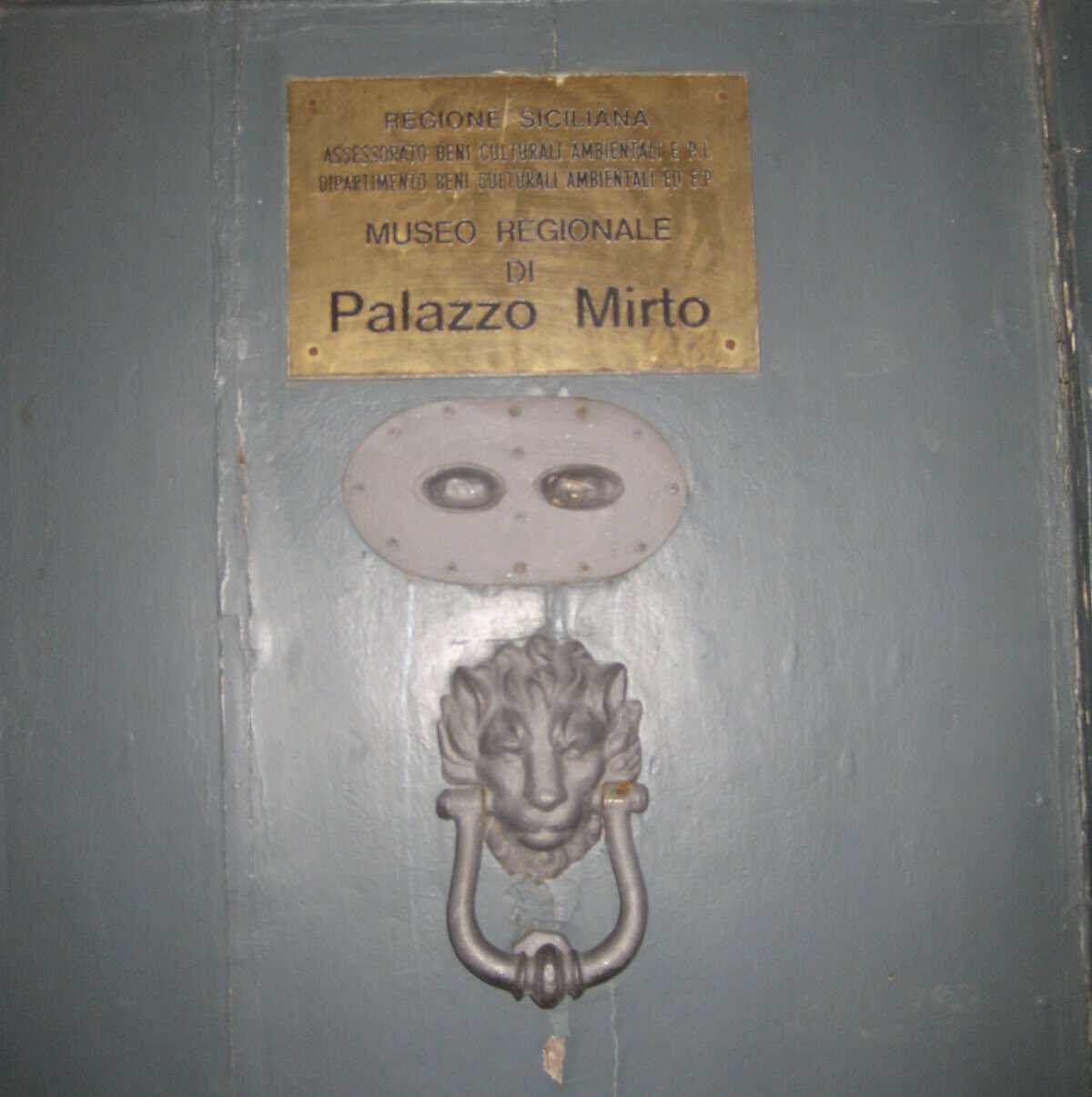
To see how the upper class lived centuries ago, visit the Palazzo Mirto www.casemuseoitalia.it/en.   The Palazzo Mirto is part of a network of “house museums” found throughout Italy. It was originally built for the Filangeri family in the mid 17th century and falls into the ancestry category of homes.

The Palazzo Mirto provides a glimpse at the opulence the upper classes enjoyed during the time of the Kingdom of Sicily.

The palazzo is filled with beautifully appointed rooms featuring elaborate furnishings, ceramics, antique musical instruments, and art. One of the most spectacular is the Chinese Room, likely decorated in 1876 when the house was renovated.

The Chinese Room was the height of fashion when it was designed in the mid 1800s.

There are also classic carriages on display along with other historic treasures that paint a picture of Sicilian life for the upper class in the days before the Risorgimento when Sicily was still a kingdom.

Splendid furnishings and elegant porcelain are among the items on display at Palazzo Mirto.

The museum is located at Via Merlo, 2 and telephone is +39 091 616 4751 for updated information.

Enjoy a performance or take a guided tour– these are the only ways to get inside the magnificent Teatro Massimo.

If there is a performance at the Teatro Massimo, get a ticket and go. Regularly scheduled dance, opera, and classical music are all performed here. If you’re feeling flush, you, too, can rent the royal box —you just have to purchase all 27 seats in it.

The Teatro Massimo is known for its excellent acoustics and grand stage.

If time does not permit you to attend a performance, take a guided tour, which is the only other way to see the inside of this magnificent and historic building.

This beautiful and historic theater is among the largest in Europe.

A model of the theater is displayed in the lobby.

The theater boasts one of the largest stages in Europe and is worth seeing. Built in 1897, it is known for its outstanding acoustics and is still the largest theater in Italy with 1,300 seats. It is appropriately located on the Piazza Verdi. +39 091 6053580 www.teatromassimo.it.

The Politeama Garabaldi Theater hosts regular performances in Palermo’s historic city center.

We wanted to visit the highly regarded National Archeological Museum but it was closed for renovations during our visit. Please go to www.regione.sicilia.it/beniculturali/salinas for current information.

A stroll through Sicily’s capital city yields surprises.

We did not visit the Catacombe dei Cappuccine, the home of about 8,000 dead bodies, amassed over the course of several hundred years, all dressed up and on display. We find the entire enterprise rather ghoulish and having seen the Capuccine Chapel in Rome, which features skeletons of dead monks, felt no obligation to see this seemingly far more ambitious enterprise. Apparently it is a popular place on many tourist itineraries and so we mention it here.

Flags fly outside the Porta Felice Hotel on the small but busy Via Butera.

There are lodgings at all price points and with all levels of service, as you would expect in a large city like Palermo. We stayed at Hotel Porta Felice www.hotelportafelice.it/en at Via Butera, 45. Tele. 091 6175678. This is in the old section of town near the port.

Pleasure craft and fishing boats crowd the marina at the end of Via Butera.

Even though the hotel is on what appears to be a small side street, it is pretty busy. We were upgraded to a nice suite, even though we’d booked through www.venere.com. The location was very convenient and we walked everywhere we wanted to go, after turning in our rental car.

Friendly service and excellent Sicilian specialties await diners at L’Ottava Nota.

We only had two nights in Palermo and wound up having dinner both evenings just down the street from our hotel at L’Ottava Nota Ristorante, via Butera 55 091 6168601 www.ristoranteottavanota.it.   The restaurant was small and lovely with fantastic food and great service. The fish dishes were all spectacular. Everything was fresh, artfully prepared and delicious.

Perfectly prepared pasta makes a delicious first course.

White fish in a light curry broth was a favorite.


Seafood dishes were the star attraction for us, but L’Ottova Nota has superb meat and vegetable dishes, too.

A fish in a light curry broth with vegetables was so good I still think about it, though it is no longer on the menu. We mentioned we were staying at the Porta Felice and were happily surprised to learn we’d get a 20 percent discount on our meal because we were guests there. We cannot confirm that the special pricing is still available but it never hurts to ask, should you dine here. The restaurant is just a few doors down from Porte Felice on Via Butera, 55. The telephone is +39 091 616 8601.

We had an excellent lunch at Trattoria Piccolo Napoli, www.trattoriapiccolonapoli.it. Piccolo Napoli had been recommended by an Italian friend in the wine business but apparently Anthony Bourdain had once dined here and the owner told us that lots of Americans had been showing up ever since. Our welcome was much more cordial when we told him (in Italian) that his friend Sasha had sent us! Try the panisse (chick pea fritters) to start and have any seafood you like—it is all super fresh and simply, but deliciously, prepared.

Snack on some panisse as you peruse the menu.

Simply but perfectly prepared pastas and seafood dishes shine at Piccolo Napoli.

Through a small window into the kitchen, we watched the chef toss a whole octopus into a pot, plate it and serve it to a young girl who devoured every bit. We had pasta with shellfish and then I had a beautiful swordfish dish. For dessert, they brought us the ubiquitous “winter melon.” The melon is sweet and refreshing and so called winter melon because it can be picked in the summer and stored throughout the winter.  We saw it on menus throughout Sicily. The restaurant is on the Piazzetta Mulino a Vento, 4. Telephone is +39 091 320431.

Palermo is a fascinating and vibrant city and certainly worth a visit. We’ll be back.

Our final meal in Palermo was an extremely casual, but excellent pizza lunch at the airport, which we enjoyed out on the observation deck with a view of planes coming and going, and of course, the beautiful sea!