Browsing Tag

Art

Why Spring is a Great Time to Visit Amalfi

By mid-March, most of us in the Northern Hemisphere are tired of winter. Our thoughts turn to cloudless blue skies, tourmaline waters, and sun-dappled landscapes. Italy’s Amalfi Coast with its breathtaking views, pristine beaches, and lemons as big as your head, comes immediately to mind.  Mild temperatures, a relaxed pace, and relative lack of crowds make Spring the perfect time to travel to what is considered a dream destination by many. Here’s what I discovered on my Springtime trip to Amalfi, Positano, and Ravello.

Beat the Crowds

Visit Amalfi before Easter and enjoy this dream destination without the crowds.

Easter marks the beginning of the season in Amalfi and elsewhere in Campania. We decided to visit right before the holiday, hoping to beat the crowds as we had the previous week in the seaside village of Castellabate di Santa Maria. About two hours drive south of Amalfi on the Cilento Coast, there were few tourists and many shops and restaurants remained closed during our stay. Our hotel, the Palazzo Belmonte, was in its “soft opening” period and the restaurant, pool, and beach club hadn’t opened yet but we had great fun exploring this less discovered area. After a five-night stay, Amalfi beckoned so we packed up the rental car and headed north.

We had barely turned on to the coastal road that winds its way across the Sorrento Peninsula, when we came nose-to-nose with an enormous city bus. I was terrified. I couldn’t even take a photo as my husband slowly backed up the narrow roadway into a spot wide enough to let the bus pass. This, I thought, is why people hire professional drivers to get around the Amalfi Coast. It was not the last time I would have this realization.

We soldiered on towards Amalfi, holding our collective breath as we inched by buses and other cars on narrow, hairpin turns. With a sigh of relief, we arrived at DieciSedici.

An Albergo Diffuso

After checking in at the reception desk, we were directed to the building next door. Though billed as a boutique hotel, DieciSedici was more of an albergo diffuso.  We had unwittingly booked a room in a residential building, not a proper hotel. This kind of lodging, where “hotel” rooms can be in different buildings, or diffused, is not uncommon in Italy and is fine if you don’t need 24/7 on-site assistance.

Beware the Stairs

When the receptionist mentioned there were stairs and no lift, we asked for help with the bags. Even though we travel with only carry-on bags, we were glad we did. Leo assisted us up the 64 stone steps leading to our room. As we climbed, we learned that breakfast, included with the stay, was served at the Bistro F. Illi Pansa where he worked. It was about a 10-minute walk away in the historic center.

While we settled in, the receptionist had someone from a nearby garage come and spirit our rental car away. She instructed us to call 45 minutes before we needed the car again, but discouraged us from driving in the area at all.

Our room was large, clean, and comfortable. It had a spacious bathroom with a heated towel rack, a small refrigerator, and an electric tea kettle. We could even see a sliver of the sea from our Juliette balcony.  After catching our breath, we headed back down the steep steps to explore Amalfi.

The Heart of Amalfi

people gathered by an ancient fountain having a drink and filling waer bottles
The beautiful Baroque Fountain of St. Andrew, across from Amalfi’s cathedral on the Piazza del Duomo, is a popular spot to get a drink or fill a water bottle.

We walked along the sparkling sea front, past many restaurants not yet open for the season, and a few busily preparing for the evening’s guests. There were some pedestrians and bicyclists on the promenade but nothing like I’d seen in summertime photos.

After passing the transportation hub where boats to Capri and Positano, and buses to Ravello, Sorrento and other points on the peninsula arrive and depart, we entered a pedestrian tunnel. Minutes later we found ourselves on the Piazza del Duomo in the heart of Amalfi’s historic old town staring in awe at the spectacular cathedral that is the city’s centerpiece.

The Duomo

Cathedral of St. Andrew's Byzantine facade with golden mosaics
The Cathedral of St. Andrew the Apostle’s facade is spectacular day or night.

Built between the 9th and 12th centuries, the Cathedral of St. Andrew the Apostle is a masterwork in golden mosaics that gleam in the Mediterranean sunshine. We watched as the elegant façade with its bronze Byzantine doors drew wedding couples and their photographers, and Instagrammers galore. The restaurant where we would enjoy breakfast each morning was directly across from the cathedral, providing us with endless people-watching opportunities with our morning cappuccino.

After queuing for a much-needed gelato at Cioccolato Andrea Pansa, we bought tickets to visit the cathedral. It features Gothic, Romanesque, Byzantine and Arab-Norman architectural styles and is one of the most popular sites in Amalfi. Architect Enrico Alvino designed the ornately decorated facade after an 1861 collapse damaged the front and atrium of the church.

The opulent interior of Amalfi’s duomo, dedicated to St. Andrew the Apostle.

Our 3 Euro visit included the Cathedral and adjoining Basilica of the Crucifix and its crypt. St. Andrews’ relics are there.  There is also a small Diocesan museum with frescoes, sculpture and religious art inside the Basilica. Outside, we toured the peaceful Cloister of Paradise, once a burial ground for nobility.

Famous Fruit

On our walk around town, we saw plenty of evidence of Amalfi’s number one citrus crop. Lemons, limoncello, lemon soap, lemon candles, lemon ice, lemon-embellished clothing, lemon everything was for sale everywhere.  At dinner at Pizzeria Donna Stella, we had a table on the upstairs terrace. Lemons were growing overhead.

People in front of the Bottega di Limone, a shop selling lemon-based products and lemon-embellished clothes.
Lemon everything is sold in towns across the Sorrento Peninsula. Upstairs is one of my favorite restaurants, Da Gemma.

Mistakes Were Made or How Not to Get to Pompeii

On our first full day in Amalfi, we planned to visit Pompeii. Earlier in the trip, we spent five days in Naples. From there, we took day trips by train to explore the nearby ruins in Herculaneum and spectacular palace and gardens at Reggia Caserta.  We could have easily taken the Circumvesuviana train to Pompeii from Naples, but thought it would be better to drive from Amalfi. It was not.

frescoes on the walls of an ancient villa in Pompeii
We were richly rewarded with the chance to see ancient frescoes in Pompeii’s intact villas, though the drive there was harrowing.

No one was available to bring us our car, so we made our way up the steep streets to the garage, passing sure-footed donkeys on the way. Back in our car, we drove down the narrow main street, ever so slowly, past startled shoppers, stand after stand of lemon-themed merchandise, cafes, and coffee shops until we reached the road out of town.

For what seemed like an eternity, we drove up harrowing, hairpin turns around the mountain and down the other side. I was exhausted by the time we reached Pompeii, and I wasn’t even behind the wheel. It was well worth the nerve-wracking journey to explore the extensive and fascinating archeological site and we spent the entire day there. I’ll share about that experience in another article, but we should have taken the train from Naples. Or hired a driver in Amalfi.

Ravello

bronze statue of Bacchus with child holding grapes on his shoulders
Villa Cimbrone’s gardens, my main reason for coming to Ravello, are filled with sculpture, fountains and spectacular views.

I was not ready to get back in the car after our Pompeii outing, but had always wanted to visit the gardens at the Villa Cimbrone in Ravello. Buses runs every half hour from Amalfi and cost 1.50 Euro each way, cash only. The decision was an easy one.

Up, up, up we went on those now familiar hairpin turns, the ride accompanied by the sounds of squealing bus tires and a blaring horn warning other drivers that we were coming. Buses takes up both lanes of the narrow road so alerting others is a matter of safety.  

About a half an hour later, we arrived in Ravello. We hiked through the ancient town and climbed the winding 100 steps to the celebrated Villa Cimbrone. The Villa dates to the 12th century and has long attracted literary luminaries including members of the Bloomsbury Group like Virginia Woolf and E.M.Forster, celebrities, and bold face names such as Greta Garbo, Winston Churchill, Tennessee Williams and Jackie Kennedy Onassis.

Someday I’d love to stay at the five- star hotel, but I’d set my sights on the botanical gardens for this visit. For 10 Euro, visitors can explore the property’s expansive English-Italo style gardens, redesigned in the early 20th century by Lord Grimthorpe (Ernest William Beckett) with advice from celebrated English garden designer Vita Sackville-West. In March, the gardens were not in full bloom, but it was still a wonderful experience to stroll the sprawling grounds, admire the superb sculpture, and enjoy sensational views from the Terrace of Infinity high above the sea.

terrace overlooking the sea with marble statues
Standing on the Terrace of Infinity, you’ll quickly understand how it got its name.

There were few other visitors in Villa Cimbrone’s gardens that sunny March day, but the restaurants and cafes we passed on our way back to Ravello’s historic city center were buzzing.  

The Villa Rufolo and the Ravello Festival

a view from above of gardens at Villa Rufolo
A view of Villa Rufolo’s gardens, home to the Ravello Festival.

Another highlight of our day in Ravello was a visit to the Villa Rufolo. It’s right off the Piazza Vescavado, the main square, and home to the acclaimed Ravello Festival that takes place every summer. The festival features world-renowned symphony orchestras, soloists, and ensembles, and will celebrate its 74th season in 2026. The festival runs from July 4 to September 5 and is the reason Ravello refers to itself as the “City of Music”.

Our self-guided tour included the upper rooms, Knight’s Hall, chapel, theater, cloisters, magnificent gardens and belvedere overlooking the sparkling Tyrrhenian Sea. We could only imagine what a memorable experience it would be to attend a performance on these spectacular grounds with the gardens and sea as a backdrop.

At the bus stop, we were surprised by the size of the crowd that had gathered. Apparently, it had been an hour or more since the last bus had appeared. One finally came 30 minutes later. Even with the wait, the crowded bus was better than driving.

Amalfi’s Maritime Museum

overview of Maritime Museum with vaulted arches and displays in glass cases
The Compass and Maritime Duchy Museum, located in Amalfi’s Arsenal, holds 1,000 years of nautical, scientific, and cultural history.

There’s more to see in Amalfi than the Cathedral and shops. Amalfi was once one of the most important maritime centers and trading hubs on the Mediterranean. Nearly 1,000 years of the city’s nautical, scientific, and cultural history are stored in the Arsenal, home to the Compass and Maritime Duchy Museum.

The museum showcases the evolution of nautical navigation equipment including the compass. The compass is a Chinese invention but Amalfitano Flavio Gioia was once credited with its creation. It was later acknowledged to have been brought to Amalfi by sailors who had traveled to China.

The museum’s collections include Roman and medieval treasures, coins, and manuscripts like the Tabula de Amalpha. This important document of maritime law, written in Latin, was used until the 16th century. Maritime equipment, art, religious artifacts, and period costumes are also on exhibit. Additional exhibitions are on display in the Salone Morelli in the Town Hall. 

Amalfi also has a Paper Museum, the Museo della Carta. I would have loved to visit but ran out of time.

Positano

large boat in the harbor in Positano in front of moutains with buildings
Take a relaxing boat ride to Positano from Amalfi. It’s the best way to get there.

After too much touring and driving, we hopped on a boat for the less than 30- minute ride to Positano. With the sun shining and wind in our hair, we were finally beginning to relax and enjoy the Amalfi Coast.

There were plenty of seats on the boat to and from Positano, not likely the case once tourist season begins.

Positano was exactly as I imagined; soaring cliffs dotted with citrus and olive groves, vineyards, and homes perched precariously high above the sea. Our plan was to have a wander, visit a church, see the shops, and have lunch by the beach. That seemed be the itinerary for most visitors. 

Just like in Amalfi, not everything in Positano was open yet, but would be soon. Workers were very busy preparing for the Easter weekend ahead, which officially kicks off the busy season. Shops and restaurants that had been closed all winter were being swept and windows washed. From our seaside table at Chez Black, we watched as workers erected umbrellas and set up chairs on the beach. They were even busily planting palm trees in the sand.

As we wandered the unexpectedly crowded streets, we saw racks of summer clothes outside in the sunshine, surrounded by shoppers. I have never seen so many lemon-embellished clothes, hats, shoes, and home décor as I did that one afternoon in Positano. After eating and drinking, shopping is a very popular pastime in Positano.

Before leaving Positano, we stopped at the beautiful Chiesa di Santa Maria Assunta. We walked the small labyrinth outside the church and took some time in the church’s serene interior to reflect on our good fortune.

On the boat back to Amalfi, I spied a gentleman sporting a straw hat with lemon trimmed band, lemon-embroidered shirt, shorts, and espadrilles. His companion was similarly attired. He told me he was from Milwaukee and on the trip of a lifetime. He certainly had the souvenirs to show for it.

If You Go:

The sun sets on the Tree of Life on Amalfi’s blissfully quiet esplanade before the “season” begins.

Don’t wait for summer to travel when the number of tourists and temperatures soar.

Consider hiring a driver or using buses and boats to get around the Amalfi Coast. Driving is treacherous and not for the faint of heart. Boats and buses leave from the harbor (Porto di Amalfi) on a regular schedule or you can hire a private boat. Taxis are also readily available.

Tourism is the main industry in Amalfi, Positano, Ravello and most towns on the Sorrento Peninsula. Be prepared to pay accordingly and extravagantly for almost everything.

If you struggle with mobility issues, be aware that streets are narrow, often cobbled, and hilly. There are stairs nearly everywhere you go, inside and outside.

Practicalities: Where to Eat, Where to Stay

We enjoyed our daily gelato stop at Ciocolatta Andrea Pansa, breakfast at Bistro F. Illi Pansa (included with our room rate), and dinners at Da Gemma, Ristorante L’Abside, and Pizzeria Donna Stella in Amalfi. Antica Trattoria Barracca also came highly recommended and it was good, but we liked the others more.

We chose Amalfi as our base to explore the Sorrento Peninsula with the exception of two nights in Sorrento. We stayed at the Hilton Sorrento Palace before returning to Naples for a flight to Sicily. If you don’t mind climbing many steep stairs and don’t need a front desk with 24-hour assistance, DieciSedici is well-located. There are hotels at varying price points and levels of service, including some luxury properties like La Sirenuse, Il San Pietro di Positano, and Hotel Eden Roc all in Positano, plus Air BnBs, to choose from throughout the peninsula. Make your reservations far in advance, no matter when you plan to visit this popular destination.

Written and photographed by Jeanne Neylon Decker

This post contains affiliate links. If you click and book, I may receive a small commission at no cost to you. Thank you for your support. I promise not to spend it all on gelato or lemons.

This article, photographs and all materials published by TravelTawk.com are protected by US Copyright Law and may not be reproduced or used without permission from the publisher.

Semana Santa: How to Celebrate Holy Week in Spain

Throughout Spain, the week leading up to Easter Sunday, known as Semana Santa or Holy Week, is one of the most important of the year. Spaniards observe Semana Santa joyously and solemnly.  Each afternoon and evening from Palm Sunday through Easter Sunday, people, sometimes numbering in the thousands, gather in city streets and town squares. They celebrate a Catholic tradition that dates back at least to the 15th century—to the reign of the Queen Isabella and King Ferdinand.

The Story of the Passion

During the reign of the Catholic monarchs, as Isabella and Ferdinand were known, the population was mostly illiterate. To reach as many people as possible, they told the story of Christ’s resurrection in a way that was easily understood and that has endured for centuries, through processions.

Processions on each day of Semana Santa correspond to the story of Christ’s Passion, Death, and Resurrection with different pasos depicting specific biblical scenes from the New Testament. Here’s our experience:

In Ronda, one of Andalusia’s famous “white towns,” Jesus is shown arriving in Jerusalem on his donkey on Palm Sunday. This is the beginning of Holy Week.

500 Years of Tradition

We arrived in Madrid for the first time on a Maundy Thursday. The Thursday before Easter commemorates Christ’s Last Supper and is one of the Catholic Church’s holiest days. Though it was after 9 p.m., we were confident we’d find plenty of dinner options in a city known for dining late. Instead, we found one restaurant after another closed.

Finally, at the Bar Santa Clara, the proprietor explained most places were closed not due to the hour, but to the day. He pointed out it was Holy Week and that in Madrid people take Easter very seriously.  

He said we could have “anything on toast,” but that was all they would serve that evening. We ordered everything available; cheese, tomatoes, anchovies, and ham. All on toast.

Good Friday is one of the most important days in Holy Week and the pasos and processions are fittingly elaborate. It was well after midnight when this Good Friday procession returned to Toledo’s Cathedral.

We returned to our apartment behind the Prado Museum close to midnight. Just as were getting ready for bed, our son excitedly announced that he “heard a parade”.  We followed the pounding of drums and the heady scent of incense down our street towards San Jeronimo. That’s the church favored by Spain’s Royal Family. Sure enough, a candlelit procession appeared out of the dark.

Processions

We watched columns of marchers in various colored robes, faces covered, wearing tall, pointed hats.  It was unsettling. Next, swaying to the music and moving slowly, came an enormous float featuring a life-sized Christ figure.  The floats are called pasos.

Beneath it, we could see the strained faces of the men who somberly carried it on their shoulders.  We watched until the entire procession passed into the church.

The Plaza Mayor in Salamanca, one of the most beautiful in Spain, filled in minutes before the procession began.

We didn’t understand the scale of Holy Week celebrations in Spain, or their importance, until the next evening. We found ourselves caught up in enormous crowds between four different processions around the Plaza Mayor. This, we began to understand, was how they celebrate Semana Santa here. We joined in.

Sevilla is famous for its elaborate Semana Santa celebrations.

Fast forward a few years and we are in Sevilla.  Though the Semana Santa festivities won’t begin for another week, preparations are well underway.  Colorful banners hang from balconies lining the procession routes that crisscross the city.

Workers erect barricades and set up chairs and bleachers in key locations for those privileged few with tickets. Most onlookers crowd streets and sidewalks waiting and watching for the story of the Passion of the Christ to unfold, as it has for 500 years or more.

Every detail on the pasos must be perfect. At the Iglesia Colegial del Divino Salvador in Sevilla, members of the cofradia work together to ready their pasos for Holy Week.

Meanwhile, cofradias (also called hermandades) or brotherhoods, are busy in parishes everywhere, painstakingly assembling the lavish pasos. These floats are beautiful works of art. Each features biblical scenes that tell the story of Christ’s Passion, Death and Resurrection from the New Testament.

The Pasos

The pasos hold life-sized statues often handcrafted from wood and can include precious metals. They are laden with candles, fresh flowers, and icons. The most beautiful of these hold a single statue, the Madonna or Senora Dolarosa, the grieving mother of Christ.

The Madonna wears an elaborate cape, often hand- embroidered with gold and silver thread. She is bedecked in gleaming jewels and surrounded by candles and flowers.

Jamie is a member of the confradia at the Church of the Magdalena and one of the 35 to 45 men, called costaleros, who will carry this exquisite paso through the streets of Sevilla during Holy Week.

While the pasos are being readied, you can see them in their parishes. We spent days wandering from church to church in several cities to see these magnificent pasos up close. The exquisite detail of the pasos and the cofradias careful handiwork is even more spectacular up close.

We talked with Jamie, a member of the brotherhood at the Iglesia de Santa Maria Magdalene in Sevilla. He is one of the paso bearers. They are called costaleros and carry the pasos through Sevilla’s cobbled streets.  Sometimes for up to six hours.

He told us some pasos can weigh 5,000 pounds and take between 35 to 45 men to carry.  Only women carry the paso of the Holy Mother in some parishes, as we saw in several processions in Salamanca.

Pasos, like this one at the Monastery of San Juan do los Reyes in Toledo, are on display in churches during Holy week. Visiting different parishes gives you the chance to admire the careful craftsmanship that goes into these spectacular floats up close.

How it Begins

Shortly before a procession begins, the sidewalks and streets swell with families who seem to appear from nowhere. A carnival-like atmosphere prevails. There are street vendors selling sweets and snacks, drinks, balloons, tiny penitent figures and other souvenirs.

Soon, the incense smoke thickens, music starts, and the excitement in the air is palpable. Fathers hoist their young children onto their shoulders, and everyone crowds closer and often right into the street where the procession will pass.

Who Marches

Some processions have only drummers; most have full marching bands, and sometimes participants sing or chant. Depending on the size and importance of a brotherhood, parish, and the day in Holy Week, there will be numerous pasos in a single procession.

People fill the streets and vendors with balloons, toys, sweets and drinks create a carnival-like atmosphere before and after Semana Santa processions.

Embroidered banners announce the cofradias; a priest with a silver cross leads children carrying incense or lanterns. Nazarenos in their colored robes, faces covered by capuz or hoods, and hats called capirote pointing high to the heavens, follow. These are the penitents.

Then there are the Mujeres de la Mantilla. These ladies dress all in black, from their lacey veils to their shoes. They process silently and somberly, carrying candles and rosary beads.  

Everywhere in Spain, men, women and children march slowly through the streets during Semana Santa’s processions, each with a role to play in this ancient ritual.

Young, old, believers or not, everyone crowds onto Spanish streets, like this one in Granada, to watch the traditional processions that mark Semana Santa.

It’s Emotional

It is magical and emotional to be a part of this. Many people cry silently with tears streaming down their faces, some sob violently. Others cheer and clap, or watch quietly, as the exquisite pasos pass by, but there are no blank expressions. These processions touch people at the most visceral level. Finally, the pasos will re-enter the church they left from hours before. The streets empty almost as quickly as they filled.

The Senora Delarosa represents Christ’s grieving mother, the Virgin Mary. These beautiful sculptures are bedecked in jewels and exquisite garments, and surrounded with fresh flowers and candles. They usually follow the other pasos in Holy Week processions.

How to Prepare

Every city we visited during this sacred time of year has procession routes and schedules available online and/or in print. Look for the booklets in cafes, shops and bars. This is valuable information for visitors to either find or avoid the processions.

Be aware of street closures. Whole areas of a city may be closed to traffic. Even passing on foot is extremely difficult, especially during the most important processions like on Good Friday. Sevilla, Toledo, Malaga and other cities have Semana Santa apps, updated annually. Download them on your iPhone.

The Risen Christ greets onlookers from this paso at an Easter Sunday procession approaching Salamanca’s Cathedral.

We have been fortunate to celebrate Semana Santa and Easter Sunday in Madrid, Barcelona, Sevilla, Granada, Toledo, and Salamanca. Each city offered a unique and beautiful experience. No matter which region you visit, Semana Santa is an incredible time to be in Spain. It’s not too soon to begin planning for next year.

If You Go

Be prepared for huge crowds during Semana Santa.

Streets and sometimes whole areas of a city close to traffic during Holy Week. Try not to arrive in your destination city during or right before a major procession. You may not be able to reach your hotel.

Download the Semana Santa app many cities offer or check with your hotel or the local tourist office for maps and procession times.

Make hotel reservations early for the Easter holidays. Be sure to book reservations for dinner as soon as possible. Leave plenty of time if your restaurant is anywhere near a procession route.

Written and photographed by Jeanne Neylon Decker

This post contains affiliate links. If you click and book, I may receive a small commission at no cost to you. Thank you for your support.

This article, photographs and all materials published by TravelTawk.com are protected by US Copyright Law and may not be reproduced or used without permission from the publisher.

Liguria: The Coastal Magic of Camogli, Portofino and the Cinque Terre

Liguria is the place you imagine when you think of Italy’s spectacularly scenic Mediterranean coastline. Think stylish Europeans sipping spritzs behind oversized sunglasses, perhaps aboard fabulous yachts bobbing in crystalline waters. I’d traveled to Italy 15 times and when a friend asked why I’d never been to Liguria, I had no answer.  It was time! 

Ligurian Coast

There are many lovely small cities and towns dotting the Ligurian coast, all with their own particular charms.  Though we’d gotten suggestions from La Spezia to Santa Margherita Ligure, we settled on Camogli.

Midway between the bustling seaport city of Genoa to the north and Riomaggiore, the southernmost of the exceedingly popular Cinque Terre—the Five Towns, Camogli made sense as a base from which to explore this stretch of Italy’s coastline.

We planned to drive to the Ligurian Coast from Ortesei in the Val Gardena, where we’d spent a week at the Adler Dolomiti hiking in the beautiful Italian Alps.

Stuck

The freeways were fine, but rain and traffic slowed us down considerably.  We’d been driving for nearly six and half hours for a trip that should have taken just over five, when 90 minutes shy of our destination we entered another of an endless string of tunnels. The Italians call them galleries. We quickly noticed that not only had traffic completely stopped, but everyone around us had turned off their engines. Did I mention I was claustrophobic?  Just as I was beginning to hyperventilate, the people in a car ahead of ours jumped out, skateboard and a soccer ball in hand.

I needed that distraction for the next hour until miraculously, engines started, and traffic began to move ever so slowly out of the tunnel.  What a relief to finally arrive at the Cenobio dei Dogi in Camogli.

Camogli- Under the Radar but Not for Long

We chose the Cenobio after reading about it in a Frances Mayes book. It’s a stylish grand dame of a hotel, with a prime location at the end of the esplanade overlooking the sea and the town below. It has a private beach, a pool with plenty of lounge chairs, a well-reviewed restaurant, and an outdoor terrace for drinks and lunch, all with amazing sea views. It is steps away from the main pedestrian street, Largo Luigi Simonetti, and a five-minute walk to the train station. 

Dinner With a View

We had phoned ahead from the tunnel, and they had a table was waiting for us in Il Doges restaurant. After admiring the sea view, we tucked into a fresh mushroom salad, spaghetti al vongole (with clams), and a tower of fritto misto del mare with every kind of fish imaginable. Stuffed, we headed upstairs where we were lulled to sleep by the sound of the waves below.

Our room was on the top floor of the bright pink building behind the main hotel. The room was amply sized, and simply but comfortably furnished with a private balcony. I could have spent every waking moment admiring the sea view.

Camogli boasts a bevy of tall pastel- hued buildings, most at least six stories high, looking out to the sea, where historically, many in this community have earned their livelihood.  There are more working boats than pleasure craft in Camogli’s harbor and townspeople go about the business of living among the tourists who descend on the pedestrian main street in search of fresh seafood, focaccia, and beachy souvenirs.

Famous Fish Fry

We devoted the next day to exploring Camogli, wandering the harbor area, window shopping, and learning about the Sagra del Pesce. Since 1952, the town has hosted a huge annual fried fish feast, originally served free to all.  The event happens the second weekend in May, and honors the patron saint of fishermen, San Fortunato. 

The early festivals used smaller cookware, but in 1954, the first of a series of massive pans was introduced.  That one was four meters in diameter. Two of these immense pans are displayed on a wall on Via Guiseppe Garabaldi near the Largo Luigi Simonetti. In 2025, they served three tons of fish fried in 3,000 liters of olive oil. In all, volunteers prepared 30,000 portions. They even fry up gluten-free portions of fish!

The festival is free but hungry attendees are asked for a 6 Euro charitable donation. The fish fry is in the Guiness Book of World Records as the largest in the world.

Around Town

The Largo Luigi Simonetti, an elevated esplanade above the sea, serves as the main thoroughfare and is where you’ll find most of the town’s restaurants and shops.  Families gather and children ride bicycles around the small piazzetta, which is also a perfect place for a sunset aperitivo and dinner.

One of the joys of staying in a seaside town is all the fresh fish. Camogli has so many excellent places to eat it was hard to choose, but Izoa was one of our favorites.

Camogli has its share of tourists who visit, eat, shop, and mostly depart by nightfall. The crowds here do not compare to towns further south, particularly in the Cinque Terre, and we were very grateful for that.

Camogli has a scenic harbor area and basilica to explore. The popular public beach is perfect for relaxing in the sunshine. Bring aqua socks. Beaches in this area are covered in stones, not sand.

A Visit to the Abbey at San Fruttuoso

A trip to the Abbey at San Fruttuoso is a highlight of a stay in Camogli. This beautiful Benedictine abbey dates to the 10th century and can only be accessed by foot – an arduous hours-long hike to the end of the peninsula, or a pleasant less than 30 -minute jaunt aboard a boat. You can catch the regularly scheduled boat, which is well signed-posted, on Camogli’s pier near the Basilica di Santa Maria Assunta.

After a quick stop at Punta Chiappa, we landed on the beach below the abbey. Upon arrival, you have options. You can climb the stone stairs up to reach the abbey immediately, take a hike up the hill beside it for the views, or just relax on the beach, as we saw a number of people doing. 

Pack your aqua socks. Many beaches in Liguria are covered with stones rather than sand. The cobbles are really hard on tender feet.

There are two small restaurants on either side of the beach. Both were busy but we didn’t eat at either. We climbed the steps, past the old rowboats and went inside to explore the maritime art, medieval artifacts, and antiquities housed on several floors of the abbey. We also visited the 10th century chapel and the crypt.

Though the abbey was important in the 11th and 12th centuries, it fell into disrepair and in 1467 was abandoned by the Benedictine monks who founded it. Genoa’s Doria family assumed patronage which lasted until 1885. Many members of the prominent family are buried here in the striking grey and white marble crypt.

We spent a few hours exploring the Abbey and the grounds and were back in Camogli in time for a leisurely late lunch on the hotel’s terrace and a swim.

The Cinque Terre: Beautiful But…

Since we were so close to the Cinque Terre, we planned to take a train early the next morning to Riomaggiore, the southernmost of the five towns, and make our way back up the coast by boat, stopping in each of the towns as we went. We had a car, but parking is almost impossible in these small Ligurian towns.

It was a gorgeous, sunny October day — perfect for exploring, or so we thought.  We caught a local train and less than an hour later disembarked along with a shocking number of other visitors. We could not believe how crowded the town was in the so-called off season.

Riomaggiore

We made our way through the heaving throngs down to the pier only to find a sign announcing there would be no boats “due to adverse weather.” Too nice to spend the day at work was our guess.

No boats today! Sunny skies, calm seas–we couldn’t fathom the “adverse weather conditions” noted on the sign.

Riomaggiore was an exercise in patience and ours wore thin quickly. We waited to climb up the stone steps to enjoy the views out over the water, waited to climb back down, waited to get a cup of coffee, until we couldn’t wait anymore. The highly touted charms of Riomaggiore were lost on us. We got on a train heading north to Vernazza, reputed to be the most beautiful of the five towns.

Vernazza

If Riomaggiore was crowded, Vernazza was mobbed! Even climbing the stairs to exit the train station was a challenge. There were tour groups galore. We finally made our way down to the water, and after noting the crowds, headed for the 11th century church of Santa Margherita d’Antiocchia for a bit of peace and quiet.

After a walk around the main square, Piazza Marconi, we decided to head back to Camogli.

The ticket machine at the station wouldn’t take our credit cards or our cash. We asked the information person what to do since we didn’t want to get a fine, or worse, for traveling without a valid ticket. He laughed, said the machines had been broken for some time and advised us to get on the train with the tickets we’d used to come south.

On we went, back down through the masses to the tracks below and northward to Camogli. We treated ourselves to gelato, headed for the hotel, and spent the rest of the afternoon at their private beach, enjoying the serenity of our beautiful little town.

Picture Perfect Portofino

By now we had explored Camogli, visited the much-vaunted Cinque Terre, had gone swimming in the Ligurian Sea’s crystal-clear waters, enjoyed a spritz or two, but still hadn’t seen any yachts.  One stop on the local train took us to Santa Margherita Ligure and then a short bus ride brought us to picture-perfect Portofino. 

The pretty town boasts upscale boutiques, inviting restaurants, and a gorgeous harbor filled with yachts. There were plenty of tourists, which we expected.  We had a nice wander around town but the sculpture garden we had planned to visit was closed. We’d checked the website for Museo del Parco but that’s the way things are here sometimes.

We hiked up the hill to the lovely church of San Giorgio, lit a few candles and enjoyed the views. We realized we could probably see at least some of the art from above and took a winding path back down from the church to the harbor, enjoying the sculpture as we went. 

We decided to take a boat back to Santa Margherita Ligure—an excellent choice as it turned out.  The boat took us on a scenic tour of the harbor where we saw plenty of pleasure craft, and spotted magnificent homes in the hills above the town. 

I’ll always say yes to a boat ride– especially on a day as beautiful as this one.

After our all too brief boat ride, we enjoyed a walk around Santa Margherita Ligure’s waterfront and headed to the train station for the one- stop train ride back to Camogli.

Genoa

Here’s where our well-planned day took a turn. Santa Margherita Ligure’s station was small and didn’t have the large electronic signs with train numbers, expected arrival times and destinations you typically find in Italian train stations. Five minutes before ours was due, a train pulled in and I insisted we get on.  My husband reluctantly climbed aboard and as soon as the doors closed, I sensed I’d made a mistake. 

This train was much more luxurious than the locals we’d been taking up and down the coast.  Sure enough, when I asked another passenger if the next stop was Camogli, he shrugged and said, “No lo so, Camogli.” He didn’t know Camogli.  Not a good sign. When I showed the conductor our tickets, he laughed and announced we were on an express train to Genoa which, by the way, had nine different stations.  He advised we keep our tickets, get off at Piazza Principe, and take the next local train back to Camogli. 

We arrived in Genoa in less than 30 minutes.  The leisurely ride back to Camogli took more than an hour and stopped no fewer than eleven times, but the views over the sea were spectacular.  Lesson learned. Trains in Italy may be delayed, but they do not arrive early. Ever.

Though I still struggle with the appeal of the tourist- packed Cinque Terre and our misadventures landed us in Genoa, I loved our time in Liguria. It is a beautiful area with enormous charm, delicious food and wine, and absolutely worth a visit.  I’ll definitely return to Camogli, may explore Genoa, but will give the Cinque Terre a miss next time!

Written and photographed by Jeanne Neylon Decker

This post contains affiliate links. If you click and book, I may receive a small commission at no cost to you. Thank you for your support. I promise not to spend it all on gelato or lemons.

This article, photographs and all materials published by TravelTawk.com are protected by US Copyright Law and may not be reproduced or used without permission from the publisher.

How to Visit Sunnylands: A Midcentury Masterpiece

As a regular visitor to the Palm Desert area, I often wondered what was behind the big pink walls where Bob Hope and Frank Sinatra Drives intersect in Rancho Mirage.  During Modernism Week I found out. 

Tours of Sunnylands were among the more than 350 events and activities offered during the 10-day celebration of all things midcentury Modern. I couldn’t resist a visit to the marvelous estate built by media mogul and philanthropist Walter Annenberg and his second wife.

The glass and Mexican lava rock midcentury marvel built by Walter and Lee Annenberg was conceived as a family home and high-level retreat for world leaders and luminaries from the arts, media and industry. Photo courtesy Annenberg Foundation Trust at Sunnylands.

Some History

Conceived as both a family home to escape winters in Wynnewood, PA, where the couple maintained their permanent residence, and an intimate, high-level retreat where leaders of government and industry could meet privately to address national and global concerns, Sunnylands has successfully filled both roles since it was completed in 1966.

The centerpiece of the 200-acre estate is the fabulous glass and Mexican lava rock 25,000- square-foot midcentury home designed by architect A. Quincy Jones.  It’s hard not to “ooh and aah” when the front door of the historic main house opens onto the spectacular great room. Pink marble floors, prolific plantings, and an outstanding art collection await visitors. Rodin’s Eve, surrounded by 300 pink bromeliads, will be one of the first things you’ll see in the central atrium. There are exquisite midcentury furnishings and stunning panoramic desert views.

Art Price’s Birds of Welcome, a favorite of the Annenbergs, greets visitors to Sunnylands.

Inside Sunnylands

Visitors on the 90-minute Historic House Tour, which is the only way to visit the home, learn all about the property and the people who designed, built, lived in and stayed at this wonderful estate.  You’ll visit all of the rooms in the house including my personal favorite–the Room of Memories. It’s chock full of memorabilia marking momentous occasions, Christmas cards and thank you letters—some from British royalty, photos, portraits, and family mementos. 

The Room of Memories has photos, portraits, letters, memorabilia, mementos and more documenting decades of visits to Sunnylands from famous guests and the historic role the house has played in U.S. history. Photo courtesy Annenberg Foundation Trust at Sunnylands.

Yellow, Pink, and Green

The stunning dining room, living room, cozy game room, and the kitchen, where visitors will get a peek at the incredible china collection the Annenbergs used to host dinners large and small, are all on the tour.  Don’t miss their breakfast china. They both had their own pattern.

Visitors also have access to the Annenberg’s private quarters. Mrs. Annenberg modified these after her husband’s death in 2002 at the age of 94. The color-themed guest rooms, all in her favorite colors of yellow, pink and green, are also on the house tour.

Comfortable guest rooms were color-themed and included Mrs. Annenberg’s favorites– yellow, green and pink. Photo courtesy Annenberg Foundation Trust at Sunnylands.

You’ll also see the Inwood Room, redesigned from its original purpose as a patio, to hold many of the antiques Mrs. Annenberg brought to Sunnylands after closing their Pennsylvania home, Inwood.  She wanted a place that reminded her of her home in the East.

Masterpieces

The Annenbergs, known for their support of the arts, filled Sunnylands with masterpieces by artists including Picasso, Degas, Van Gogh, Cezanne, Monet, Renoir, Matisse, Rodin, Giacometti and Braque. Some of the paintings now on the walls are high-quality reproductions.  Mr. Annenberg donated many of the original works to the Metropolitan Museum of Art in New York, where he was a trustee for many years.

This Kwakiutl totem pole was commissioned by the Annenbergs and is located on the estate’s private nine-hole golf course.

Playtime

The grounds include a tennis court, private nine- hole golf course and no less than 11 lakes. Now operated by the Annenberg Foundation Trust, the estate has expanded to include 15 additional acres for the Sunnylands Center and Gardens, which opened in 2012.  That’s the same year the property became accessible to the public.

UNADJUSTEDNONRAW_thumb_1a421
Visitors to Sunnylands enjoy spectacular desert and mountain views. The private nine-hole golf course enjoyed by celebrities and world leaders is in the distance.

U.S. Presidents

Sunnylands served as the winter home of the Annenbergs. It was also designed to function as a private and intimate retreat for luminaries and world leaders. The guest list is as impressive as the property. Eight U.S. Presidents were among the notable visitors the Annenbergs welcomed to Sunnylands.  Dwight Eisenhower, an avid golfer, was the first U.S. President to enjoy a round on the estate’s private course with Walter Annenberg.

President and Mrs. Reagan were good friends of the Annenbergs and frequent visitors to Sunnylands. Mr. Reagan was one of eight U.S. Presidents to have enjoyed their hospitality. Photo courtesy Annenberg Foundation Trust at Sunnylands.

Ronald Reagan, a good friend of the Annenbergs, was a frequent guest as President, and earlier, when he served as Governor of California.  Along with his wife Nancy, a dear friend of Leonore “Lee” Annenberg, the Reagans were a fixture at the Sunnylands New Year’s Eve party for many years.   

Mr. Reagan held cabinet meetings and invited his top advisors to the estate. President Reagan’s treat of choice, JellyBelly® jellybeans are still available in his favorite guest room. No detail that could add to a guest’s pleasure was too small to include at Sunnylands.  Fun fact; the jellybeans are color-coordinated to match the bedding and upholstery!

The Yellow Room was President Reagan’s favorite. Jellybeans were always on hand–color coordinated to match the room, of course. Photo courtesy Annenberg Foundation Trust at Sunnylands.

Richard Nixon, was also a long-time friend of the couple and another frequent guest before, during and after his presidency. He spent a number of months in seclusion at the estate after his resignation. His poignant thank you note is on display in the house.

 President George H.W. Bush held the only State dinner ever hosted outside the White House at Sunnylands for Prime Minister Kaifu of Japan in 1990. They were able to negotiate some difficult trade issues in the relaxed setting Sunnylands provided. President Bush also enjoyed fishing at the estate. He preferred the Green Room for its proximity to the lake for early morning angling.

President George H.W. Bush enjoyed early morning fishing in some of the 11 lakes on property at Sunnylands.

Presidents Gerald Ford, George W. Bush and Bill Clinton all enjoyed the Annenberg’s hospitality at Sunnylands.  President Obama was a three-time visitor. He met with Chinese President Xi Jinping on one occasion and Jordan’s King Abdullah II on another. He also held a summit with 10 Association of Southeast Asian Nations leaders at the estate. The “Sunnylands Declaration” resulted from the meeting.

UNADJUSTEDNONRAW_thumb_1a3ce
President Obama and Chinese President Xi Jinping were photographed strolling near the reflection pool shown here.

Welcoming World Leaders

Appointed by President Reagan, Walter Annenberg served as U.S. Ambassador to the Court of St. James and was awarded an Honorary Knightship (KBE). It’s no surprise that Queen Elizabeth IIPrince Philip, Prince Charles, and other members of the British Royal Family were visitors to Sunnylands.

Queen Elizabeth II and Prince Philip, shown here with Ambassador and Mrs. Annenberg, were guests at Sunnylands, along with other members of the Royal Family. Photo courtesy Annenberg Foundation Trust at Sunnylands.

U.S. Supreme Court Justices Sandra Day O’Connor and Anthony Kennedy, Secretary of State George Shultz, British Prime Minister Margaret Thatcher, Henry Kissinger, Barbara Walters, Colin Powell, Steve Forbes and other highly influential people from government, industry, media and the arts have all been feted at Sunnylands. 

Weddings and Celebrations

It hasn’t been all problem solving and high- level meetings at the estate though. Frank Sinatra wed his wife Barbara at Sunnylands and the couple were frequent guests at festivities there, including the social event of the year—the Annenberg’s annual New Year’s Eve party.  Hollywood icons like Bob Hope, Bing Crosby, Kirk Douglas, Gregory Peck and Ginger Rogers have all been on the guest list.  Photos capturing the Annenbergs and their famous friends at play are on display throughout the home.

UNADJUSTEDNONRAW_thumb_1bde0
All tours except the Open Air Experience must be booked in advance, online.

The historic main house can be visited only by guided tour. Tours must be booked online, typically one month in advance.  The Historic House Tour slots fill quickly because access is limited. Plan ahead!  This is the only tour that provides access to the home. 

Groups of seven are shuttled from the Visitor Center to the house for the 90-minute tour, which includes standing and walking—there is no sitting down and children under 10 are not permitted.  Knowledgeable guides, many from local colleges, accompany visitors through the home and around the lushly landscaped exterior areas adjacent to the house.

Channel your inner Hollywood icon and imagine yourself preparing for a dip in the pool with some of the Annenbergs’ famous friends like Frank Sinatra. He was married at the estate.

Sunnyland’s Open Air Experience

There is a separate tour available for the grounds without prior reservations. The Open Air Experience is a 45-minute trip aboard an electric shuttle around the exquisite estate with visits to various outdoor locations such as the private golf course where visitors can see a Kwakiutl totem pole built especially for the Annenbergs, the Chinese Pavilion where Mrs. Annenberg entertained lunch guests, the Annenbergs’ final resting place, sculpture including Birds of Welcome by Art Price, and much more. 

Sustainability

The Sunnylands Foundation is committed to sustainability. Steps being taken to preserve and protect plant and wildlife species on the grounds are discussed during the visit. The Open Air Experience can be booked on a first come-first served basis during a visit to the Sunnylands Center and Gardens. Unlike the other tours, it does not require prior reservations.

Birding tours on the Estate are also available and must be booked online, in advance. An experienced birder leads the 90-minute excursion and all levels are welcome to participate.


mQEQzctlQDaVLL2MO8%IfQ_thumb_1a468
The Sunnylands Center and Gardens are open to the public free of charge.

Visit the Gardens for Free

There is no admission fee for the Sunnylands Center and Gardens, which opened in 2012 and is family-friendly.  Inside the glass-walled building guests can enjoy a short film that tells the history of the estate and the Annenbergs. This is well worth viewing before visiting the house or in lieu of, if you haven’t been fortunate enough to reserve space on a tour. There are art and photo exhibitions, historic photos, and memorabilia on display.

UNADJUSTEDNONRAW_thumb_1a3f2
Enjoy the gardens while having a snack or light meal at the cafe.


UNADJUSTEDNONRAW_thumb_1bd8c
Sunnylands Center and Gardens are family-friendly, though the tours do have age limits.

There’s also a gift shop and a small café for a casual lunch or snack, which can be enjoyed indoors or outside at the tables overlooking the garden.  On a recent visit, families were playing games and picnicking on the garden’s central grassy grounds.

UNADJUSTEDNONRAW_thumb_1a403
Meandering paths take visitors through the Sunnylands Gardens featuring more than 70 native and drought-tolerant species.

The expansive gardens include a labyrinth for peaceful mediation, meandering paths, reflection pools and more than 70 species of native plant life. The native and drought-resistant plants used in the landscape are clearly marked. Surely, this adds to the enjoyment of amateur botanists.

UNADJUSTEDNONRAW_thumb_1bdaf
Visitors can walk the labyrinth and enjoy quiet meditation at Sunnylands Gardens.

If You Go

Tours are not conducted while retreats and meetings are taking place on the property. No photos are allowed inside the house due to security concerns.  The Annenberg Foundation graciously provided the interior photos I’ve included here.  Sunnylands is not open during summer months. Please visit their website for current tour dates and ticket information.

This post contains affiliate links. If you click and book, I may receive a small commission at no cost to you. Thank you for your support. I promise not to spend it all on gelato or lemons.

This article, photographs and all materials published by TravelTawk.com are protected by US Copyright Law and may not be reproduced or used without permission from the publisher.

A Visit to Friedrichshafen’s Fascinating Zeppelin Museum

zeppelin museum with playground in front of it

Can you resist looking up when the Goodyear blimp passes overhead? Imagine being among the first to spot a zeppelin as the strange looking aircraft floated by 125 years ago. Learn about the iconic airship that once captured the world’s imagination and transformed travel, commerce, and military strategy at a visit to Friedrichshafen’s fascinating Zeppelin Museum.

This engaging, family-friendly museum is perfect for fans of flight, military history, engineering, and adventure. The museum is a must for those fascinated by the Hindenburg disaster.

zeppelin suspended from ceiling
After 125 years, Zeppelins are still a source of fascination.

On the Shores of Lake Constance

museum signage about von Zeppelin
Retired German General von Zeppelin correctly foresaw a rewarding future in the rigid airship.

Housed in an enormous structure on the shores of Lake Constance, or the Bodensee in German, the Zeppelin Museum tells the story of the airship developed by Count Ferdinand von Zeppelin.  A retired German General and an inventor with a penchant for engineering, he foresaw a future where these large, lighter than air, rigid airships would play an important role in transporting goods and people, with both commercial and military applications. For decades, they did just that.

Visitors to the museum learn the science, technology, development and fascinating 125 year history of the airships. Compelling interactive and static exhibits tell the story. The first zeppelins, LZ 1 and LZ 2, were experimental aircraft and used to survey large swaths of Europe from their base in Friedrichshafen.

As von Zeppelin correctly surmised, the German military quickly saw their potential for surveillance and transportation. Consumer applications came soon after when zeppelins were used to transport goods over long distances.

First in Transatlantic Flight

reconstructed zeppelin hull
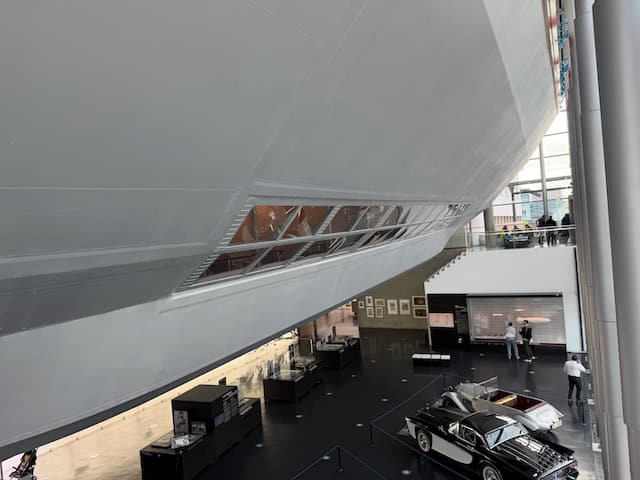
The Hindenburg was the fastest way to cross the Atlantic for passengers and goods in 1936. The museum has a partial reconstruction of the airship and some of the wreckage from its crash.

Zeppelins were first flown to destinations within Germany and then across Europe. The fast, economical airships became the first aircraft to carry passengers across the Atlantic Ocean.

By 1936, the Hindenburg carried passengers and up to eight tons of perishable goods like flowers, food, and medicine in its cargo hold for the relatively speedy two-day transAtlantic journey. Zeppelins were also used for polar expeditions including Roald Amundsen’s last fateful trip to rescue Italian explorers at the North Pole. 

During Wartime

museum exhibits explain the zeppelin's history
Zeppelins changed military strategy in WWI but barely played a role in WWII.

The museum has fascinating exhibitions about the zeppelin’s role in WWI and the subsequent shut down of production demanded by the Allies after Germany’s loss in the conflict. Two of the already-built zeppelins were given as reparations to Italy and France. A third was sent to the USA. German engineers also came to the United States to work with the military to develop an American dirigible program. 

Let Your Imagination Soar Aboard the Hindenburg

One of the highlights at the Zeppelin Museum is exploring a partial reconstruction of the Hindenburg. It was one of the largest passenger-carrying zeppelins ever built. The reconstruction was faithfully built adhering to the airship’s original plans.

Enjoy the 1930s Bauhaus design of the surprisingly spacious lounges and public spaces and relax where passengers would have. Peek into the restrooms and down the halls where the passenger cabins are located aboard the luxury airship. It’s clear that traveling by zeppelin was for strictly for those with means.

During the zeppelin’s heyday, 50 to 70 passengers could comfortably travel across the Atlantic to Lakehurst, New Jersey just outside of New York City, or to Brazil’s then capital, Rio de Janeiro. In 1928, the journey to New Jersey aboard the LZ 127 Graf Zeppelin took more than four days, while less than a decade later the Hindenburg could make the crossing in about 50 hours.

The Hindenburg Disaster

The Hindenburg crash signaled the end of transatlantic passenger flights aboard zeppelins.

After a transatlantic journey on May 6, 1937, the Hindenburg crashed and burned while landing in Lakehurst, New Jersey. The zeppelin was carrying half its normal passenger load on that flight. Incredibly, of the 97 people aboard, which included 61 crewmen and 36 passengers; 65 lived through the catastrophe while 32 souls perished. The museum contains photos, newsreels and news clips of one of the world’s most infamous air disasters.

An aviation failure of epic proportions, the fiery Hindenburg crash has been studied in minute detail since then. Spoiler alert: While a number of factors (highly combustible hydrogen gas, weather conditions, the flammable coating of the rigid aircraft) may all have played a role, the exact cause of the crash is still a mystery. Many of the most sensational photographs of the burning Hindenburg in the exhibition were taken by Richard Fleischhut, who became known for his photographic portraits of stars like Marlene Dietrich.

An older man and young boy look at an exhibit together
The Zeppelin Museum is fascinating for visitors of all ages.

With the development of faster aircraft and public confidence dwindling after the Hindenburg disaster, the era of passenger travel aboard zeppelins came to a close. This was not the end of the zeppelin, however. The museum explores how Hitler’s National Socialist Party leveraged the airships for propaganda purposes and used slave and forced labor brought to Friedrichshafen from across Europe to build zeppelins before and during WWII, even though they knew the airships had limited military usefulness.

A Family Connection

We have a family connection to that dark period of history. We spotted signage in the museum that noted after Allied bombers attacked Friedrichshafen on March 18, 1944, Hitler ordered all military production, including the Zeppelin factory, to move to hastily constructed underground bunkers. It was on that March 18th bombing run that my father-in-law and his B-24 crew mates, who had taken off from Wendling Air Base in the UK, were shot down over Friedrichshafen. They managed to fly their crippled aircraft across Lake Constance and landed in Switzerland, barely avoiding Nazi capture.

photograph and handwriting in an open book
My father-in-law kept a journal during his internment in Switzerland in 1944. He is in the back row, second from the right, in the crew photo.

The men were interned in Adelboden, Switzerland for the remainder of the war. The 392nd bombing group had one of its deadliest days of the war on that mission. Only 10 of the 24 planes that flew to Friedrichshafen that day returned to England.

Models, Statistics, and A Flight Simulator

inside museum sign points to Hindenburg Hall
Hindenburg Hall is the first stop for many visitors to the Zeppelin Museum.

The museum has an entire gallery dedicated to the Hindenburg. In addition to models, photographs, and plenty of fascinating facts, the largest surviving pieces of Hindenburg wreckage are on display here; the rudder bearing arm and part of the tail unit.

In Zeppelin Hall, aviation fans can geek out over routes, statistics, comparisons, and models of various aircraft. There is a lot to see here. In addition to aircraft models, visitors can admire the luxurious Mercedes-Maybach custom-built for Herr Zeppelin, as well as other classic cars on exhibit. 

The museum explores the science, technology, and social impact of zeppelins. Be sure to see the advertisements for passenger travel.

Ever wonder what makes a gas balloon rise or how airship gears and engines work? Visitors can learn the basics of flight technology and the science behind airships, and use the museum’s NT Zeppelin flight simulator to embark on a scientific research mission. The interactive stations bring the technology of zeppelins to life and are a hit with visitors of all ages.

The Wunderkammer: A Cabinet of Wonders

The zeppelin’s soaring popularity in the 1930s created a huge market for all things airship-related including clocks, coins, toys, and tableware. Based on 16th century collector’s cabinets, the Wunderkammer is a treasure trove of 350 zeppelin-inspired items that can be further explored using the tablets near the displays. I could have spent hours in the Wunderkammer admiring everything from the carousel to miniature zeppelins.

Image and Power

After viewing the extensive exhibitions on the zeppelin’s history, development, role in two world wars, and the merchandise the zeppelin craze spawned; head upstairs to see the photography gallery. Image and Power: Photography in Focus contains fascinating photographs from the museum’s archives and explores the role photographs of the zeppelin played in promoting political agendas and national identity, among other things. The photographs will be on view until April 12, 2026.

Art and Restitution

Obligation of Ownership focuses on the provenance of the 40 works of art displayed here from the Bodensee Museum and the ongoing difficulties of reuniting art confiscated or stolen from victims of the Third Reich. The museum scrutinizes its own collection regarding Nazi looting and relocation of cultural treasures, along with a look at art dealers who played a role. Even 80 years after the end of the war, restitution work continues.

painting of a woman on a wall
The challenge of reuniting art with its rightful owners continues 80 years after WWII ended.

Take a Walk

After your visit to the Zeppelin Museum, take some time to explore Friedrichshafen. More than half of the city was destroyed by bombing during WWII, but today there are beautiful public gardens to stroll in, lovely churches to visit, and plenty of coffee shops, bars, and restaurants to relax in while you take in the views across Lake Constance to Switzerland’s magnificent mountains.

As you stroll along the Lake Constance shoreline take a moment to enjoy the public art including Helmut Lutz’s Sound Ship (above left), a carved wooden toad who appears to be watching the sunset over Switzerland (center), and a memorial to Herr von Zeppelin (right) in the park across from the water. There’s also a pedestrian shopping zone nearby if you’re looking for some retail therapy.

Practicalities: Plan Your Trip

We stayed at the charming Hotel Villino, a Relais & Chateau property in Bodolz, a 30-minute drive from Friedrichshafen. The Villino is a delightful, family-owned property with 21 beautifully decorated, comfortable rooms and suites. It is surrounded by gardens in a peaceful countryside setting and has a spa on the property. The hotel was the ideal base for exploring the Bodensee region and a pleasure to return to after day trips throughout the area.

The Villino boasts a Michelin-starred dining room with two elegant multi-course pre-fix menus with an Italian-Asian flair. We enjoyed the restaurant very much, both at breakfast and dinner. Reservations are essential for dinner.

Eat Like a Local

We also enjoyed dining in nearby Lindau at Hotel Restaurant Alte Post, known for traditional Styrian and Swabian cuisine like schnitzel, roasts, spaetzle, and fish dishes. It was the perfect place for dinner before catching a performance of Swan Lake at the Lindau Marionettenoper a few streets away. (Get tickets to see a show if you can; it’s a delightful experience.) In the warmer weather Alte Post’s beer garden is open, serving beverages and hearty fare. Be sure to reserve as the restaurant is very popular with residents and visitors.

For a very local experience, head to Bodolzer Dorfstubel in Bodolz.  This casual eatery offers German dishes like schnitzel, spaetzle, wurstsalat, steaks, and stews. Our waiter, who didn’t speak English comfortably (I relied on Google translate) pulled up the restaurant’s Instagram account and showed us photos of the food to help us choose. It was a tasty meal that left us too full for dessert.

The Bodensee

The Bodensee region encompasses Germany, Austria, Switzerland, and Lichtenstein, and offers travelers a world of cultural activities and culinary opportunities, along with boating, hiking, and other outdoor pursuits. The Zeppelin Museum is just one of the highlights in area filled with them. Be sure to get a Bodensee PLUS card for free admission to the Zeppelin Museum and 160 other attractions in the Lake Constance region. Visit traveltawk.com again soon for more stories on the fascinating cross-cultural Bodensee.

Written and photographed by Jeanne Neylon Decker

This article, photographs, and all materials published by TravelTawk.com are protected by US Copyright Laws and may not be reproduced without permission from the publisher.

This post may contain affiliate links. If you click and book, I may earn a commission at no cost to you. Thank you for your support. I promise not to spend it all on ice cream!

O Canada! An Exciting Culinary Adventure in Southern Québec

Wine and Cheese? Oui, Merci!

Canada may not be the first country that springs to mind for wine tourism. Perhaps you should. The Okanagan Valley in British Columbia has 284 wineries and 4,486 hectares of vineyards and Ontario is known for it’s world-class ice wine. Québec is Canada’s third largest wine region and a growing force in the country’s wine industry. It boasts 125 wineries and 775 Hectares dedicated to viticulture. i

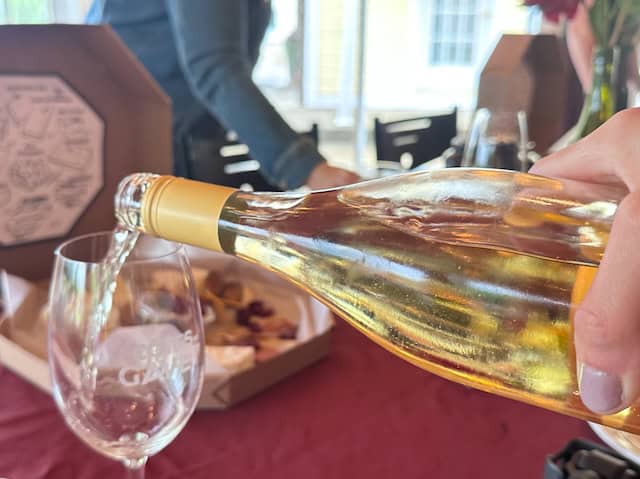
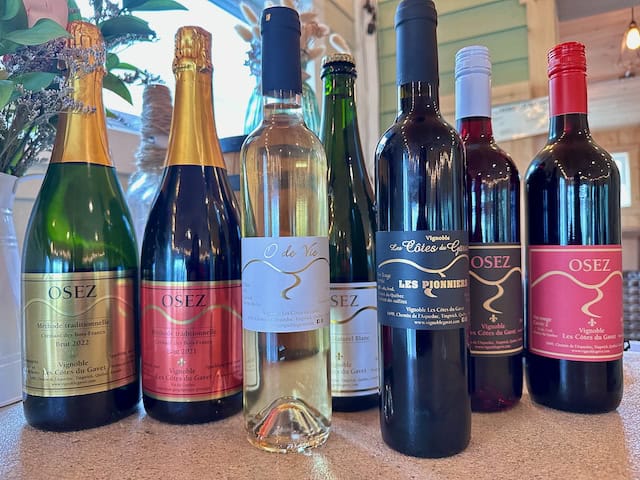
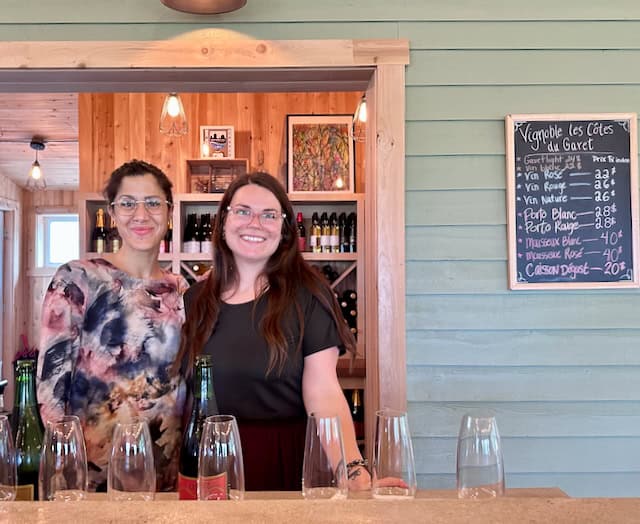
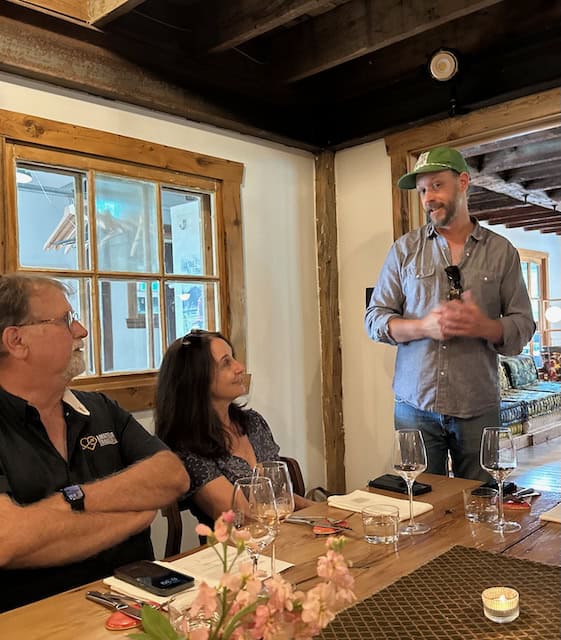
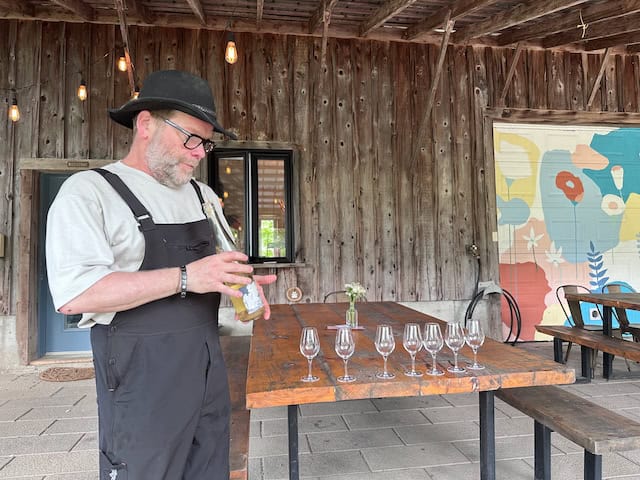
Our journey began with a visit to Vignoble Cotes du Gavet, a family-run, award-winning winery in Centre-du-Québec. The Marchand family has been making wines here since 2023 from vineyards that have been producing since 2000.

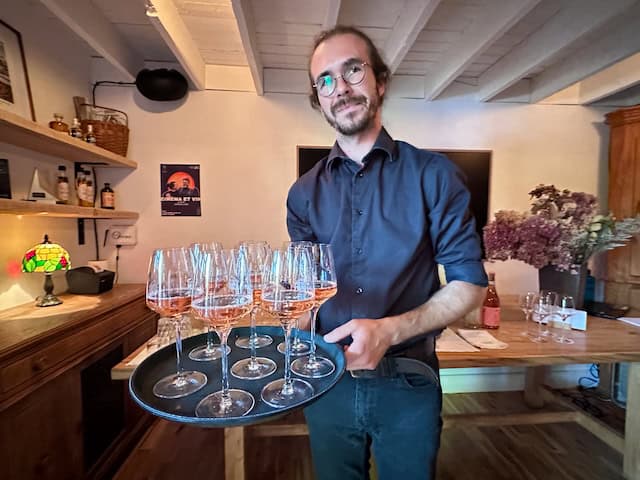
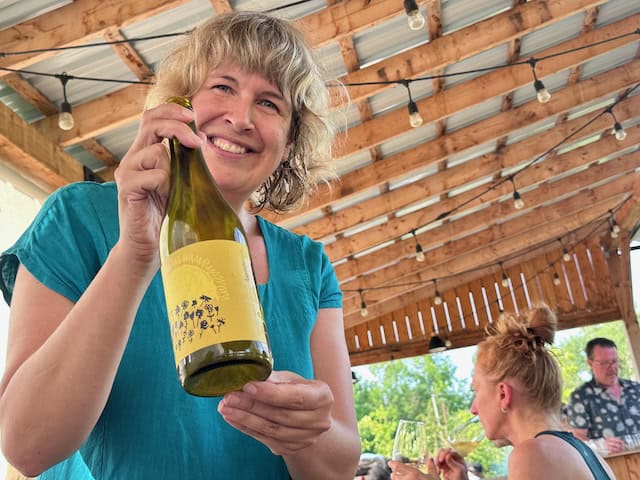
We sampled several of their wines including their pet nats (petillant naturel).  I was particularly partial to the sparkling rose. The wines, under both Cotes du Gavet and Osez labels, are made using local hybrid grape varietals like Frontenac Blanc, Frontenac Noir, Louise Swenson, Sabrevois, Petite Pearl and Crimson Pearl.

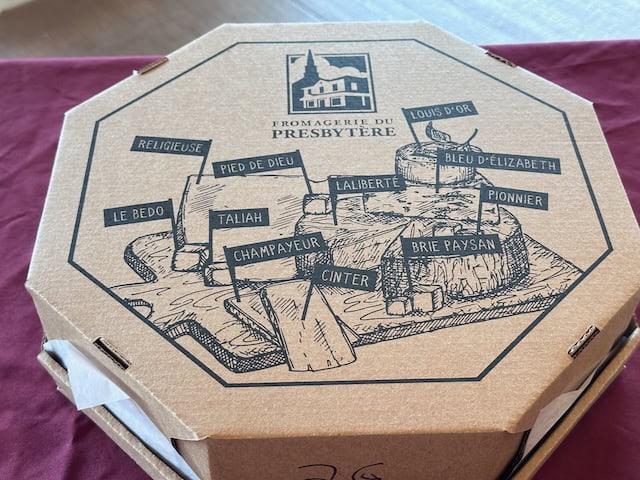
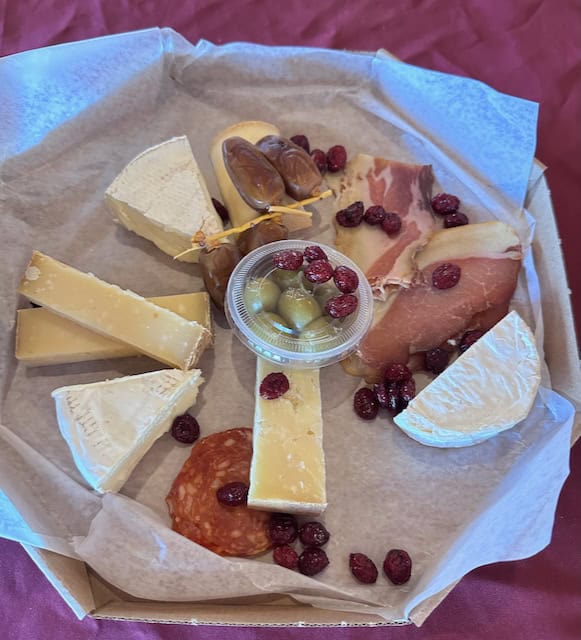
We enjoyed delicious cheeses from Fromagerie du Presbytère with our wine tasting.  Their award-winning cheeses are produced nearby by the Morin family using milk from their dairy farm, Ferme Louis d’Or. They are aged in a former church, which retains a small chapel for worship.  Our cheese platter featured Louis d’Or aged 24 and 36 months, Religieuse, Bleu d’Elizabeth and Laliberte.  I’d love to visit their shop in St. Elizabeth du Warwick during one of their famous Friday summer picnics. They feature live music and are open to all.

Poutine!

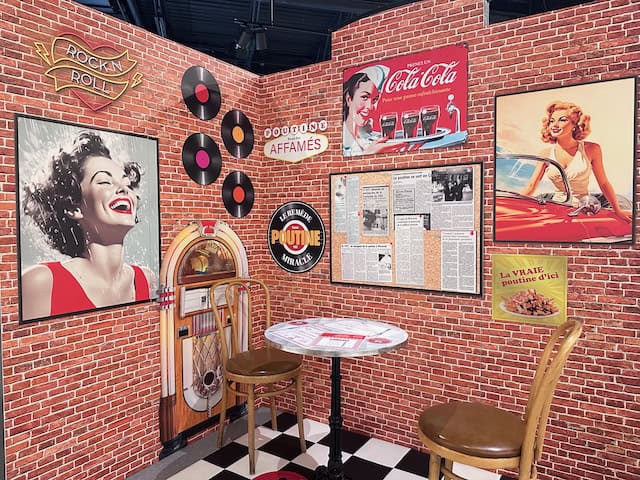
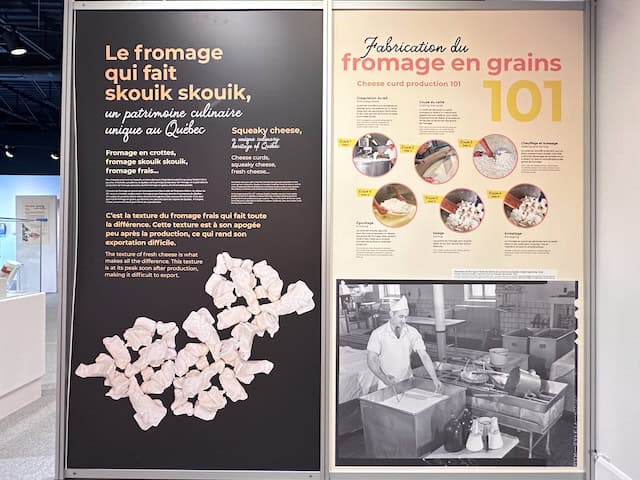
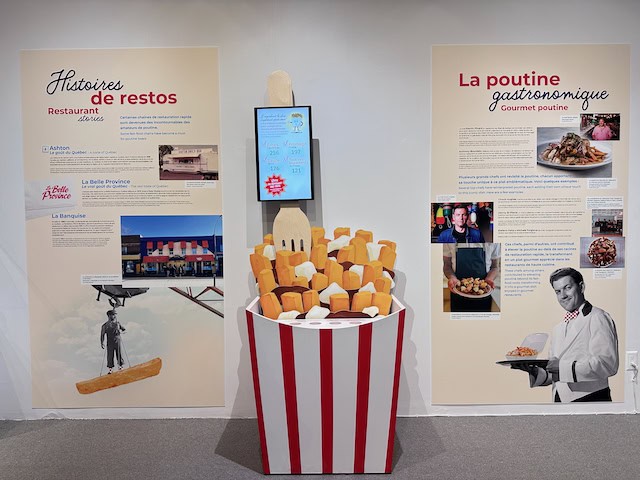
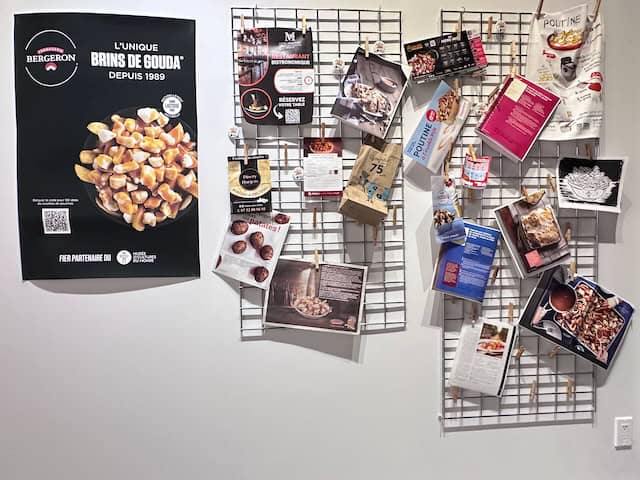
Poutine is almost synonymous with Québec. We learned all about this beloved regional dish and its controversial beginnings at the Musee des Cultures du Monde.  The iconic dish, which is traditionally made from French fries, gravy and cheese curds, has been adapted globally to reflect local tastes in nearly every corner of the world.

We had fun voting for our favorite origin story and most important ingredient using giant plastic French fries. The only thing missing here was actual poutine. I think we were all craving it at the end of the exhibit. The poutine-themed merch in the gift shop was impossible to resist and made up for missing the tasty dish.

Poutine: A Culture of all Flavors is a special exhibition and closes September 28. There is more to see at this small museum in the Centre-du-Québec.

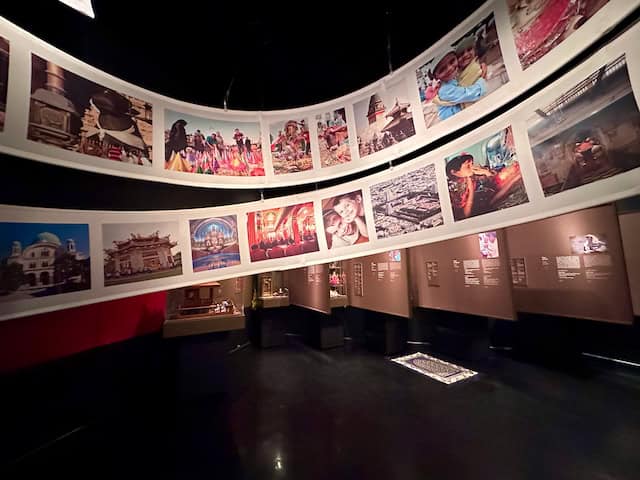
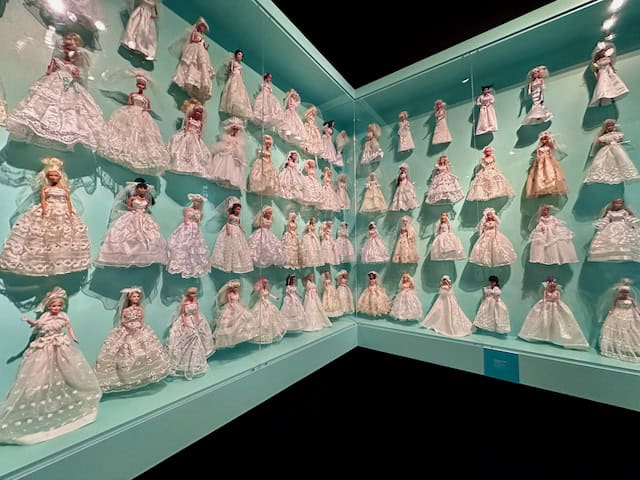
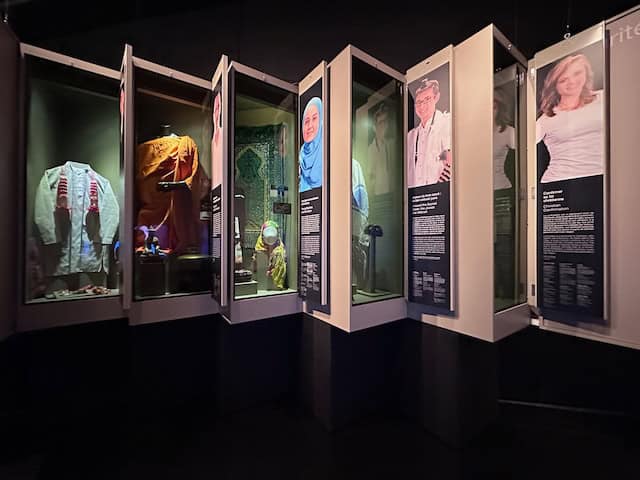
The museum has ongoing exhibitions about world religions including a massive display of Barbie dolls illustrating wedding customs from many cultures.

Elevated Cuisine at Au Paturage

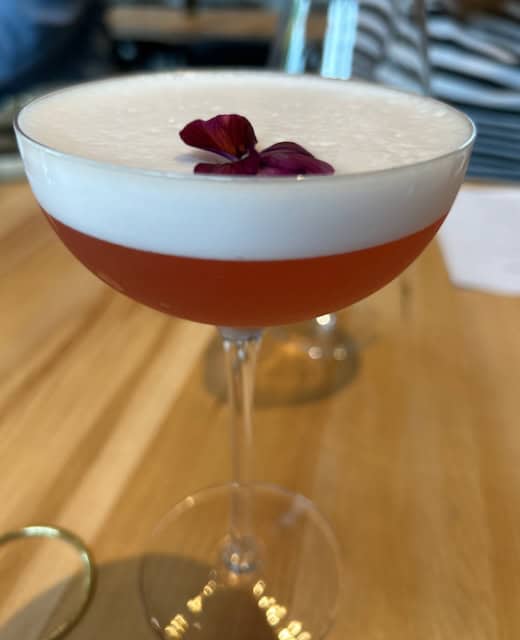
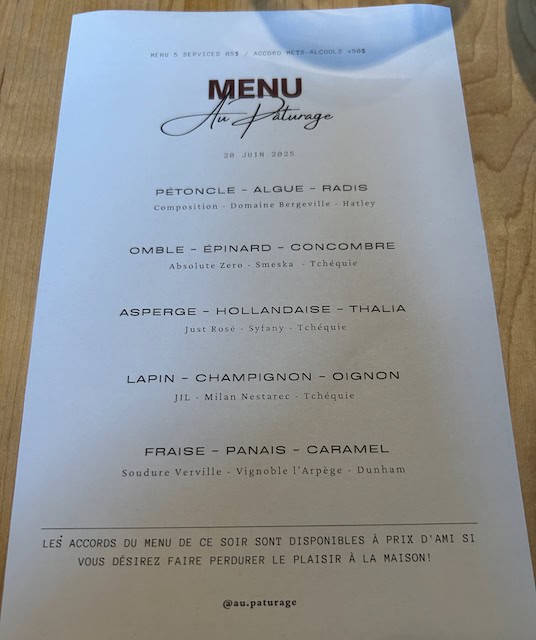
Au Paturage roughly translates to at the pasture. The restaurant is indeed surrounded by agricultural fields and flower- filled meadows. The elegant Au Paturage- Espaces Gourmand,

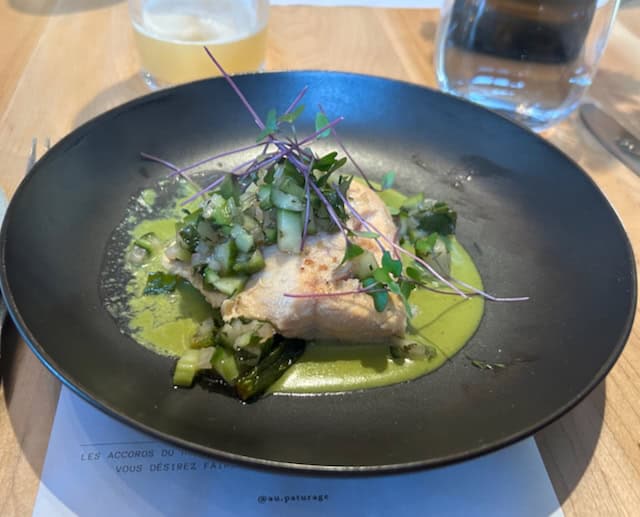
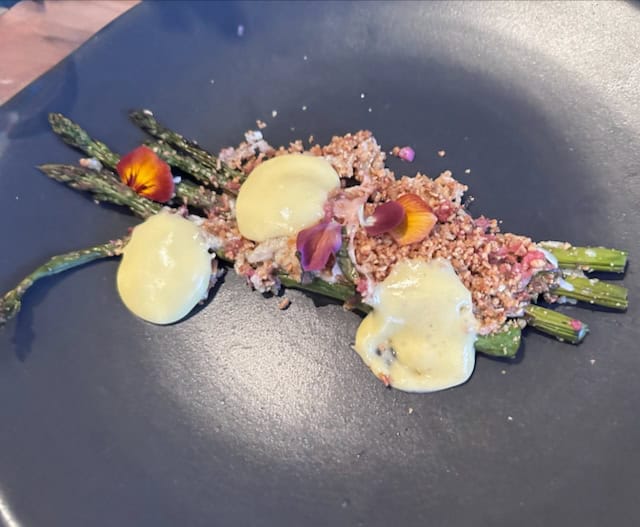
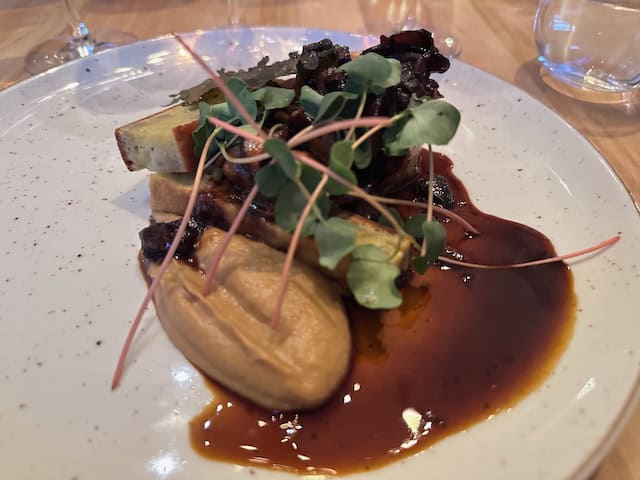
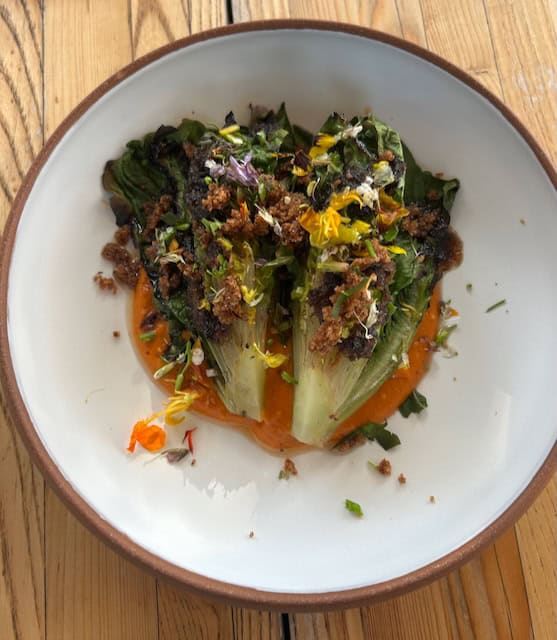
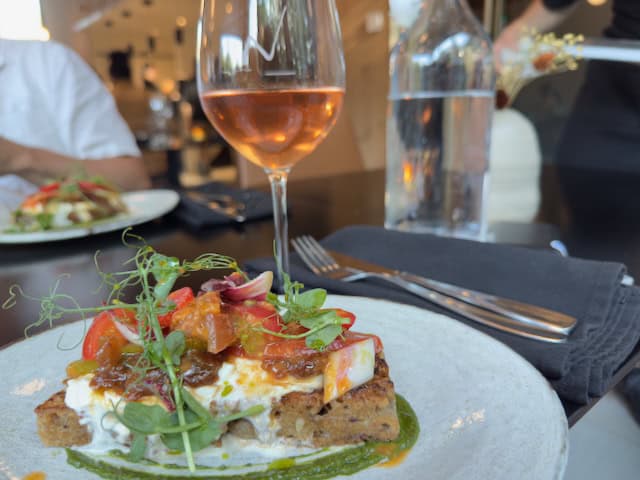
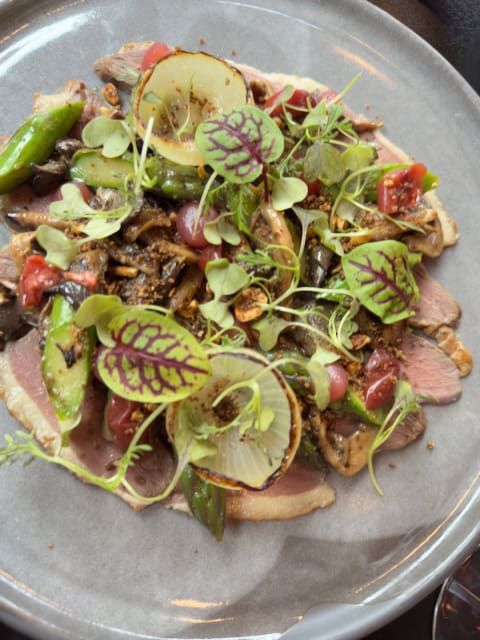
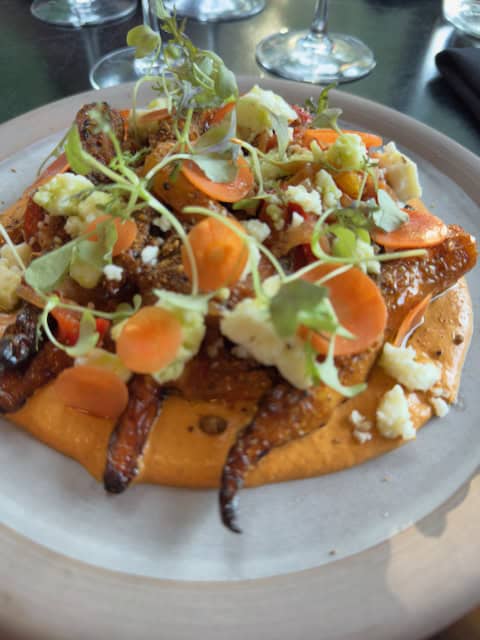
focuses on seasonal, locally sourced foods, including produce grown on their own three-acre farm, right outside the restaurant. Their cheese comes from Fromagerie Presbytère and meat from Ferme le Roy du Cerf. After a welcome cocktail, it was time to taste the vegetable-forward menu.

Prepared in the open kitchen by Chef Chloe Ouellet, the meal was spectacular. Each course was paired with wines from Québec, or interestingly, Eastern Europe. During summer, their dog-friendly 55-seat terrace is open. Be sure to make a reservation.

The (Very) Old Mill

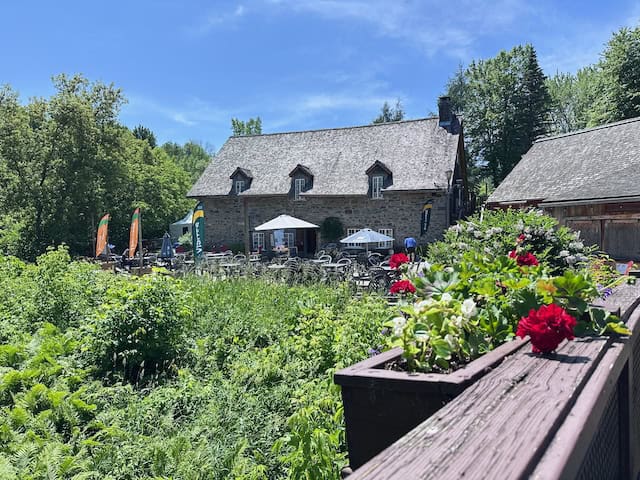
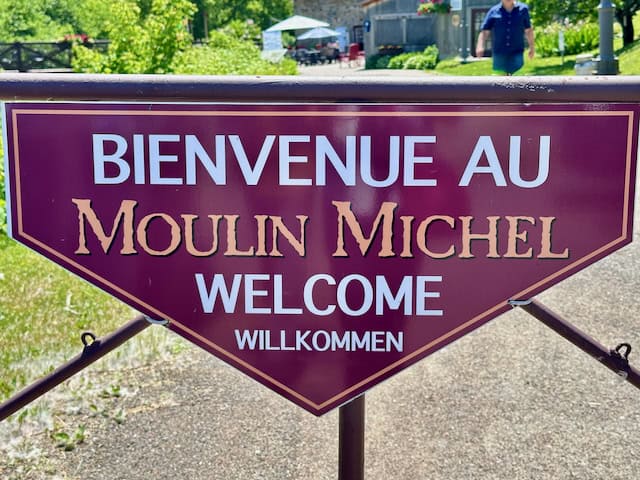
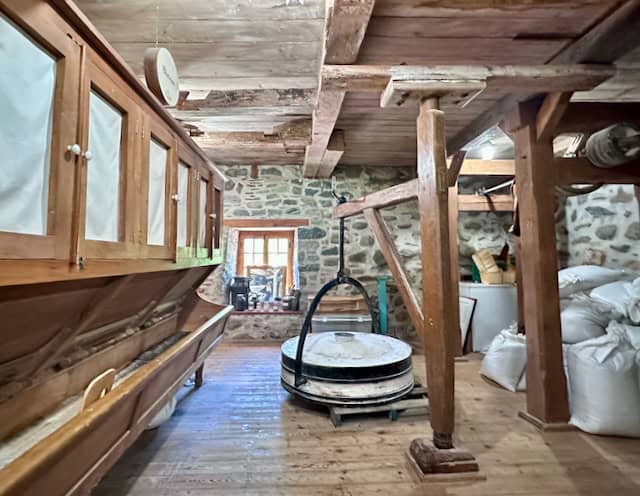
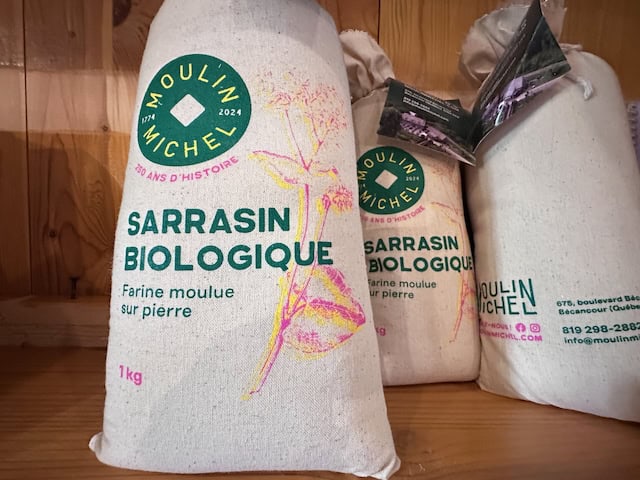
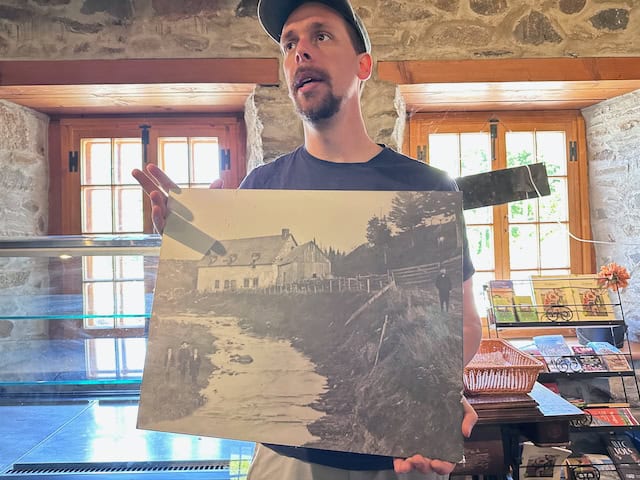
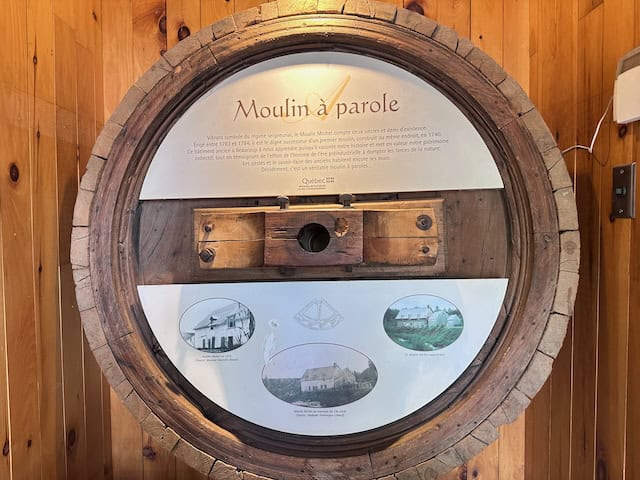
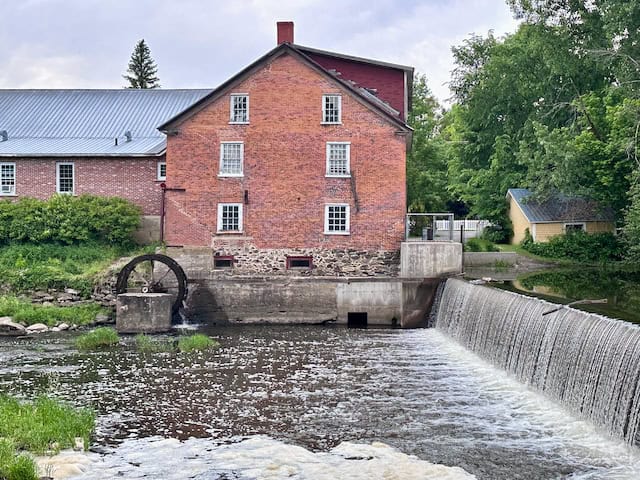
After a night at Hotel Montfort in Nicolet, it was time to move on to Bécancour. We began the day with a visit to the historic Moulin Michel, which has been grinding buckwheat into flour since 1743. The current mill has been operating in the Centre-du-Québec since 1774, after a fire destroyed the original mill.  

Owner Philippe Dumas showed us the hydraulic mechanism and taught us about the fascinating history of buckwheat, the 18th century mill, and the area. Fun fact, in lieu of cash, farmers left a portion of their grain as payment to use the mill, which was available to everyone.

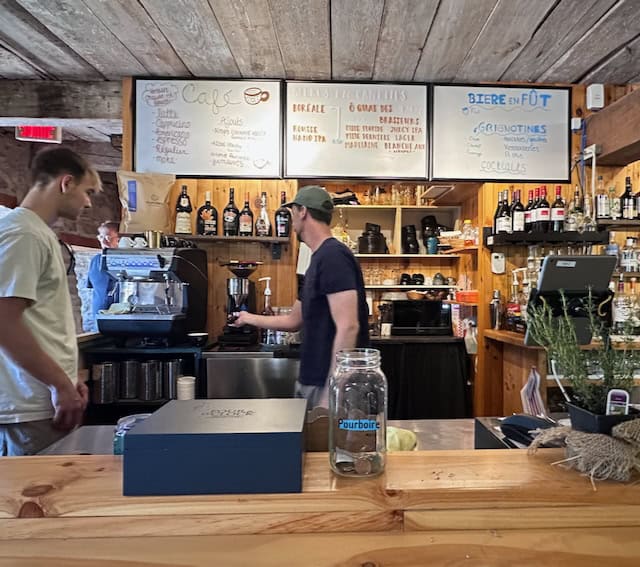
Inside the historic mill building you’ll find a café and shop with delectable pastries, coffee and local products for sale.  In the evening it becomes a bar.

During summer months, the sprawling grounds behind the mill are transformed into an entertainment venue. The Old Mill hosts a Blues Festival, now in its fifth year, that draws 1,200 people to this town of 2,000.

Take a Hike or Bike

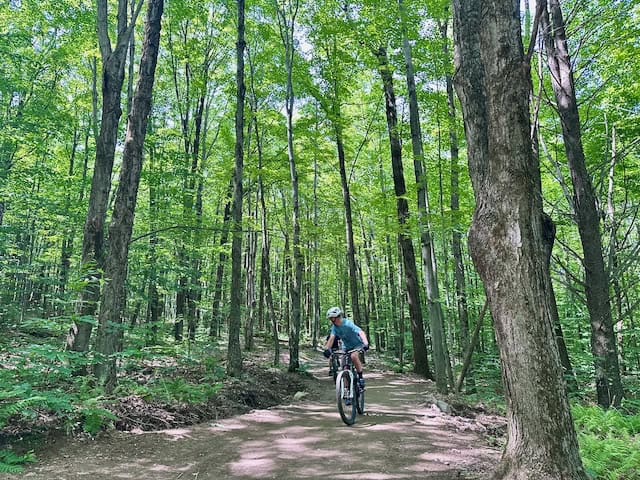
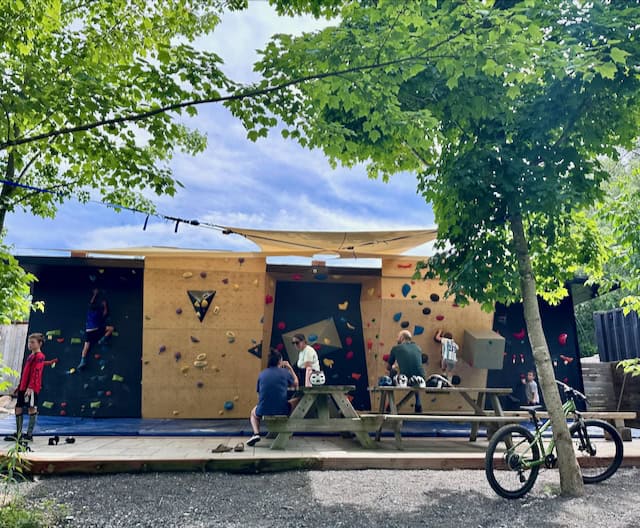
We needed to walk off all those goodies and did so with a guided hike at the beautiful Parc des Sommets. It’s a popular natural recreation area in Bromont in the Eastern Townships. In summer, the 150 kilometers of hiking trails draw outdoor lovers of all ages and abilities. It’s also a great place to bike. Let the kids try out the climbing wall or just enjoy a picnic here.

Southern Québec boasts six national parks perfect for outdoor endeavors like hiking, biking and kayaking during lazy summer days. There are snow sports of all kinds when the winter weather beckons. 

L’Espace Old Mill

Having met our exercise goal for the day, it was time for dinner at one of the toughest tables to get in the Eastern Townships; L’Espace Old Mill. 

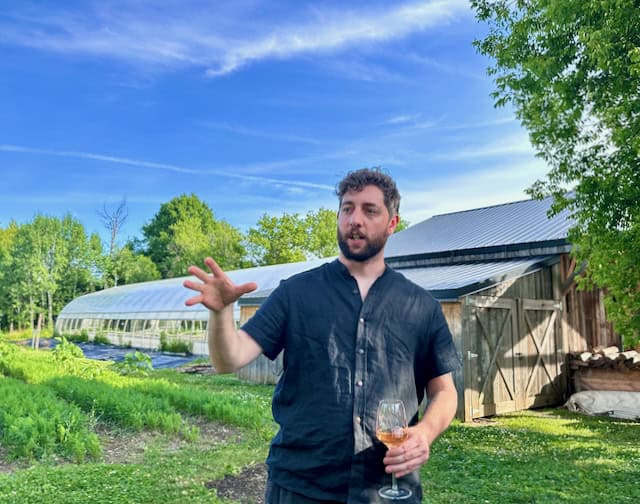
Inspiration and education are on the menu at this extraordinary restaurant that serves only what grows in its greenhouse and gardens (even in Québec’s frigid winter months) and what it can procure from nearby farms. We enjoyed a glass of local sparkling wine while we toured the expansive gardens with Executive Chef Eric Gendron before heading inside the airy dining room to feast on summer’s bounty.

The hyper-local focus is on the cuisine of the Brome-Missiquoi region here. Farmer/owner Jean-Martin Fortier came by and shared his vision for L’Espace Old Mill and their ongoing commitment to sustainable and regenerative farming, widely embraced by farmers in the Eastern Townships.

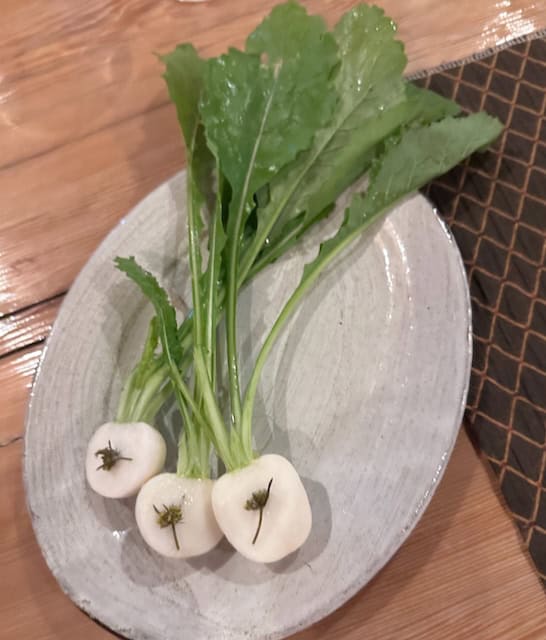
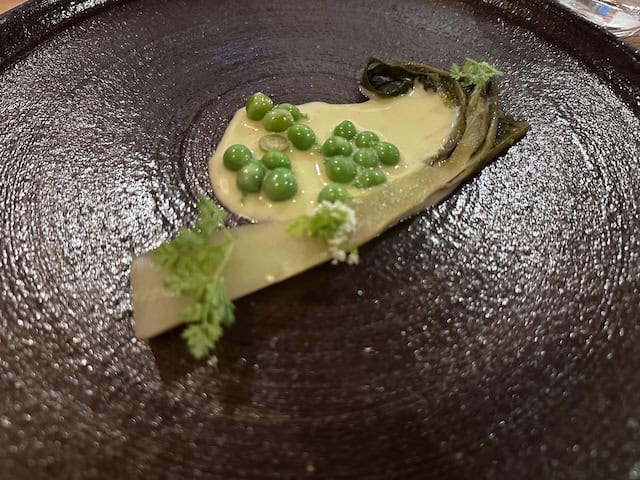
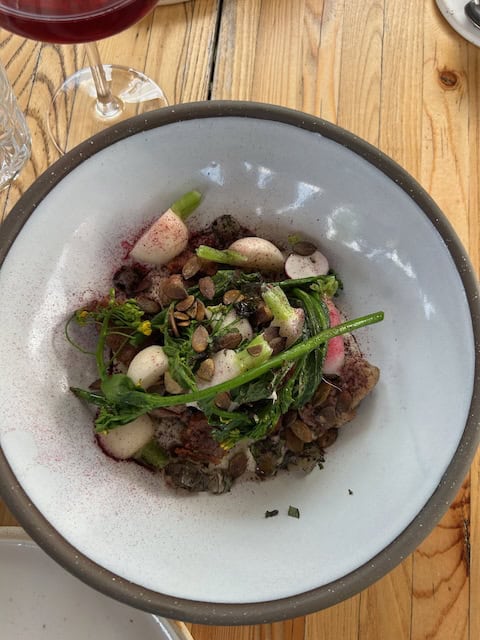
The Michelin Green Star-awarded restaurant’s menu is naturally vegetable-forward, though not vegetarian. I don’t think I have ever had peas or radishes that tasted so sweet and delectable! The wines poured to match the courses were also local. After a remarkable meal, we were off to nearby Hotel Chateau-Bromont, our lux and comfortable home for the night. 

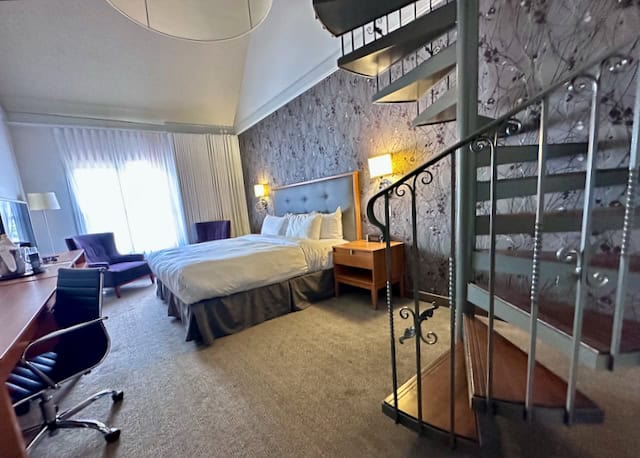
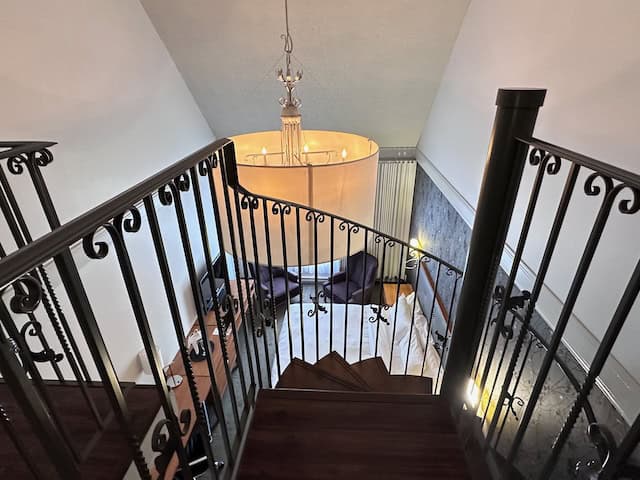
We had a beautiful bi-level room at Hotel Chateau-Bromont with a gorgeous view of the mountains.  After our abundant breakfast, we explored the property, wishing we had more time to lounge around the spa and pool area.  We need a return visit to take advantage of the wellness offerings here and revisit the beautiful nature park! Another dinner at Old Mill would be wonderful, too.

Beer and Brunch

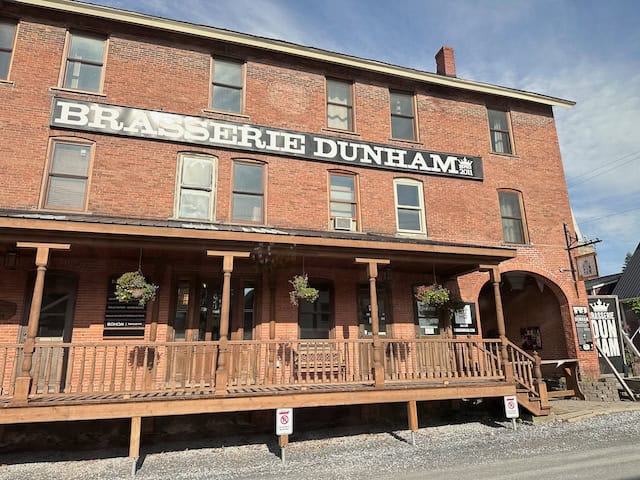
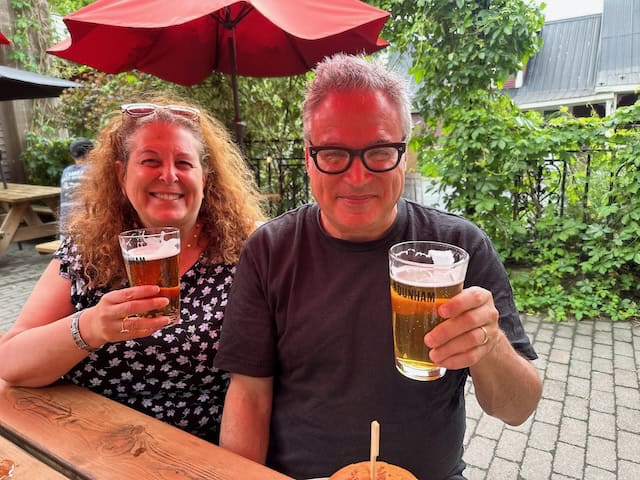
It was time to move on to the charming town of Dunham and the Brasserie Dunham, which brews its own beer. We took a table in the outdoor beer garden and finally, poutine was on the menu! We couldn’t resist ordering a plate to share. 

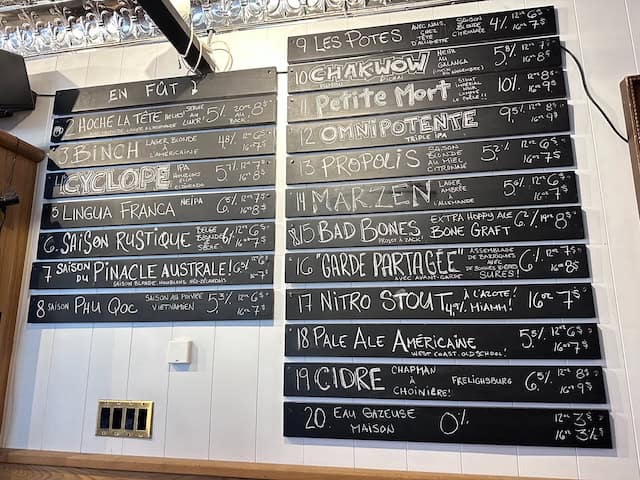
Hearty sandwiches, salads, burgers and other beer-friendly fare make the Brasserie popular for lunch and dinner. The brewery offers beers from blonde lagers to IPAs to seasonal ales and stouts. Our group sampled several. Our wonderful driver Dave was behind the wheel so were able to indulge in adult beverages.

On the Wine Route

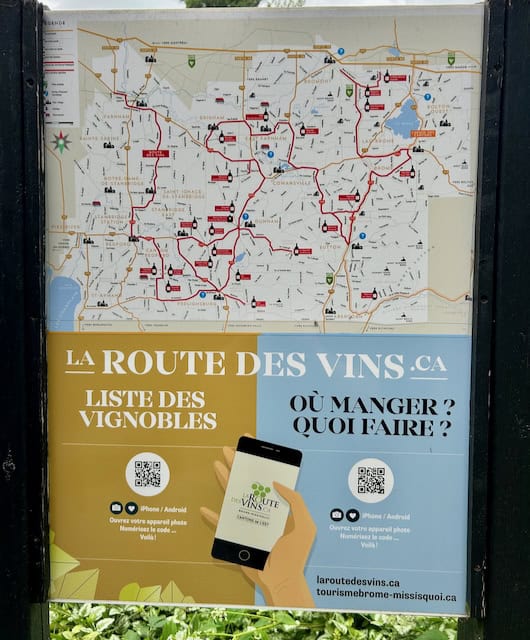
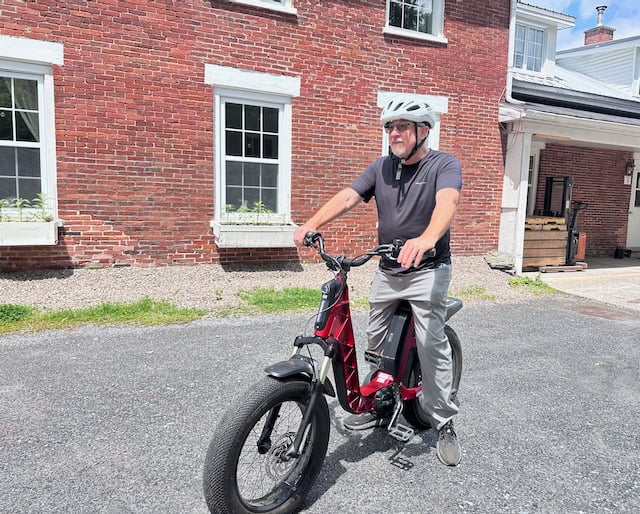
Our stomachs full, we headed out to explore the wine route of Brome-Missisquoi where about 60 percent of Québec’s wine is produced. Now home to more than 20 wineries, the 160-kilometer route winds through beautiful countryside, rolling hills and several pleasant towns in the Eastern Townships. There are itineraries for cars and bicycles available.

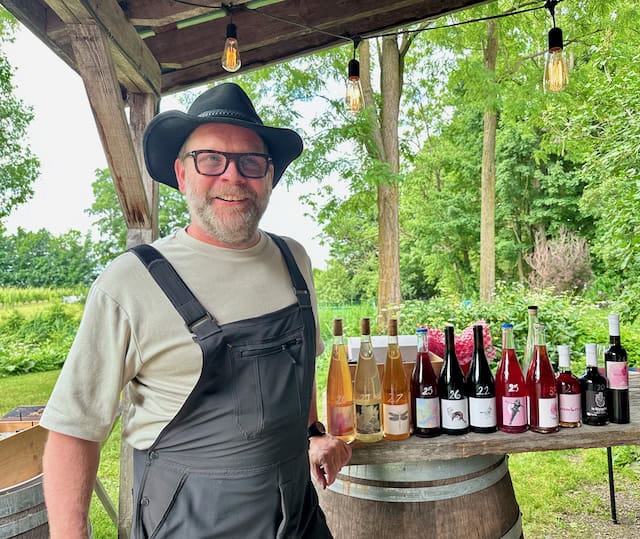
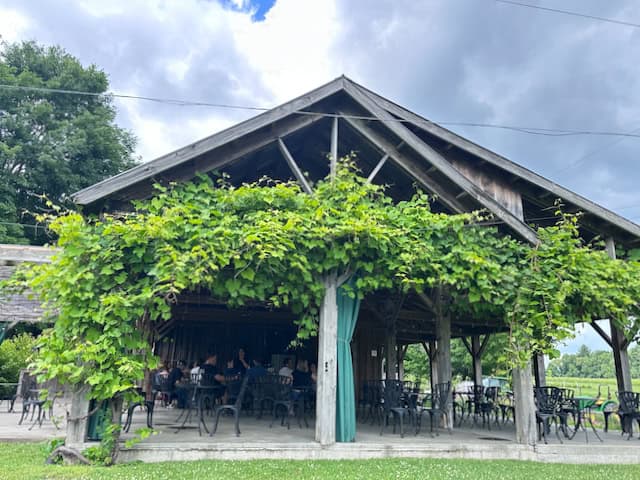
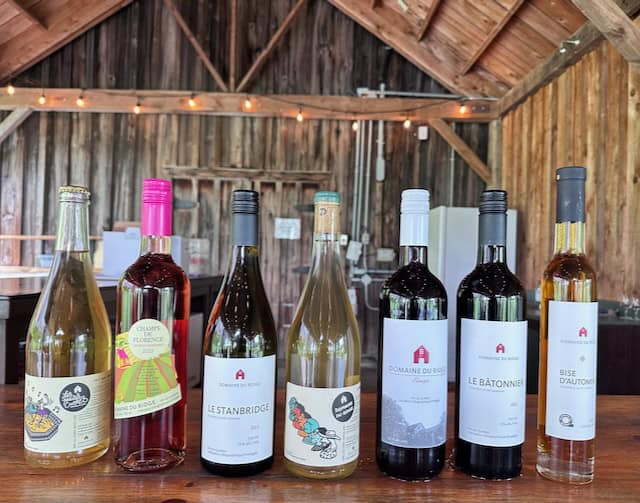
Our first stop was at Domaine du Ridge, a 200-acre property that includes fields, woodlands and 40 acres of vineyards. It’s a popular venue for weddings and other special events. Tours and tastings are by reservation at this 26-year-old winery.

In addition to still and sparkling wines, Domaine du Ridge produces a late harvest made with Vidal Blanc grapes called Bis d’Automne (Autumn Kiss), a dessert wine in the style of Pineau des Charentes, and Mystic, a vermouth. After sampling several still wines from their recent vintage it was time to move on to Vignoble de l’Ardennais.

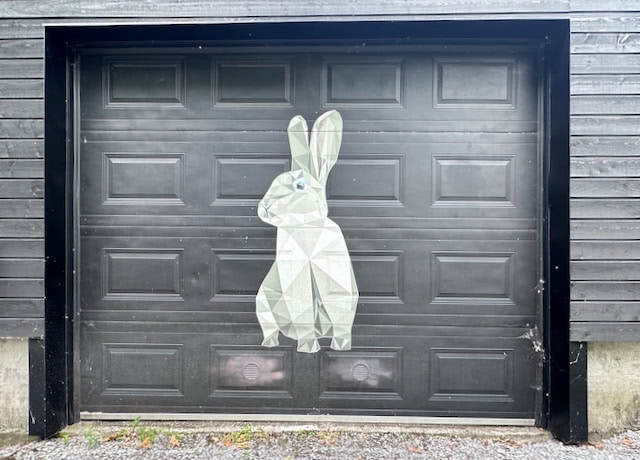
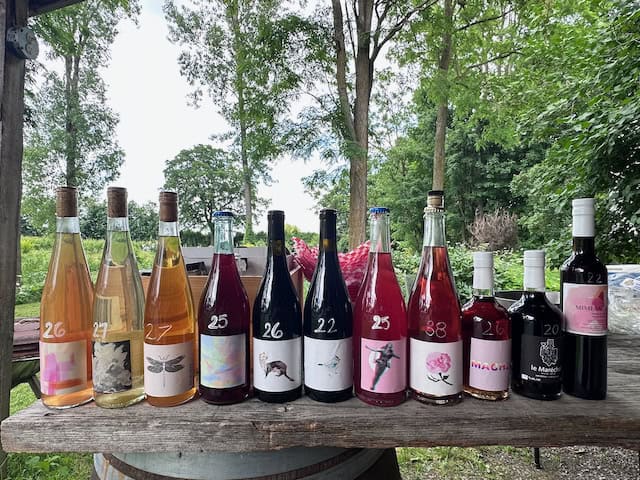
You’ll know you have arrived at Vignoble de l’Ardennais when you see the giant bunny painted on the garage. This was my favorite, both for the wines and the charming owner, Pier Cousineau, who with his wife Stephanie Thibodeau, and adult children Charlotte and Eliot, run every facet of wine production from label design to vinification.


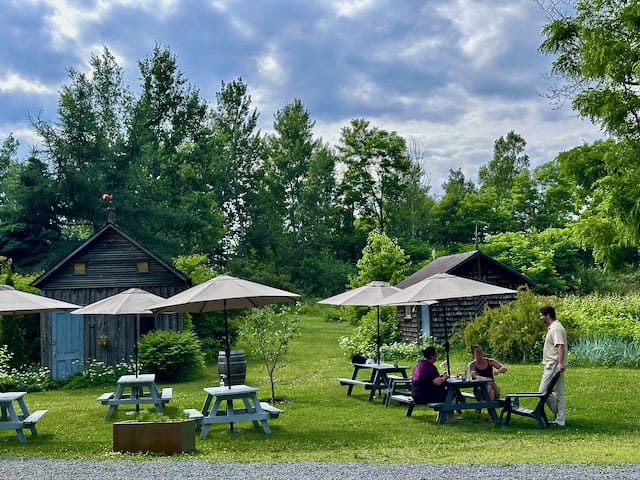
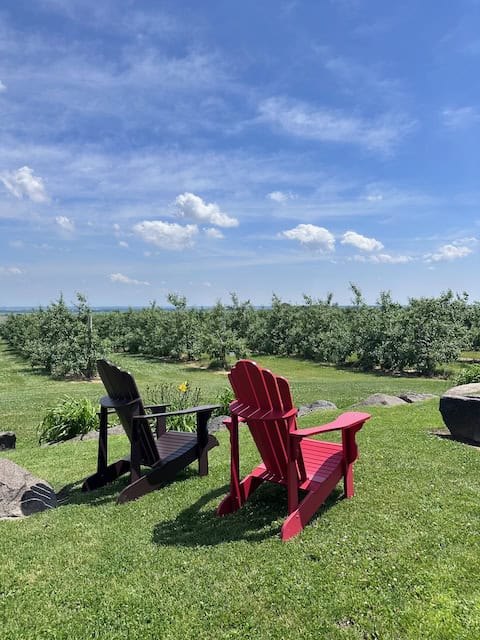
Other than Pinot Noir and Riesling, the grape varieties used here were unfamiliar to me. Seyval Noir, Chancellor, Petite Pearl, Frontenac Noir, Cayuga, and Marquette are hardy hybrid varietals that grow well in the often unforgiving Québec climate. Monsieur Cousineau uses them to full advantage to produce excellent wines and has been since 2016 when they acquired the property. The vineyards had been established by the previous owner in 1994. Grab a glass of Berthe rose and relax in the Adirondack chairs or picnic tables. That’s my idea of a perfect summer Sunday afternoon.

Dining en Plein Aire

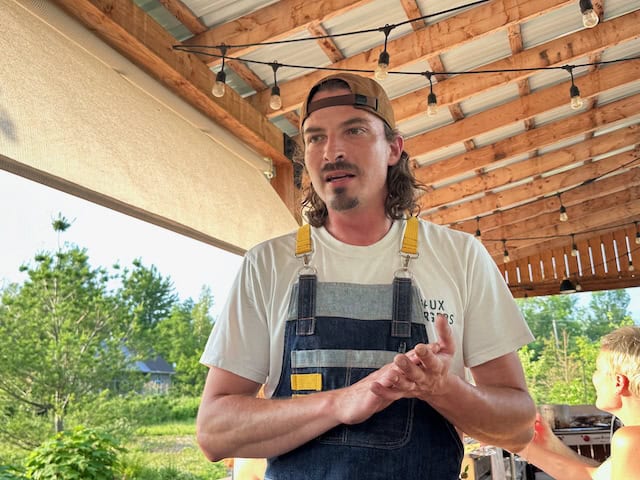
It was a pleasant surprise to find that our Sunday dinner at Les Cocagnes in Frelighsburg would be prepared by chefs Emile Trembly and Sylvain Dervieux from Faux Bergers in Baie St. Paul, where we had spent the weekend before arriving in Québec City. 

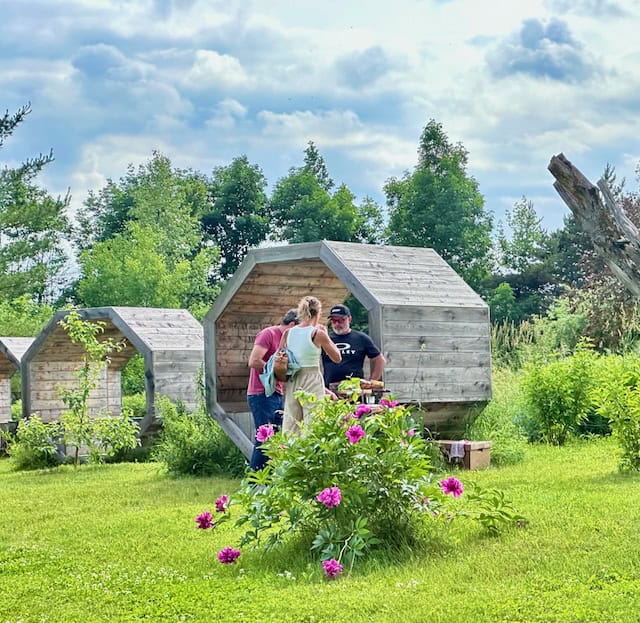
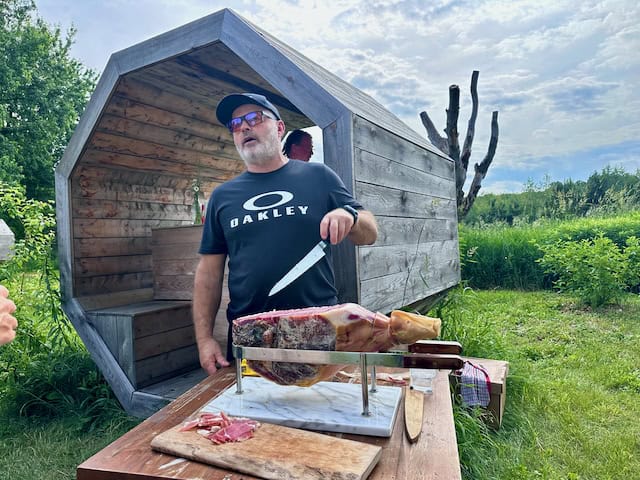
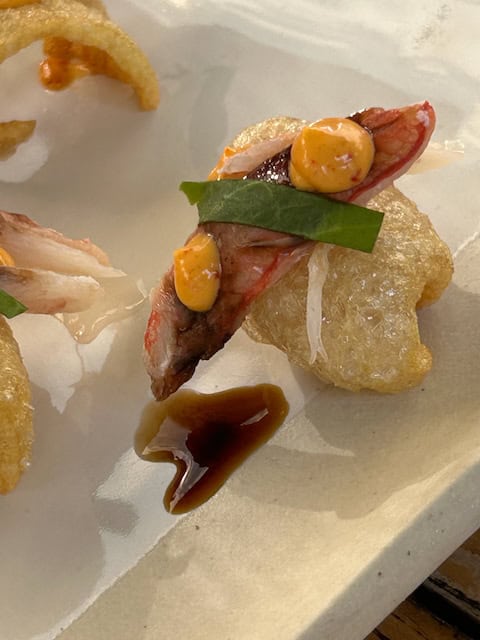
Each summer weekend, chefs from throughout Québec set up shop at this bucolic spot in the Eastern Townships. After an aperitif and hand-sliced local prosciutto, we followed our hostess through the fields and vegetable gardens to the outdoor dining room for a memorable five-course tasting menu paired with local wines. Reservations are essential.

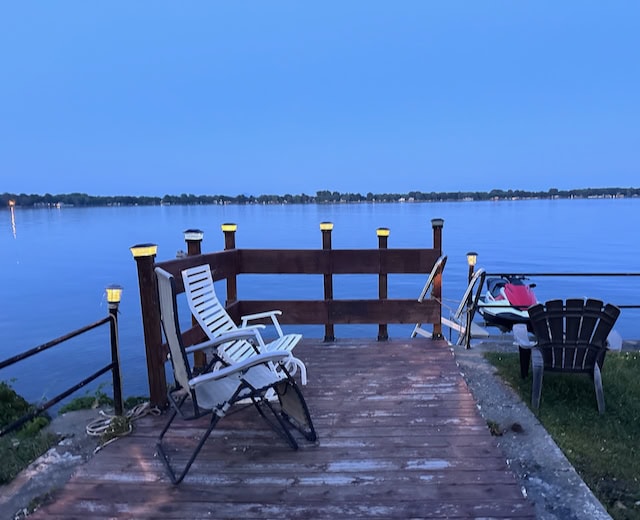
It was time to leave the Eastern Townships for Montérégie. La Cache du Lac Champlain across the street from Lake Champlain was our home for the evening. After depositing our bags in our large room with a golf course view, we headed out for a moonlight walk along the lake.

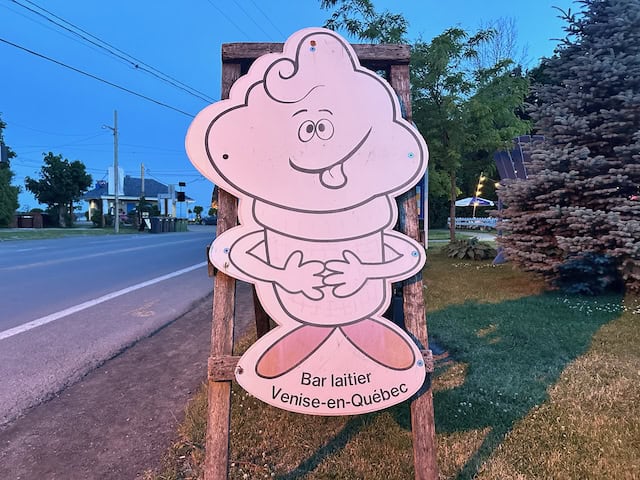
We couldn’t resist a local ice cream stand a few blocks away and enjoyed our cones while admiring the public art and private terraces along the lake front. These terraces, with outdoor furniture and boat docks, dot the lakefront while the homes are across the road.

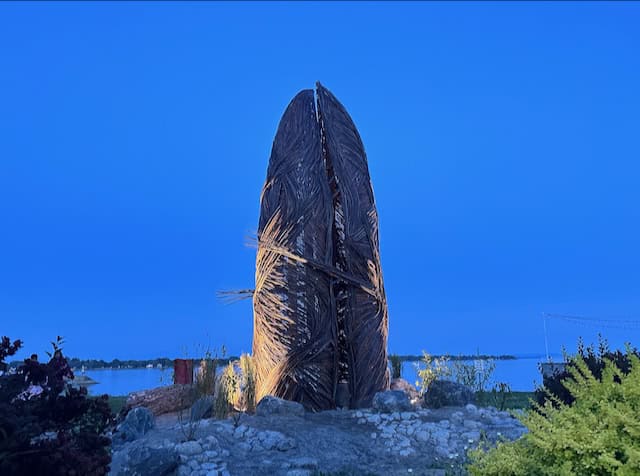
Les Amoureuses (The Lovers) by Veronique Pepin and Patrick Monast has space inside for two. It is the first work in a public art installation in Venice-en-Québec and will be on view through May 2026.

Ferme Guyon and Bonne Saint Jean

We heard people at breakfast greeting each other with “Bonne Saint Jean.” Saint Jean Baptiste (John the Baptist) is the patron saint of Québec, and the Fete de la Saint Jean is a national holiday in the province. This called for a slight change of plans and a trip to Ferme Guyon.

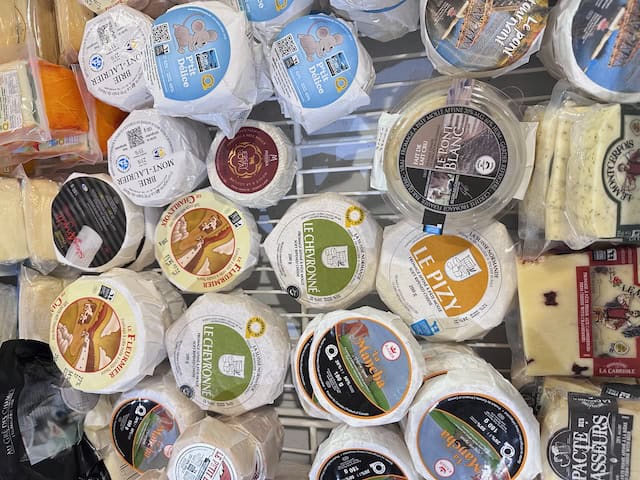
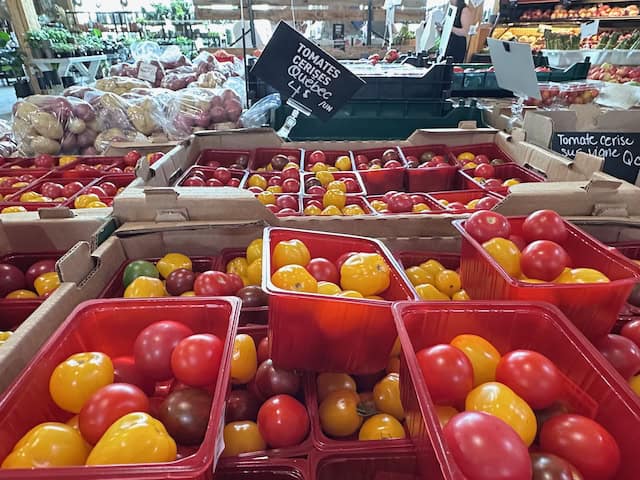
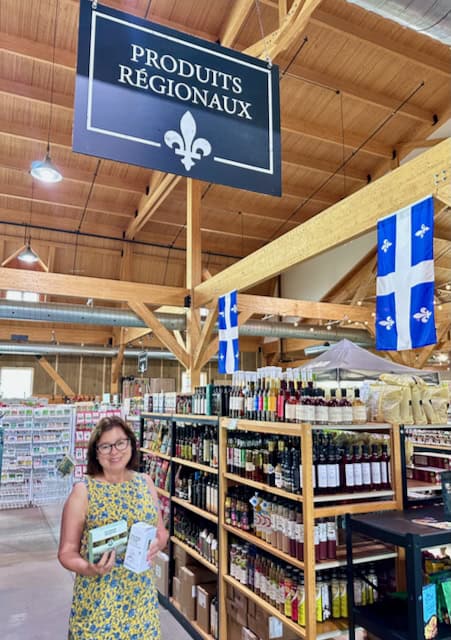
Just 30 minutes from Montreal, this is the supermarket of my dreams. Farm-fresh produce, fine cheeses, charcuterie, maple sugar everything (cotton candy!), and an extensive selection of local ciders, beer and wines, plus Québecois handicrafts make this a one-stop shop for picnic provisions or any meal you’d want to prepare. If you don’t have time to visit local fromageries, wineries and farms, a trip here will definitely give you a taste of local flavors!

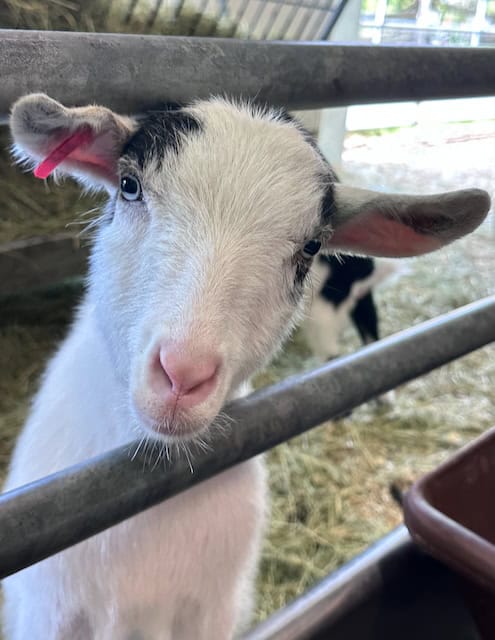
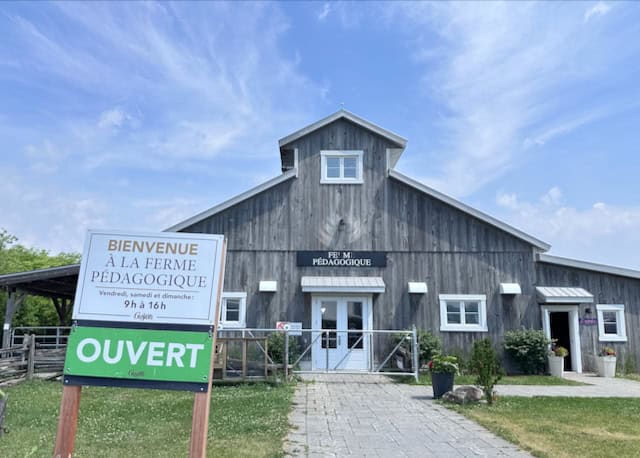
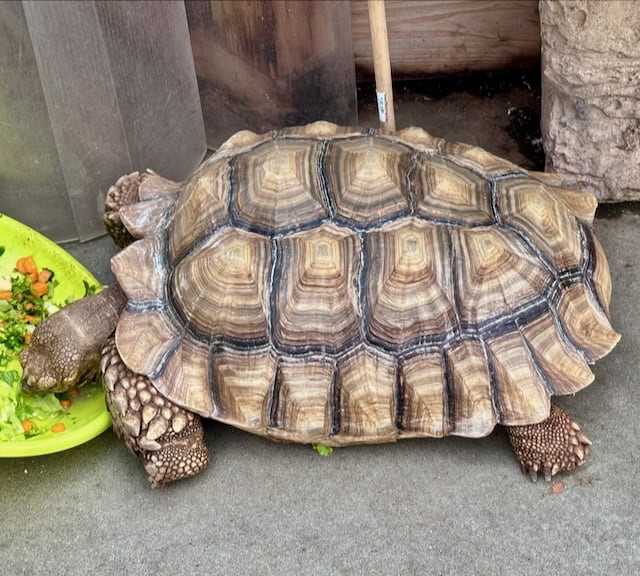
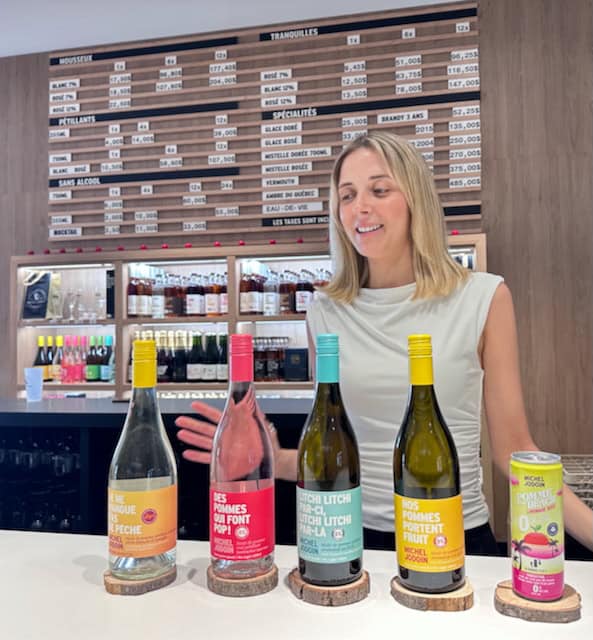
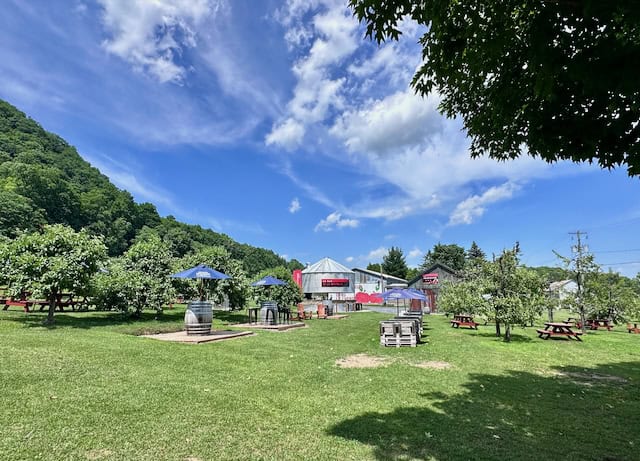
The Ferme Guyon also has an educational farm with adorable baby animals and a butterfly pavilion, which in addition to housing lepidoptera, is the habitat of Oscar, a 14-year old tortoise.  I could have spent the whole day here, but shopping completed, we headed off to Cidrerie Michel Jodoin on the Rougemont Cider and Montérégie Wine Route.

Cider and More Wine

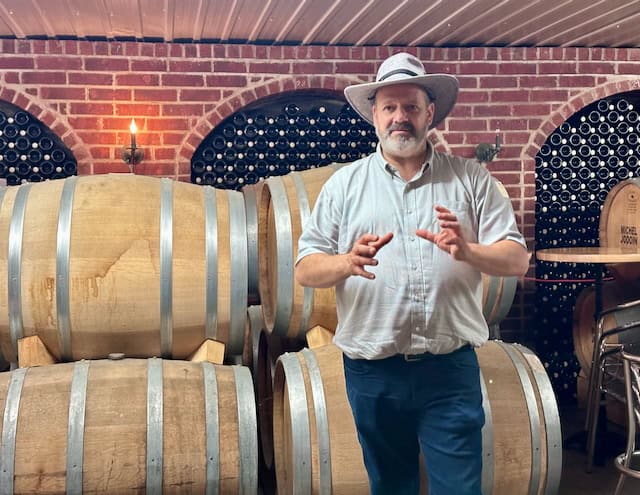
I adore champagne and was intrigued to learn that Monsieur Jodoin had worked in France’s Champagne region in the 1980s and returned to Québec with a plan to make a sparkling wine from apples using the traditional methode champenois.  His family has been in the apple orchard business for five generations, ever since Jean-Baptiste Jodoin purchased 100 apple trees in 1901. Jodoin is now the largest grower of Geneva apples in North America.

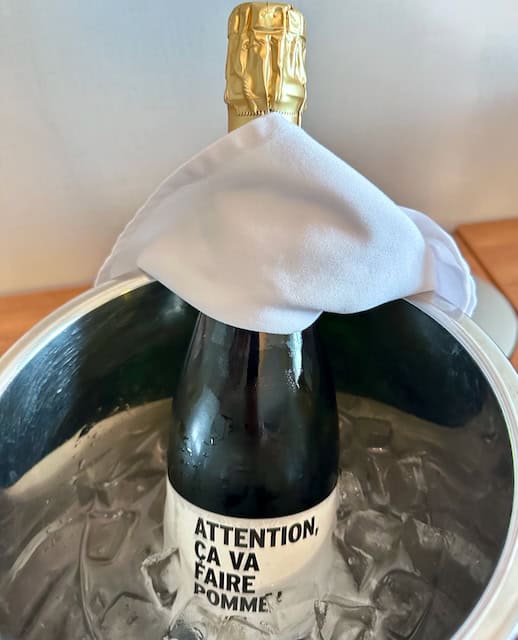
Their award-winning ciders were delicious, and we enjoyed them thoroughly with our picnic lunch in the cidery’s cellars. My favorite was Attention Ca Va Faire Pomme! It’s packaged to look like champagne and captures the wine’s characteristics right down to the perlage or tiny bubbles in the glass.

Jodoin makes several refreshing roses from apples, a broad range of fruit flavored ciders, vermouth, and non- alcoholic drinks.  They became the first micro distillery in the country in 1999 and we tasted their spirits, too.  

No reservations are needed to visit the Cidrerie Michel Jodoin tasting room. Visitors are welcome to enjoy their picnics outside and can access the hiking trails here. During the summer their grounds are often the site of evening entertainment.

Next, we stopped into Coteau Rougemont just down the road from Jodoin, to sample their wines. The winery was quiet due to the holiday, so we enjoyed a leisurely tasting outdoors overlooking the beautiful gardens and rolling hills of Montérégie. They also sell local honey, jams and maple syrup at the winery.

Spaaaah

It was time for a break. Bonjour Québec arranged a wonderful afternoon of complete relaxation at Strom Spa Nordique. The thermal waters and serene surroundings are the draw here and we took full advantage, moving from one temperature- controlled pool to another on the recommended circuit. After several hours of blissful soaking, it was dinnertime.

The menu at Bistro Nord at the Strom Spa spotlights artfully and healthily prepared local produce and every course was both. Executive Chef Raphael Podlasiewicz came out to describe each delicious dish to us. Reservations are required at the Strom Spa Nordique locations throughout Québec and in their restaurants as well.  

We spent our last night in Québec at the Hotel Rive Gauche, just 20 minutes from Montreal. The hotel is on the Richelieu River, and we were able to see a bit of the Fete de la Saint Jean fireworks launched further upstream.

Sugar Shack

Our last stop on our extraordinary epicurean adventure was a visit to Sucrerie de la Montagne. This traditional “sugar shack” has been a site for maple syrup production in Montérégie since the 1930s and has been owned by the Faucher family since 1978. Unlike most, it is open all year long, not just March to April during the “sugaring off” season.  Owner Steven Faucher (shown above in front of a photo of his father) showed us where and how they make syrup.

We learned how trees are tapped using a spout and bucket and the “maple water” collected and turned into syrup.  It takes 40 gallons of maple water to make one gallon of light or amber (medium) syrup, and 50 gallons to make a gallon of dark syrup! Amber is the most popular grade of syrup.

We also visited the massive oven, which was purpose-built in 1982 for bread baking and requires two bakers working six days a week to make enough loaves to feed workers and guests during the maple sugar season.

After finishing our tour of the buildings, we settled into their popular restaurant for a hearty meal, served with maple syrup made at Sucrerie de la Montagne, of course. During lunch we were entertained by live traditional Québecois music and afterwards given a lesson in playing the spoons by our jovial and charming host.  Depending on when you visit, you may even see an axe-throwing demonstration near the general store, which has a wide selection of local goods, handicrafts and maple syrup products. Some syrup and tea towels made it into my suitcase!

Our journey through Southern Québec was an unending series of delight and surprise, from the gorgeous countryside to the incredible cuisine.  What will really stay with me is the warmth, generosity, and hospitality of the people I met in Centre-du-Québec, the Eastern Townships and Montérégie. Despite recent political tensions between our countries, the Québecois are wonderfully welcoming. Take them up on their offer to, “Come to the Eastern Townships and hug it out!”

Written and photographed by Jeanne Neylon Decker

Protected by US Copyright Laws.

This post contains affiliate links. If you click and book, I
may earn a commission at no extra cost to you
. I promise not to spend it all on ice cream. Thank you. I appreciate it!

Fun, Free (and Almost Free)Things to Do in Rome

Lagoon in the Villa Borghese Gardens in Rome

Heading to Rome? You won’t be alone. This year, the Eternal City expects to host 35 million visitors, up from 13 million in 2024.  It is a Jubilee Year in the Catholic Church—a celebration with events and activities throughout the year jubilaeum2025.va, and there is a new, American Pope.  It is going to be very, very crowded in Rome and prices for everything are going to be higher. Go anyway.

To help you keep costs down while still enjoying the magic of Rome, I’ve put together a list of some of my favorite free (and almost free) things to do in the Eternal City. 

Visit the Vatican

St. Peter's Basilica in Rome
You must visit St. Peter’s Basilica at least once. Why not during the Jubilee Year?

Yes, there will be crowds, but how can you visit Rome and not see St. Peter’s?  Entry to the Basilica and crypt is always free and tickets are not required. Lines are shorter early in the morning but there are always lines.  If you are there to pray and would like to enter through the Porte Santa, (the Holy Doors) which are open only during the Jubilee Year, ask one of the guards and they may let you proceed directly.  No promises. You can also attend mass at St. Peter’s but be on time and dress appropriately –shoulders and knees must be covered–or risk being denied entry. The Basilica is closed during the Pope’s Wednesday public audience until 1 p.m. You need to purchase a ticket to visit the Sistine Chapel, Vatican Museums or Gardens but it is worth it. Order now for a summer visit if you haven’t already!

Meet the Pope

Every Wednesday morning (except in July and important Church feast days) the Pope holds a general audience for thousands of well-wishers either outside in the piazza in front of St. Peter’s or in the nearby auditorium.  Tickets are free. Write to the Pontifical North American College pnac.org no later than two weeks before you’d like to attend, but as soon as possible to avoid disappointment.

Collect your tickets in person at PNAC offices near the Piazza Navona on the Tuesday before your visit.  Newlyweds can apply to sit in the special Sposi Novelli section near the Holy Father. The audience is general seating but try to get an aisle seat for the best chance of an encounter with the Pope. Be warned, it was chaotic when we went to an audience in the auditorium. People were clambering over chairs (and other people) to try to shake the Pope’s hand. Go early as you will have to pass through security.

Take a Walk in the Borghese Gardens

Rome’s Borghese Gardens are full of fountains, sculpture and plenty of places to sit and relax.

Located at the top of the Via Veneto, these beautiful gardens are to Rome what Central Park is to New York City.  Once the private parklands of the powerful Borghese family, they’ve been open to the public since 1903. There are fountains, sculptures, and the Orolgio al Aqua del Pincio—a water powered clock from 1867 that’s still ticking along! 

Orlogio al Aqua del Pincio Water clock in Rome's Borghese Gardens
This water-powered clock has been keeping time since 1867.

Bring a picnic and enjoy the views over the lagoon or pick a bench and people watch—it’s the perfect place for it. There’s a dog park, playing fields, even a riding rink where you can admire the equestrian skills of riders putting their horses through their paces.

There are plenty of things to do in the Gardens of the Villa Borghese. Or you can just relax and enjoy the beautiful surroundings. Weekends are busy with families out enjoying the day and sometimes there are special events in the park. We came across a chocolate festival a few years ago– very tasty!

Rent a bike, a trike or a boat in the Borghese Gardens for more family fun.

For a small fee, you can rent a boat, a bicycle or a kart, or ride the carousel. The world-renowned Galleria Borghese is here, too,  galeriaborghese.beniculturi.it with its collection of works by Bernini, Caravaggio, Titian and other masters. The museum has a private sculpture garden, too. It is not free but absolutely worth a visit and must be booked in advance online.

The Museo Canonica is one of the eight free City of Rome Museums.

The Pietro Canonica Museum museocanonica.it/en which features the sculptor’s work, is also in the park and because it is a City of Rome Museum, is free.

Enjoy Art, Archeology, and History for Free

Rome’s free city museums feature fine art, antiquities, fossils and ancient artifacts.

The City of Rome’s eight free museums are sure to delight and entertain most visitors. These small museums present everything from fine art to fossils, and ancient Egyptian artifacts to Napoleonic family heirlooms. They each focus on a specific area.

The Napoleonic Museum is free and worth a visit to see the Bonaparte family’s art and personal belongings, many with historical relevance.

In no particular order, the free Comune di Roma Museums include: Napoleonic Museum (a grand palazzo with art and belongings from generations of the Bonaparte family), Museo delle Mura (archeology museum inside the Aurelian Walls), Pietro Canonica Museum (the sculptor’s works exhibited in “the little fortress”–his home and studio), Casal de’ Pazzi Museum (archeology), Carlo Bilotti Museum (contemporary art), Museo della Memoria Garibaldina (Italian history), Giovanni Barracco Museum (ancient Middle Eastern arts and artifacts and Classical Greek sculpture), and Villa Massenzio (Imperial Roman villa on the Appia Antica).

You’ll rarely fight crowds at Rome’s smaller, less known museums.

Visit museiincomuneroma.it for details on each of these small treasure- filled museums. Not only are they free, but in my experience, and I’ve visited almost all of them, they are rarely crowded.

Explore the Neighborhoods

Villa Torlonia Gardens
Leave the center of the city and explore Rome’s vibrant and interesting neighborhoods.

There is a lot more to explore in Rome than the Centro Storica, the city’s historic center, though of course you’ll spend time there, especially if this is your first visit.  Head out to the upscale Nomentana neighborhood and enjoy another lovely park at the Villa Torlonia museivillatorlonia.it/en

The gardens surrounding the Villa Torlonia are open to the public and one of the few “English” gardens in Rome.

This is one of the few sprawling English-style gardens in Rome and it is free to enter. We have seen yoga classes, kids playing soccer, picnickers, and people just relaxing in this lovely green space. There are also sculptures and a grand obelisk in the park to enjoy.

You can visit the Villa Torlonia, Mussolini’s former home, for free on the first Sunday of the month as part of the Domenica al Museo program.

Mussolini and his family made their home at the Villa Torlonia from 1925-1943. He rented the VIlla for one lira a year, which is less than you’ll pay to enter the Villa, now a museum. The ticket also includes entry to the Little Owl House and a contemporary art gallery on the grounds.  Mussolini’s underground bunker requires a separate ticket and has more limited hours.

Owl House at Villa Torlonia in Rome
The art-filled Casa delle Civette is included with admission to the Museo Villa Torlonia.

After your visit to the park and villa, go around the corner to my favorite gelateria- Guttilla Alta Gelateria. It’s not free but costs less than five euro for a three-scoop cone topped with panna (cream) and a cookie!

ice cream cones from the gelato shop Guttilia
Take a break and enjoy a gelato!

There are many neighborhoods outside the city center that all have something enriching to offer from markets to museums. Rome’s public transportation system is inexpensive and makes it easy to get around. We use it frequently, especially when we want to visit a more far flung location like Cine Citta, which while not free, I highly recommend if you’d like to do something completely different on your Roman holiday.

Unless you’re traveling at rush hour (and why would you?) buses and subways are convenient, affordable, and not terribly crowded.

Have a Wander

The 19th century Galerie Sciarra is one of Rome’s “hidden” treasures. FInd it on Via Marco Minghetti.

Wandering Rome’s cobbled streets is one of the great free pleasures of a visit here. You never know what you’ll find as you explore the streets of this beautiful city. We came upon this gorgeous frescoed late 19th galleria completely by accident. We also saw a college graduation (champagne corks popping) near the Colosseum, nuns and gladiators on the Ponte Sant’Angelo, and heard an impromptu acappella concert in a park as we made our way to the Scuderie del Quirinale.

Stroll around the Jewish Quarter or the Trastevere, which means across the Tiber. The Flaminia neighborhood has plenty of shops and a great contemporary art museum– MAXXI italia.it/en/lazio/rome/maxxi-museum. It’s free on the first Sunday of the month, as are many of the Musei di Comune di Roma that typically require tickets, including the Centrale Montemartini where you’ll find classic sculpture displayed in Rome’s first power plant, and the MACRO satellite with its multimedia and contemporary art. Both are in outlying neighborhoods, respectively in Ostiense and the Testaccio, a former slaughterhouse area that’s now home to top restaurants, local markets and museums, of course.

Domenica Al Museo– Free First Sundays

The National Gallery of Modern and Contemporary Art is part of the Sunday at the Museum Program.

For a complete list of museums, monuments and sites that participate in Domenica al Museo, the free on first Sundays program, visit cultura.gov.it but be aware that special exhibitions will still require a paid ticket. A MIC pass will give you further discounts for ticketed museums and special exhibits, if you are eligible for it.

Swiss Institute

The Swiss Institute, housed in a stunning early 20th century palazzo, often hosts free contemporary art exhibitions that change regularly, lectures and other events.

The gardens are spectacular, too. Check out current offerings here.

Pick a Piazza and Drink Up!

Rome’s Piazza Navona is one of the city’s best known squares and home to museums, churches and restaurants as well as the Fontana dei Quattro Fiumi (four rivers).

From the popular Piazza Navona and Campo di Fiori to small, tucked away piazzetti, you’ll stumble upon plenty of places to ponder and people watch across the city. You’ll also find public fountains everywhere–usually good places to sit and relax a bit. There are 2,500 fountains within the city of Rome according to several sources.

Piazetta di Vicolo in Rome, Italy
The Piazetta di Vicolo di San Simeone is one of the many small piazzas throughout the city. The Taverna Agape here is good for a casual meal.

Wherever you find a piazza or piazzetta, there’s almost always a bar nearby for a quick espresso. Drink it standing up like the locals do, and if you stop into a popular place like Sant’ Eustachio, be ready to order or they’ll pass you by. An espresso is still only a few euro in most places. Remember, everything costs more if you sit at a table than if you stand at the bar and no milky drinks after breakfast please.

The Porter's Fountain in Rome, Italy
The Fountain of the Porter dates back to 1580.

Fun fact–Rome’s drinking fountains are often called “nasoni” because many are shaped like big noses.  And yes, the water is safe to drink in all Roman fountains, so bring your water bottle and fill it up!

See the Forum for Free

The Victor Emmanuel II Monument is one of Rome’s most iconic modern structures.

Often called the “wedding cake” or the “typewriter”, the Victor Emmanuel II Monument is one of Rome’s most recognizable modern structures. Located in the busy Piazza Venezia, it honors Italy’s first king and the unification of the country. Italy’s Tomb of the Unknown Soldier is here. Climb the white marble steps and head to the rear of the Altare della Patria–you’ll have a splendid view over the Forum for free. Do not sit on the stairs. You can take a glass elevator to the very top for even better views for a fee. The ticket includes access to the Museum of the Risorgimento inside the monument and an audio guide. The Imperial Forum and the Colosseum are not free but participate in the Domenica al Museo program (first Sundays free) but lines will be very long. An Architectural Pass or Roma Pass help save money and skip the long lines.

Window Shop

WIndow shopping on the Via Condotti in Rome, Italy.
Can you resist the temptations of the Via Condotti?

It costs nothing to admire the designer goods and fabulous fashions on display in the windows along the Via Condotti and Via del Babuino–if you can resist the temptation of Prada, Gucci, Dolce & Gabbana and other fashionista favorites. Via del Corso has lots of shopping, too, at a more affordable price point.

Clever window displays always draw a crowd.

If you’re looking to do more than admire the window displays, head over to the Via del Corso for more affordable shopping. To visit the Rinascente, Italy’s premier department store, take a walk down the Via Tritone. Check out the views from their rooftop bar/cafe.

The Spanish Steps

Spanish Steps and Trinita dei Monti
Sooner or later, everyone stops by the Spanish Steps. Please do not sit down.

It’s always free to walk up and down the Spanish Steps but do not sit down or you will risk a sizable fine. Head up the steps to Trinita dei Monti and enjoy the beautiful church and the views towards St. Peter’s Basilica. At the bottom of the stairs is the Fontana della Baraccia, Via del Corso, and the famous Via Condotti for upscale shopping.

Cozy Up to Cats

It’s hard to see them in this photo, but plenty of cats call Rome’s Largo di Argentina home.

The Cat Sanctuary at Largo di Argentina is home to hundreds of feral felines that are fed, vaccinated, neutered, and adopted out by a legion of volunteers.  The sanctuary, which was nearly evicted from these ancient Roman ruins in 2012, is free to visit but depends upon donations to continue its work. Stop by to admire the ancient Roman foundations and watch the kitties at play. Give them a few euro while you’re there.

More Art For Free

Step inside Rome’s “identical” churches to enjoy the art and see how different they actually are.

Rome’s artistic treasures aren’t all in museums. Even some of the city’s smaller churches have amazing art which we’ve discovered by stopping into many that looked interesting to us. We’ve seen incredible sculpture, paintings, frescoes and tapestries simply by chance.

For another cultural treat, head over to the Piazza del Popolo. There’s always something entertaining going on there and it is also home to Rome’s so-called twin churches, Santa Maria dei Miracoli and Santa Maria di Montesanto. The baroque exteriors are quite similar, but once inside you’ll see that though beautiful, the churches are not at all identical.

You can pay one euro each to illuminate Caravaggio’s spectacular Conversion of Saint Paul and Crucifixion of St. Peter. Both are in the north transept of the Basilica of Santa Maria del Popolo.

Closer to the Aurelian Walls near the Fountain of Neptune and the Goddess of Rome Fountain, you’ll find the Basilica of Santa Maria del Popolo. The church has two of Caravaggio’s masterpieces along with works by other artists including Bernini and Raphael, and frescoes by Pinturicchio. Make it a point to visit here.

Visit Rome’s Official Cathedral– It is Not St. Peter’s!

Last year the Basilica of San Giovanni di Laterano celebrated its 1700th anniversary. It is one of the most important in Rome, the oldest in Europe and the only archbasilica in the world. It serves as the seat of the bishop of Rome aka, the Pope, and is the official Cathedral of Rome, not St. Peter’s. The Altar of the Holy Sacrament contains a table said to be used at the Last Supper.

After your visit, cross the plaza and climb the Scala Santa or sacred steps. This wood- encased marble staircase is believed to have been brought from the home of Pontius Pilate by St. Helene, Emperor Constantine’s mother. Pilgrims climb the 28 steps on their knees in a display of piety, and historically, to seek indulgence– the fast track to heaven. Important relics are kept here including fragments of the True Cross. Both St. John’s and the Pontifical Shrine of the Holy Stairs are free. Appropriate dress is required and no photos are allowed here.

Savor the Sunset

The Pincio Terrazzo overlooking the Piazza del Poppolo is the perfect spot to watch the sun setting over St. Peter’s dome.

One of the best and most popular places to view the setting sun in Rome is the Pincio Terrace in the Borghese Gardens overlooking the Piazza del Popolo. Locals and tourists stand shoulder to shoulder, waiting for the magic moment, oohing and aahing in languages from all over the world. It is the perfect way to end the day in this always enchanting and often surprising city.

You’ll have plenty of company on the Pincio Terrace watching the sunset.

This is by no means an exhaustive list of free things to do in Rome but will get you started. Have fun and share your discoveries with us in your comments or by email!

Written and photographed by Jeanne Neylon Decker

Protected by US Copyright Laws.

This post contains affiliate links. If you click and book, I
may earn a commission at no extra cost to you, and I
promise not to spend it all on gelato
. Thank you!

Explore Rome’s Ancient Wonders and Avoid the Crowds (Mostly)

Rome is the destination of choice for tens of millions of visitors annually and it seems like everyone is heading to the Eternal City this year. In fact 35 million are expected to visit during this Jubilee year compared to 13 million in 2024! Where do all those tourists go? Only the Vatican gets more visitors than the Colosseum and both boast more than 4 million each year. If this is your first time visiting, you’ll understandably want to see both, but Rome has more monuments than any other city in the world, so why fight the crowds when there are so many other archeological marvels to see in Bella Roma?

The Vatican Museums are astounding and should be on everyone’s itinerary but even with timed entry tickets, be prepared for enormous crowds.

The savvy traveler to Rome will purchase an Archeological Museum Pass. The last time we checked, 25 Euro will buy you an expedited entrance to several of Rome’s most important archeological sites and museums. The Colosseum, Forum, Palatine Hill, Baths of Diocletian, Crypta Balbi, Palazzo Massimo, Palazzo Altemps, and Baths of Caracalla are all included. The pass is available for purchase at any of these sites and is good for seven consecutive days. The Roma Pass also includes these sites plus additional museums and public transportation. It is available for 32 Euro for a two- day pass or 52 Euro for a three- day pass.


The Baths of Diocletian

The Baths of Diocletian are just across the busy Piazza Repubblica near Rome’s main train station Stazione Termini.

We have visited the Baths of Diocletian many times and have never had to wait on line to enter. On our first visit a few years ago, an expansive Henry Moore exhibition was on display throughout the baths. Seeing Moore’s sculpture, large and small, in this remarkable setting was an incredible experience.

The largest and best preserved thermal baths the Romans constructed, the Baths of Diocletian provide a respite from the crowds, outstanding architecture, art and history.


We were fortunate to see a marvelous Henry Moore exhibition staged at the Baths of Diocletian on one of our first visits here.

Even without a special exhibit on, this museum should be on your list. Built in the 4th century, these are the largest of all the thermal baths built by the Romans. They are also among the best preserved and easy to reach since they are across the Piazza della Repubblica from Rome’s train station—Roma Termini.

Remarkably preserved Roman mosaics line the floors and some walls within the Baths of Diocletian.


A memorable experience awaits visitors to this archeological and architectural wonder.


Water was stored in these great halls where sculpture now stands.

If you happen to visit the in the evening, you’ll have the opportunity to walk inside the enormous baths bathed in blue light—a simulation of sorts of what the ancient Roman experience may have been. Day or evening, don’t miss this astounding repository of Rome’s magnificent history.

The large marble-clad pool, called the natatio, was about 4,000 square meters and one meter deep. Visitors are free to wander throughout the pool areas and great halls.

In 1561, Michelangelo was given the job of converting the Bath’s frigidarium into a church. He created the beautiful Basilica Santa Maria degli Angeli on the site, along with the cloister he designed. He likely did not live long enough to oversee its construction though it is referred to as Michelangelo’s Cloister. More than 400 works of art, including sculpture, reliefs, altars and more are displayed in the cloister and gardens.

The cloister of Santa Maria degli Angeli e dei Martiri, referred to as Michelangelo’s Cloister, contains hundreds of statues, sculpture, altars and sarcophagi.


This is one of several colossal animal heads that were found near Trajan’s Column in 1586 and brought to the cloister.

Inside the National Roman Museum, which has been housed at the Baths of Diocletian since 1889, visitors will find three floors of extraordinary exhibitions and works of art ranging from important documents related to Roman life, culture and commerce through the centuries, to classic sculpture, funerary objects, mosaics and much more.

Art and artifacts from the 5th century BC to the 4th century AD are displayed in the area known as the Epigraphic Museum, part of the National Roman Museum.


Fascinating documents and antiquities relating to Roman life, culture and commerce through the centuries bring the Roman experience to life.

We have visited the Baths of Diocletian numerous times and always spend many more hours than we planned– wandering through the Baths, the garden and cloister, and of course, the marvelous museum and beautiful Michelangelo-designed church, all located on this easy- to- reach site. There is so much to see here. Don’t miss it!

Palazzo Massimo alle Terme

Built at the behest of Jesuit priest Massimiliano Massimo, whose family had owned the land prior to the construction of Rome’s Termini Station, Palazzo Massimo was constructed between 1883 and 1887.

Also near the Baths of Diocletian you’ll find the stunning Palazzo Massimo alle Terme. This is another of Rome’s great treasures not found on many traveller’s itineraries. The Palazzo Massimo gives visitors a rare look into what life was like for upper class Romans during the empire’s heyday.

Detail of one of the many beautifully preserved mosaics on display at Palazzo Massimo alle Terme.

Here you’ll discover beautifully preserved mosaics, frescoes, stuccoes and entire rooms rebuilt inside the museum from Imperial Roman villas. The beautiful painted garden from Livia’s Villa (constructed 75-50 BC) now displayed here, offers a serene escape in the heart of the busy city.

These carefully restored painted walls once adorned the villa belonging to Livia, wife of Augustus.


This reconstructed room from Villa Farnesina gives a glimpse into upper class Roman life in the 1st century BC.


These bronze arms were fittings from one of two ceremonial vessels owned by Caligula and recovered from Lake Nemi between World Wars I and II. The ships were destroyed during WWII.

Portraits from the Republican to the Imperial era, Greek and Roman sculpture (including the famous Hermaphroditus Asleep from the 2nd Century), jewelry, furnishings, and even a mummy of an eight-year old are included in the museum’s collections.

The Boxer (also called The Pugilist) seems to gaze plaintively at visitors through his lost eyes. This magnificent sculpture may date from the 4th century BC and was found on Quirinal Hill.


The Lancellotti Discobolos, in the foreground, is another important sculpture from the Antonine period on view at Palazzo Massimo.

Palazzo Altemps

This peaceful courtyard gives visitors to Palazza Altemps quiet respite from the busy Piazza Navona just outside.

Just off the busy Piazza Navona is Palazzo Altemps. This gorgeous 15th century palace was once home to Cardinal Altemps and has been a part of the Roman National Museum since 1997.

Classical sculpture and elaborately decorated ceilings line the loggia.

The Palazzo includes works ranging from Egyptian antiquities, Greek and Roman sculpture, original frescoes, and the spectacular Ludovisi Collection.

The Ludovisi Fury is thought to be a copy of a Greek work, likely from the 2nd century. The left side of the face was cut horizontally to provide stability and is sometimes called the Sleeping Fury.


Ancient sculpture and reliefs from important collections, notable Egyptian artifacts, frescoes from 70-100 AD, and other antiquities are all housed in the museum’s galleries.

The 104 sculptures that comprise the collection, begun by Cardinal Ludovico Ludovisi in the early 1620s and purchased by the Italian government in 1901, is widely regarded as the centerpiece of the Palazzo Altemps. Be sure to see the famous Ludovisi Throne.

Detail of one of the colossal sculptures displayed at the Palazzo.

The museum also houses several other important collections including the Mattei and “Dragon Collection” which has nothing to do with mythical beasts but is instead the works owned by the del Drago family. Visitors will also find the Pallavicini Rospigliosi Frescoes, which date from 70-100 AD, and notable art and significant artifacts in the Altemps’ Egyptian and Antiquarian collections.

The beautiful Church of San Aniceto is located within the Palazzo Altemps– a serene spot for contemplation and prayer.

Step inside the Church of San Aniceto, which is located within the palazzo and was built in 1617 to house the saint’s remains, for a meditative moment or two and leave the noise and crowds behind.

Crypta Balbi

Crypta Balbi’s excavations show how Rome developed from antiquity through the 20th century, building layer upon layer from its ancient beginnings.

You will not be fighting crowds at Crypta Balbi, also part of the National Roman Museum. It is a wonderful archeological site and should be on your list of remarkable places to see. A subterranean tour through excavations of ancient buildings, combined with fascinating exhibitions, takes visitors on a historical journey from Rome’s earliest beginnings through the 20th century.

The excavations, which give visitors a fascinating look at the city’s earliest development, began in 1981.


Frescoes, such as these from Santa Maria in Via Lata can be found upstairs in the “Rome from Antiquity to Middle Ages” section of the museum.


Ceramics, glass fragments, coins, tools and other items from Roman daily life centuries ago are on display.

Be aware that there are not always English speaking guides available to accompany you through the excavations below the museum but the exhibitions upstairs have information in English. Even without a guide, it is worth exploring the lower level. The museum is at Via delle Botteghe Oscure 31, just around the corner from the Largo di Torre Argentina where you’ll find interesting ruins, a sunken excavation site and a cat sanctuary and adoption point.

The Largo di Torre Argentina is home to ancient Roman ruins and a cat sanctuary.

The Pantheon

The Pantheon is one of Rome’s most important and most visited ancient wonders.

The Pantheon is one of ancient Rome’s most glorious structures and has been in continual use since it was built by Marcus Agrippa in 31 BC and rebuilt by the Emperor Hadrian 125-118 AD. Illuminated by the oculus in its magnificent dome, the Pantheon boasts the largest masonry vault ever constructed. Tickets are 5 Euro and available online and onsite. Be prepared to wait if you haven’t purchased in advance.

Originally built in 31 BC by Marcus Agrippa, this is the largest masonry vault ever constructed and it is spectacular.

We have been here when the sun is streaming in through the oculus as well as when the rain is pouring down—a visit here is a memorable experience at any time.

Sculpture, paintings and sacred art adorn the interior of the Pantheon.

The esteemed Italian painter Raphael and Italy’s first king, Vittorio Emanuel II, are both buried here. Go early in the morning to beat the crowds.

Arrive here any time after early morning and be prepared for large crowds and the occasional, “Silencio,” shouted by guards.

After you’ve finished marveling at the immense beauty inside the Pantheon, take a walk around the exterior. You can see excavations of the shops and dwellings that surrounded the building during the era of Imperial Rome.

Shops and homes were once built into the Pantheon’s exterior walls. Visitors can see the remains today.

Close to this magnificent building you’ll find the classic Armando Al Pantheon. Open for lunch and dinner, except on Saturday nights and Sundays, this place serves traditional Roman cuisine. Reservations are essential as it’s popular with locals and tourists.

The Colosseum

If you’ve never visited Rome before, you’ll need to brave the crowds and see the Colosseum.

I’m not suggesting you skip the Colosseum. In fact, if you’re planning to head over that way, be sure to include the Forum and Palatine Hill in your plans. Just be prepared. Lines are less long early in the morning, but there are always lines. If you have an Archeological Pass or Roma Pass you get to go on a much shorter line than those without, just look for the signs. Note: You do not need a guide to enter. Beware of unscrupulous people hanging around outside who will tell you otherwise. The Colosseum, which took just under 10 years to build, was completed in 80 AD and is the largest amphitheater ever constructed.

Pack your patience and your most comfortable walking shoes. Crowds are huge and steps are steep and unforgiving at the Colosseum–one of Rome’s most visited sites.


There are rules, though apparently not always observed.

You’ll be hiking up and down some very steep stone steps and rocky, uneven walk ways in both the Colosseum and the Forum. There is no shade so wear a hat or take an umbrella to keep the sun off and bring a bottle of water if it’s a hot day. There are no services or shops. Some areas are handicapped accessible but inquire before setting off.

The Forum

The Forum tempts the imagination with incredible Imperial Roman ruins.

The Roman Forum was the heart of the ancient city and the ruins are spectacular. Some of the highlights include the Arch of Titus (through which most visitors enter), the Temple of Saturn, and the Temple of Vesta. The Sacra Via, or sacred road, runs through the ancient site.

Uneven walkways and cobbled paths at the Forum call for comfortable shoes. Bring a hat and water– there’s no shade and no conveniences inside the gates.

Be aware that unlike the Colosseum, there are no facilities once you are in the Forum—no bathrooms, snack shops, water fountains or souvenir vendors inside the gates. Beware of pickpockets and “for hire” guides at both the Colosseum and the Forum. The latter often dupe visitors into thinking they must buy a guided tour to get inside, which is not true.

Visitors take a walk through ancient history on original Roman roads. Most significant sites are signed in English and Italian but a guidebook will be handy here.

All that walking gave us an appetite. We had a good lunch across from the Colosseum at Angelino ai Fori dal 1947 at Largo Ricci #40, 06.6791121. We expected high prices and mediocre food since it’s so close to several major tourist sites but were pleasantly surprised by both the food and the prices.

We enjoyed a delicious lunch on the patio at Angelino ai Fori.

If you are prepared for a short journey, take a trip to Ostia Antica. Ancient Ostia was once a bustling seaside town built on the Tiber River where it enters the Mediterranean Sea, but now, 2,000 years later, it is four kilometers from the water. We found the ancient site even more interesting than the Forum and far less crowded. We enjoyed a picnic here one fine afternoon and learned, once we had secured a knowledgeable guide of the area, that we’d had our lunch seated on a burial site. There are spectacular ruins of baths, a theater, apartment houses (some with interior wall paintings still intact), mosaics, and much more to see in the excavations of this once fortified city.

These are just a few of the astounding archeological treasures found nowhere else but Rome. Put on your walking shoes and go explore this ancient and vibrant city.

PS If you’re looking for restaurant recommendations near the historic center or want to know where to go for gelato, reach out!

Written and photographed by Jeanne Neylon Decker

Protected by US Copyright Laws. 

This post contains affiliate links. If you click and book, I
may earn a commission at no extra cost to you. I
promise not to spend it all on gelato. Grazie!

SaveSave

What To Do In Bilbao After Visiting The Guggenheim: There’s A Lot

I’ve met more than a few people traveling in Spain who take a day trip to Bilbao to visit the Guggenheim Museum and then they leave. The museum is incredible both for its collections and Frank Geary’s astounding architecture, but there is so much more to experience in the Basque region’s largest and most important city.   

There is art everywhere in Bilbao! To enjoy it all you’ll need more than a day in this vibrant Basque city.

After a quiet stay on the beautiful Costa Verde, we felt the energy of this revitalized city on arrival. We dropped our car with the valet at the centrally located Hotel Ercilla Bilbao and took a walk around to get our bearings. We couldn’t help but notice the public art, pedestrian only streets, and parks everywhere we went.

The Guggenheim Museum Bilbao

Architect Frank Geary’s spectacular design has come to represent the city of Bilbao since the Guggenheim opened in 1997.

We planned a four-day stay in this vibrant city and since it was at the very top of our list, had gotten tickets for the Guggenheim for our first full day in Bilbao. Tickets are timed and the museum is the number one attraction in the city. Buy your tickets online as soon as you have your dates and get them for as early in the day as you can. There is much to see so book lunch at one of the two restaurants in the museum and you can stay all day.  Bistro Guggenheim Bilbao is the more casual of the two, while the Michelin one-star Nerua offers a fine dining option.

Jeff Koon’s Puppy serves as the official greeter at the Guggenheim Bilbao.

We could see the top of the iconic building as we headed towards the Guggenheim, enjoying Bilbao’s bustling streets as we walked the short distance from our hotel. We spotted Puppy by Jeff Koons, waiting out front. People were vying for a turn to take selfies and group pictures in front of the enormous floral sculpture. The building is spectacular—even more so in person—and there are monumental masterworks to experience even before you enter the museum. Louise Bourgeois’ giant spider called Maman, Daniel Buren’s Arcos Rojos and Anish Kapoor’s Tall Tree are all outside the museum, along with the fog “sculpture” by Fujiko Nakaya that creeps out from under the building every hour.

The first enormous gallery you’ll encounter inside is dedicated to Richard Serra’s site-specific work The Matter of Time. His massive steel structures spiral, snake, and defy gravity. Walking through the huge sculptures can be vertiginous, claustrophobic, even isolating, though you are hardly alone here. Feel the texture of the steel, which changes, as does the temperature. Make some noise! People were whistling and yelling to create echoes inside the sculptures. It was a sensory experience on all levels.

Richard Serra’s monumental The Matter of Time is a multi-sensory experience. Here’s the view from above.

There’s a viewing deck above the gallery where you can take in the entire exhibition at once, something you can’t really do on the ground level. It’s fascinating to watch people going into the work, standing in the center of some of the larger pieces, moving in a single file through the narrow spaces in others, and just wandering around and enjoying it all! I could’ve spent the day just in that gallery.

Steps from the sculpture is a smaller gallery that has models of each piece, information about Serra’s work and process, and details about the steel’s origins. We learned that only gravity is keeping these gigantic sheets of steel upright and in place! There are photos and information about other works Serra has created–many, like this one, site-specific. I was particularly taken with the history of a piece designed for the City of New York which the artist took back, after the city wanted to move the work.

After you’ve spent some time with Richard Serra’s installation, head upstairs to the special exhibitions and the museum’s excellent permanent collection. Highlights during our visit included an extensive Miro exhibition and Yayoi Kusama’s Infinity Mirrored Room— there was a line to enter this small room, but it was worth the wait to step inside the enchanting world she created!

Read about current exhibitions here.

The museum focuses on art from 1945 on—all modern and contemporary pieces, primarily by American artists. Works by many of the artists you’d expect, including Andy Warhol, Jeff Koons, Ellsworth Kelly, Sol Lewitt, Rothko, Oldenburg, Jackson Pollock, Jean-Michel Basquiat, Willem de Kooning, and their contemporaries are all here, along with works by other less familiar artists.

Our day at the Guggenheim Bilbao was definitely a highlight of our travels through the North of Spain.

Mercado de la Ribera

Take time to explore the oldest covered market in the world– and have a little lunch.

There are other iconic structures in this Basque city, some with significantly more history than the Guggenheim. Built in 1929, the Mercado de la Ribera (Erriberako Merkatura in Basque)is the largest covered market in the world and features beautiful stained-glass windows and original iron works throughout. In the heart of the old city, it is the perfect place for a quick, casual meal, snack or drink.

The ground level is a massive food hall offering just about everything—vermouth bars, coffee bars, beer bars, tapas bars, and sweets shops! We went on a busy Saturday afternoon and it was really crowded, but the lines went fast. Look around to see what appeals, order, and then grab a seat at a communal table. This is food hall dining at its best.

Upstairs you’ll find purveyors of fresh fish, produce, meats, cheeses, spices—all the things that made me wish I had a kitchen in Bilbao.   There’s also a cooking school. If you’d like to take classes, reserve online here.

It was a sunny Saturday afternoon when we set out to explore to the market and old town and it felt like everybody in Bilbao was outside enjoying the fine day. We stopped at the lively and bustling Plaza Mayor, full of cafes and shops, as you’d expect, along with kids playing soccer (and subsequently soccer balls breaking glasses), people at tables and sitting on the ground having tapas and wine, and everyone generally having a lovely time!  We saw a bridal group in tutus with the maid of honor hoisting a megaphone making regular announcements—all fun to experience! Plaza Mayor is the perfect place to stop and have a drink or a coffee—and people watch.

Bilbao’s Cathedral and Church of San Anton

While we were in the old town, we visited the beautiful Cathedral, as we do in every European city. Bilbao’s cathedral, Gothic in style, is dedicated to Saint James or Santiago, the city’s patron saint.

There’s also the much smaller Church of Saint Anton, the oldest building in Bilbao, right next to the market.  Purchase a combo ticket at the Cathedral so you can visit both splendid sanctuaries. The entrance fee includes an audio guide available in seven languages, including English.

We took a 20-minute walk through an interesting and diverse neighborhood to reach the market/old town area and walked back another route, through an upscale shopping area. These very different experiences showed us two opposing sides to this Basque city.

Beaux Art Museum

Rainy days and museums were made for each other!

Where better to spend a rainy day than a museum—or two? The Fine Arts Museum (also called Beaux Arts Museum) is the second most visited museum in Bilbao. They have an impressive collection of contemporary art, special exhibitions, and European art from the 16th, 17th and 18th centuries.

You’ll find many well-known Spanish artists like Goya, Picasso, and Velazquez, plus others you may not have heard of, with Basque artists known for their mostly modern and contemporary works in this category.  We bought tickets onsite, though if you are visiting during busy summer or holiday times, it is best to get tickets for everything online in advance.

ITSAMuseum

Head to the waterfront to find ITSAMuseum.

Also known as the Maritime Museum, ITSAMuseum surprised us by the scope of its offerings. Naturally, the focus of the museum is the sea, which has created a livelihood for so many in the area. In addition to all the seafaring/maritime themed exhibitions, artworks and even a surfing exhibit, we saw a terrific video and exhibit on Bilbao’s history and the enormous impact that the Guggenheim Museum has made on the growth and revitalization of the city. The video also focused on the role Basque culture has played in the city’s history and development, the importance of shipping and trade, and what the future may look like for the area. You’ll see what a sad, industrial wasteland Bilbao was not so long ago, and what it took to become the beautiful, vital city that it is now.

There’s a bar next door if you’d like a drink and a snack. While we were visiting, they were celebrating Earth Day there. There was a band and lots of people, including families with kids, singing along to Basque songs, drinking beer (not the kids), and having a good time.

Azkuna ZentroaCultural Center

Surprising art and architecture await just inside Bilbao’s Cultural Center.

The Cultural Center –Azkuna Zentroa is worth a visit. The façade is all that remains of the original building but the Philippe Starke- designed interior is the real draw. There are three separate structures under one roof and within the walls. Eight hundred different columns were created for the building and from those, the architect chose 47 to become a part of the edifice. Each one is unique and designed from different materials.

There is art displayed in various spaces on the ground floor between the columns.  Several pieces were by an artist whose work we had seen at the Fine Arts Museum. The Bilbao public library is also in the building and has free art exhibitions in addition to being a lending library. We saw a comic-themed show. There are also some small shops selling arts and artisanal goods produced by local artists and an information center on the ground floor. The building and the library are free to visit.

Can you spot the swimmers?

On the top floor, there’s a gym and a public swimming pool available to everyone. Look up and you’ll see the swimmers overhead—the pool bottom is transparent!

Practicalities: Where to Stay and Delicious Places to Eat

Like every large city there are lodging options at all price points in Bilbao. We stayed at the Autograph Collection Ercilla Bilbao, which is in a great location right in the center of the city on a pedestrian shopping street. It is walking distance to all the major sites and there are plenty of restaurants and shops nearby. Our room was spacious (Vintage King) and overlooked a courtyard, so it was very quiet. Disclosure—I have status with Marriott/Bonvoy that gives me perks like room upgrades and free breakfast, so I often choose a hotel from the brand.

Be sure to book a table at Ercilla’s rooftop bar, even if you’re a guest.

The Ercilla has a great rooftop bar with fabulous views over the city—perfect for an aperitivo or an after-dinner drink! They also have light fare available. You don’t have to be a guest to visit the bar but you should make a reservation.

Restaurants We Loved

We ate extremely well in Bilbao—everywhere in the Northern Spain, in fact. As in any Spanish city, it is important to book a table unless you’re having stand up tapas. Here’s where we went in Bilbao—all different and all excellent!

We had a wonderful, casual dinner our first night in Bilbao at La Vina del Ensanche.  They offered a prefix menu for €45 per person along with the regular menu. We had an enormous plate of beautiful Iberian ham, fresh fish, vegetable croquettes, and two desserts. The wine was not expensive and selections were almost all Spanish with plenty of local choices. Service was attentive and very helpful describing different dishes and assisting with wine selection. They also had a little shop with specialty food and wine you could buy to take away.  This would be a great place for provisions if you had a kitchen!

We also had an excellent dinner at Viejo Zorti, a popular upscale restaurant with a long history. We had shrimp with garlic to start, followed by a whole turbo which they presented at the table with Pil Pil sauce—you’ll see that sauce everywhere!  It was a delicious meal but pricey, which we expected because the fish was “price by the kilo” but so fresh and worth every euro.  The wine list was extensive and again, service was attentive and extremely helpful.

Bistro Salitre is a lively, buzzy place catering to a younger, hipper crowd than Viejo Zorti. They had both traditional Basque dishes and updated versions of classics.  It was fun on a Saturday night and they had music, too!

It can be hard to find a restaurant that’s open on Sunday night, so we were happy to have Serantes II reserved. This one also specializes in fish dishes and was recommended by the hotel. It was quiet and elegant and a nice respite after a day of touring.

We’ll Be Back

Bilbao was a city of surprises and there was more I wanted to see and do there than we could accomplish, even in four days. I’m excited to return to this beautiful Basque city of outstanding art, notable culture, rich history and exemplary cuisine!

Written and photographed by Jeanne Neylon Decker

Protected by US Copyright Laws.

This post contains affiliate links. If you click and book, I
may earn a commission at no extra cost to you, and I
promise not to spend it all on ice cream.

Where to Go for Cool Summer Fun: Fairbanks Alaska

Once the “greening” begins, it’s a sure sign that Spring has arrived in Fairbanks, Alaska and summer is on its way. In the space of a week, trees that have lain dormant and shrubs and wildflowers that have been buried under the snow for months, erupt in a riot of blooms and buds.  The time to see the exuberant sky show known as the Northern Lights has passed, but the Midnight Sun will keep things light in our 49th state until late August. There are plenty of Spring and Summertime activities to keep visitors busy in Alaska’s far northern interior once the snow goes! Here are some suggestions:

Rolling On the River

Take a ride on the Tanana River aboard the Riverboat Discovery III with Captain Wade Binkley. His grandfather began piloting boats up and down the river decades ago transporting passengers and supplies to those living along this important tributary.

 I got a chance to chat with Captain Wade in the wheelhouse and found out he, like his father before him, worked on the Discovery every summer during high school and college, learning the ins and outs of the river and the boats.

These days, after a hearty lunch in the on-land dining room, tourists queue to climb aboard the big paddle wheel riverboat for an unforgettable trip into Alaskan history.  We learned a lot about the region, dog mushing, and native culture on our journey with our group from the North American Travel Journalists Association.  We even met some reindeer!

As we cruised along, David Monson, husband of the late Susan Butcher, Iditarod champion (four- time winner and only the second woman to win the grueling dog sled race), provided an entertaining and informative sled dog demonstration on the shore while we watched and cheered from the boat. 

He showed off his prize-winning dogs from Trail Breaker Kennel, which he and his late wife established in 1976. We saw first-hand how the older dogs tutor the young ones in the skills they’ll need to succeed as sled dogs. We also learned how important the dogs are for survival in this inhospitable climate where roads are few and far between.

We continued along the waterway to an Athabascan Fish Camp called Chena Village.  These camps were typically inhabited only during summer months when native Alaskans would fish, hunt and preserve their catch in preparation for the long, hard winter ahead.  We learned about the salmon that was a dietary mainstay not just for the people, but their dogs as well, and watched a demonstration showing how salmon is prepared for drying and smoking.

We also saw a fashion show of sorts featuring the many garments necessary for living in this frigid terrain—moose leather, beaver, caribou and muskrat fur play a key role in traditional Athabascan winter wear. Fur is more a necessity than a fashion statement here, where winter temperatures can hover around -50F.

Athabascans are a subsistence-based culture and put everything to use from salmon skin to the fur and hides of the animals they hunt.  While many Athabascans now live in Fairbanks and surrounding areas, and conventional camps have been abandoned in many areas, we were told some families still gather in summer months at fish camps like the one we visited.

As we enjoyed the scenery on our way back, our captain’s grandmother came out of her home on the riverbank to wave enthusiastically at her grandson, and us. We soon returned to the dock where cocktails and shopping awaited us. We got a good deal on waterproof parkas, which came in handy on our Holland America cruise the following week, while others stocked up on cute and cozy pjs, sweatshirts and other Alaska-themed merchandise. 

Cultural Exchange

Our interest in all things Athabascan was piqued after our riverboat ride and we were excited to learn more at the Morris Thompson Cultural and Visitor Center.  We met local artisans who displayed and sold their work, which included jewelry, hand-beaded and embroidered clothing, paintings and handcrafted baskets. 

We also enjoyed a dance performance put on by local tribal members who explained the symbolism of every move and sound we heard.  We were treated to the still rare event of having a woman drummer accompany the dancers. We even got to sing and dance along to their ice cream song, which shows and tells how to make the treat arctic style!

The Morris Thompson Cultural Center and Tanana Chiefs Conference partner to provide classes and Athabascan cultural programs to residents and visitors.

Take time to explore the fascinating exhibits at the Morris Thompson Cultural Center.

Admission is free and the center has a wealth of information for visitors, in addition to outstanding exhibitions that explain the area’s history, habitats and cultures.

Cool Cars and Clothes

If vintage cars and clothing are more your speed, the Fountainhead Auto Museum is a must.  We spent several hours ogling the immaculately maintained cars in the museum’s private collection.  The vehicles are displayed with period-appropriate clothing, which made it even more interesting—there’s something for both antique auto fans and fashionistas here. 

The first car built in Alaska is exhibited here and as the story goes, a young man in Skagway, desperate to win the affections of a certain young woman, thought if he only had a car, he could court her in style and win her affections. His rival was a doctor’s son who had a fancy horse and carriage.  Never having seen one, 22-year-old Bobby Sheldon built a car from found items including a discarded wagon, miner’s headlamps, a gas pipe (used for a steering tiller) and ordered a brass horn from Sears & Roebuck.  He may not have gotten the girl in the end, but he and his car are memorialized at the museum. 

The Fountainhead Auto Museum was founded by Tim Cerny who began his collection with a 1951 Dodge Wayfarer in 1976.  The 30,000 square foot museum exhibits 60 vintage vehicles at a time.

Every car in the collection is in working order and regularly taken for a jaunt around town.  Tim’s wife, Barb Cerny, curates the textile collection which includes garments from the 1700s to the 1930s.

Go North

The Museum of the North at University of Alaska Fairbanks is a short drive out of town and well-worth the trip. The museum contains one of the most comprehensive collections of arctic and sub-arctic Native American art and artifacts anywhere and tells the story of the people and the land in Alaska’s Northern Interior.

Art and artifacts, textiles and taxidermy, are all included in the collections that bring to life the rich history of the area’s first people and those who followed. It’s fascinating to see the unbridled creativity this unforgiving but stunningly beautiful environment has generated.

Plan to spend at least several hours perusing the art galleries and natural exhibitions at the Museum of the North.

While you’re here, step inside, “The Place Where You Go to Listen.” It’s a unique experience that allows you to feel the earth move subtly around you, watch the light change and listen to the world. 

A Day in Denali

One of the country’s most spectacular National Parks is about a two-hour drive south of Fairbanks or a relaxing train ride away.  We took a bus, which had been arranged for our group, to the Park. We learned that Denali is only visible 20 percent of the time, even though the peak rises to 20,310 feet and the base is about 2,000 feet above sea level. We were lucky enough to see it both days we visited the park.  Everyone is welcome at Denali National Park, but special permits are required for anyone intending to hike the mountain and transportation via plane must be arranged. 

Our plans were far more modest.  After a welcome briefing from US National Park Rangers (who seemed disappointed that no one in our group had packed bear spray or even bear bells as a safety precaution) we hopped aboard one the many free green buses that traverse the park and headed out into the wilderness. 

Before departing the Visitor Center our driver gave us a safety lesson that included what to do if you encounter wild life, how to use the radio in case he was incapacitated (it could happen he assured us), and how to access the first aid kit—stark reminders that cell phones don’t work here and you are on your own in this stunning natural environment that is, in fact, home to animals that can kill you.

We were cautioned to never hit the trails alone, to talk or sing as we hiked so if bears were in the area they would hear us and stay away, and to never approach wild animals, ever! Denali National Park is an incredibly beautiful place but it is a wilderness. I’m happy to report we enjoyed hiking amid the awe-inspiring scenery, singing as we went. We spotted moose from a long way away—and saw no bears!

We also had a chance to see sled dogs up close at Denali.  There are regularly scheduled demonstrations where the dogs and the rangers show off their skills. Visitors can meet the dogs before and after the demos.  We learned that in summer months, park employees volunteer to take the dogs out for exercise so they’ll stay in shape for their winter work, which includes bringing rangers and equipment far afield in the Park once snow renders the roads impassable.

After a busy day exploring the this natural wonder, we enjoyed Gold Star service aboard the Alaska Railroad. Our trip back to Fairbanks included dinner, drinks and an opportunity to enjoy the area’s incredible natural beauty from the only rooftop railway observation cars in the state. It was a glorious ending to what was a bucket list day for me.

Go Play Outside

When summer comes, Fairbanks has plenty of options for fishing, rafting, hiking, and other outdoor activities as well as annual events like the Midnight Sun Run and Midnight Baseball.  The Chena Hot Springs get rave reviews at any time of year and a drive or flight to the Arctic Circle is easily arranged. You can also enjoy Christmas year-round at North Pole, just a 20-minute drive from Fairbanks. Visit explorefairbanks.com for more!

We thoroughly enjoyed our time in a town that not enough people from “the lower 48” get to experience. Don’t miss out on this fascinating destination!

Fun fact– Fairbanks is one of the best locations in the world to see the Aurora Borealis.  To enjoy nature’s spectacular light show, plan to visit between August 21 and April 21. That’s next on my wish list!

Written and photographed by Jeanne Neylon Decker

Protected by US copyright laws.

This post contains affiliate links. If you click and book, I
may earn a commission at no extra cost to you
. Thank you. I appreciate it!